
San Marzano Tomatoes: What the DOP Actually Guarantees
The most counterfeited tin in the Italian aisle. What the real designation requires, what the certification number means, and how to judge a tin before you buy it.
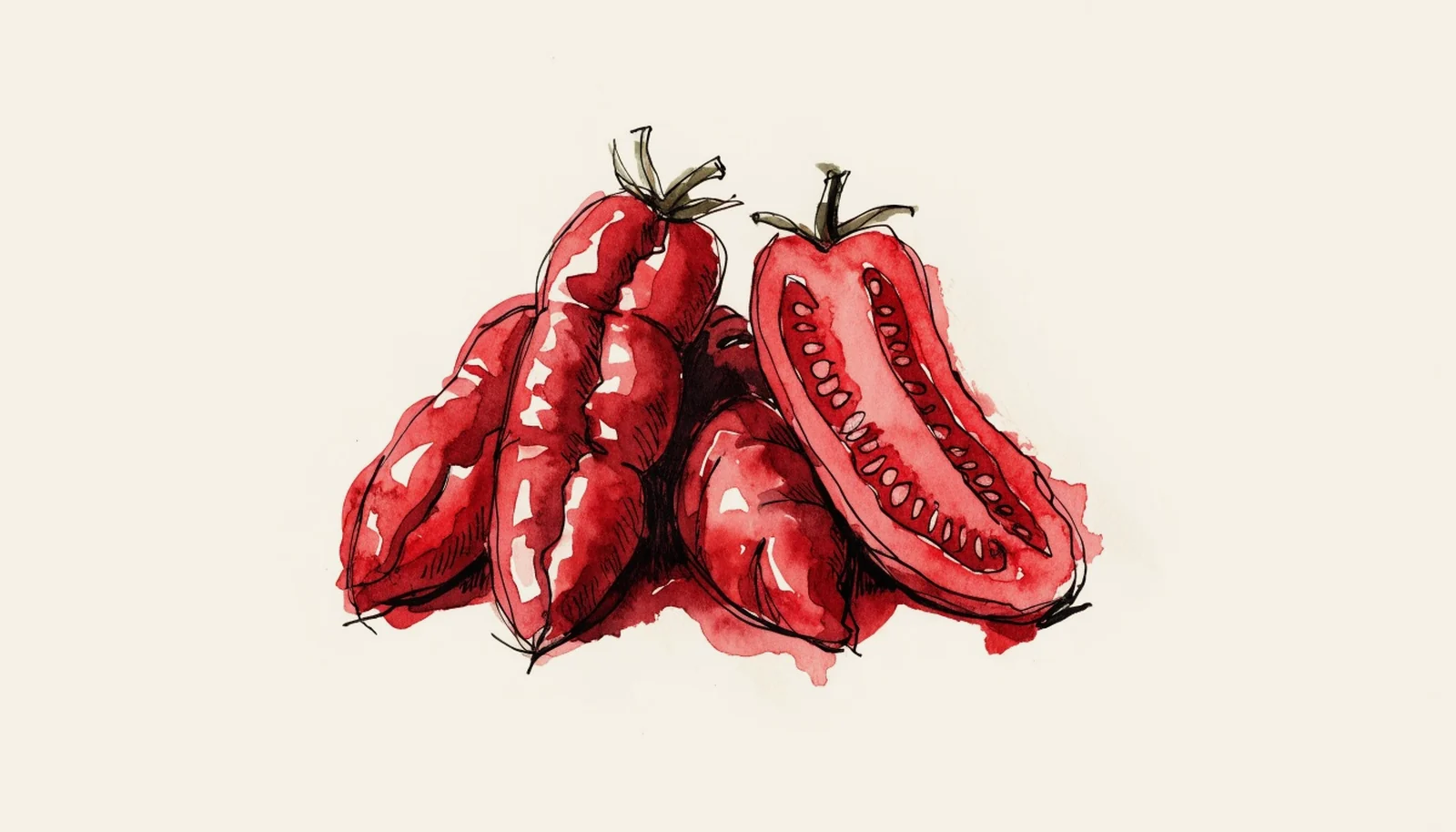
San Marzano is a plum tomato variety, and Pomodoro San Marzano dell’Agro Sarnese-Nocerino DOP is a protected designation covering fruit grown in a defined area south of Naples and processed to a specified standard. Telling the two apart is a textbook case of judging an Italian ingredient against its imitations.
The two are not the same thing, and the gap between them is where most of the confusion in the American tinned tomato aisle lives.
The variety against the designation
San Marzano names a tomato variety and also a protected designation, and a tin can carry the first without qualifying for the second.
The variety is grown worldwide, including in California, and seeds are freely sold.
A tin reading San Marzano variety or San Marzano style is making a claim about the seed, not about the place.
Pomodoro San Marzano dell’Agro Sarnese-Nocerino DOP is the protected designation.
It requires the fruit to be grown in a defined area in the provinces of Naples, Salerno and Avellino, on the volcanic plain south of Vesuvius. Piennolo tomatoes, from the slopes of Vesuvius itself, carry a DOP of their own.
It requires specified processing, peeled whole or in fillets, packed in juice or purée, with limits on additives.
Growing San Marzano seed in California produces San Marzano tomatoes and not the DOP product.
What the DOP actually requires
The designation constrains area, cultivation, harvest and processing.
A defined growing area across forty-one comuni.
Hand harvesting, since the fruit ripens unevenly.
Peeling by steam or lye rather than mechanically.
Packing whole or in fillets in tomato juice or purée, with no added tomato paste to thicken.
Certification by a designated body, with each tin traceable.
It does not guarantee the tin tastes better than a good non-DOP tomato, which is the same caveat this site applies to every protected designation.
How to check a tin
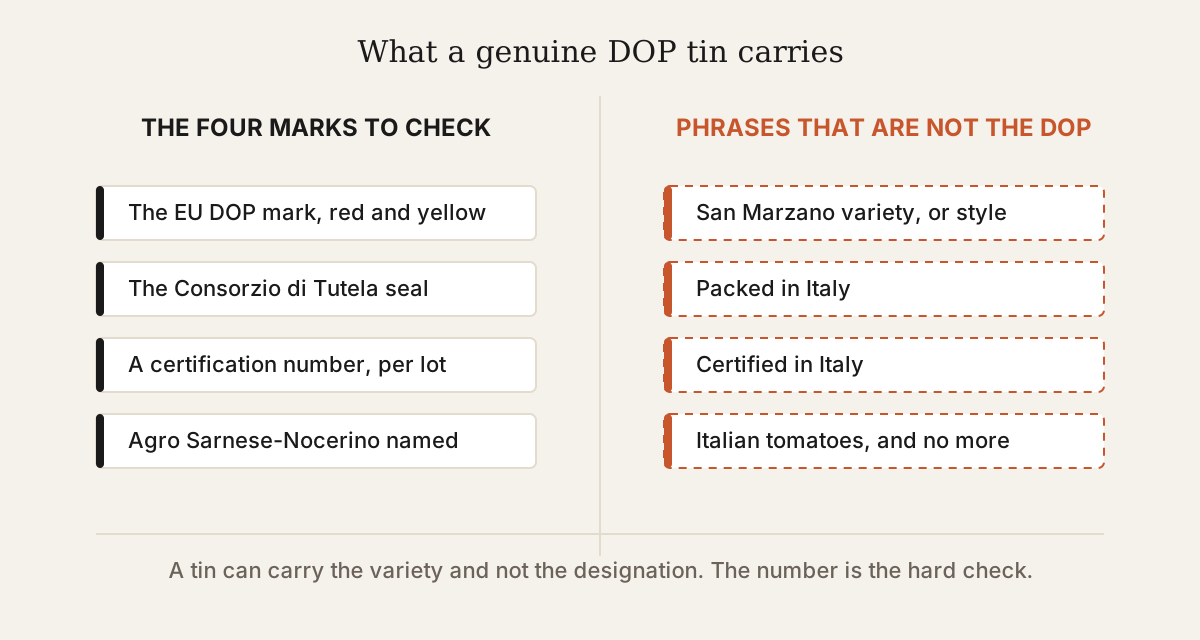
A genuine DOP tin carries four marks, and any tin missing them is making a lesser claim.
The DOP mark, the red and yellow European Union symbol.
The consortium seal of the Consorzio di Tutela.
A certification number unique to the producer and lot, printed on the tin.
The full designation named, Pomodoro San Marzano dell’Agro Sarnese-Nocerino.
Read what is missing. A tin reading only San Marzano, or San Marzano style, or Italian tomatoes, is not the DOP product.
Certified in Italy is not the same as grown in the DOP area, and neither is packed in Italy.
The counterfeiting problem
San Marzano is among the most misrepresented Italian food names sold in the United States.
Estimates of the scale circulate widely and vary enormously depending on who is counting and what counts as misrepresentation.
This site does not publish a figure, because the commonly cited ones do not carry a stated method.
What is verifiable is the check itself. Whether a given tin carries the four marks is a fact anyone can establish in a shop.
The DOP production is genuinely small, which is the structural reason the name outruns the supply.
Checked on 13 August 2026, United States listings for DOP San Marzano tomatoes clustered between roughly five and twelve dollars per 400 gram tin, above ordinary Italian plum tomatoes. Counting rule: a listing counts when it is an imported tin naming the San Marzano DOP. That describes what was visible on that date and is not a recommendation of any seller.
Are they worth it
DOP San Marzano tomatoes are low in seeds, thick-fleshed and sweet, and a good non-DOP Italian plum tomato is often the better buy. The case for datterini instead is covered separately on this site.
The fruit is genuinely well suited to sauce, being fleshy with few seeds and low water content.
The sweetness and low acidity are real characteristics.
Other Campanian plum tomatoes grown outside the DOP area can be excellent and cost considerably less.
A poor DOP tin exists, since the designation controls process rather than outcome.
Buy on the producer as much as on the designation, which is the same advice this site gives for oil and cheese.
Frequently asked questions
What is the difference between San Marzano tomatoes and San Marzano DOP?
San Marzano is a tomato variety that can be grown anywhere, including in California. Pomodoro San Marzano dell’Agro Sarnese-Nocerino DOP is a protected designation requiring the fruit to be grown in a defined area south of Naples and processed to a set standard. A tin can contain the variety without qualifying for the designation.
How can I tell if a tin is really DOP?
A genuine tin carries four marks: the European Union DOP symbol, the Consorzio di Tutela seal, a unique certification number printed on the tin, and the full designation Pomodoro San Marzano dell’Agro Sarnese-Nocerino. A tin reading only San Marzano, or San Marzano style, is not the DOP product.
Are San Marzano tomatoes actually better?
The fruit is genuinely well suited to sauce, being thick-fleshed, low in seeds and water and relatively sweet. Whether a given DOP tin beats a good non-DOP Campanian plum tomato is another question, and often it does not. The designation controls area and process rather than the quality of the result.
Does packed in Italy mean it is DOP?
No. Packed in Italy, certified in Italy and product of Italy are all weaker claims than the DOP designation, and none of them means the fruit was grown in the Agro Sarnese-Nocerino area. Only the four marks together establish the DOP.
Why is so much fake San Marzano sold?
DOP production is small relative to how well the name sells, which creates the gap that misrepresentation fills. Figures for the scale of it circulate widely and this site does not publish one, because the commonly cited numbers do not state how they were counted. Checking the marks on a tin is a fact a shopper can establish directly.
CalItalia Food covers Italian ingredients: what they are, how to tell a good one from an ordinary one, and where to buy them in the United States.