
Ventresca Tuna: The Belly Cut, and Why It Costs More
The fatty belly of the tuna, jarred in olive oil. What separates ventresca from ordinary tinned tuna, how to judge a good jar, and how to use it.
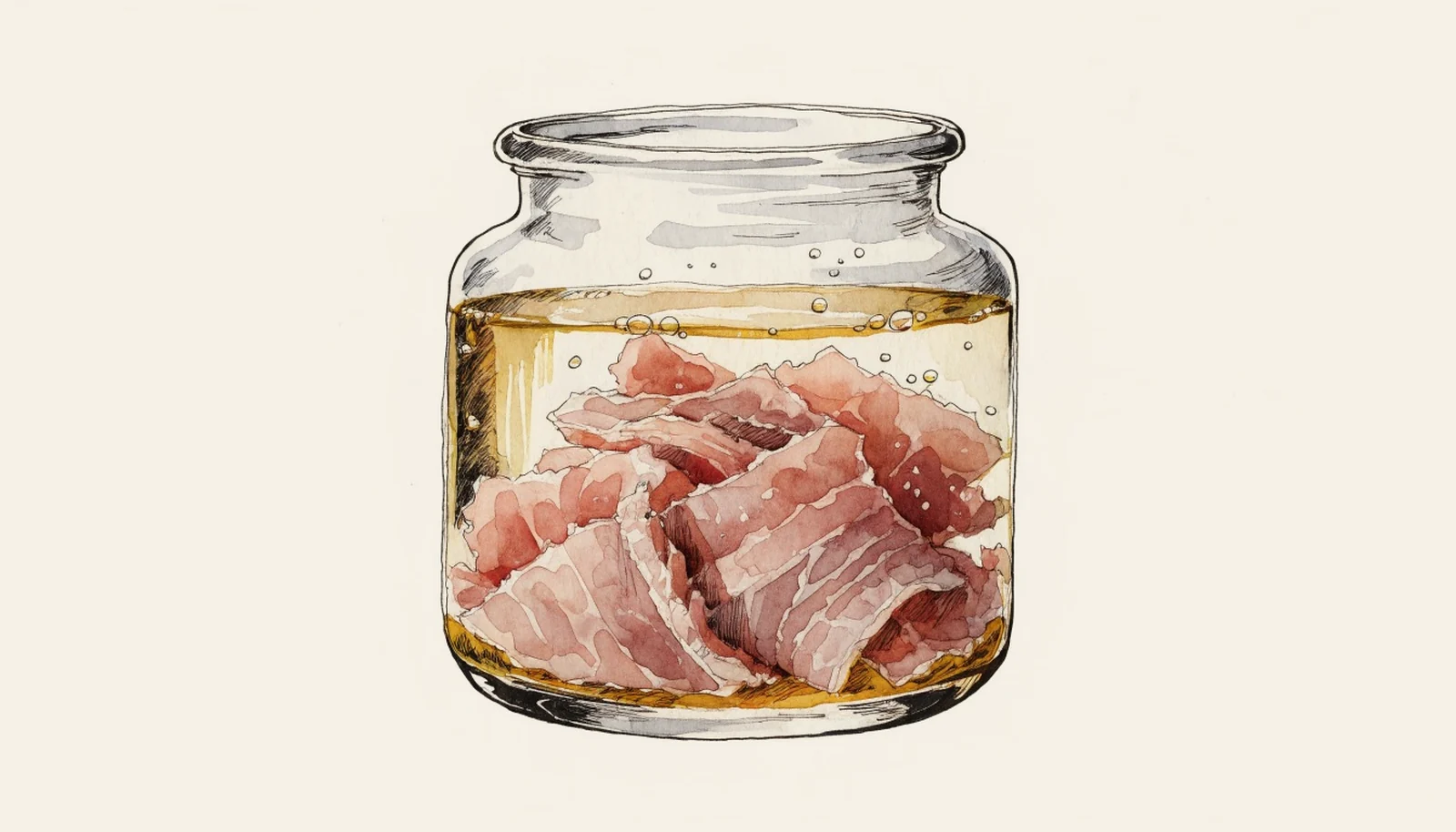
Ventresca is the belly cut of the tuna, jarred in olive oil, and it is fattier, paler and more tender than the loin meat that fills ordinary tins. Whether the premium is justified is the question this site puts to every Italian ingredient.
It is the same fish and a different part of it, which is the whole of the price difference.
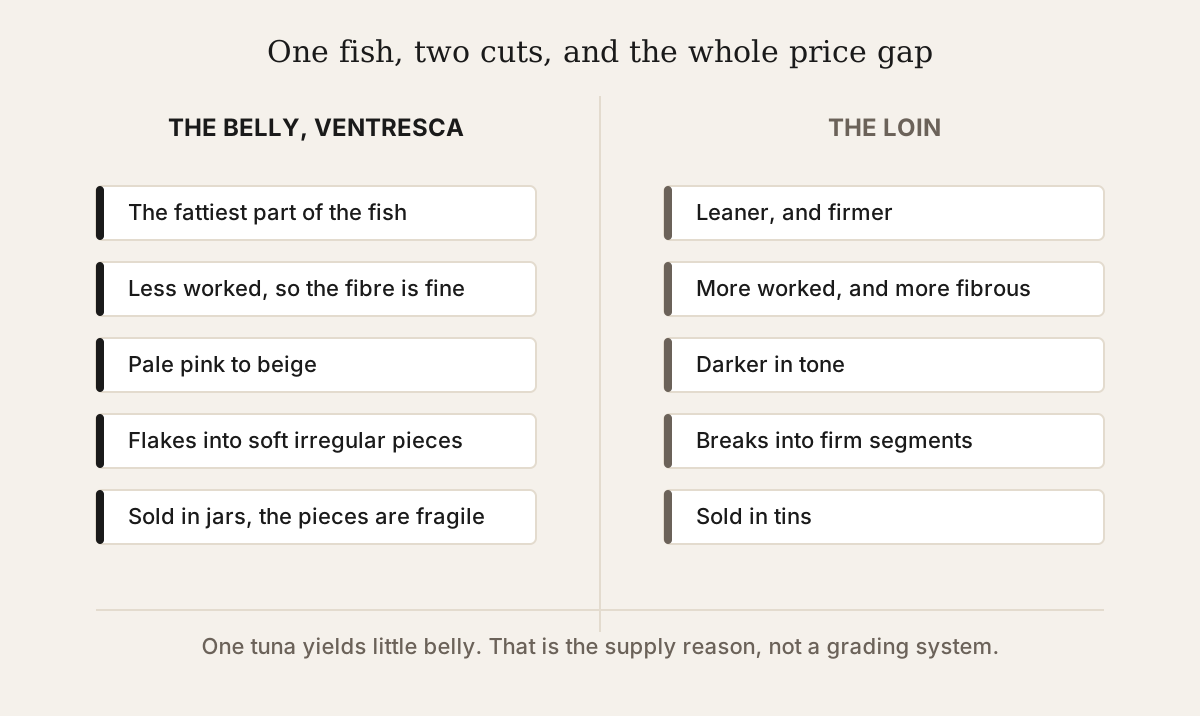
What ventresca is
Ventresca is the triangular belly section of the tuna, running along the underside of the fish behind the head.
It is the fattiest part of the animal, in the same way pork belly is.
The muscle is less worked than the loin, so the fibre is finer and softer.
One tuna yields comparatively little of it, which is the supply reason for the price.
Bluefin ventresca is the most prized, and most jarred ventresca in retail is yellowfin or albacore. Bluefin roe, salted and pressed, becomes bottarga di tonno.
The Spanish equivalent is ventresca too, and the Italian and Spanish products are closely comparable.
How it differs from ordinary tinned tuna
Ventresca and standard tinned tuna differ in cut, texture and how they should be used.
Ordinary tinned tuna is loin meat, leaner, firmer and more fibrous.
Ventresca is pale pink to beige rather than the darker tone of loin.
It flakes into soft irregular pieces rather than firm segments.
It carries much more fat, which is where the flavour sits.
It is sold in jars far more often than tins, because the pieces are fragile and glass lets you see them.
How to judge a jar
Look for whole intact pieces, olive oil rather than seed oil, and a stated species.
Whole pieces, not fragments. A jar of broken flakes has been packed from offcuts.
Packed in olive oil, ideally extra virgin, which many producers state.
Species should be named, most often Thunnus alalunga for albacore or Thunnus albacares for yellowfin.
Pale colour is correct for ventresca and would be a defect in loin tuna.
Checked on 13 August 2026, United States listings for imported Italian or Spanish ventresca clustered between roughly twelve and forty dollars per 200 gram jar. Counting rule: a listing counts when it is an imported jarred tuna sold as ventresca. That describes what was visible on that date and is not a recommendation of any seller.
The price gap against ordinary tinned tuna is large, frequently five to ten times per gram.
How to use it
Ventresca is served as it comes, and cooking it wastes both the texture and the money.
On its own with bread, which is the standard Italian and Spanish presentation.
In a salad with white beans, onion and parsley.
On toasted bread with a little of its own oil.
With tomatoes, where the fat balances the acidity.
Not in a cooked sauce or a casserole. Ordinary tinned tuna does that job and ventresca dissolves into it.
Storage
An unopened jar keeps for years; once opened it needs refrigeration and a few days.
Unopened jars are shelf stable and many producers state that the product improves over the first year. Good Italian sardines are dated for the same reason.
Refrigerate after opening and use within three or four days.
Keep it submerged in its oil, which protects the surface.
Bring it back to room temperature before serving, since the oil solidifies in the refrigerator and the flavour is muted cold.
Frequently asked questions
What is the difference between ventresca and regular tuna?
Ventresca is the belly cut, ordinary tinned tuna is loin meat. The belly carries far more fat, has finer, less worked muscle fibre, and flakes into soft pale pieces rather than firm darker segments. It is the same fish, and the difference is which part of it is in the jar.
Why is ventresca so expensive?
One tuna yields a small quantity of belly relative to loin, so supply is limited by anatomy rather than by processing. The pieces are also fragile and are usually hand-packed into glass jars. The price is typically five to ten times ordinary tinned tuna per gram.
Should I cook with ventresca?
Cooking it wastes it. Ventresca is a finished product meant to be eaten as it comes, with bread, in a salad or with tomatoes. In a cooked sauce it disintegrates and its texture, which is most of what you paid for, is lost. Ordinary tinned tuna is the right choice for cooked dishes.
Is ventresca the same as toro?
Both terms describe tuna belly and they belong to different traditions. Toro is the Japanese term used in sushi for raw bluefin belly, subdivided into otoro and chutoro. Ventresca is the Mediterranean term for the same anatomical cut, and it usually refers to the cooked and jarred product.
Is pale ventresca a sign of poor quality?
Pale pink to beige colour is correct for ventresca and reflects the high fat content of the belly. In loin tuna the same pallor would suggest a problem. Judging ventresca by the colour expected of ordinary tinned tuna leads people to reject exactly the product they paid for.
CalItalia Food covers Italian ingredients: what they are, how to tell a good one from an ordinary one, and where to buy them in the United States.