
Castelvetrano Olives: Why They Are Green, and What to Look For
The bright green Sicilian table olive, its unusual curing, why the colour is sometimes genuine and sometimes not, how to judge and use it, and what a good jar costs.
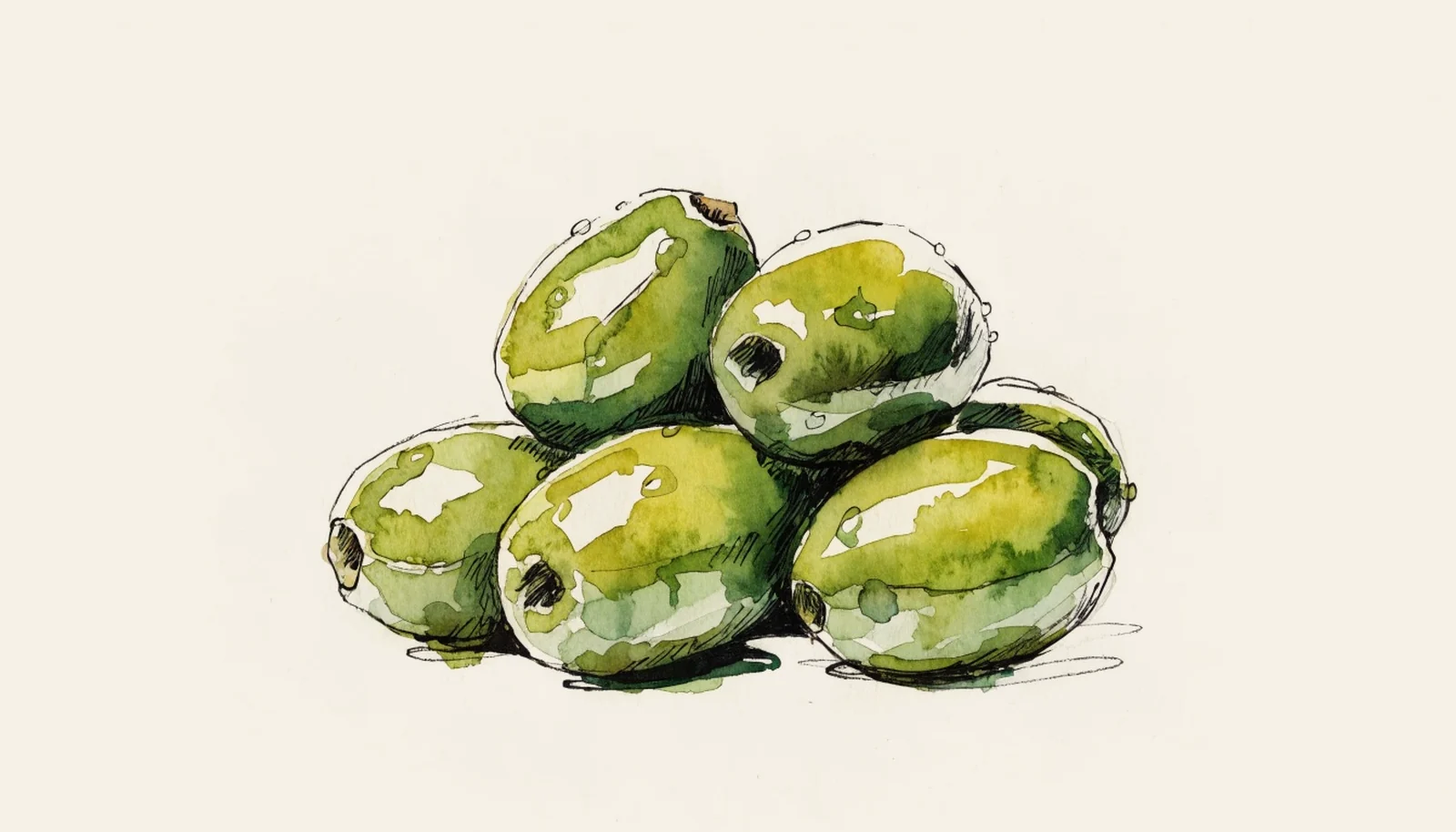
Castelvetrano olives are a Sicilian table olive from the Nocellara del Belice cultivar, cured quickly in lye and brine rather than slowly in salt, which is why they stay bright green, firm and mild rather than turning dark and bitter. The colour is a consequence of the method, not a defect and not always an additive. Knowing which is which is part of telling a genuine Italian ingredient from its lookalikes.
The confusion worth clearing up first: their green is so unusual that people assume it is dye. Sometimes it is. Usually it is not, and there is a way to tell.
What they actually are
Castelvetrano olives are Nocellara del Belice olives, grown around the town of Castelvetrano in western Sicily, picked young and green and cured in a weak lye solution before going into brine. The whole process takes days rather than months.
The cultivar is doing half the work. Nocellara del Belice is a dual-purpose olive, used both for oil and for the table, with a high flesh-to-stone ratio and a naturally buttery texture. Picked green and cured fast, it stays crisp.
The name Castelvetrano describes the place and the style rather than a protected designation on its own. The related olive oil, Valle del Belice DOP, is protected; the table olive as sold in the United States generally is not.
Why the cure matters
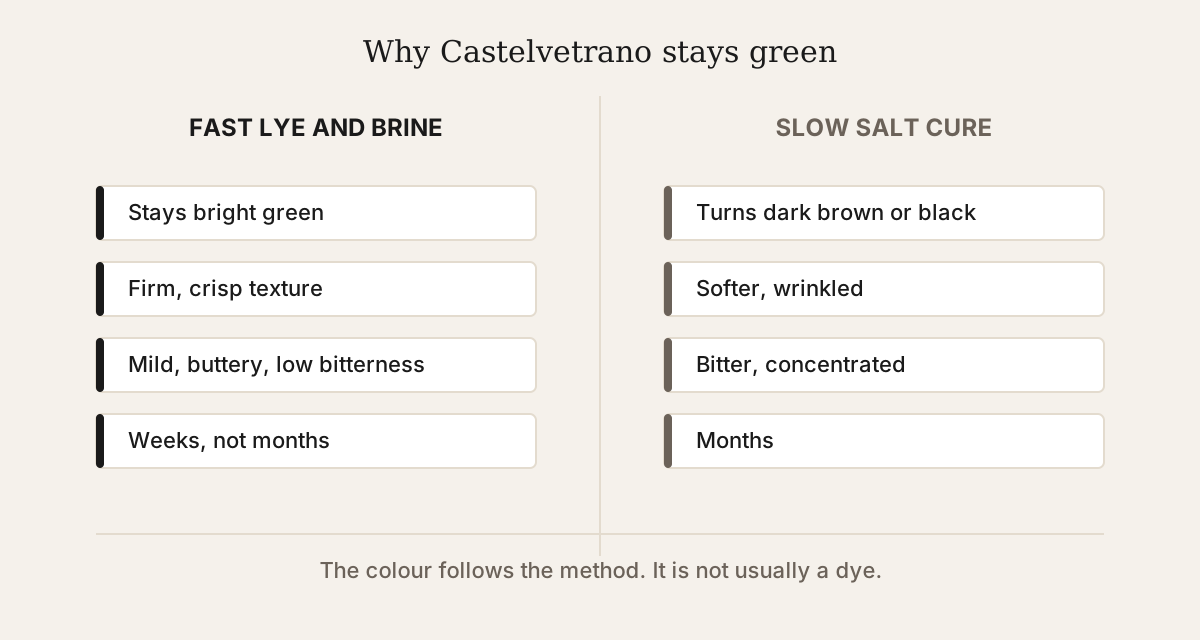
A traditional salt or long brine cure ferments the olive over months, which develops complexity and turns the fruit brown or black. The lye cure removes the bitter oleuropein in days and stops there.
So Castelvetrano olives taste mild, buttery and faintly sweet rather than complex or funky. People who love Kalamata olives sometimes find them bland; people who dislike olives frequently like these. That is the whole positioning.
About the colour
The bright green comes from picking young, curing fast and never letting the fruit oxidise, and it is genuine in a properly made product. Some producers also add ferrous gluconate or a copper compound to fix or intensify it.
Check the ingredient list. A good jar reads: olives, water, salt, and often citric acid or lactic acid as an acidifier. That is a clean list.
Ferrous gluconate is the additive to look for. It is the standard colour fixative in commercially processed green and black olives, it is permitted and safe, and its presence tells you the colour has been helped. Some producers use it, many good ones do not.
Colour uniformity is a weaker signal than the label. Naturally cured Castelvetrano olives vary a little in shade across a jar. A jar where every olive is exactly the same emerald is worth a look at the list.
What a good jar looks and tastes like
Firm and crisp rather than mushy, glossy rather than dull, mild and buttery rather than sharp, with almost no bitterness.
Texture is the most reliable quality signal. A Castelvetrano that has gone soft has usually been sitting in brine too long or been through heat. They should snap slightly under the tooth.
Look at the brine. It should be clear or lightly cloudy. Heavy sediment or a slimy texture in the liquid means the jar is old or has fermented further than intended.
Whole and unpitted keeps better than pitted. Pitting breaks the flesh and shortens the life, and pitted Castelvetranos soften noticeably faster. Buy whole where you can.
What they should cost
Expect roughly 8 to 16 dollars for a jar in the 300 to 500 gram range in the United States, with bulk from an olive bar often cheaper per pound and fresher.
They are not an expensive olive. The short cure and the yield mean they cost less to produce than a long-cured specialty olive, and prices well above that range are usually paying for packaging.
The olive bar is frequently the best value and the best product, because turnover is high and you can see the texture before buying. The trade-off is that bar olives sit in shared brine and are best used within a few days.
Where to buy them
Italian delis, olive bars in well-stocked supermarkets, and specialist importers all carry them, and they are among the easier Italian pantry items to find in the United States.
Checked on 13 August 2026, the first page of United States results for castelvetrano olives returned a mix of producers, specialist food sellers and cooking publishers, including a major olive brand and a cheese retailer. That describes that search on that date rather than recommending any seller.
Availability is genuinely good for this one, which is unusual on this site. Most of the sourcing difficulty in Italian ingredients does not apply here.
How to use them
Eat them as they come, and use them where their mildness is the point rather than where an olive needs to assert itself.
They belong on a board, in a martini, chopped into a salad, alongside cheese, or warmed briefly with citrus peel and fennel seed. They are the standard answer to serving olives to people who say they do not like olives.
Where they work less well is in cooking. In a puttanesca or a braise you want the sharpness and salt of a brined black olive such as Gaeta, and a Castelvetrano’s mildness disappears. Using them there wastes both the olive and the dish.
Do not cook them hard. Heat turns their crisp texture soft and dulls the green.
Storage
Unopened, a jar keeps for a year or more in a cupboard. Opened, refrigerate and keep the olives submerged in their brine, and use them within about two weeks.
If the brine runs low, top it up with a light salt solution rather than plain water, which dilutes the cure and hastens softening. Olives left exposed above the liquid discolour and soften quickly.
They do not freeze. The flesh collapses on thawing.
Frequently asked questions
Are Castelvetrano olives dyed?
Usually not. The bright green comes from young picking and a fast lye cure that prevents oxidation. Some producers do add ferrous gluconate as a colour fixative, which is permitted and safe, and it will appear on the ingredient list. A jar listing only olives, water, salt and an acidifier has not been colour-treated.
Why are they so mild compared with other olives?
Because the lye cure removes the bitter compound in days rather than fermenting the fruit over months. Long-cured olives develop complexity and sharpness through fermentation; Castelvetranos skip that stage. The result is buttery and faintly sweet, which is why they suit people who find other olives too aggressive.
Are Castelvetrano olives DOP?
The table olive as generally sold is not, though the olive oil from the same area and cultivar carries Valle del Belice DOP. The name on a jar of olives describes the place and the style rather than a certified designation, so judge them on texture, ingredient list and seller rather than expecting a mark.
Can I cook with Castelvetrano olives?
You can, but they are usually the wrong choice. Their mildness and crisp texture are their whole appeal, and both are lost to heat. Dishes that call for olives generally want the salt and sharpness of a brined dark olive. Save these for eating as they come.
Why did my olives go soft?
Most often age after opening, or being left above the brine line. They can also soften if the jar was stored somewhere warm, or if they were pitted, since pitting breaks the flesh and shortens their life considerably. Keep them submerged, refrigerated and eat them within a couple of weeks.
CalItalia Food covers Italian ingredients: what they are, how to tell a good one from an ordinary one, and where to buy them in the United States.