Cerignola Olives: The Giant Ones, and Why Some Are Bright Red or Black
Enormous mild Puglian table olives, crisp and low in bitterness. What the DOP covers, why the coloured ones are dyed, and how to judge a jar and use them.
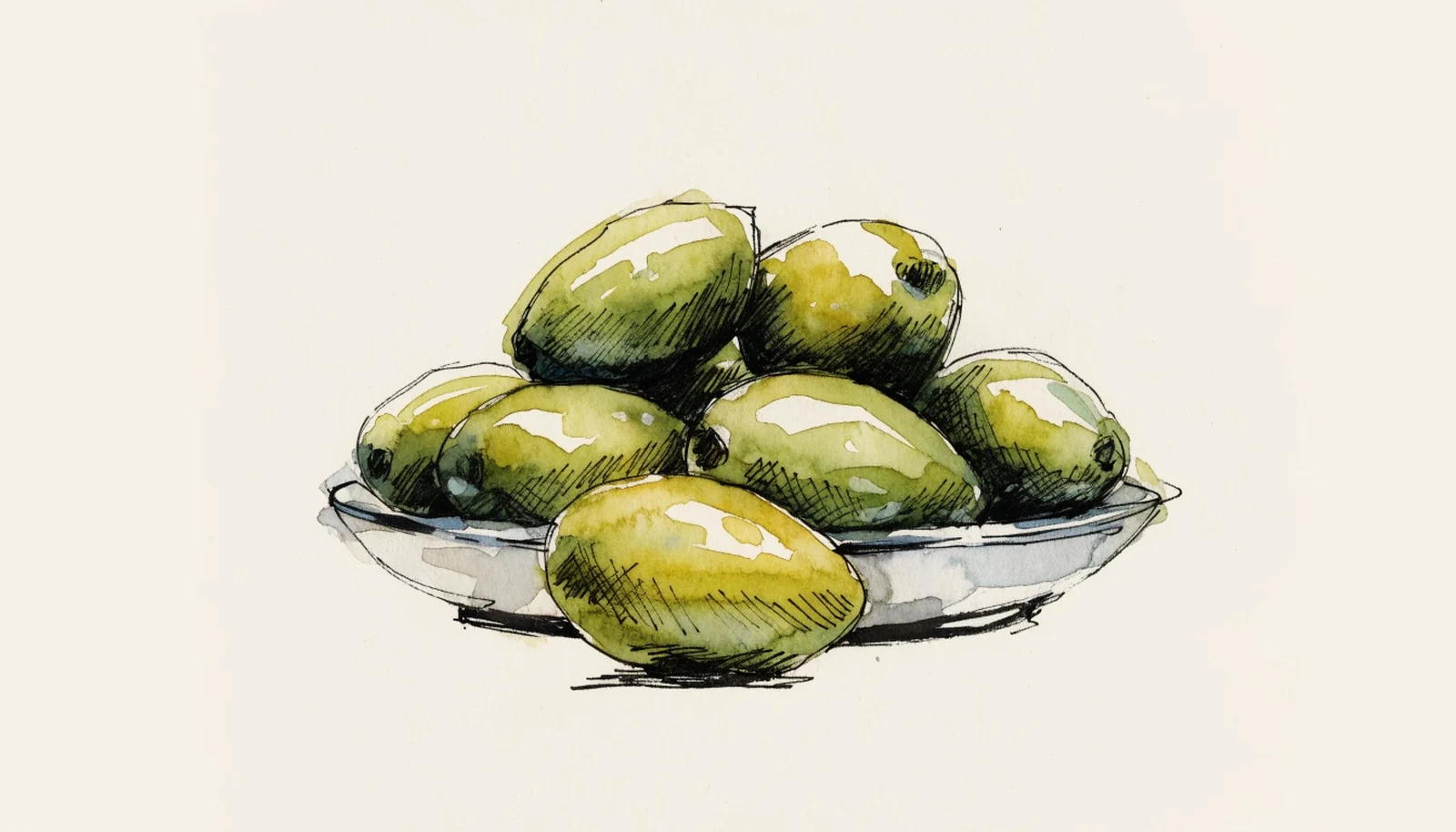
Cerignola olives are very large Puglian table olives, crisp, mild and low in bitterness, sold green, black or in a startling bright red. The green and black are the natural product. The red is dyed, and so is a good deal of the black. The colour is a small case of the gap between how an Italian ingredient looks and what it is.
Saying that first matters, because the colour is the first thing a buyer notices and it is the thing least connected to quality.
What Cerignola olives actually are
Cerignola olives come from the Bella di Cerignola cultivar, grown around the town of Cerignola in the Puglian province of Foggia, and are cured in brine or lye rather than dry-salted.
They are among the largest table olives grown anywhere. A single olive can be the size of a small plum, and the size is the cultivar rather than a growing trick.
The flesh is firm and crisp rather than soft, with a high flesh-to-stone ratio.
The flavour is mild and buttery, notably low in the bitterness that defines many table olives, with a clean vegetal note.
They are cured young and quickly by a lye or brine method rather than the long fermentation used for smaller olives, which is part of why they stay mild and crisp.
La Bella della Daunia DOP is the protected designation covering the cultivar from the defined Puglian zone. Much of what is sold as Cerignola carries no mark.
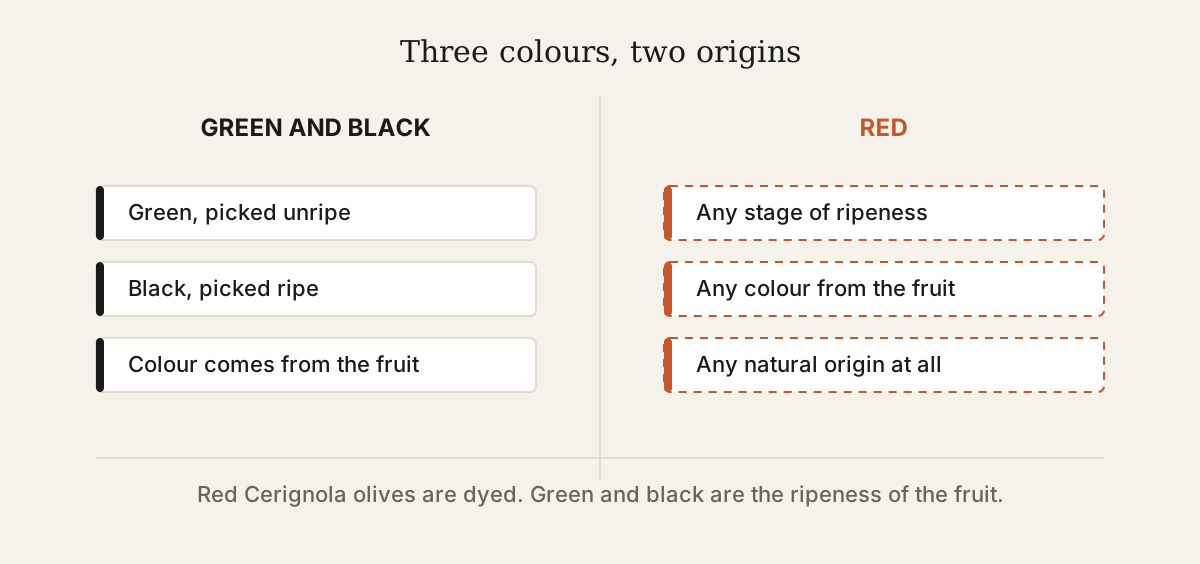
Green and black are two ripeness stages of the same fruit, picked earlier or later.
The colour question
Cerignola olives appear in three colours on an American shelf and only two of them arise naturally.
Green is unripe fruit picked early and cured. This is the standard and the most common.
Naturally black is fully ripe fruit left on the tree longer, and it is genuinely produced.
Bright red or vivid pink is dyed. No olive is that colour. The dye is usually a permitted food colouring and it is applied for appearance.
A good deal of black table olive is also dyed, or darkened by oxidation using ferrous gluconate, which is a common industrial process across the olive trade and not specific to Cerignola.
Read the ingredient list. Colourings appear there where they are used, and their absence alongside a deep uniform black is worth a second look.
Dyed is not the same as bad. A dyed olive is a cosmetic decision rather than a safety or flavour failure, and the point is knowing what you are paying for.
How to judge a jar
Judge it on firmness, then colour uniformity, then the brine.
They should be firm and crisp, giving a snap rather than yielding softly. Mushy Cerignola olives have been over-cured or are old.
Natural colour is uneven. A jar of naturally black olives shows variation between fruit; a perfectly uniform deep black suggests oxidation treatment.
The brine should be clear to faintly cloudy, smelling clean and briny. Murky brine or a sour smell means fermentation has gone wrong.
The skin should be unbroken. Split or wrinkled olives have been handled badly.
Read for colouring agents on the label, particularly on red or uniformly black jars.
Checked on 13 August 2026, the first page of United States results for cerignola olives returned reference material, a general marketplace listing and Italian food importers, which describes that search on that date rather than recommending any seller. Availability here is good.
What they should cost
Expect roughly 10 to 18 dollars a pound in the United States, above ordinary table olives.
The size is the cost. Large fruit means fewer olives per tree by weight and more careful handling, since a bruised giant olive is more visibly damaged than a bruised small one.
DOP La Bella della Daunia costs more and carries a real guarantee of cultivar and zone.
Dyed red versions are usually no cheaper despite the colouring being cosmetic, since they are sold as a novelty.
Very cheap large green olives may be a different cultivar sold in the Cerignola style, which is legitimate and is not the same fruit.
How to use them
Serve them whole at room temperature as an antipasto. They are a table olive rather than a cooking one.
Their mildness and size make them the olive to put out for people who do not like olives, and they sit well with a young cheese, cured meat, or simply a drink.
Serve them at room temperature. Cold, the firm flesh is dull and the buttery note is closed.
Do not cook with them. Their virtue is crispness, which heat destroys, and their mildness means they contribute little to a cooked dish. Taggiasca or Gaeta olives are the cooking choices.
They stuff well because of their size, and are commonly sold stuffed with cheese, almond or pepper.
Do not use them where a recipe wants a briny punch, since they are the mildest common Italian table olive.
Drain them shortly before serving rather than long in advance, since they dry out.
Storage
In their brine, refrigerated after opening, two to three weeks.
Keep them submerged. Olives above the brine line dry, discolour and go soft.
Top up with a light salt brine if the level drops, rather than with plain water, which dilutes the cure.
Use a clean utensil each time, since introduced bacteria are what spoil an open jar.
Unopened jars keep for a year or more in a cool dark cupboard.
Do not freeze them. The flesh collapses and the crispness that defines them is gone.
Frequently asked questions
Why are some Cerignola olives bright red?
Bright red or vivid pink Cerignola olives are dyed with a permitted food colouring, since no olive grows that colour naturally. The treatment is cosmetic rather than a safety or flavour issue. Green and naturally black Cerignola olives are the unadulterated product, representing earlier and later picking of the same fruit, though a good deal of black table olive is also darkened industrially.
Are black Cerignola olives natural?
Some black Cerignola olives are naturally ripened and some are darkened by oxidation treatment using ferrous gluconate, which is common across the olive trade generally. The tell is uniformity: naturally ripened fruit varies in colour between olives, while treated ones are a perfectly even deep black. The ingredient list will show colouring agents where they are used.
What do Cerignola olives taste like?
Cerignola olives are mild, buttery and crisp, with notably little of the bitterness that characterises many table olives, and a clean vegetal note. They are cured young and quickly rather than long-fermented, which preserves that mildness and their firm texture. They are frequently the olive that people who dislike olives find they can eat.
Do Cerignola olives have a DOP?
The protected designation is La Bella della Daunia DOP, covering the Bella di Cerignola cultivar grown in a defined zone of the Puglian province of Foggia. A great deal of what is sold as Cerignola olives carries no mark at all, and may be a different large cultivar sold in the same style. The DOP is the only public guarantee of cultivar and origin.
Can you cook with Cerignola olives?
Cerignola olives are a table olive and cooking wastes them, since heat destroys the crispness that is their main virtue and their mildness contributes little to a finished dish. Smaller, more assertive olives such as Taggiasca or Gaeta are the ones for cooking. Their size does make them excellent for stuffing and serving whole.
CalItalia Food covers Italian ingredients: what they are, how to tell a good one from an ordinary one, and where to buy them in the United States.