
Nocellara del Belice: The Cultivar Behind Castelvetrano, Under Its Real Name
A Sicilian dual-purpose olive grown for eating and for oil. How the cultivar name relates to the Castelvetrano brand, why the bright green is a curing choice, and how to judge and use it.
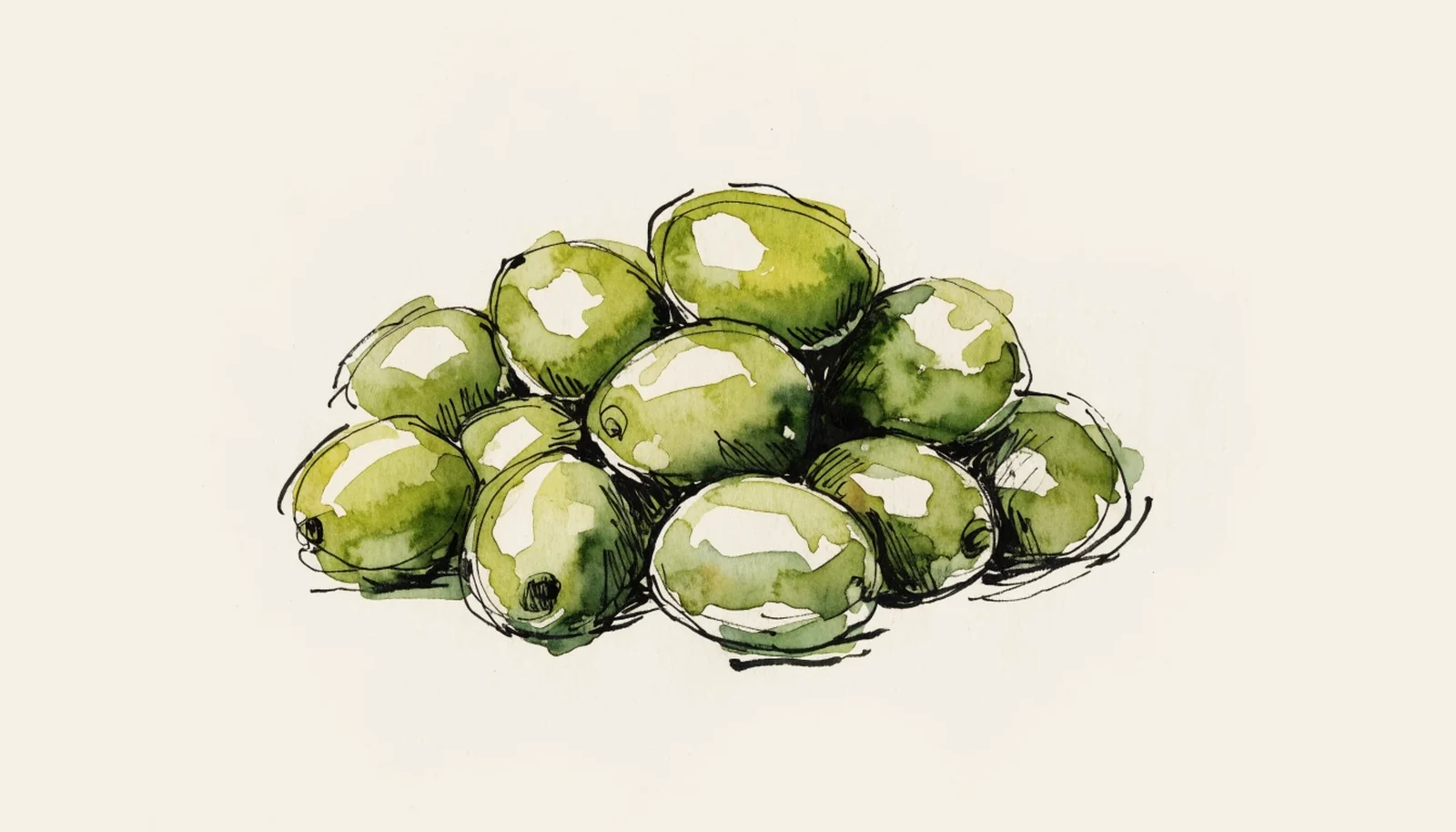
Nocellara del Belice is a Sicilian olive cultivar from the Belice valley in the province of Trapani, grown both for the table and for oil. It is the cultivar behind the bright green olives most Americans know as Castelvetrano. Its two names are a small example of the distance between an Italian ingredient and its American shelf name.
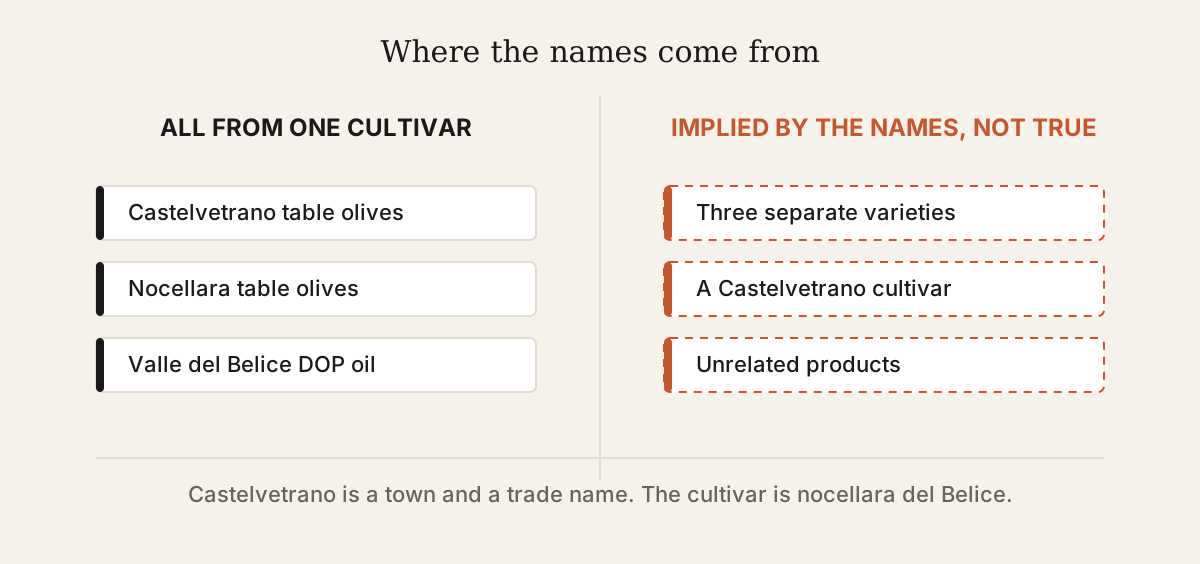
The two names are not competing products. One is the botanical cultivar and the other is a place, and knowing which is which explains a good deal about what you are buying.
What Nocellara del Belice actually is
Nocellara del Belice is an olive cultivar grown in the Belice valley of western Sicily, producing a round, plump, fleshy fruit with a high flesh-to-stone ratio.
It is a dual-purpose cultivar. Most olives are grown either for eating or for pressing; this one is genuinely good at both, which is unusual.
The fruit is round and squat, distinctly apple-shaped rather than the elongated form of an oil olive.
The flesh is firm, crisp and thick, with a buttery, mild, faintly sweet flavour and very little bitterness.
Nocellara del Belice DOP covers the table olives from the defined zone, and Valle del Belice DOP covers the olive oil from the same cultivar and area.
The name is descriptive. Nocellara relates to the small round nut-like shape, and del Belice places it in the valley.
Nocellara against Castelvetrano
The two words that appear on American shelves refer to the same fruit from slightly different angles.
Nocellara del Belice is the cultivar. It is what the botanist and the DOP call the plant.
Castelvetrano is a town in the same Belice valley, and the name became the commercial label for the table olives in export markets, particularly the United States.
So a Castelvetrano olive is a Nocellara del Belice olive, prepared as a table olive in the characteristic style.
Neither name is a mark of quality on its own. Castelvetrano in particular is used loosely in the United States for bright green mild olives that may not be from the zone or the cultivar.
The DOP mark is the guarantee, under either name, and it is not always present.
This site covers the table olive under Castelvetrano and this page under the cultivar name, since a buyer meets both words.
Why they are so green
The vivid green of these olives surprises people and it comes from the cure rather than from dye.
They are picked very young and unripe, when the fruit is naturally bright green.
A short lye cure follows, which removes bitterness quickly without the long fermentation that darkens and softens other olives.
Speed is what preserves the colour. A long brine fermentation would dull the green toward khaki; a fast cure keeps it.
No colouring is added in the traditional product, which distinguishes these from the dyed red Cerignola.
The crispness comes from the same choice. Minimal fermentation leaves the flesh firm, which is why these olives snap rather than yield.
A dull, olive-drab example has usually been sitting or was fermented longer, and it will be softer.
Judging the oil
The oil from this cultivar is a distinct product and is judged differently from the fruit.
Valle del Belice DOP oil is intensely green, with a pronounced fresh tomato and green almond character and a peppery finish.
It is a strongly flavoured oil rather than a neutral one, so it is a finishing oil rather than a cooking one.
Harvest date on the bottle matters more than any other information, as it does for any olive oil, since polyphenols and aroma decline from the moment of pressing.
Monocultivar bottlings say Nocellara and are worth seeking out if you want to taste the cultivar rather than a blend.
Checked on 13 August 2026, the first page of United States results for nocellara del belice olives returned reference material, a nursery, an oil specialist and an Italian producer, which describes that search on that date rather than recommending any seller. The presence of a nursery and an oil seller alongside table-olive results reflects the cultivar’s dual purpose.
What they should cost
Expect roughly 12 to 20 dollars a pound for the table olives in the United States, and 25 to 45 dollars for a 500 millilitre bottle of the DOP oil.
The table olives are picked young, which reduces yield per tree, and the fast cure is more labour-intensive per batch than a long fermentation.
DOP versions of either product cost more and carry a real guarantee of cultivar and zone.
Very cheap bright green olives are frequently a different cultivar treated to look similar, which is legitimate at the price and is not this fruit.
The oil is expensive for a reason. A dual-purpose cultivar diverted to pressing competes with a profitable table crop.
How to use them
Serve the olives whole at room temperature; use the oil raw over finished food.
The olives’ mildness makes them an easy antipasto and a good introduction for anyone who dislikes olives, and they sit alongside cheese, cured meat or a drink without competing.
Serve olives at room temperature. Cold, the firm flesh is dull and the buttery note closes.
Do not cook the olives. Their crispness is the point and heat removes it, and their mildness adds little to a dish.
Use the oil raw, over vegetables, fish, bread, soup and beans, where its tomato and pepper character is audible.
Do not fry with the DOP oil. Heat destroys the aromatics you paid for, and a cheaper oil does the job.
Pit the olives yourself if a recipe needs them pitted, since pitted olives sit in brine and soften.
Storage
Olives in their brine, refrigerated after opening, two to three weeks. Oil in a cool dark cupboard, best within a year of harvest.
Keep olives submerged and top up with light brine rather than water.
Keep oil away from light and heat, in a dark bottle or a tin, and never above the stove.
Once an oil bottle is opened, use it within a couple of months, since oxygen degrades it steadily.
Do not freeze the olives. The flesh collapses.
Do not refrigerate the oil. It clouds and solidifies, which is harmless and unhelpful.
Frequently asked questions
Are Nocellara del Belice and Castelvetrano the same olive?
Nocellara del Belice is the cultivar and Castelvetrano is a town in the same Sicilian valley whose name became the commercial label for the table olives in export markets. A Castelvetrano olive is therefore a Nocellara del Belice olive prepared as a table olive. Neither name guarantees origin on its own in the United States, where Castelvetrano in particular is used loosely.
Why are Castelvetrano olives so green?
The vivid green comes from the fruit being picked very young and unripe, when it is naturally that colour, followed by a short lye cure that removes bitterness quickly. A long brine fermentation, as used for most other olives, would dull the colour toward khaki and soften the flesh. No colouring is added in the traditional product.
Is Nocellara del Belice an eating olive or an oil olive?
Nocellara del Belice is genuinely both, which is unusual since most cultivars are grown for one purpose or the other. Nocellara del Belice DOP covers the table olives and Valle del Belice DOP covers the oil, both from the same cultivar and zone. The oil is intensely green with a fresh tomato and green almond character.
Are Castelvetrano olives dyed?
Traditional Castelvetrano olives are not dyed, and their green comes from early picking and a fast cure. This distinguishes them from the bright red Cerignola olives on the same shelf, which are genuinely coloured. Very cheap bright green olives may be a different cultivar treated to resemble them, which the ingredient list will indicate.
Can I cook with Nocellara olives?
Cooking these olives wastes them, since their crisp firm flesh is their main virtue and heat destroys it, while their mildness contributes little to a finished dish. They are a table olive. For cooking, a more assertive olive such as Gaeta or Taggiasca is the right choice. The Nocellara oil, by contrast, should be used raw as a finishing oil rather than for frying.
CalItalia Food covers Italian ingredients: what they are, how to tell a good one from an ordinary one, and where to buy them in the United States.