
Salted Capers: Why They Beat the Ones in Vinegar
Salt-packed capers keep their floral flavour where brined ones taste of vinegar. How to rinse them properly, where to use them, and what size to buy.
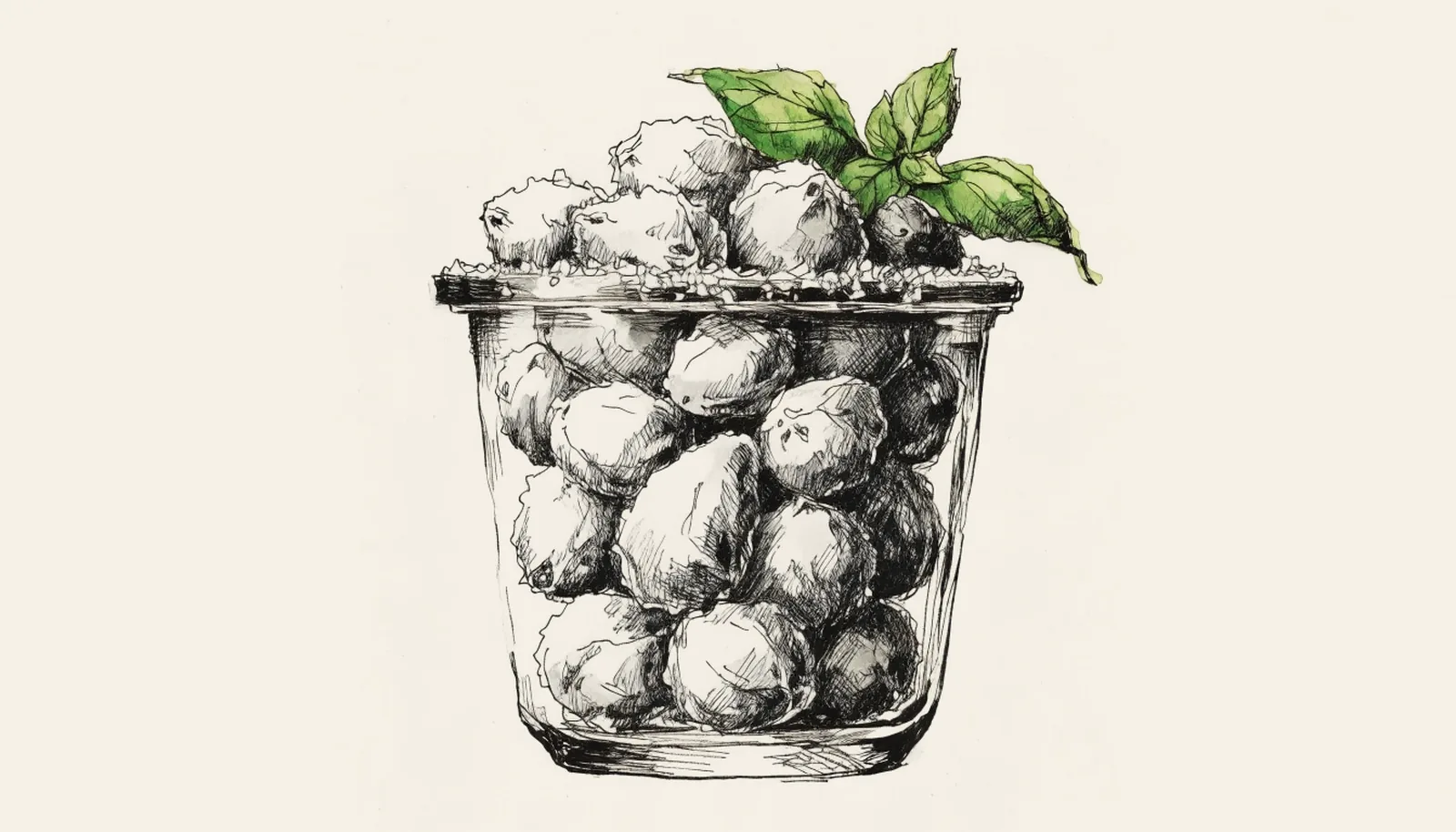
Salted capers are caper buds preserved in dry sea salt rather than in vinegar brine, and they retain a floral, mustardy flavour that brined capers lose. That lost flavour is what the whole site means by a gap worth paying for.
The trade is that they must be rinsed and soaked before use, which is the step people skip and then blame the capers for.
What a caper is
A caper is the unopened flower bud of Capparis spinosa, a shrub growing wild across the Mediterranean, picked by hand before it opens.
The bud must be picked closed. An opened flower is no longer a caper.
Picking is done by hand, bud by bud, over a season, which is why capers cost what they do.
They are inedible raw, being intensely bitter until cured.
Curing develops the flavour, whether by salt or by brine.
The caper berry is the fruit that follows the flower and is a different product, covered separately on this site.
Salt against brine
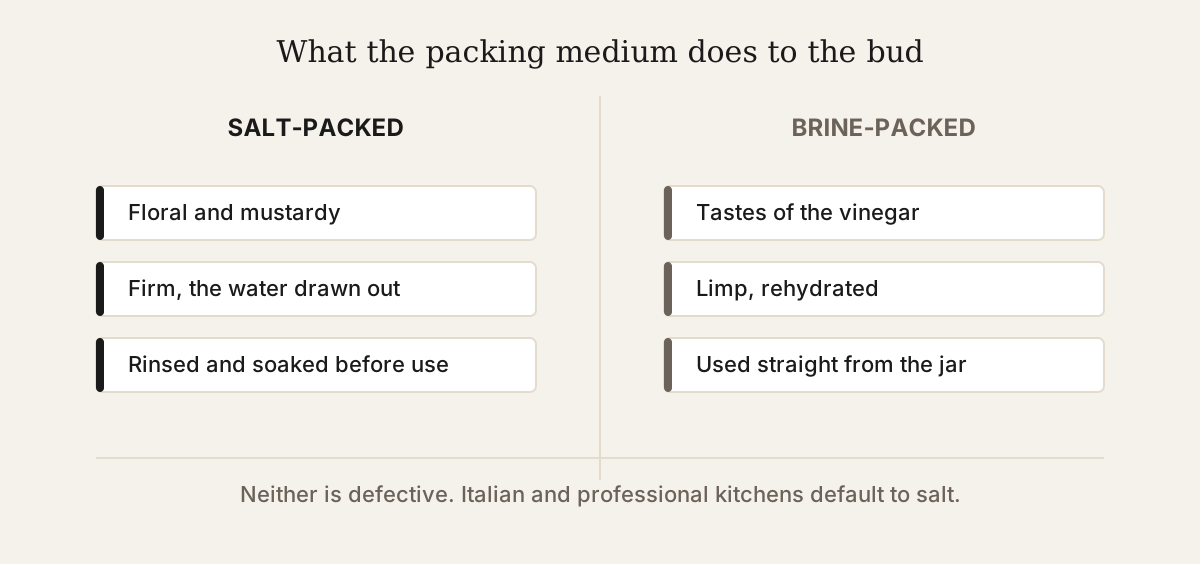
The preservation medium changes the flavour more than anything else about the product.
Salt-packed capers keep their own character, floral and mustardy with a distinct bitterness.
Brined capers taste substantially of the brine, since vinegar is assertive and the bud is small.
Salt draws out water and concentrates the caper.
Brine rehydrates and softens, giving a limper texture.
Italian and Sicilian cooking uses salt-packed as the default, and most professional kitchens do the same.
Brined capers are not a defective product, and they are a different one.
How to rinse them
Salted capers need rinsing and soaking, and doing it properly is the difference between good and unpleasant.
Rinse thoroughly under cold running water, rubbing the salt off with your fingers.
Then soak in cold water for fifteen to thirty minutes.
Change the water once during the soak.
Taste one before using. They should be savoury and floral rather than aggressively salty.
Do not soak for hours. Over-soaking leaches the flavour along with the salt.
Dry them before frying, since wet capers spit in hot oil.
Size, and what it means
Capers are graded by size and the smallest are the most prized.
Nonpareil is the smallest grade, under 7 millimetres.
Surfines, capucines, capotes and grusas run progressively larger.
Smaller buds are more tender and more concentrated, which is why they cost more.
Larger capers are not inferior for cooking, where they are chopped or where their firmness is useful.
Pantelleria capers carry an IGP, from the Sicilian island, and are covered separately on this site.
Checked on 13 August 2026, United States listings for imported salt-packed capers clustered between roughly six and eighteen dollars per 100 to 250 grams. Counting rule: a listing counts when it is an imported salt-packed caper. That describes what was visible on that date and is not a recommendation of any seller.
Where they belong
Salted capers belong in southern Italian cooking, in sauces, with fish and anywhere their sharpness cuts fat.
Puttanesca, alongside anchovy and olive.
With fish, particularly in a butter or oil sauce.
Vitello tonnato and other cold sauces.
In caponata, which is Sicilian and where they belong by tradition.
Fried whole as a garnish, which opens them into crisp flowers.
Added late. Long cooking dulls them.
Storage
Salt-packed capers keep for a year or more in the cupboard and do not need refrigeration until opened.
Keep them covered in their salt, which is what preserves them.
They do not spoil readily, being packed in a hostile medium.
Refrigerate after opening if you use them slowly, though many kitchens do not.
If the salt looks damp or clumped, the jar has taken up moisture and the capers will keep less well.
Do not rinse the whole jar at once. Rinse only what you are about to use.
Frequently asked questions
Are salted capers better than capers in brine?
Salt-packed capers retain their own floral, mustardy flavour where brined capers taste substantially of vinegar, and most Italian cooking and most professional kitchens prefer them for that reason. They require rinsing and soaking, which brined capers do not. Better depends on whether you want the caper or the pickle.
How do I prepare salted capers?
Rinse them thoroughly under cold running water, rubbing the salt off, then soak in cold water for fifteen to thirty minutes with one change of water. Taste one before using. Skipping the soak leaves them unpleasantly salty, and soaking for hours washes out the flavour along with the salt.
What does nonpareil mean on a caper jar?
Nonpareil is the smallest size grade, under 7 millimetres, and it is the most prized and most expensive. Larger grades run surfines, capucines, capotes and grusas. Smaller buds are more tender and more concentrated; larger ones are perfectly good where they will be chopped or fried.
Can I substitute brined capers for salted?
You can, and rinse them first to remove some of the vinegar, and expect a sharper, less floral result. Where the caper is a background note the substitution passes unnoticed. In a dish where capers are a leading flavour, such as vitello tonnato, the difference is clear.
Do salted capers need refrigerating?
An unopened jar keeps for a year or more in a cupboard, since dry salt is a hostile medium for spoilage. After opening, refrigeration is sensible if you use them slowly, and many kitchens keep them in the cupboard without trouble. Keeping the buds covered in their salt matters more than the temperature.
CalItalia Food covers Italian ingredients: what they are, how to tell a good one from an ordinary one, and where to buy them in the United States.