
Bottarga di Tonno: The Bigger, Cheaper Bottarga, and Where It Wins
Salted pressed tuna roe from Sicily and Sardinia. Why it is coarser and saltier than mullet bottarga, the dishes where that is an advantage, and how to judge and use a piece.
Bottarga di tonno is the salted, pressed and dried roe of bluefin tuna, made in Sicily and Sardinia, and it is the second of Italy’s two bottarghe. It is coarser, saltier and considerably cheaper than the grey mullet version, and it is usually described as the lesser one. Both bottarghe belong among the Italian pantry ingredients worth learning to buy well.
That description is fair on delicacy and wrong as a general verdict. There are dishes where tuna bottarga is the better choice, and knowing which they are is the point of this page.
What bottarga di tonno actually is
Bottarga di tonno is the intact ovary sac of a female tuna, salted, pressed under weight and air-dried for weeks until firm enough to grate or slice.
The lobes are very large. A tuna sac can weigh well over a kilogram, against 100 to 300 grams for a mullet one, which is the root of the price difference.
The colour is darker, running from deep red-brown to near-black, against mullet’s amber.
The grain is coarser and the texture denser and drier.
The flavour is more directly fishy and saltier, with less of the nutty, faintly bitter complexity mullet carries.
Sicily is the traditional centre, particularly the tonnara towns of Favignana and Trapani, with Sardinian production as well.
It is frequently sold in vacuum-packed slabs cut from the lobe rather than as a whole sac, which is a practical consequence of the size.
Where tuna bottarga is the better choice
Tuna bottarga’s bluntness is an asset in the right place, and there are several.
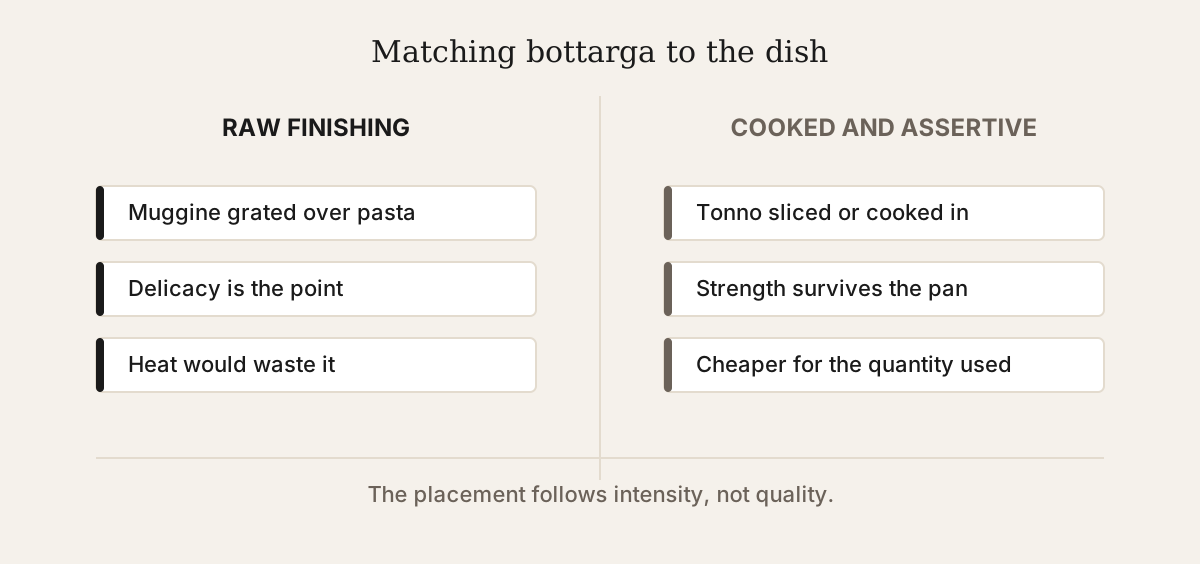
In anything cooked, tuna wins on economy. Heat flattens the delicacy that makes mullet expensive, so paying for mullet in a cooked dish is spending money on something the dish destroys.
Against assertive ingredients it holds. Tomato, chilli, garlic, capers and olives will bury a mullet bottarga and will not bury this one.
Sliced rather than grated it has presence. Thick shavings of tuna bottarga on a plate with oil and lemon give a meaty bite that mullet is too fine for.
Where a large quantity is needed, the price makes it viable. A dish using bottarga generously rather than as a whisper is a tuna dish.
As an introduction to bottarga it is the sensible first purchase, since a lobe costs a fraction and the character is recognisable.
For the classic spaghetti alla bottarga, buy mullet. That dish is a raw finish over oil and garlic and it is exactly where the delicacy shows.
How to judge a piece
Judge it on colour, then firmness, then smell.
Colour should be an even deep red-brown. Grey patches indicate uneven curing; near-black throughout suggests over-drying.
It should be firm and dense, sliceable with a sharp knife, not crumbling and not soft.
A translucent edge held to light is a good sign, as with mullet.
It should smell marine and salty, clean, without any rancid or ammoniated note. Rancidity is the fault, and the oil content makes it a real risk.
Vacuum-packed slabs are normal for this product and are not a lesser format, given the size of the lobes.
Avoid pre-grated jars for the same reason as with mullet: ground roe oxidises within days.
Checked on 13 August 2026, United States retail for bottarga di tonno runs to Italian specialty importers and gourmet retailers, which describes availability on that date rather than recommending any seller.
What it should cost
Expect roughly 45 to 90 dollars a pound in the United States, which is roughly half the price of mullet bottarga.
The enormous lobes are the reason. One tuna yields a great deal of roe where one mullet yields a little, and the curing labour per kilogram is correspondingly lower.
It is genuinely good value for the uses it suits.
Sicilian tonnara production carries a premium and the traditional tuna fisheries there are much reduced from their historic scale.
Sustainability is a fair consideration. Bluefin tuna stocks are managed and have been under pressure, and a buyer who cares about that should ask about the source, which is not a question that arises with grey mullet.
How to use it
Grate it into cooked dishes, or slice it thickly and dress it raw.
Its salt and its directness suit robust company: tomato, chilli, capers, olives, oily fish, and vegetables with some bitterness.
Grate it into a sauce toward the end, where it seasons without being the delicate top note.
Slice it thickly with oil and lemon as an antipasto, where its density is an advantage.
It suits a puttanesca-adjacent register and any southern dish already carrying salt and chilli.
Do not add salt before tasting. It carries more than mullet does.
Do not use it for spaghetti alla bottarga if mullet is available, since that dish is built around the finer roe.
Do not cook it hard even so. Bitterness develops with sustained heat in either bottarga.
Storage
Whole or in a vacuum-packed slab, refrigerated, several months. Once cut and opened, a few weeks.
Wrap the cut face closely so it does not dry and darken, and trim a thin slice before the next use if it has.
Keep vacuum packs sealed until needed, since the packaging is doing real work against oxidation.
Refrigerate rather than freeze for normal use, with freezing acceptable for long storage at some cost to texture.
Store away from strong smells, since cured roe absorbs them.
Grate only what you need, since ground roe loses aroma within days.
Frequently asked questions
Is bottarga di tonno worse than bottarga di muggine?
Tuna bottarga is coarser, saltier and less complex than grey mullet bottarga, which is why mullet commands the higher price and the higher regard. It is not simply worse. In cooked dishes and against assertive ingredients the delicacy of mullet is destroyed anyway, and tuna performs better for a fraction of the cost. The two suit different uses rather than ranking straightforwardly.
Why is tuna bottarga cheaper than mullet bottarga?
A tuna roe sac can weigh well over a kilogram while a grey mullet sac weighs 100 to 300 grams, so one fish yields vastly more product and the curing labour per kilogram is far lower. The price difference reflects that yield rather than a difference in care. Tuna bottarga typically costs around half what mullet does by weight.
Can I substitute tuna bottarga for mullet bottarga?
Tuna bottarga substitutes acceptably in cooked and assertive dishes, where the finer character of mullet would be lost regardless. It substitutes poorly in spaghetti alla bottarga and other raw finishing uses, which are built specifically around mullet’s delicate nutty quality. Use somewhat less tuna bottarga than a recipe specifies for mullet, since it is saltier.
How should I serve bottarga di tonno?
Grate it into cooked sauces toward the end of cooking, or slice it thickly and dress it with olive oil and lemon as an antipasto, where its density and meaty bite are an advantage over the finer mullet roe. It works alongside tomato, chilli, capers and olives, which would bury a mullet bottarga. Do not add salt to a dish before tasting it with the bottarga in.
Is bottarga di tonno sustainable?
Bluefin tuna stocks are managed and have been under significant pressure, so the source is a fair question to ask when buying tuna bottarga, and it is a question that does not arise with grey mullet. Sicily’s traditional tonnara fisheries are much reduced from their historic scale. A buyer concerned about this should ask the retailer about the fishery rather than assume.
CalItalia Food covers Italian ingredients: what they are, how to tell a good one from an ordinary one, and where to buy them in the United States.