
Cantabrian Anchovies: The Spanish Ones on an Italian Shelf, and Why They Are There
Large hand-filleted anchovies from northern Spain, the benchmark for oil-packed fillets. Why an Italian pantry carries them, how to judge a tin, and when to buy them rather than salted ones.
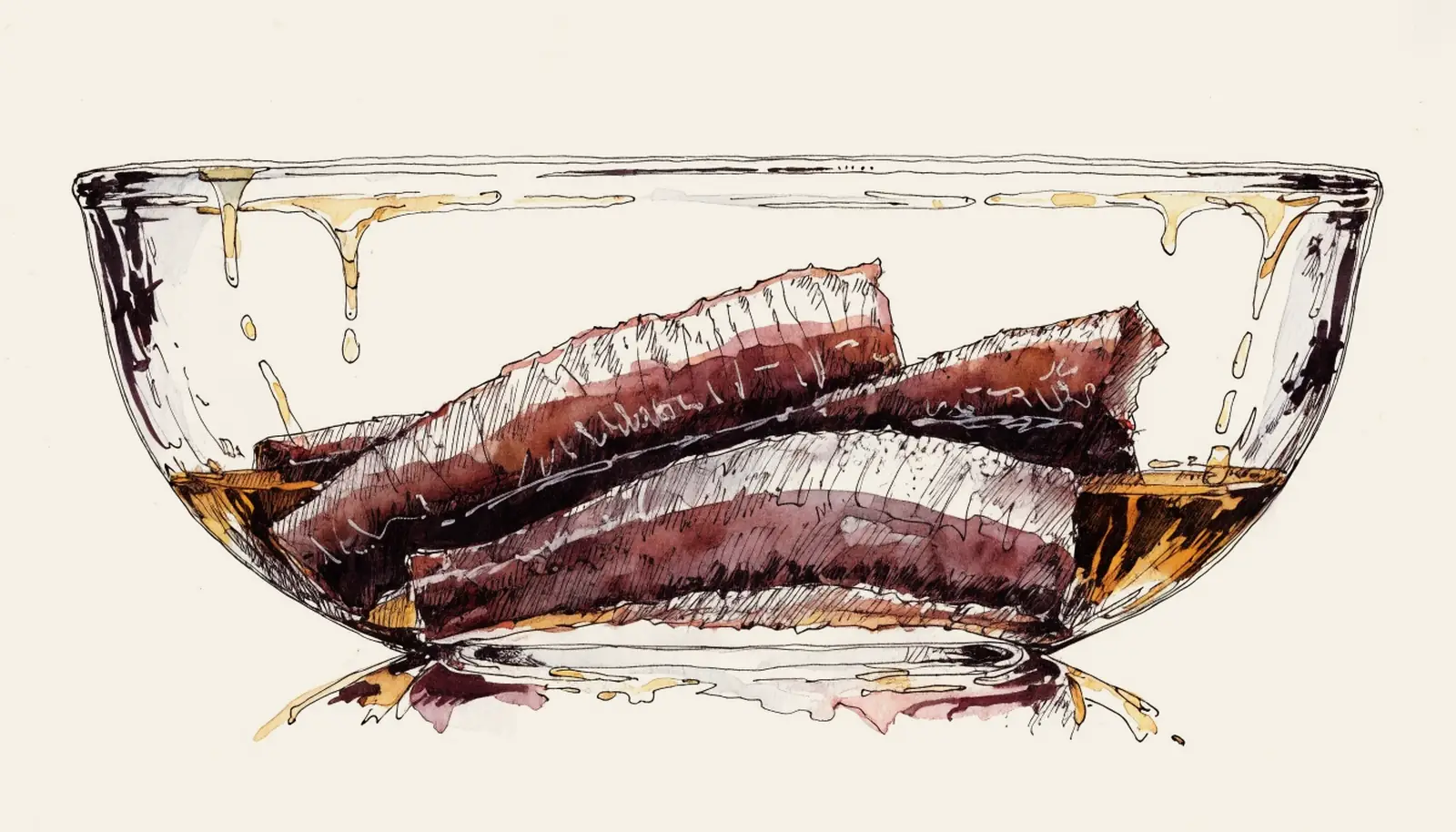
Cantabrian anchovies are caught in the Bay of Biscay off northern Spain, salt-cured for months and then hand-filleted and packed in oil. They are widely regarded as the benchmark for oil-packed anchovy fillets, and they are Spanish rather than Italian. That still leaves them inside the quality gap this site is about.
They appear on this site because an Italian pantry in the United States routinely contains them, and because the honest comparison with Italian salted anchovies is more useful than pretending the category stops at the border.
What Cantabrian anchovies actually are
Cantabrian anchovies are Engraulis encrasicolus from the Bay of Biscay, headed and gutted, salt-cured in barrels under weight for six months or more, then washed, hand-filleted, trimmed and packed in oil.
The fish are larger than most Mediterranean anchovies, which is a property of the cold Atlantic water and is why they fillet so well.
The spring catch is the prized one. Fish taken in the spring months are fatter and are the ones the good houses buy.
Curing runs six months to a year, which is longer than most commercial anchovy production.
Filleting is done by hand, one fish at a time, with the small bones removed individually. This is the expensive step and it is what separates the grades.
They are packed in olive oil, and the oil quality varies more than buyers expect.
Santoña and the surrounding coast is the centre of the trade, and the town’s name appears on many of the best tins.
Why they are the benchmark for oil-packed
The Cantabrian trade built its reputation on the step most producers skip.
Hand-filleting removes the pin bones individually. A machine-processed fillet leaves them, which is the gritty texture people dislike in cheap anchovies.
The long cure develops flavour before filleting. Many oil-packed anchovies are cured briefly and rely on the oil and salt for taste; a Cantabrian fillet has months of enzymatic breakdown behind it.
The larger fish gives a thicker, meatier fillet that holds together rather than dissolving on contact.
Trimming is thorough. Good houses trim the fillet to a clean strip, discarding the belly and the tail, which is why a premium tin holds fewer fillets than a cheap one of the same weight.
The result is a fillet that can be eaten alone, which is the test. A cheap anchovy needs to be hidden in a dish; a Cantabrian one is served on bread with nothing on it.
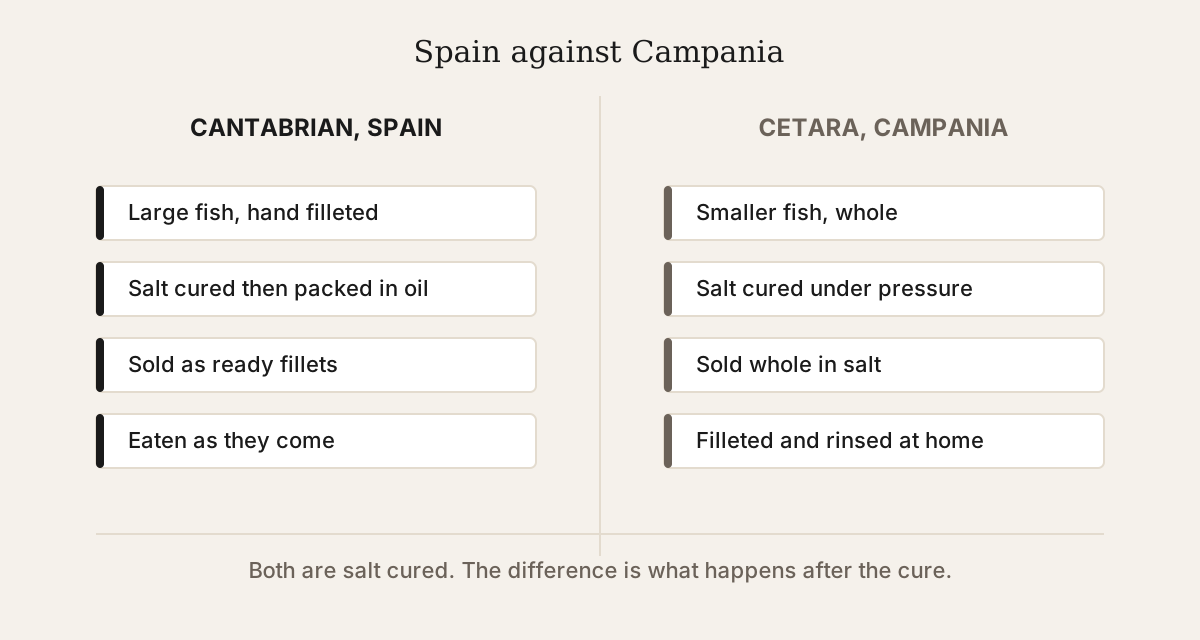
The Italian anchovy trade did not go this way, favouring salt-packed whole fish, which is a different and equally valid tradition rather than a failure.
Cantabrian against Italian salted
The two traditions produce different things and the choice is genuinely by use.
Cantabrian oil-packed are ready to use and are meant to be tasted directly.
Italian salt-packed require rinsing, soaking and boning, and carry more concentrated flavour and a firmer texture.
For melting into a sauce, Italian salted are better value, since the fillet is going to dissolve and the hand-filleting you paid for is wasted.
For eating whole on bread, buy Cantabrian. This is what the extra work bought.
Colatura has no Spanish equivalent in common trade, so the Italian barrels yield a product the Cantabrian ones do not.
Neither is more authentic to an Italian dish. A puttanesca made with good Cantabrian fillets is not compromised.
How to judge a tin
Judge them on the fillets, then the oil, then the count.
The fillets should be a deep reddish-brown, uniform, firm and intact, lying flat.
Grey, pale or mushy fillets indicate a short cure, poor fish or age.
They should be free of visible bones. Running a fingertip along one should find nothing.
The oil should be clean and clear. Cheap tins use poor oil that tastes of nothing or worse, and the oil is a significant part of what you eat.
Fewer, larger fillets in a tin is usually a better sign than many small ones, since it indicates larger spring fish and thorough trimming.
Look for the catch season or the curing period on premium tins, which the good houses state.
Checked on 13 August 2026, United States retail for Cantabrian anchovies runs to specialist and gourmet importers alongside general online grocers, which describes availability on that date rather than recommending any seller.
What they should cost
Expect roughly 12 to 30 dollars for a small tin in the United States, and the range within that is real rather than marketing.
Hand-filleting is the cost. A person removing pin bones from one fish at a time sets a floor under the price that no amount of scale removes.
A cheap tin is machine-processed and will have bones and a softer fillet, which is a fair product at its price for melting into a sauce.
The expensive tins are worth it only if eaten directly. Melting a premium Cantabrian fillet into a puttanesca is a waste of money rather than an upgrade.
Italian salt-packed anchovies are better value for cooking, jar for jar.
How to use them
Eat them as they are, on bread or on their own, at room temperature.
Their whole point is that they need nothing. Bread, butter, perhaps a caper or a piece of roasted pepper, and the fillet itself.
Take them out of the refrigerator twenty minutes before serving, since the oil is cloudy and stiff when cold.
Serve them on buttered bread or with a boiled egg, which are the traditional Spanish presentations and are hard to improve on.
They suit a Gilda, the Basque skewer of anchovy, olive and pickled guindilla pepper.
Use the oil. It carries a great deal of flavour and belongs in a dressing rather than down the sink.
Do not cook them hard. Warm oil dissolves them; hot oil burns them and turns them bitter.
Storage
Unopened tins keep a year or more in a cool cupboard, and some houses maintain they improve for a period.
Refrigerate after opening and use within a week.
Keep the fillets covered in oil, topping up with olive oil if the level drops.
Transfer them out of an opened tin into a small jar, since metal and air together accelerate deterioration.
Do not freeze them. The texture suffers and there is no need.
A tin that smells sharply rancid on opening should be discarded. That is the fault to watch for and it is not recoverable.
Frequently asked questions
Why are Spanish anchovies on a site about Italian ingredients?
Cantabrian anchovies are the benchmark for oil-packed fillets and an Italian pantry in the United States routinely contains them, so comparing them honestly with Italian salt-packed anchovies is more useful than ignoring them. The two traditions produce different products: Spain went toward hand-filleted fillets in oil and Italy toward whole salt-packed fish and colatura. Neither is a lesser version of the other.
What makes Cantabrian anchovies expensive?
Hand-filleting is the main cost, since the pin bones are removed from one fish at a time by a person rather than by machine, and no amount of scale removes that. A long cure of six months or more, the use of larger spring-caught fish and thorough trimming that discards much of each fillet all add to it. The fish itself is inexpensive.
Should I buy Cantabrian or Italian salted anchovies?
Buy Cantabrian oil-packed fillets if the anchovy is going to be eaten directly on bread, where the hand-filleting and long cure are what you are paying for. Buy Italian salt-packed for melting into a sauce, since the fillet dissolves and the expensive preparation is wasted. Salt-packed also carry more concentrated flavour and cost less per jar.
How do I tell a good tin of anchovies?
Look for deep reddish-brown fillets lying flat, uniform, firm and intact, with no bones detectable under a fingertip. The packing oil should be clean and clear, since it is a significant part of what you eat. Fewer, larger fillets in a tin generally indicates larger spring fish and thorough trimming, which is a better sign than many small ones.
Can I use Cantabrian anchovies in puttanesca?
Cantabrian anchovies work perfectly well in puttanesca and are a waste of money there, since the fillets dissolve into the sauce and the hand-filleting and trimming you paid for contribute nothing once melted. A good Italian salt-packed anchovy, or an ordinary oil-packed fillet, gives the same result for far less. Save the Cantabrian tin for bread.
CalItalia Food covers Italian ingredients: what they are, how to tell a good one from an ordinary one, and where to buy them in the United States.