
Cetara Anchovies: The Amalfi Village That Salts Them and Presses the Liquid
Salt-cured anchovies from a small Amalfi Coast fishing town, and the colatura that drips from the barrels. How to buy salted rather than tinned, and how to bone and use them.
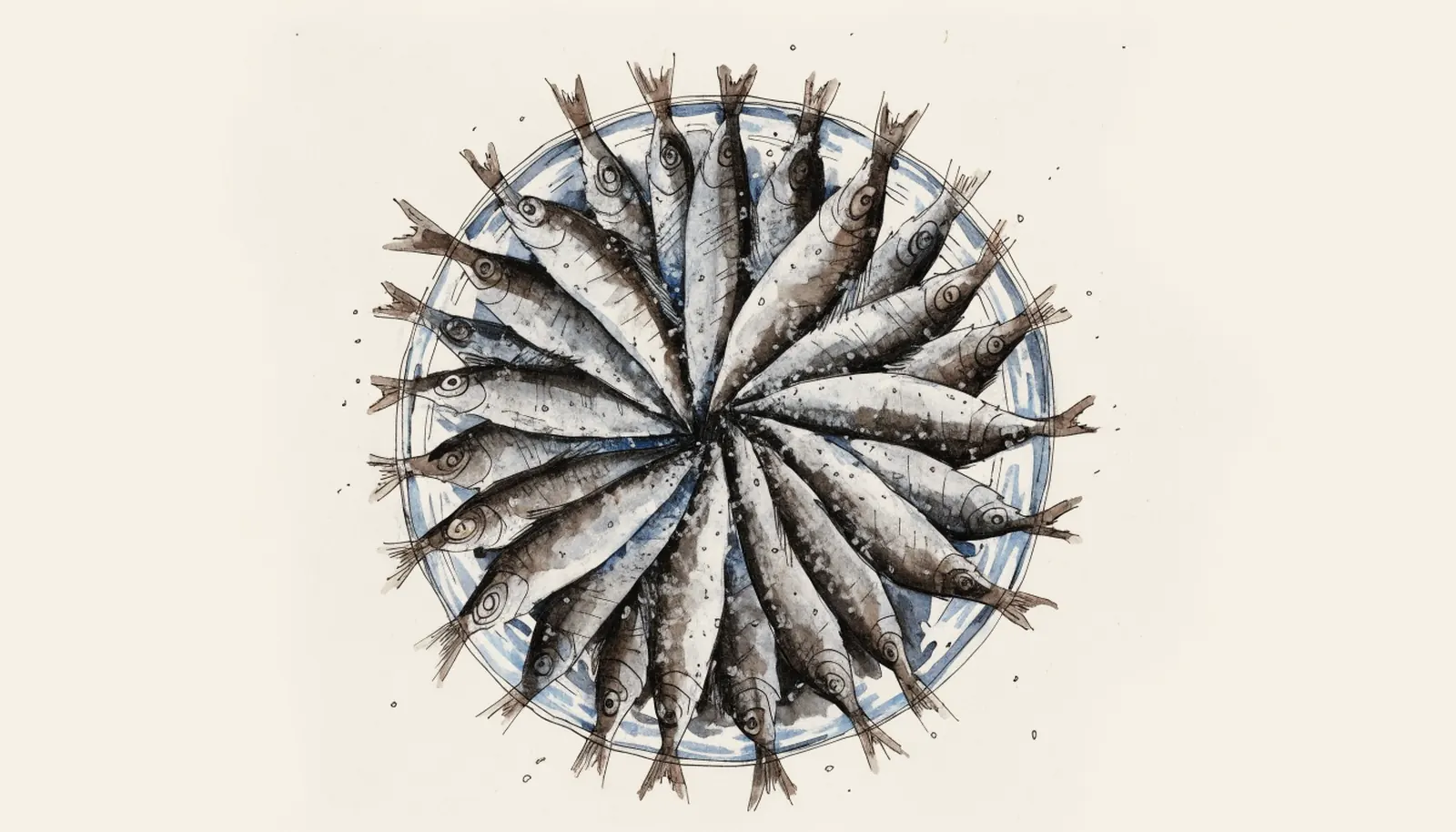
Cetara is a fishing village on the Amalfi Coast whose anchovies are salt-cured in wooden barrels, and whose barrels also yield colatura di alici, the amber liquid pressed from the curing fish. The two products come from the same process, and knowing that explains both. Both sit among the Italian ingredients where sourcing the real one matters.
Cetara anchovies are sold salt-packed and whole rather than filleted in oil, which is the form worth buying and the form most people have never handled.
What Cetara anchovies actually are
Cetara anchovies are Engraulis encrasicolus caught in the Gulf of Salerno, headed and gutted by hand, then layered with sea salt in wooden barrels under a weight and left to cure for months.
They are cured whole, on the bone, rather than filleted before curing.
The barrels are traditional terzigni, chestnut casks, weighted with a stone so the fish compress as they cure.
Curing runs months, during which enzymes break the flesh down, developing the savoury depth that distinguishes a cured anchovy from a fresh one.
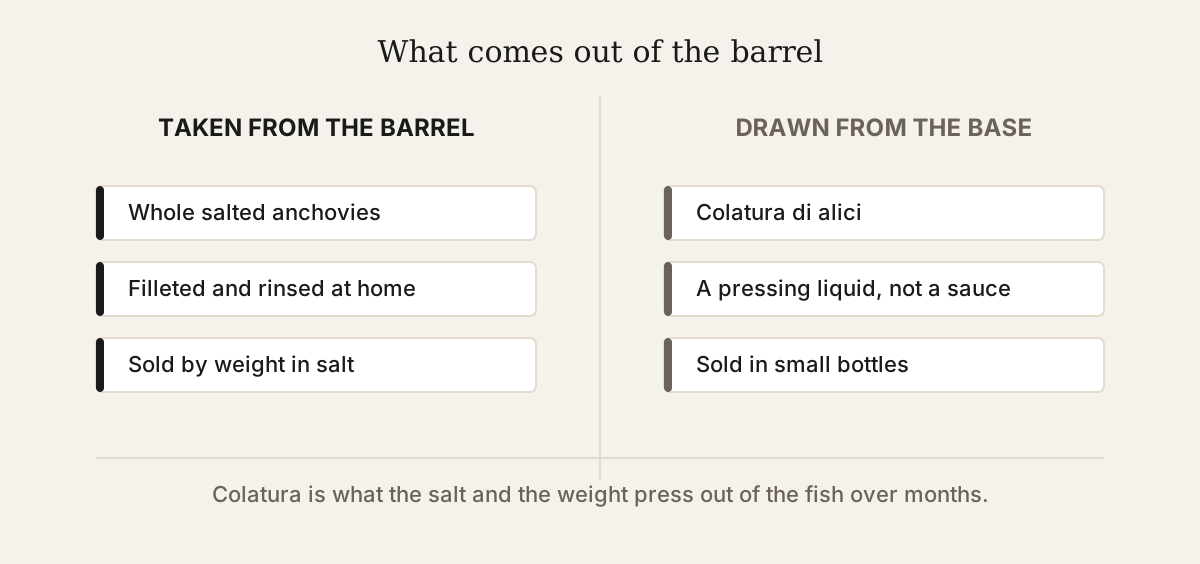
The liquid that collects is colatura, drawn off and filtered, and covered separately on this site. It is the by-product that became a prized product.
Cetara is a small village and the scale is correspondingly small, so genuine Cetara anchovies are a specialist purchase.
Alici is the Italian word and appears on labels alongside acciughe, which is the other Italian word for the same fish.
Salted against tinned in oil
Anchovies reach a shelf in two forms and the difference is larger than the packaging.
Salt-packed anchovies are whole, on the bone, in a jar or tin of coarse salt. They must be rinsed, soaked and boned before use.
Oil-packed anchovies are filleted, already boned, ready to use straight from the tin.
Salt-packed have more flavour and better texture. The salt cure continues to work and the fish stays firmer; oil-packed fillets have usually been rinsed of much of their cure and are softer.
Oil-packed are far more convenient, which is a real consideration and is why they dominate.
The best oil-packed are excellent and are made from properly salt-cured fish that is then filleted and packed, which is a legitimate and good product.
The worst oil-packed are mushy and one-dimensional, cured briefly and packed in poor oil.
Buy salt-packed if the anchovy is being tasted, and good oil-packed if it is melting into a sauce.
How to prepare a salted anchovy
Handling salt-packed fish is the barrier for most people and it is a two-minute job.
Rinse the salt off under cold running water, rubbing with your fingers.
Soak for ten to twenty minutes in cold water, or in milk or wine for a gentler result, then taste one.
Open the fish along the belly with your thumb, which it will do easily.
Lift the backbone out from the head end in one piece, taking the small bones with it.
Pat the two fillets dry, and use them or cover them in olive oil.
Do not skip the tasting step, since the salt loading varies and over- or under-soaking are both easy.
How to judge a jar
Judge them on the flesh, then the smell, then the salt.
The flesh should be firm and pinkish-brown, holding together when lifted. Grey or mushy fish has been over-cured or is old.
They should smell savoury and marine, not sharply fishy or rancid. Rancidity is the common fault and it announces itself.
The salt should be dry and crystalline, coating the fish rather than caked into a wet paste.
The fish should be whole and uniform, headed and gutted cleanly, without broken bodies.
Check for Cetara or Amalfi on the label if origin matters, since Sicilian and Spanish salted anchovies are widely sold under generic labels and are frequently excellent.
Checked on 13 August 2026, the first page of United States results for cetara anchovies returned specialist Italian importers and gourmet retailers, which describes that search on that date rather than recommending any seller. This is a specialist purchase rather than a supermarket one.
What they should cost
Expect roughly 15 to 30 dollars for a jar of salt-packed anchovies in the United States, with genuine Cetara at the upper end.
Hand processing, months of curing and small-scale production account for the price, and the fish itself is not expensive.
Ordinary tinned fillets cost a fraction and are a different product rather than a cheaper version.
Sicilian and Cantabrian salted anchovies are strong alternatives at similar or lower prices, and the cure matters more than the coast.
Very cheap salted anchovies are usually a shorter cure and a lower grade of fish, which shows as softness and a flatter flavour.
How to use them
Melt them into a sauce, mash them into a dressing, or lay them whole on bread with butter.
Their job is savoury depth rather than fishiness. Cooked into oil or butter they dissolve entirely and leave a background of savour that most people cannot identify as anchovy.
Melt them in warm oil at the start of a sauce, where they break down in a minute and season the whole dish.
Whole on buttered bread is the Cetara way and needs nothing else.
They are essential in puttanesca, bagna cauda and a proper Caesar dressing, and they are what makes a braised lamb or a broccoli rabe taste of more than itself.
Do not add salt to a dish before tasting it with the anchovies in.
Do not fry them hard. They burn and turn bitter, so warm oil rather than hot is the rule.
Storage
Salt-packed anchovies keep a year or more unopened in a cool cupboard, and months once opened.
Keep them covered in their salt, topping up with coarse sea salt if needed.
Any fish exposed above the salt will darken and dry, so press them back down.
Refrigerate after opening for the longest life, though a well-salted jar tolerates a cool cupboard.
Boned fillets covered in oil keep two to three weeks refrigerated, which is the practical way to prepare a jar’s worth at once.
Do not freeze them. There is no need, and the texture suffers.
Frequently asked questions
What is the difference between salt-packed and tinned anchovies?
Salt-packed anchovies are whole fish on the bone in coarse salt, requiring rinsing, soaking and boning before use, and they have more flavour and a firmer texture. Tinned anchovies are pre-filleted and packed in oil, ready to use, and are usually softer since much of the cure has been rinsed away. Good oil-packed anchovies are made from properly salt-cured fish and are an excellent product.
How do you prepare salt-packed anchovies?
Rinse the salt off under cold running water, soak for ten to twenty minutes in cold water, milk or wine, then taste one to check. Open the fish along the belly with a thumb and lift the backbone out from the head end in one piece, which takes the small bones with it. Pat the fillets dry and use them or store them under olive oil.
What is colatura di alici?
Colatura is the amber liquid that drips from barrels of anchovies curing under salt and weight, drawn off and filtered, and it is a Cetara speciality made from the same process as the salted fish. It functions as a concentrated savoury seasoning rather than a sauce. The salted anchovies and the colatura are two products of one barrel rather than separate preparations.
Are Cetara anchovies better than Spanish ones?
Cetara and Cantabrian anchovies are both excellent and different, and neither is straightforwardly better. Cantabrian anchovies from northern Spain are generally larger and are famous for oil-packed fillets; Cetara’s are smaller and the village is known for salt-packed fish and colatura. The quality of the cure matters more to the finished product than the coast does.
Why do my anchovies taste too salty?
Salt-packed anchovies that taste too salty have usually been under-soaked, since the salt loading varies considerably between jars and grades. Rinse thoroughly, then soak for ten to twenty minutes, changing the water, and taste one before using them. Soaking in milk rather than water gives a gentler result. Over-soaking is the opposite error and leaves the fish limp and bland.
CalItalia Food covers Italian ingredients: what they are, how to tell a good one from an ordinary one, and where to buy them in the United States.