
Amatriciana Sauce in a Jar: The Guanciale Test, and What Most Jars Substitute
Jarred amatriciana is defined by three ingredients and most jars get one of them wrong. How to read the label, judge and use a jar, and why pancetta in the list is the tell.
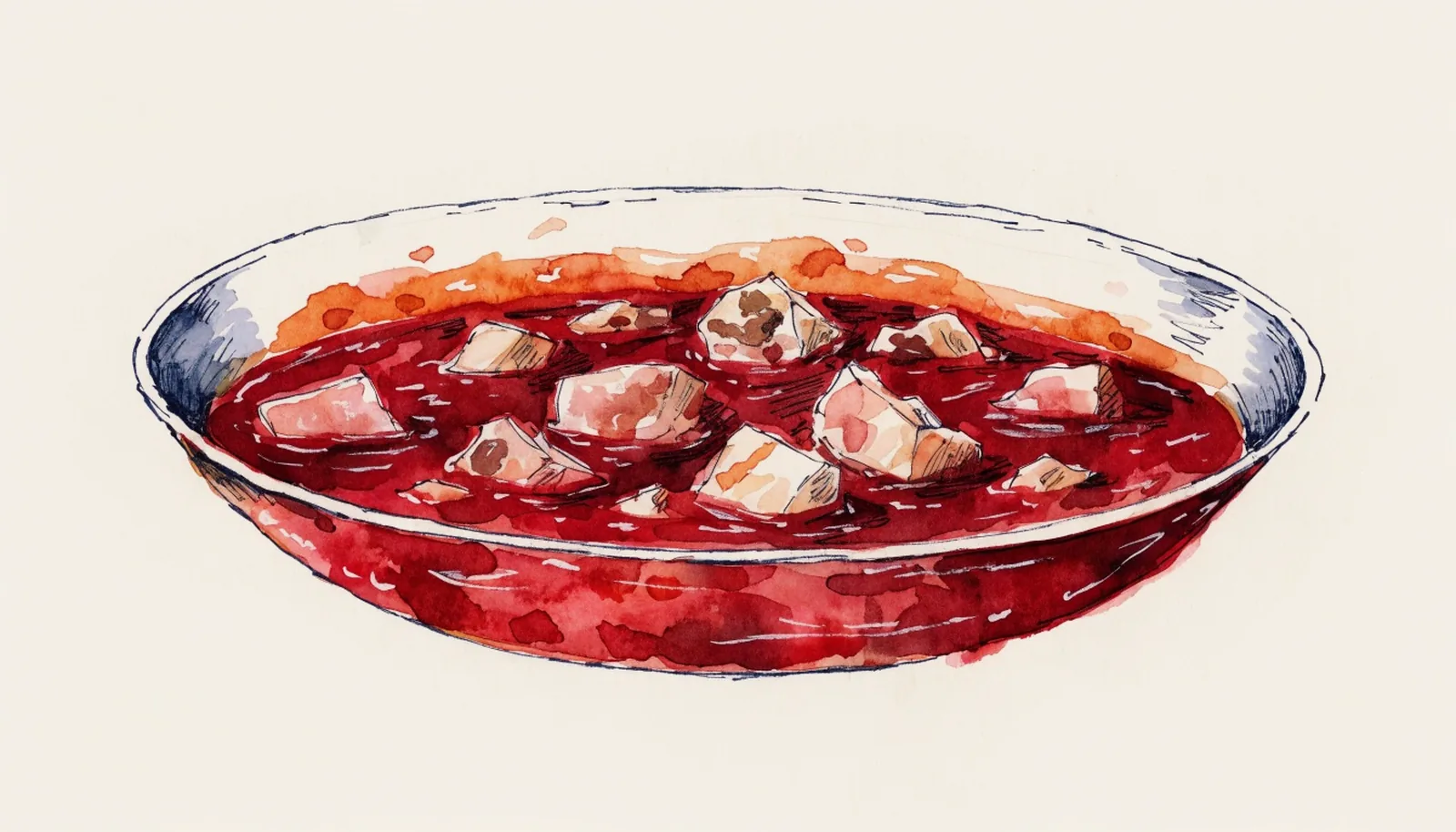
Amatriciana is a Roman and Laziale sauce of guanciale, tomato and Pecorino Romano, and it is the most tightly specified of the jarred Italian sauces on an American shelf. Three ingredients, and one of them is routinely replaced. That swap is where the gap between the real sauce and the shelf version opens.
The substitution is pancetta for guanciale, it is visible on the label, and it is the fastest way to sort a jar worth buying from one that is not.
What defines an amatriciana
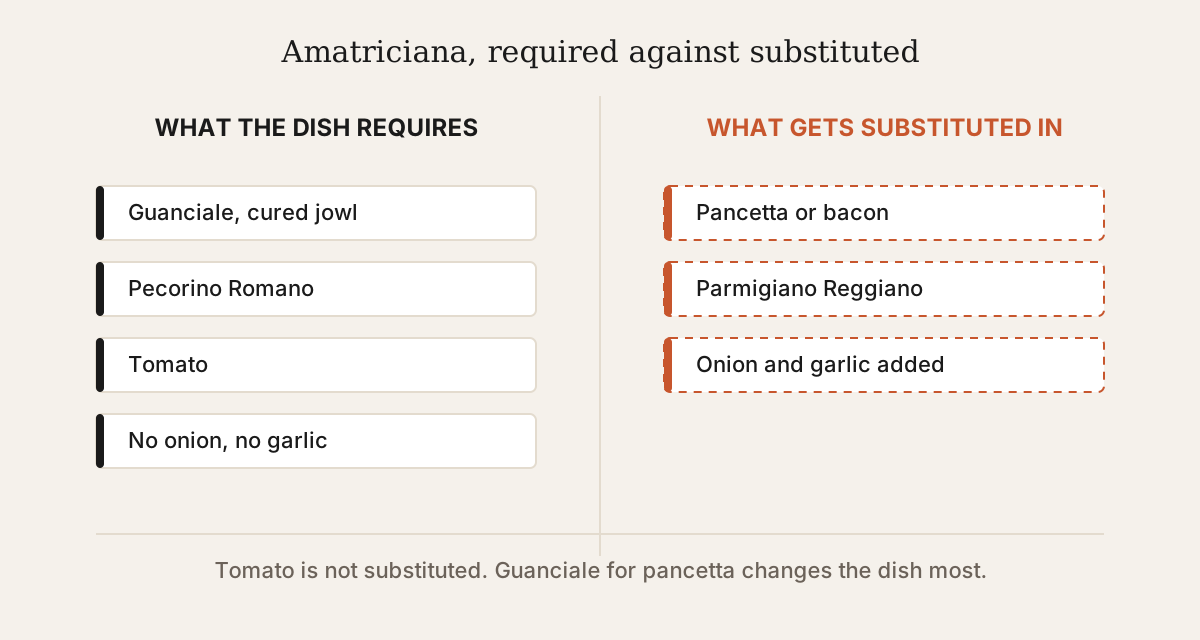
Amatriciana is defined by a very short list, which is why deviations are easy to spot.
Guanciale is the cured pork. Pig’s cheek, cured with salt and pepper, which renders into a soft fat quite unlike belly fat.
Tomato provides the body, traditionally San Marzano or another plum tomato, and its acidity is doing structural work against the fat.
Pecorino Romano is the cheese, not Parmigiano, and its salt and sharpness are what the dish is balanced around.
Chilli appears in many versions and is genuinely traditional in parts of Lazio, though it is not universal.
Onion is contentious. Roman purists exclude it; a good many household and commercial versions include it, and it is not a fault so much as a position.
The town of Amatrice in the province of Rieti gives the dish its name, and there is a recognised traditional specification for it in Italy.
The guanciale test
Guanciale against pancetta is the substitution that matters most and it is declared on the label.
Guanciale renders to a soft, almost liquid fat with a distinctive porky sweetness, and the lean stays tender.
Pancetta renders firmer and drier, and its fat is less abundant and less sweet.
The dish depends on that fat. An amatriciana is emulsified by rendered guanciale fat meeting starchy pasta water, and pancetta gives less of it and a different texture.
Pancetta is cheaper and far more available, which is why it appears in jars and in a great many home kitchens.
A jar listing pancetta is not a fraud and is not an amatriciana in the strict sense. It is a perfectly reasonable tomato and bacon sauce.
Bacon is a further step away, since it is smoked, and smoke is entirely foreign to the dish.
This site’s guanciale page covers the cut and why it is not pancetta.
How to read the label
Four checks place a jar before you open it.
Find the cured pork and read which one it is. Guanciale, pancetta or bacon, in that order of fidelity.
Note its position on the list. After tomato is expected; fourth or fifth means very little of it. The same position test sorts a jar of nduja sauce.
Look for Pecorino Romano rather than Parmigiano or an unspecified cheese. Parmigiano is a sweeter, less salty cheese and shifts the balance.
Read for sugar. Added sugar in a tomato sauce is a correction for poor tomatoes, and in a dish balanced on acidity against fat it is working against the recipe.
Read for smoke flavouring, which indicates bacon-derived character being simulated.
Checked on 13 August 2026, the first page of United States results for amatriciana sauce returned recipe publishers and reference material rather than jarred products, which describes that search on that date rather than recommending any seller. Counting rule: a result counts as a seller when it offers a jarred amatriciana for purchase. On that rule the first page carried none, which reflects that most Americans meet this sauce as something to make.
How to judge one once open
Judge it on the fat, then the pork, then the balance.
There should be visible rendered fat, orange-tinged, separating slightly on standing. Its absence means very little cured pork went in.
Pieces of pork should be identifiable rather than dissolved, and should be soft rather than chewy or crisp.
The colour should be a deep brick red, not bright, since long cooking with fat darkens it.
It should taste salty before it tastes sweet. Pecorino and cured pork are both salty, and a sauce reading sweet has too much tomato sugar and too little of the other two.
Heat, where present, should be background rather than the dominant note.
A thin watery sauce indicates padding, since a proper amatriciana reduces.
Gricia, and what the tomato is actually doing
Amatriciana is gricia with tomato added, and holding that relationship in mind explains what a jar is meant to deliver.
Gricia is guanciale and Pecorino Romano with black pepper and pasta water, and no tomato at all. It is the older preparation of the two.
Amatriciana adds tomato to that base. The tomato is a later arrival, as it is in most Italian cooking, and it functions as acid and body against the fat and salt already present.
So a jar in which tomato dominates has inverted the dish. The pork and the cheese are the foundation and the tomato is the addition, not the reverse. Ragù napoletano is built the other way round, a tomato sauce carrying meat.
An amatriciana bianca is sold occasionally, which is effectively a jarred gricia, and it is a legitimate product rather than an incomplete one.
This is the clearest test of a jar’s proportions. If it tastes like a tomato sauce with some bacon in it, the balance is wrong regardless of what the label claims.
What it should cost
Expect roughly 9 to 18 dollars for a 280 to 340 gram jar in the United States.
Guanciale is the expensive component and the jars using it genuinely cost more to make. Tomato and onion are cheap.
A cheap jar will list pancetta or bacon, which is where the saving comes from, and it will say so.
Making it is genuinely straightforward and the ingredients keep, which is worth weighing. Guanciale lasts weeks and a tin of tomatoes lasts years.
Imported Italian jars carry a freight premium that does not always buy a better formulation, so the ingredient list matters more than the flag.
How to use it
Warm it gently and finish the pasta in it with a little of the cooking water.
Its rendered fat is what makes it cling, so the emulsion step is not optional if the sauce is to coat rather than sit.
Bucatini is traditional, with rigatoni and spaghetti both common and acceptable.
Do not boil it hard. The fat separates and the sauce turns greasy rather than glossy.
Grate Pecorino Romano over it at the table, off the heat, which is where the dish gets its final salt and sharpness.
Do not add salt before tasting. Between the cured pork, the pecorino and the tomato, most jars are already at the limit.
A little pasta water is the correction if it seems tight, rather than oil or cream.
Storage
Unopened, a year or more in a cool dark cupboard. Once opened, refrigerated, four to five days.
Transfer out of a tin if it came in one, since the acid picks up the metal.
A layer of separated fat on a refrigerated jar is normal and stirs back in on warming.
It freezes well in portions, and the texture change does not matter once reheated into pasta.
Discard any jar with a bulging lid unopened.
Cover the surface with a film of oil if keeping it more than a couple of days.
Frequently asked questions
What is the difference between guanciale and pancetta in amatriciana?
Guanciale is cured pig’s cheek and pancetta is cured pork belly, and the dish depends on the difference. Guanciale renders to a soft, abundant, sweet fat that emulsifies with starchy pasta water to coat the pasta; pancetta gives less fat, firmer texture and a different flavour. A jar listing pancetta is a reasonable tomato and cured pork sauce rather than an amatriciana in the strict sense.
Does amatriciana contain onion?
Onion in amatriciana is contested rather than settled. Roman purists exclude it and a great many household and commercial versions include it, including in the region itself. It is a position rather than a fault. What is not contested is that the dish requires guanciale, tomato and Pecorino Romano, and those are the components to check on a label.
Can I use Parmigiano instead of Pecorino Romano?
Parmigiano Reggiano will produce a sweeter, nuttier and much less salty result, since Pecorino Romano’s high salt and sharpness are what the dish is balanced around. A jar listing Parmigiano or an unspecified cheese has shifted that balance. Grating Pecorino Romano over the finished plate is where the dish gets its final seasoning, so it can be corrected at the table.
Is amatriciana meant to be spicy?
Chilli is genuinely traditional in many versions from Lazio and it is not universal, so both a spiced and an unspiced amatriciana are legitimate. Where it appears, the heat should sit in the background rather than dominating. A jar in which chilli is the leading flavour has moved away from the dish toward a generic arrabbiata register.
Why is my jarred amatriciana greasy?
Greasiness usually means the sauce was boiled hard rather than warmed, which separates the rendered pork fat instead of emulsifying it. Warming it gently and finishing the pasta in it with a spoonful of starchy cooking water brings the fat and the liquid together into a glossy sauce. A layer of separated fat in a cold jar is normal and stirs back in.
CalItalia Food covers Italian ingredients: what they are, how to tell a good one from an ordinary one, and where to buy them in the United States.