
Can You Heat Pesto? What It Does Under Heat and Acid
Pesto behaves in specific ways when cooked, baked or used as a marinade. What survives, what splits, where the limit sits, and how to use it hot, whether you make it or buy it.
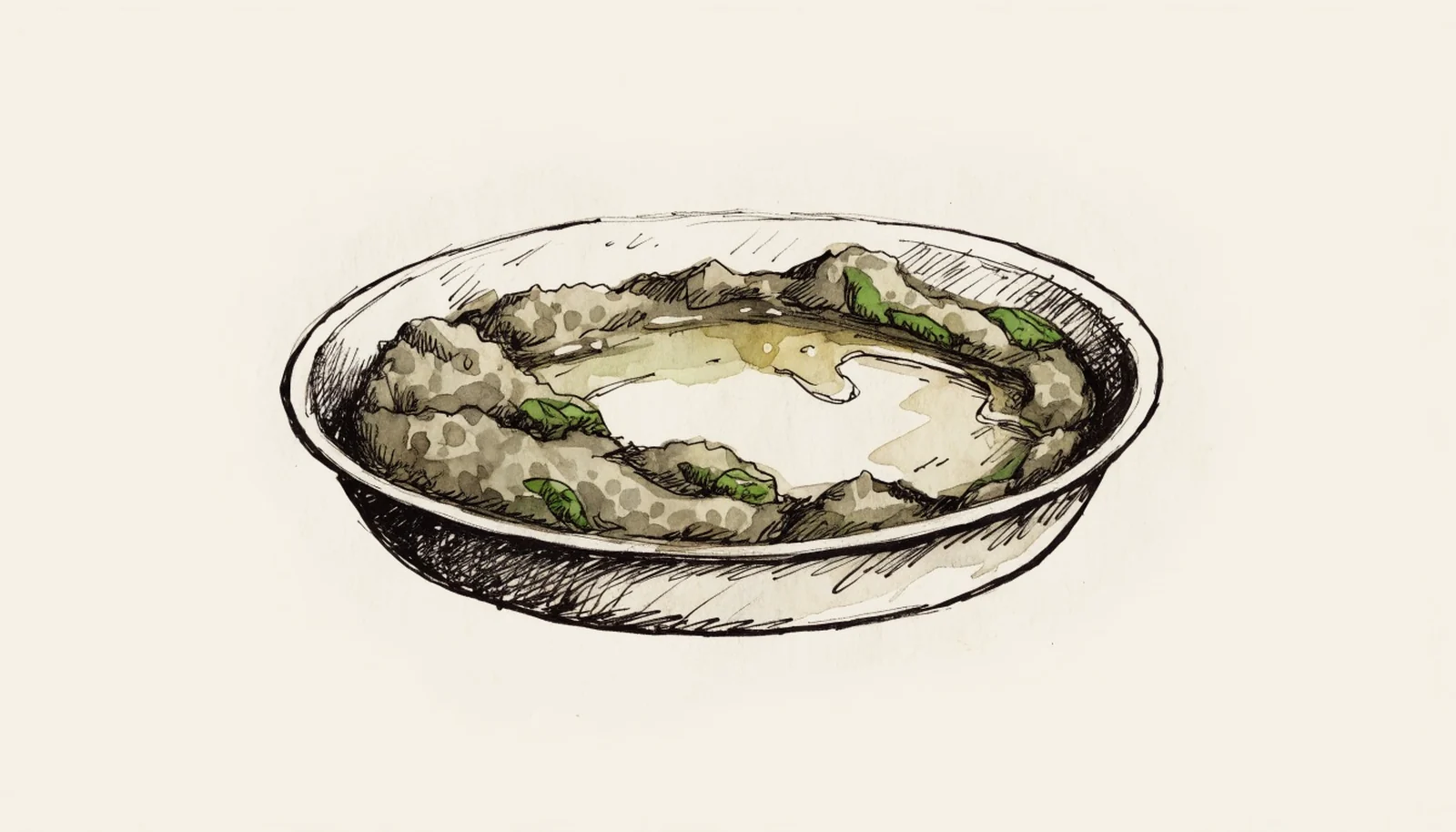
Pesto tolerates gentle warming and does not tolerate cooking, because heat drives off the basil’s volatile aromatics and can split the emulsion of oil and cheese. The practical limit is the temperature of hot pasta, not the temperature of a pan. Heat spends the aroma that is much of what makes the real article worth paying for.
This page treats pesto as an ingredient with measurable behaviour rather than as a recipe component, which is the only frame in which the question has a real answer.
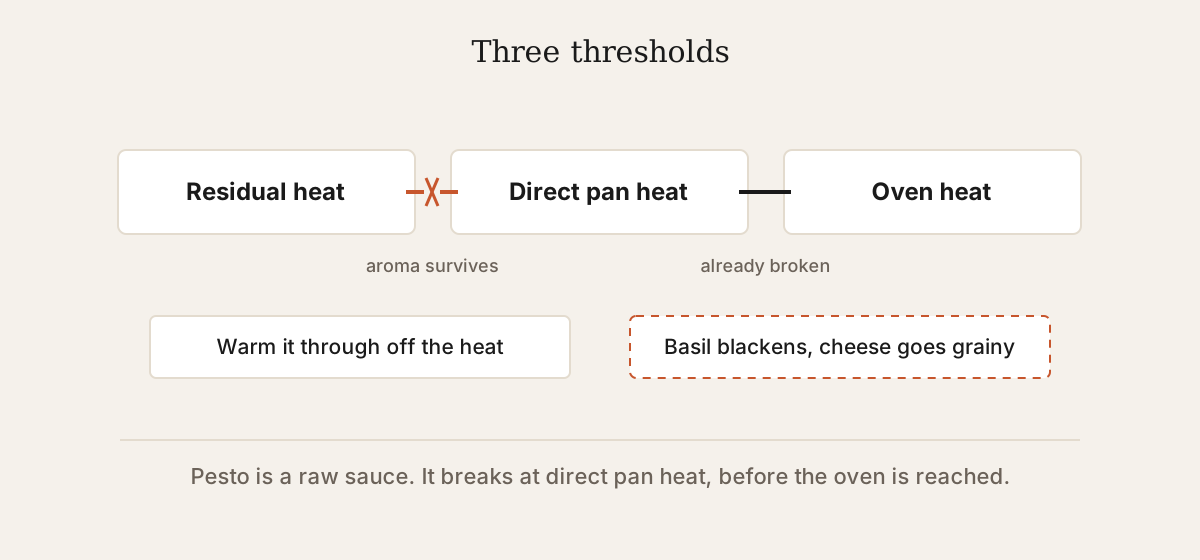
What heat actually does to pesto
Three separate things happen, at different temperatures, and they are worth separating because only one of them is a failure.
The aromatics leave first, and at low temperature. Basil’s character sits in volatile compounds that begin dispersing well below simmering. This is why cooked pesto smells wonderful and tastes flat: the aroma went into the kitchen rather than into the dish.
The colour goes next. Heat accelerates the enzymatic browning that basil undergoes anyway, so warmed pesto dulls from bright green to olive within minutes.
The emulsion splits last. Pesto is oil held in suspension with cheese and ground solids. Sustained heat breaks that suspension, the oil separates, and the cheese can turn grainy or stringy depending on which cheeses are in it. How that suspension was built, by mortar or blender, is covered separately.
Only the third is irreversible in the pan. Aroma and colour losses are gradual; a split emulsion is visible and unpleasant.
The correct method for hot pasta
Stir pesto into cooked pasta off the heat, loosened with a spoonful of the pasta water, and never in a pan over a flame.
The residual heat of drained pasta is enough to warm the sauce through and is below the threshold where the emulsion breaks. The starchy pasta water does two jobs: it loosens the sauce and its starch helps the emulsion hold. The same residual heat will thaw frozen pesto dropped straight onto the drained pasta.
Take the pan off the heat before the pesto goes in. This is the single instruction that separates a good result from a split one.
Add the water gradually. Pesto thickens as it cools and as it meets the pasta, and it is easier to loosen it further than to recover a sauce that has been flooded.
Where pesto does work under heat
There are real applications involving heat, and the ones that work share a pattern: the pesto is protected or added late.
On a pizza base, pesto works when it is applied under cheese or other toppings rather than exposed on top. Shielded from direct oven heat it warms rather than scorches. Exposed, the surface darkens and the basil goes bitter well before the base is done.
As a marinade, pesto works for short contact with poultry and fish, where the oil carries flavour onto the surface and the garlic does its work. The basil contribution is largely lost during cooking, so treat it as a garlic-and-oil marinade with some herb rather than as a way of making the dish taste of pesto.
Stirred into soup off the heat at the point of serving is the classic use, and it is really the pasta method applied to a bowl.
Finished onto roasted vegetables after they leave the oven, not before.
The pattern: heat the food, then add the pesto. Almost every successful hot application follows it.
What acid does
Acid affects colour more than flavour, and the effect is quick and visible.
Lemon juice or vinegar in contact with pesto accelerates the darkening of the basil, which is why commercial jars that use citric or ascorbic acid as an antioxidant are also often the darkest.
In a marinade this matters practically. A pesto marinade with added lemon will darken visibly within an hour, which is cosmetic rather than a spoilage sign.
Acid does not split the emulsion the way heat does. It is the milder of the two stresses.
The jarred question
Shelf-stable jarred pesto has already been heat-treated, so it has less to lose and behaves slightly differently from fresh.
A jar has already given up much of its volatile aroma during processing, which is why jarred pesto tastes flatter than fresh even before it meets a pan. The corollary is that heating it costs proportionally less, since less remains to be driven off. The fresh, frozen and jarred formats of pesto genovese are compared on its own page.
It still splits. Heat treatment does not make the emulsion more stable, and many jars contain added oil that separates readily.
Checked on 13 August 2026, the first page of United States results for can you heat pesto returned cooking forums and community discussion rather than authoritative sources, which describes that search on that date. The practical reading is that this is a genuinely common question with thin published guidance behind it.
Frequently asked questions
Does cooking pesto make it bitter?
It can, particularly under direct or prolonged heat. Basil develops bitter notes when scorched, and garlic turns acrid when it browns hard, so a pesto exposed on top of a pizza or fried in a pan will often taste bitter. Gentle warming through residual heat does not produce this.
Can I bake with pesto?
Yes, if it is shielded rather than exposed. Pesto under cheese on a pizza, inside a stuffed chicken breast, or swirled into a batter is protected from direct heat and works. Pesto spread on an exposed surface and put into a hot oven darkens and goes bitter before the dish is cooked.
Why did my pesto sauce split?
Sustained heat broke the suspension of oil in the ground solids and cheese, which is the standard failure. The fix is prevention: take the pan off the heat before the pesto goes in, and use a spoonful of starchy pasta water, whose starch helps hold the emulsion together. A split sauce can sometimes be brought back with more pasta water and vigorous stirring.
Is jarred pesto better for cooking than fresh?
It is less wasteful rather than better. A jar has already lost much of its volatile aroma during heat treatment, so heating it costs proportionally less than heating a fresh pesto whose aroma is its main asset. Neither becomes good after being cooked hard; the jar simply has less to lose.
Can I use pesto as a marinade?
For short contact with poultry or fish, yes, understanding what it does. The oil carries flavour onto the surface and the garlic works as it would in any marinade, while most of the basil character is lost during cooking. Treat it as a garlic and oil marinade carrying some herb rather than as a way to make the finished dish taste of pesto.
CalItalia Food covers Italian ingredients: what they are, how to tell a good one from an ordinary one, and where to buy them in the United States.