
Salsa di Noci: The Ligurian Walnut Sauce, and the Bread in the Jar
Ligurian walnut sauce is thickened with soaked bread and enriched with prescinseua. What a jar substitutes for both, and how to judge and use one.
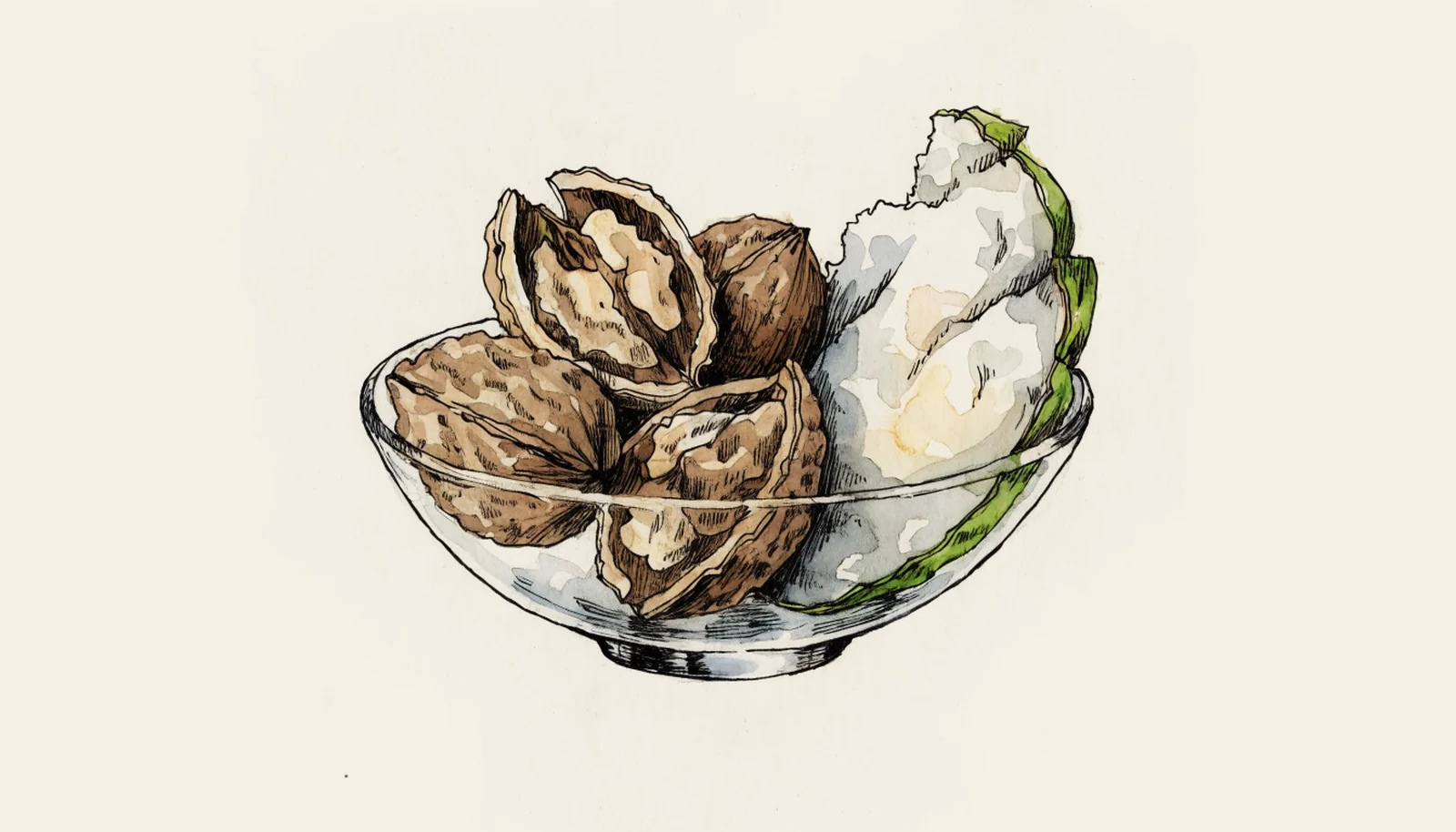
Salsa di noci is the Ligurian walnut sauce served with pansoti, made from walnuts, garlic, oil, a soft fresh cheese and bread soaked in milk. Two of those components are routinely dropped or replaced in a jar, and the sauce is defined by them. Those two are where the Ligurian original and the commercial jar part ways.
This page is about what a commercial jar actually contains and how to read it, rather than about making the sauce.
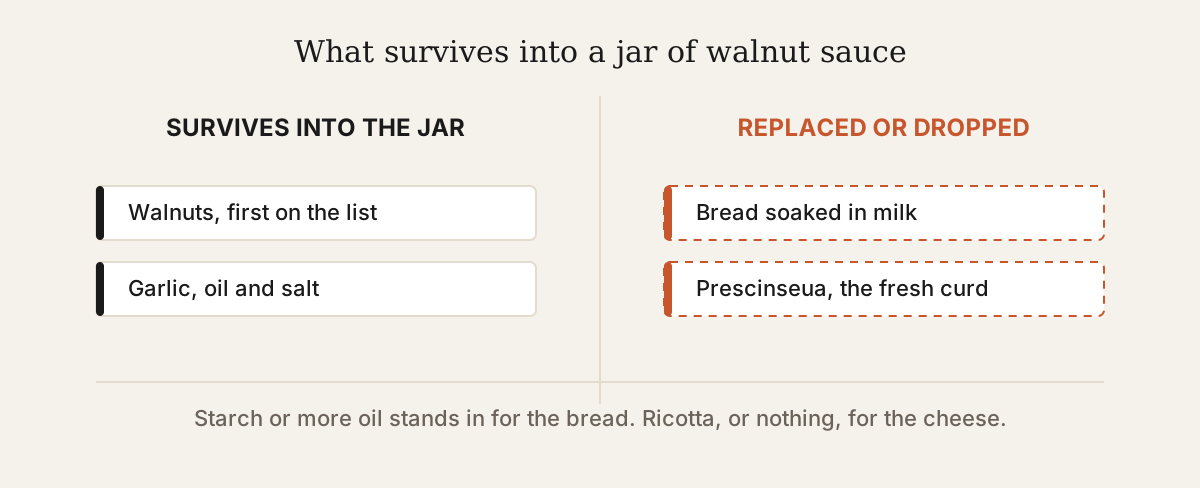
What the traditional sauce contains
Salsa di noci is a short list and each item does a job.
Walnuts are the body, ground rather than pounded to a paste, and they should be the first ingredient.
Bread soaked in milk is the thickener. This is the component most often missing from a jar, and it is what gives the sauce its particular soft, slightly grainy body rather than an oily one.
Prescinseua is the cheese, a Ligurian fresh curd somewhere between ricotta and yoghurt, tangy and loose. It is almost unobtainable outside Liguria.
Garlic, oil and salt complete it, with marjoram in many versions.
Pine nuts appear in some recipes alongside the walnuts, in small quantity.
Blanching the walnuts to remove their skins is traditional and reduces bitterness, and it is skipped in cheaper production.
What a jar substitutes
Two components are hard to put in a jar and both are usually replaced.
Prescinseua is normally replaced by ricotta, which is milder and less acidic, or by nothing at all with cream or oil taking its place.
The soaked bread is often replaced by starch, breadcrumb powder or simply more oil, since bread in a shelf-stable jar is a preservation problem.
Milk and cream present the same difficulty, so many jars are dairy-free by necessity rather than by design and rely on oil for richness.
The result is oilier and less tangy than the sauce as served in Liguria, which is worth expecting rather than being disappointed by.
Some producers use a refrigerated format rather than a shelf-stable jar precisely to keep the dairy, and those are closer to the original.
None of this makes a jar worthless. A good walnut sauce in a jar is a pleasant thing; it is not the pansoti sauce of a Genoese kitchen.
How to read the label
Four checks place a jar.
Walnuts should be first. If oil or water leads, the walnut content is low.
Look for bread or breadcrumb in the list, which indicates the traditional thickening was attempted.
Look for a dairy component, ricotta, prescinseua, cream or milk. Its presence points toward a fresher, tangier sauce and usually a refrigerated product.
Read for cashew. Cashew is cheaper than walnut and is the usual filler in a nut sauce, exactly as it is in pesto.
Read for excessive oil and starches, which pad a thin paste.
Checked on 13 August 2026, the first page of United States results for walnut sauce returned Ligurian cooking publishers and an Italian oil producer rather than jarred sauces, which describes that search on that date rather than recommending any seller. Counting rule: a result counts as a seller when it offers a jarred walnut sauce for purchase. On that rule the first page carried none.
How to judge one once open
Judge it on colour, then texture, then bitterness.
The colour should be a pale beige to greyish cream, not brown. A brown sauce means the walnuts were not blanched or have oxidised.
Texture should be soft and slightly grainy, thick enough to hold a spoon shape, not runny and not stiff.
Oil separation is normal and stirs in; a thick oil layer over a thin paste indicates padding.
It should taste mildly of walnut with a faint tang, and it should not be bitter. Bitterness comes from unblanched walnut skins and is the commonest fault.
It should not taste sharply of garlic. Garlic in this sauce is a background note, unlike in a pesto genovese.
Rancidity is the fault to check for, since walnut oil turns readily, and it announces itself as a stale paint-like smell.
What it should cost
Expect roughly 8 to 18 dollars for a 180 gram jar in the United States.
Walnuts are moderately expensive and the sauce is nut-dominant, so the price tracks walnut content much as pistachio pesto tracks pistachio.
Refrigerated versions cost more and are usually closer to the traditional sauce, since they can carry the dairy.
A cheap jar is oil, cashew and a little walnut, which is fair at its price and is a different sauce.
Making it is genuinely easy and the result is far better, since the two missing components are simply bread and ricotta, both of which any kitchen has.
How to use it
Loosen it with pasta water and toss it off the heat, or thin it with a little warm milk.
Its thickness and its lack of acidity mean it needs both thinning and, frequently, a small correction with lemon or with a spoonful of ricotta.
Never heat it. The sauce splits and the walnut turns bitter.
Pansoti is the traditional pairing, the Ligurian herb-filled pasta, and any filled pasta suits it.
A little warm milk or cream loosens it more sympathetically than water does, given that the sauce is dairy-based in its original form.
Do not add much cheese on top. The sauce is already rich and grating hard cheese over it muddies it.
A squeeze of lemon lifts a jar that tastes flat, which most shelf-stable versions do relative to the fresh sauce.
Storage
Unopened, a year or more in a cool dark cupboard for a shelf-stable jar. Once opened, refrigerated, one week.
Refrigerated versions carry their own much shorter date and should be treated as a fresh product.
Cover the surface with oil after each use to slow oxidation.
Use a clean spoon each time.
It freezes acceptably in portions, though a dairy-containing version may separate slightly on thawing.
Rancidity is the end point. Walnut fat turns faster than most, so buy small jars and use them.
Frequently asked questions
What is prescinseua and can I substitute it?
Prescinseua is a Ligurian fresh curd cheese, tangy and loose, sitting somewhere between ricotta and yoghurt, and it is almost unobtainable outside Liguria. Ricotta is the standard substitute and is milder and less acidic, so a spoonful of yoghurt or a squeeze of lemon alongside it gets closer. Most commercial jars use ricotta or omit the dairy entirely.
Why does salsa di noci contain bread?
Bread soaked in milk is the traditional thickener, and it gives the sauce its characteristic soft, slightly grainy body rather than the oily texture a nut-and-oil emulsion would have. It is the component most often missing from a shelf-stable jar, since bread presents a preservation problem, and starch or additional oil is substituted instead.
Why is my walnut sauce bitter?
Bitterness in salsa di noci comes from walnut skins, which are traditionally removed by blanching the nuts before grinding. Cheaper production skips that step. A bitter jar cannot really be corrected, though a spoonful of ricotta or cream and a little sweetness will mask it. Browning of the sauce is a related sign that the skins were left on or the nuts have oxidised.
Can you heat walnut sauce?
Walnut sauce should not be heated, since it splits and the walnut develops bitterness. It is loosened off the heat with pasta water, or more sympathetically with a little warm milk given that the original sauce is dairy-based, and tossed through hot pasta. The heat of the pasta itself is sufficient to bring it to temperature.
What pasta goes with salsa di noci?
Pansoti, the Ligurian herb-filled pasta, is the traditional pairing and is what the sauce was developed for. Any filled pasta suits it, since the sauce is rich and mild and does not compete with a filling. Long thin pasta works less well because the sauce is thick and does not coat evenly without generous thinning.
CalItalia Food covers Italian ingredients: what they are, how to tell a good one from an ordinary one, and where to buy them in the United States.