
Mortar Against Blender for Pesto, and What Each Does to Basil
The DOP specification names the mortar, and the reason is mechanical. What tearing does against cutting, how much of the difference is real, when a machine is fine to use, and what size to buy.

A mortar crushes basil against salt crystals while a blade slices and bruises it, and the difference shows up mainly in texture, colour stability and how much the sauce separates, rather than in a dramatic gap in flavour. The pesto genovese specification names the marble mortar for reasons that are mechanical rather than ceremonial. Method, as well as ingredients, is part of what separates a protected Italian food from its imitations.
This page is here because the tool is part of the ingredient’s identity, which is the narrow ground on which equipment belongs on an ingredient site at all.
What each tool actually does
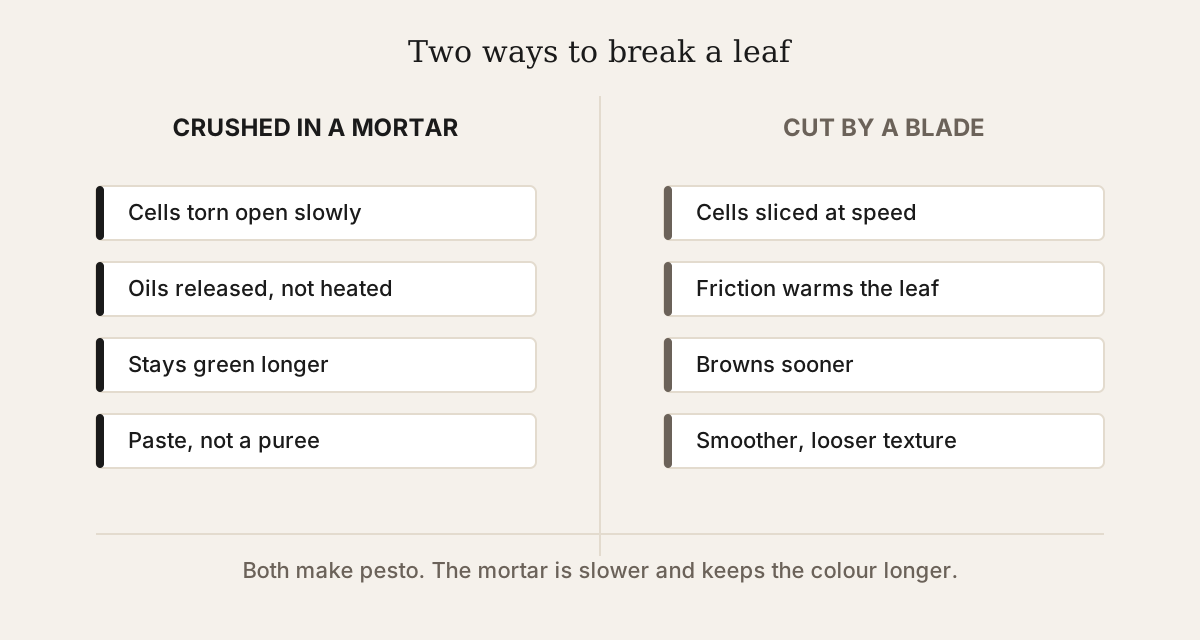
A mortar and pestle crush and tear, a blade cuts and bruises, and basil responds differently to the two because of how its cells release their contents.
The mortar works by pressure and abrasion. Coarse salt crystals act as an abrasive against the leaf, rupturing cells progressively while the pestle’s rocking motion tears rather than shears. The oils are released and immediately absorbed into the garlic and nut paste already in the bowl.
The blade works by shearing at speed. It cuts cleanly through some cells and bruises many others without opening them, and it does so while introducing air and a small amount of frictional heat.
Both produce pesto. The question is what the differences cost, and the honest answer is that they are smaller than enthusiasts claim and larger than sceptics allow.
The three differences that are real
Colour stability. Blade-made pesto browns faster. Bruising releases the enzymes that drive oxidation without fully rupturing the cells, and the frictional heat accelerates the reaction. Mortar pesto holds its green noticeably longer, which is the most visible difference.
Texture. Mortar pesto is looser and less homogeneous, with the components distinguishable. Blade pesto is smoother and more uniform, and at the extreme it becomes a paste. Which you prefer is a genuine matter of taste; which is traditional is not.
Emulsion behaviour. A mortar incorporates the oil gradually into a paste that is already holding together, producing a sauce that separates less on standing. A blender emulsifies more aggressively and the result can split when it meets hot pasta.
What is not clearly different is flavour immediately after making, and anyone claiming an enormous gap on a fresh side-by-side is claiming more than the difference supports. The gap widens over the following hours as the blade version oxidises. Holding a batch past those hours is covered under freezing pesto.
Why the specification names it
The Consorzio del Pesto Genovese specifies the marble mortar and wooden pestle, and the reason is that the method is part of what the protected preparation is.
This is the same logic that puts a curing basin in the lardo specification and a wooden barrel in colatura’s. Where a traditional tool measurably changes the product, protecting the recipe without protecting the tool would protect very little.
It does not follow that a home cook must own one. The specification governs what may be sold under the protected name, not what anyone may make for dinner.
Making the machine version better
If you are using a processor, four adjustments close most of the gap.
Chill everything. The bowl, the blade and the basil. Frictional heat is a meaningful part of why blade pesto browns, and starting cold reduces it.
Pulse rather than run. Short bursts cut without the sustained heating and over-emulsification that continuous running produces.
Add the oil last and by hand. Blitz the solids, then fold the oil in with a spoon. This is the single change that most improves the texture and the stability, because it stops the machine from forcing a tight emulsion.
Do not overfill. A small quantity in a large bowl spins without being cut, so the machine runs longer to compensate.
Checked on 13 August 2026, the first page of United States results for mortar and pestle vs blender pesto returned cooking publishers and community discussion rather than any controlled comparison, which describes that search on that date. The practical reading is that this is argued about far more than it is measured.
The order of operations in a mortar
The sequence is fixed and it is the part most people get wrong when they try a mortar for the first time.
Garlic and salt first, alone. The coarse salt is the abrasive and the garlic is the softest solid, so starting with the two produces a paste quickly and gives everything after it something to grind against. Starting with basil instead leaves you pushing leaves around a bowl.
Nuts second. Pine nuts break down into the garlic paste readily and thicken it. At this stage the mixture should look like a coarse wet paste rather than anything recognisable as pesto.
Basil third, a handful at a time. Adding all the basil at once is the second common error, since a full bowl of leaves cannot be worked against the surface. Add, grind until it disappears into the paste, add more.
Cheese fourth, worked in briefly.
Oil last, poured in slowly and stirred rather than ground. The pestle’s job is finished by this point. Grinding the oil in aerates it unnecessarily.
The motion is a rotating press rather than a pounding. Pesto comes from pestare, to pound, and the useful action is nonetheless closer to crushing and dragging against the wall of the bowl than to hammering downward.
It takes ten to fifteen minutes for a serving batch. That is the honest time cost, and it is most of why the machine won.
Buying a mortar, if you want one
Marble is the traditional material for pesto and its weight and slight roughness are both useful. Wood is specified for the pestle.
Size matters more than material. A small mortar bought for spices will not hold enough basil for a batch of pesto, and the most common regret is buying one too small.
A rough interior surface is doing work. A polished granite mortar looks better and grips worse.
It is not a purchase this site recommends generally. The standing here is travel, sourcing and cooking, not equipment testing, and the mortar appears only because the pesto genovese specification names it.
Frequently asked questions
Does mortar pesto taste better than blended?
Immediately after making, the difference is smaller than commonly claimed and mostly textural. Over the following hours mortar pesto holds its colour and freshness better, because blade bruising and frictional heat accelerate oxidation. So the gap grows with time rather than being large at the outset.
Why does my blended pesto turn brown so quickly?
Because a blade bruises many cells without fully opening them, releasing the enzymes that drive browning, and because friction warms the basil. Chilling the bowl and blade, pulsing instead of running the machine, and covering the finished sauce with a film of oil all slow it considerably.
Can I use a food processor and still call it pesto?
For anything you are making at home, yes. The mortar requirement in the Consorzio specification governs what may be sold as the protected preparation, not what a cook may make. A processor version is pesto by any ordinary use of the word and is what the large majority of pesto, including commercial pesto, is made in.
What size mortar do I need for pesto?
Larger than most people buy. A mortar sized for grinding spices holds nowhere near enough basil for a usable batch, and working in small batches defeats the purpose. If you are buying one specifically for pesto, err substantially larger than looks necessary in the shop.
Should I add the oil in the machine or by hand?
By hand, after blitzing the solids. Adding oil while the machine runs forces a tight emulsion that is more likely to split against hot pasta, and it produces a smoother, more uniform texture than the preparation traditionally has. Folding it in with a spoon is the single easiest improvement to machine-made pesto.
CalItalia Food covers Italian ingredients: what they are, how to tell a good one from an ordinary one, and where to buy them in the United States.