
Pesto di Pistacchio: The Bronte Question, and What the Percentage Means
Sicilian pistachio pesto sold in jars where the pistachio content ranges from most of the jar to a fraction. How to read the percentage and the Bronte claim, and judge a jar before you buy.
Pesto di pistacchio is a Sicilian sauce of ground pistachios with oil, cheese and usually garlic, and the jars sold under the name range from roughly eighty percent pistachio to under twenty. The percentage is printed on most of them and it is the number that decides the purchase. A spread that wide is the kind of quality gap this site is written about.
This page is about reading that number and the Bronte claim beside it, rather than about making the sauce.
What the percentage actually tells you
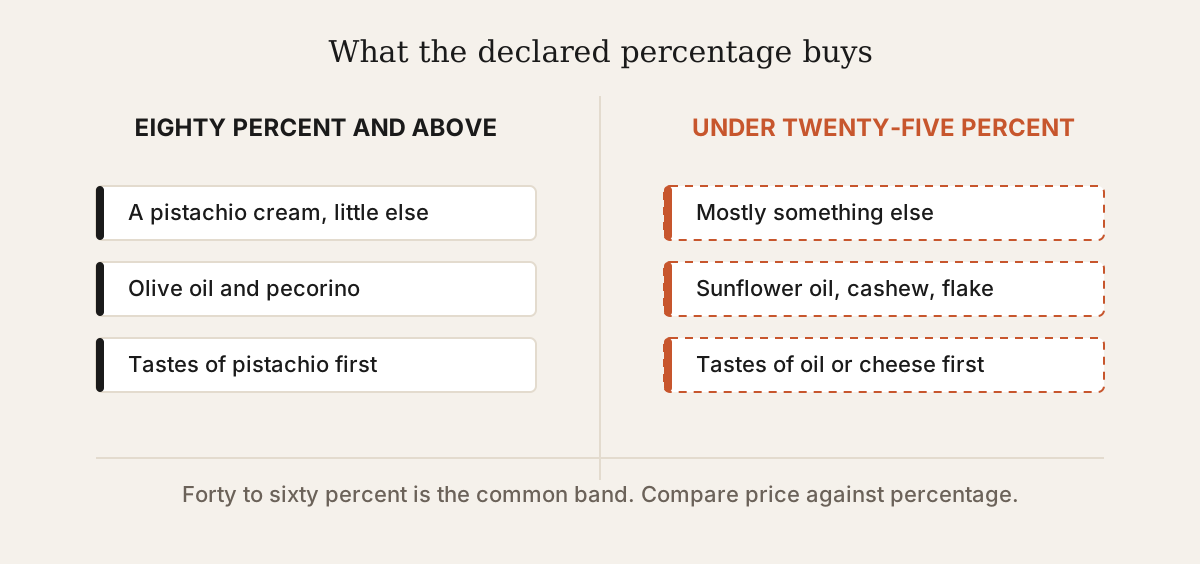
Almost every jar declares a pistachio percentage on the front, and the range is enormous.
Eighty percent and above is a pistachio cream with very little else, and it costs accordingly.
Forty to sixty percent is the common premium band, with oil, cheese and a little cashew or other filler making up the rest.
Under twenty-five percent is mostly something else. Sunflower oil, cashew, potato flake and cheese carry the bulk, with pistachio as a flavouring and a colour.
The number is the most reliable information on the jar and is far more useful than any adjective on the label.
Compare price against percentage rather than against jar size. A cheaper jar at twenty percent is not better value than a dearer one at sixty; it is a different product. The artichoke percentage on pesto di carciofi is read the same way.
Read what fills the remainder. A jar at forty percent pistachio with olive oil and pecorino is a good product; the same percentage padded with sunflower oil and starch is not.
The Bronte claim
Pistacchio di Bronte DOP is the prized Sicilian pistachio and the name appears on a great many jars.
Bronte sits on the slopes of Etna and its pistachios are grown on volcanic soil, harvested every two years, and command a very high price.
Pistacchio Verde di Bronte DOP is the protected designation covering the nut itself.
A jar claiming Bronte should say DOP and should declare a percentage. Bronte without DOP is a geographic gesture rather than a guarantee.
Much pesto labelled Sicilian uses Iranian or Turkish pistachios, which is not a fraud where the origin is not claimed, and is a fraud where Bronte is claimed and not delivered.
The colour is a weak signal. Bronte pistachios are notably green, and so are others, and colour can be influenced by processing.
A Bronte DOP jar at a low pistachio percentage is spending the designation on a small fraction of the contents, which is worth noticing.
How to judge one once open
Judge it on colour, then texture, then the oil.
Colour should be a muted green to olive, not vivid. A bright emerald jar has usually had colouring added or is heavily processed.
Some browning at the surface is oxidation and is normal in a nut paste, and it stirs in.
Texture should be finely ground but not perfectly smooth, with the nut detectable. A completely uniform cream suggests high filler content and industrial emulsification.
Oil separation is normal and stirs back in. A thick layer over a thin paste indicates padding.
It should taste of pistachio first, sweet and resinous, with the cheese and salt behind it. If the first taste is oil or cheese, the percentage is low whatever the label says.
A gritty or sandy mouthfeel means poorly ground nuts.
Checked on 13 August 2026, the first page of United States results for pesto di pistacchio returned Italian cooking publishers and recipe sites rather than jarred products, which describes that search on that date rather than recommending any seller. Counting rule: a result counts as a seller when it offers a jarred pistachio pesto for purchase. On that rule the first page carried none.
What it should cost
Expect roughly 12 to 35 dollars for a 180 to 200 gram jar in the United States, and the spread tracks the pistachio percentage closely. A Ligurian walnut sauce is priced on its nut content in the same way.
Pistachios are among the most expensive culinary nuts, and Bronte DOP nuts are several times the price of ordinary ones, so there is no way to make a high-percentage jar cheaply.
A cheap jar is a low-percentage jar. The economics leave no other possibility, and the label will confirm it.
Bronte DOP at a high percentage is a genuinely expensive product and the price is not a markup on a name.
Buying shelled pistachios and grinding them is viable and not always cheaper, given what good pistachios cost.
How to use it
Loosen it with pasta water and toss it through pasta off the heat, or use it as a spread.
Its richness means a little goes a long way, and a heavy hand produces something cloying rather than luxurious.
Never heat it. As with any pesto, cooking makes the oil greasy and dulls the nut.
Loosen with pasta water off the heat, which is what lets it coat rather than clump.
It suits a short pasta and a cream-adjacent register, and it is frequently paired with prawns or with mortadella in Sicily.
Do not add cheese on top without tasting. Most jars already carry pecorino or grana.
It is excellent on bread or with a spoon, and a high-percentage jar is close to a savoury nut butter.
Storage
Unopened, a year or more in a cool dark cupboard. Once opened, refrigerated, two to three weeks.
Cover the surface with a film of oil after each use to keep air off the paste, since nut pastes oxidise and darken readily.
Use a clean spoon each time.
Surface darkening is oxidation rather than spoilage and stirs in or scrapes off.
It freezes well in small portions.
A rancid smell is the real fault to watch for, since a high-fat nut paste can go that way, and it is not recoverable.
Frequently asked questions
What percentage of pistachio should pesto di pistacchio contain?
Jars range from over eighty percent pistachio down to under twenty, and almost all declare the figure on the front. Forty to sixty percent is the common premium band. Under twenty-five percent means the bulk is oil, cashew, cheese and starch with pistachio as a flavouring. The declared percentage is the most useful information on the jar and should be compared against price directly.
What is Bronte pistachio?
Bronte is a town on the slopes of Etna in Sicily whose pistachios are grown on volcanic soil, harvested every two years, and protected as Pistacchio Verde di Bronte DOP. They are several times the price of ordinary pistachios. A jar claiming Bronte should state DOP and declare a percentage, since the town name without the designation is a geographic gesture rather than a guarantee.
Why is my pistachio pesto brown rather than green?
Some surface browning is oxidation and is normal in any nut paste, and it stirs back in without harm. A muted green to olive colour throughout is correct. A vivid emerald jar is more suspicious than a dull one, since that colour usually indicates added colouring or heavy processing rather than better nuts.
Can I heat pistachio pesto?
Pistachio pesto should not be cooked, like any pesto, since heat makes the oil greasy and dulls the nut flavour that the jar was bought for. It is added to pasta off the heat and loosened with a spoonful of the starchy cooking water so it emulsifies into a coating sauce. It can be warmed by the pasta itself without being put over direct heat.
Why is pistachio pesto so expensive?
Pistachios are among the most expensive culinary nuts, and Bronte DOP nuts cost several times what ordinary ones do, so a jar with a high pistachio percentage cannot be made cheaply. A low price reliably indicates a low percentage, with the bulk made up by oil, cashew and starch. Comparing the declared percentage against the price is the only sensible way to judge value here.
CalItalia Food covers Italian ingredients: what they are, how to tell a good one from an ordinary one, and where to buy them in the United States.