
Anchovy Pesto: A Loose Category, and How to Tell It From Bagna Cauda
Jarred anchovy-based pastes sold as anchovy pesto cover several unrelated preparations. What separates them from bagna cauda and colatura, and how to judge and use a jar.
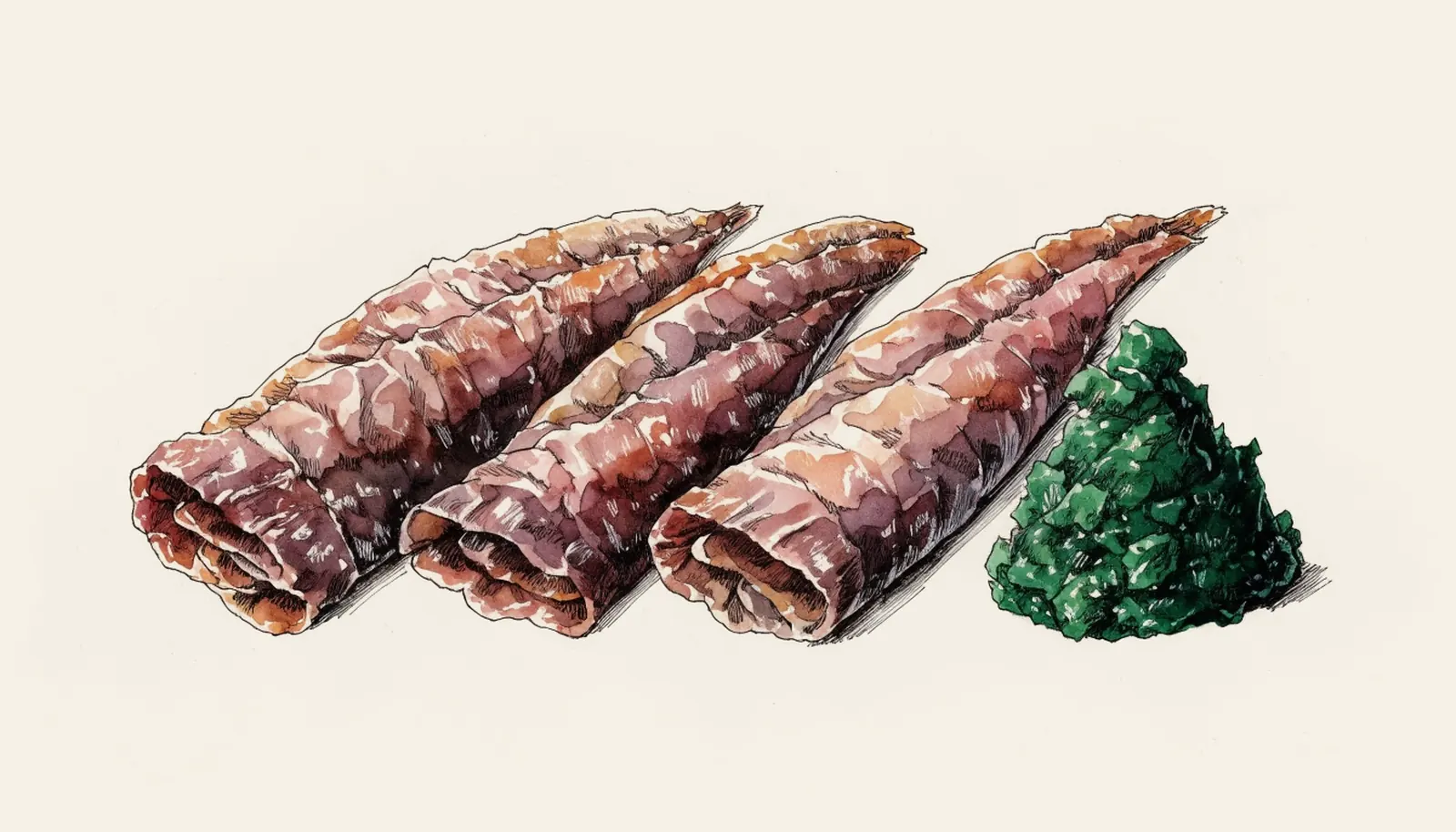
Anchovy pesto is a loose commercial category rather than a traditional Italian preparation. Jars sold under the name range from a basil pesto with anchovy added, to an anchovy and oil paste, to something close to a bagna cauda in a jar. With no tradition fixing its contents, it is read here through the four questions the site asks of every Italian ingredient.
Italy has several established anchovy preparations with their own names, and knowing which one a jar is approximating is the fastest way to decide whether to buy it.
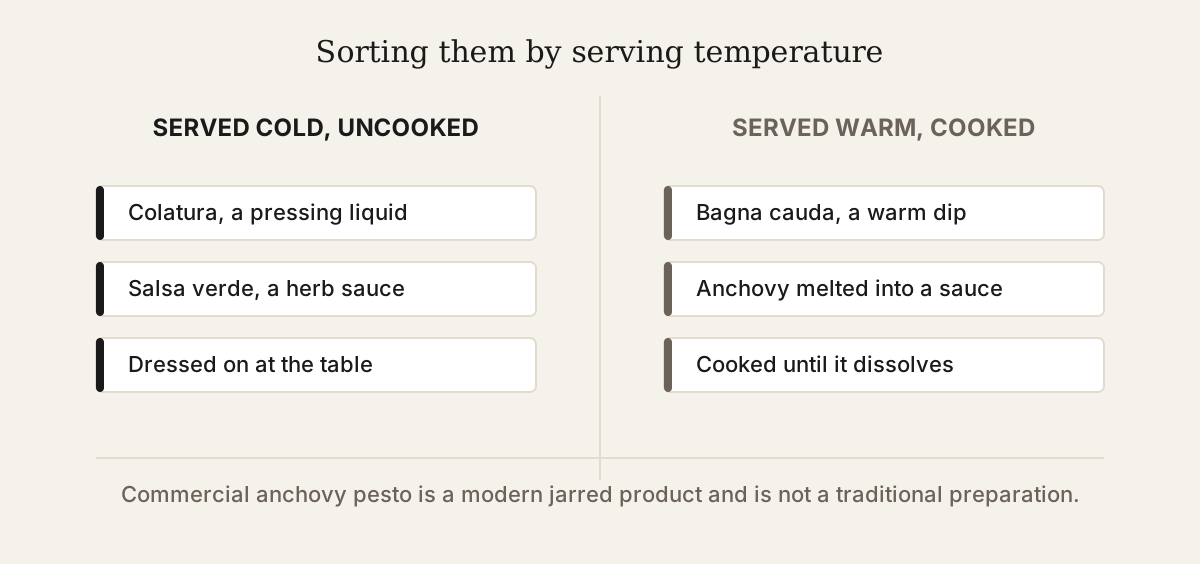
The established preparations it sits near
Four Italian anchovy preparations have real names and definitions, and the commercial category borrows from all of them.
Colatura di alici is the amber liquid pressed from curing anchovies, a concentrated seasoning rather than a sauce. This site covers it separately.
Bagna cauda is a warm Piedmontese dip of anchovy, garlic, oil and often butter, served hot over a burner with raw vegetables.
Salsa verde is a green sauce of parsley, capers, anchovy, garlic and oil, served cold with boiled meat and fish.
Pesto genovese contains no anchovy at all, so an anchovy pesto is not a variant of it in any traditional sense.
Anchovy pesto as a jarred product is a modern export category, assembled to be recognisable to a buyer who knows the word pesto.
That is not a criticism. It is a useful thing to have in a cupboard, and it is worth knowing that no tradition governs what goes in it.
What is actually in the jar
The ingredient list resolves which preparation a jar is closest to.
Anchovy first with oil second is an anchovy paste, closest to a bagna cauda base without the garlic emphasis.
Basil high on the list means it is a green pesto with anchovy added, which is the commonest formulation in export markets.
Garlic prominent alongside anchovy and oil points toward a bagna cauda in a jar, and some are labelled as such.
Parsley and capers indicate a salsa verde formulation.
Butter in the list almost always means a bagna cauda intent, since butter appears in that preparation and in few others here.
Read for chilli, which some producers add and which is not traditional to any of the four.
How to read the label
Three checks matter more than the rest.
Note which anchovy. Salt-cured anchovy declared as such is a better starting material than an unspecified anchovy paste.
Note the oil. Extra virgin olive oil is the mark of a serious jar; sunflower oil indicates an economy product and the oil is a large proportion of the contents.
Note the position of the anchovy. Third or below means it is a flavouring rather than the basis.
Read for cashew or potato flake, which pad any pesto-style paste.
Read for added salt. Anchovy carries a great deal already, and additional salt suggests a low anchovy proportion being compensated for.
Checked on 13 August 2026, the first page of United States results for anchovy pesto returned recipe publishers and a discussion thread rather than jarred products, which describes that search on that date rather than recommending any seller. Counting rule: a result counts as a seller when it offers a jarred anchovy pesto for purchase. On that rule the first page carried none, which is consistent with this being a loose category rather than an established product.
How to judge one once open
Judge it on smell, then colour, then salt.
It should smell savoury and marine, not sharply fishy. A strong fishy smell means poor or old anchovy rather than a well-cured one.
Rancidity is the fault to check for, since anchovy is oily and the jar is oil-based, and it reads as a stale, paint-like note.
Colour depends on the formulation. A basil-based one should be a muted green rather than bright; an anchovy and oil paste should be greyish-brown to tan.
Texture should be a smooth paste without graininess, since anchovy breaks down completely when properly worked.
It should be intensely savoury rather than merely salty. If salt is the only impression, the anchovy content is low.
Oil separation is normal and stirs back in.
What it should cost
Expect roughly 8 to 18 dollars for a small jar in the United States.
Anchovy is not an expensive fish, but good salt-cured anchovy and extra virgin olive oil both cost, and those are the two variables.
A cheap jar is sunflower oil with a low anchovy proportion, padded with salt.
Making an anchovy paste at home is trivial, requiring only good anchovies, oil and a fork, which is worth weighing against any jar.
A jar of good anchovies is more versatile than a jar of anchovy pesto and costs comparably, in the same way nduja beats jarred nduja sauce.
Colatura is the better buy if you want anchovy as a seasoning, being concentrated and long-keeping.
How to use it
Use it as a seasoning rather than as a sauce in its own right, off the heat.
Its salt and savour mean it belongs where something needs depth: stirred into pasta with oil, spread thinly under a roast, whisked into a dressing, or on bread.
Do not heat it hard. Anchovy turns bitter and the oil goes greasy.
Use less than you would use of a green pesto. A spoonful seasons a whole pan.
Do not add salt before tasting. It carries a great deal.
It is very good on bread with butter or under a piece of roasted lamb.
Thin it with pasta water if using it on pasta, exactly as with any pesto.
Storage
Unopened, a year or more in a cool dark cupboard. Once opened, refrigerated, two to three weeks.
Cover the surface with a film of oil after each use.
Use a clean spoon each time.
Rancidity is the end point rather than spoilage in the usual sense, and an oily fish paste reaches it faster than a vegetable one.
It freezes acceptably in small portions.
Discard a jar that smells stale or paint-like, which is not recoverable.
Frequently asked questions
Is anchovy pesto a traditional Italian sauce?
Anchovy pesto is a modern commercial category rather than a traditional preparation. Italy has several established anchovy sauces with their own names: colatura di alici, bagna cauda, and salsa verde. Pesto genovese contains no anchovy at all, so an anchovy pesto is not a variant of it. Jars sold under the name borrow from those preparations in varying proportions.
What is the difference between anchovy pesto and bagna cauda?
Bagna cauda is a defined Piedmontese preparation of anchovy, garlic, olive oil and often butter, served warm over a burner as a dip for raw vegetables. Anchovy pesto is an undefined commercial category that may resemble it closely, particularly where garlic and butter appear high on the ingredient list. A jar with butter in it is almost always aiming at bagna cauda.
Should I buy anchovy pesto or just anchovies?
A jar of good salt-cured or oil-packed anchovies is more versatile than a jar of anchovy pesto and costs comparably, since anchovies can be melted into a sauce, laid on bread or mashed into a dressing as needed. The pesto is a convenience product. Where anchovy is wanted purely as a background seasoning, colatura di alici is more concentrated and keeps far longer.
Can you heat anchovy pesto?
Anchovy pesto should not be heated hard, since anchovy turns bitter and the oil base goes greasy. It is added off the heat and loosened with pasta water where it is going onto pasta. Bagna cauda is the exception among anchovy preparations in being served warm, and it is gently warmed rather than cooked.
Why does my anchovy pesto taste only of salt?
Tasting only of salt usually indicates a low anchovy proportion with added salt compensating for it, which the ingredient list will confirm by placing anchovy third or lower and listing salt separately. A good anchovy paste is intensely savoury rather than merely salty. Checking the anchovy’s position on the list before buying is the way to avoid this.
CalItalia Food covers Italian ingredients: what they are, how to tell a good one from an ordinary one, and where to buy them in the United States.