
Nduja Sauce in a Jar: What Is Actually In It, and When to Buy Nduja Instead
Jarred nduja pasta sauce is mostly tomato with a little nduja. How to read the label and judge a jar, what the chilli content tells you, and when the plain salume is the better buy.
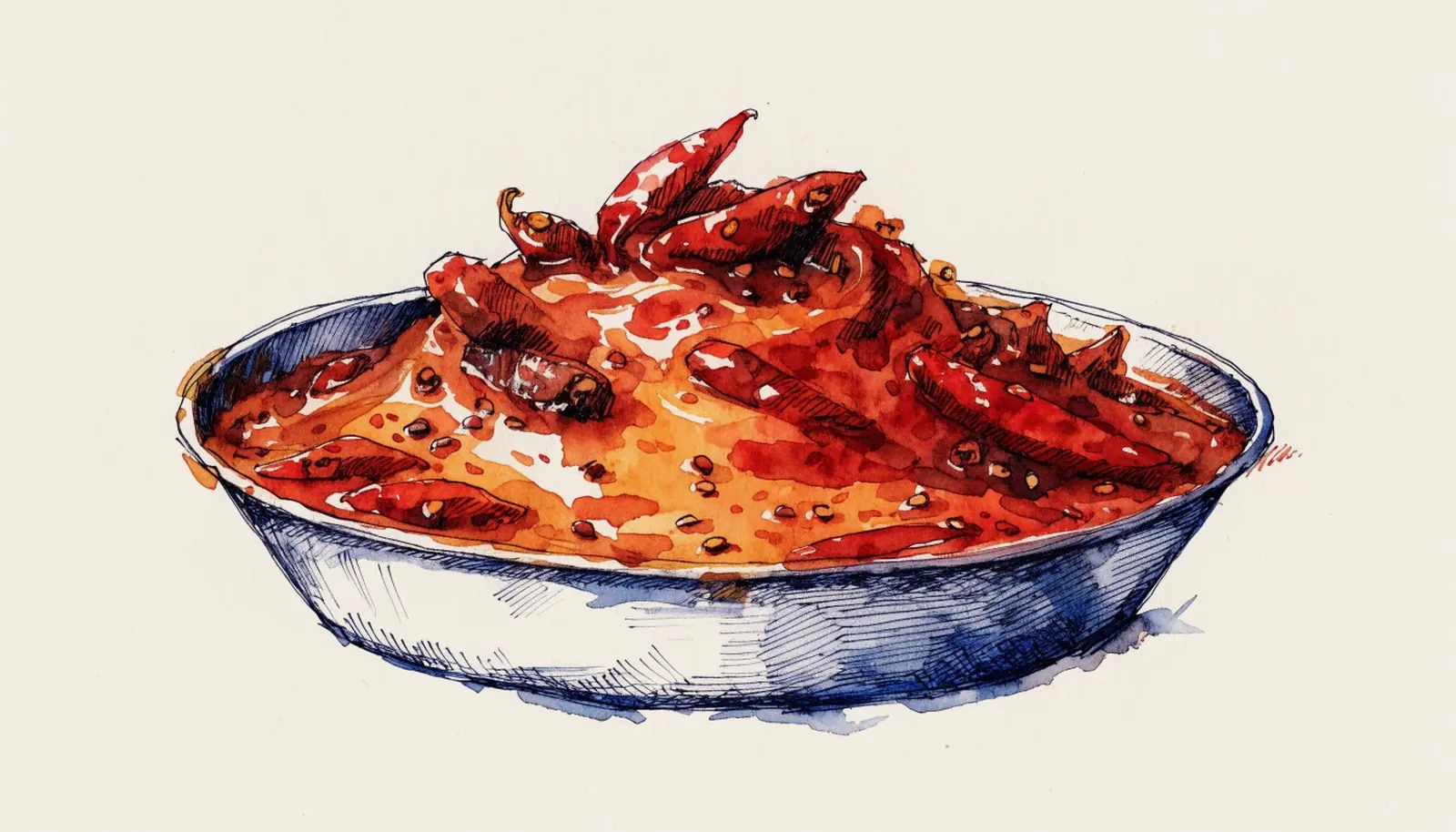
Nduja sauce is a jarred tomato-based pasta sauce carrying a proportion of nduja, the spreadable Calabrian salume. The proportion is the whole question, and on most jars it is smaller than the name implies. That shortfall is a small case of the gap between the name on the jar and what is in it.
This page is about buying and judging the jar rather than about making the dish. The most useful thing it can tell you is when not to buy one at all.
What is actually in the jar
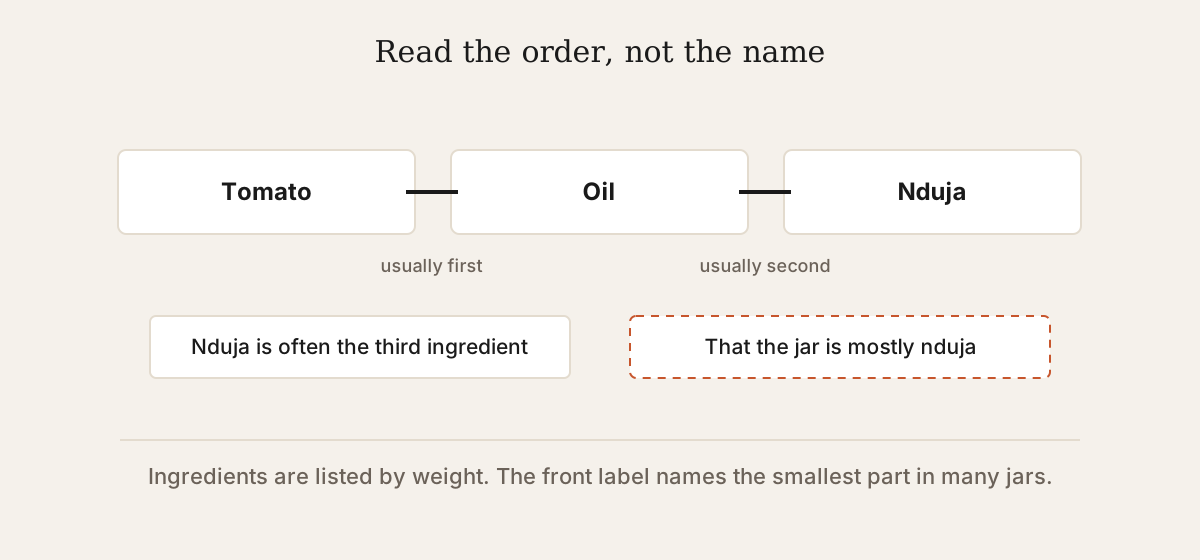
Jarred nduja sauce is a tomato sauce with nduja added, and the ingredient list tells you in what order.
Tomato is almost always the first ingredient, usually passata or chopped tomato, which is unremarkable and correct for a pasta sauce.
Nduja’s position on the list is the number that matters. Second or third means a meaningful quantity; fifth or below means a flavouring.
Some jars declare a percentage. Where a producer states nduja content, it is usually in the range of a few percent to around ten, and stating it at all is a good sign.
Oil, onion, garlic and salt make up most of the remainder.
Some carry additional chilli beyond what the nduja brings, which is worth knowing since it means the heat is not all coming from the salume.
Cream appears in some versions, which makes them a different product, and there is nothing wrong with that provided you know before opening it.
When to buy nduja instead
Buying nduja itself rather than a jar of nduja sauce is the better choice more often than not.
Nduja itself is a pantry item that keeps. A jar of the salume lasts weeks refrigerated and makes many meals; a jar of sauce makes one or two.
Stirring nduja into passata takes two minutes and gives you control over the proportion, which is the thing the commercial jar takes away.
The economics favour the salume. Nduja costs more per gram and you use very little, so the finished cost per plate is usually lower than buying a sauce whose bulk is tomato.
Nduja does other things. It goes onto bread, into eggs, onto pizza, into a braise. A finished pasta sauce does one thing.
Buy the jarred sauce for convenience, which is a real and legitimate reason, and not on the assumption that it is the better route to the flavour. The same reasoning favours good anchovies over a jar of anchovy pesto.
This site’s nduja page covers the salume, including how to judge one and why it carries no protected designation.
How to read a label
Four checks separate a jar worth buying from a tomato sauce with a Calabrian name.
Find nduja in the ingredient list and note its position. This is the single most informative thing on the jar. A jar of amatriciana is read the same way, by where its cured pork sits.
Look for a declared percentage. Producers confident in their formulation tend to state it.
Check whether the nduja itself is broken out. Good labels list the nduja’s own components in brackets, pork, chilli, salt, which lets you see whether it is real nduja or a chilli paste standing in for one.
Read for added chilli listed separately, which indicates the heat is being supplemented.
Read for thickeners and starches, which pad a thin sauce.
Checked on 13 August 2026, the first page of United States results for nduja sauce returned a mixture of recipe publishers and a Calabrian producer’s jarred product on a general marketplace, which describes that search on that date rather than recommending any seller. Counting rule: a result counts as a seller when it offers a jarred nduja sauce for purchase. Sellers were present alongside recipe pages on that rule.
How to judge one once open
Judge it on colour, then texture, then heat.
The colour should be a deep brick red to orange-red, from the tomato and the chilli-laden fat together. A flat tomato red suggests very little nduja.
There should be visible flecks of chilli and rendered fat, and a slick of orange oil on the surface when warmed, which is nduja doing its work.
The texture should be slightly grainy rather than perfectly smooth, since nduja does not homogenise fully.
Heat should be broad and warming rather than sharp. Calabrian chilli gives a rounded heat, and a sharp fierce burn suggests added chilli extract or a different pod.
It should smell of pork fat and chilli, not only of tomato.
A watery separation on standing is normal and stirs back in; a large volume of clear liquid indicates a padded sauce.
What it should cost
Expect roughly 8 to 16 dollars for a 280 to 340 gram jar in the United States.
The price reflects the tomato base more than the nduja, which is present in small quantity, and imported Calabrian jars carry a freight premium.
Compare it against a jar of nduja, which costs perhaps 12 to 20 dollars for 200 grams and will make considerably more than two plates of pasta.
A cheap jar is a tomato sauce with a flavouring, which is fair at its price and is not what the name promises.
Calabrian producers’ own jars are generally the ones with the higher nduja content, since the salume is their primary product.
How to use it
Warm it gently and toss it with pasta off the heat, with a little of the cooking water.
Its fat content means it emulsifies readily into pasta water, which is the technique that makes any oily sauce cling rather than sit.
Do not boil it hard. The chilli fat separates and the sauce turns greasy.
A short tubular pasta suits it, rigatoni or paccheri, since the sauce is loose and needs somewhere to sit.
Do not add salt before tasting. Nduja carries a great deal, as does the tomato.
A spoonful of ricotta or a scattering of pecorino at the end cuts the heat, which is the standard Calabrian move.
It is good on bread and in eggs as well as on pasta, which is worth remembering for the second half of the jar.
Storage
Unopened, a year or more in a cool dark cupboard. Once opened, refrigerated, four to five days.
Cover the surface with a film of olive oil if keeping it more than a couple of days, which slows oxidation at the exposed face.
Transfer it out of a metal tin if it came in one, since the acid picks up the metal.
It freezes well in portions, and the texture loss does not matter in a cooked sauce.
Discard any jar with a bulging lid unopened.
A separated layer of orange fat on a refrigerated jar is normal and stirs back in on warming.
Frequently asked questions
How much nduja is in jarred nduja sauce?
The proportion varies widely and is usually smaller than the name implies. Tomato is almost always the first ingredient. Nduja’s position on the ingredient list is the most informative thing on the jar: second or third indicates a meaningful quantity, fifth or below indicates a flavouring. Some producers declare a percentage, typically a few percent up to around ten, and stating it at all is a good sign.
Is it better to buy nduja or nduja sauce?
Buying nduja itself is usually the better choice. It keeps for weeks refrigerated, makes many meals rather than one or two, gives you control over the proportion, and does other jobs on bread, in eggs and on pizza. Stirring nduja into passata takes two minutes. The jarred sauce is worth buying for convenience rather than because it is a better route to the flavour.
Why is my nduja sauce greasy?
Greasiness usually means the sauce was boiled hard, which separates the chilli-laden fat that nduja contributes rather than emulsifying it. Warming it gently and tossing it with pasta and a little of the starchy cooking water off the heat keeps it together. A layer of orange fat on a refrigerated jar is normal and stirs back in on warming.
How spicy is jarred nduja sauce?
Heat varies with the nduja content and with whether the producer has added separate chilli. Genuine Calabrian chilli gives a broad warming heat rather than a sharp one, so a fierce immediate burn suggests added chilli or extract rather than nduja doing the work. Checking whether chilli is listed separately from the nduja on the label tells you which you have.
What pasta suits nduja sauce?
A short tubular shape such as rigatoni or paccheri suits it, because the sauce is loose and oily and needs somewhere to collect. Long thin pasta sheds it. Finishing the pasta in the sauce with a spoonful of its cooking water helps the fat emulsify and cling, and a little ricotta or pecorino at the end cuts the heat in the standard Calabrian way.
CalItalia Food covers Italian ingredients: what they are, how to tell a good one from an ordinary one, and where to buy them in the United States.