
Sugo Finto: The Fake Ragù, and What the Name Is Admitting
A Tuscan meatless sauce built to taste like a meat ragù. What the name records about poverty cooking, how to judge a jar against a plain tomato sauce, and when to buy one.
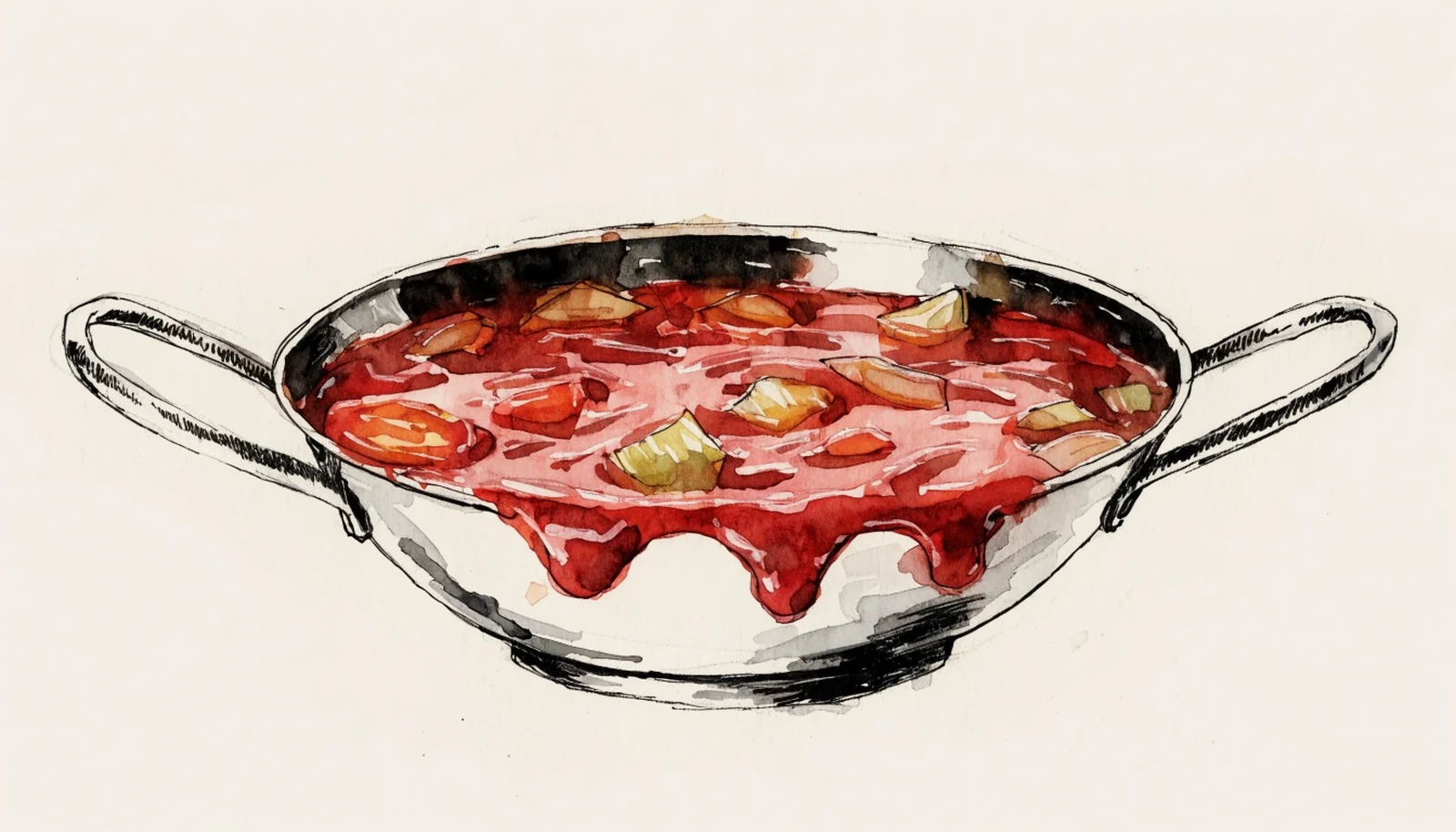
Sugo finto means fake sauce, and it is a Tuscan tomato and vegetable sauce built to give the depth of a meat ragù without any meat in it. The name is not a modern marketing joke; it is what the sauce has been called for a long time and it is an admission rather than a claim. The name states the difference between an imitation and the original outright.
That honesty is the interesting thing about it, and it also tells you what to judge a jar against.
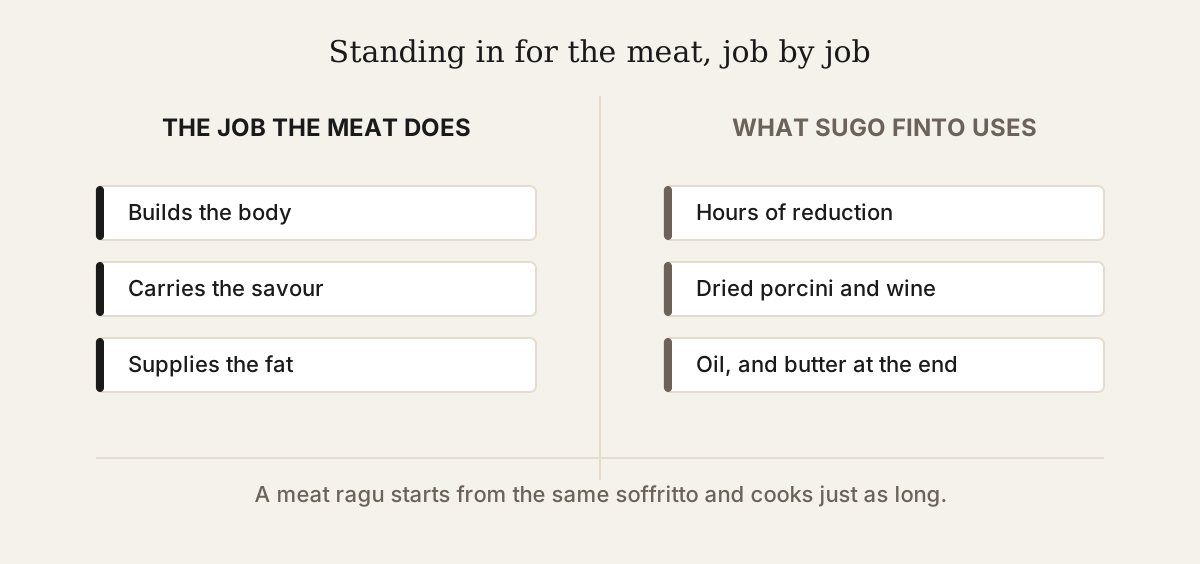
What sugo finto actually is
Sugo finto is a slow-cooked sauce of soffritto and tomato, built to reach the body and savour of a ragù without meat.
The soffritto does the work. Onion, carrot and celery cooked slowly in oil until genuinely soft and sweet, which is the same foundation a meat ragù starts from.
Long cooking is the second half. The sauce is simmered for a long time, which concentrates it and develops the depth that a quick tomato sauce lacks.
Tomato provides the body, and dried porcini, herbs or a little wine appear in many versions to add savour.
It is Tuscan, from the tradition of cooking that produced ribollita and panzanella, where poverty and good ingredients coexisted.
The name records why it exists. Finto means feigned or fake, and it names a sauce made when meat was unaffordable and the shape of a ragù was still wanted.
It is not a modern vegetarian product, though it is entirely vegetarian and is frequently sold as one now.
How it differs from a plain tomato sauce
The distinction is easy to lose in a jar and it is the whole point of buying one.
A plain tomato sauce is quick and bright. Tomato, garlic, oil, twenty minutes, and the tomato tastes of itself.
Sugo finto is long and dark. Hours of cooking on a proper soffritto base, and the tomato is no longer the leading flavour.
The soffritto is the difference you are paying for. Onion, carrot and celery cooked down properly take time and cannot be faked with a splash of stock.
Colour tells you. A quick sauce is bright red; a sugo finto is brick to brown-red.
Sweetness in a sugo finto comes from carrot and onion, not from added sugar, and that is a fair test of a jar.
A jar that tastes like a slightly herby marinara has not been cooked long enough and is not this sauce.
The finto tradition, and what else carries the name
Sugo finto belongs to a small family of Italian dishes whose names admit to imitating something absent, and seeing the pattern makes the sauce legible.
Finto and finta appear across Italian regional cooking attached to dishes that reproduce the form of an expensive one without its costly component.
Polpette di pane are meatballs without meat, bound from stale bread, cheese and egg, and they are the same idea applied to a different dish.
Pesce finto is a fish-shaped preparation of potato and tuna, or in leaner versions no fish at all, moulded and dressed to look like a whole fish on a platter.
The naming is candid rather than deceptive. A cook serving sugo finto was not pretending; the household knew exactly what was on the table and the name said so.
That candour is the opposite of modern substitute marketing, which tends to claim equivalence rather than admit imitation, and it is worth noticing in a category now sold as a plant-based product.
Cucina povera is the wider tradition. Tuscan cooking in particular built a repertoire around bread, beans, vegetables and time, and sugo finto sits alongside ribollita, pappa al pomodoro and panzanella in using long cooking to make cheap material taste of more than it cost.
Sugo finto against the other meatless ragùs
Several meatless sauces now sit near it on a shelf and they are built on different principles.
Ragù di verdure is a vegetable ragù in which the vegetables remain identifiable, cut small and cooked but not dissolved. It tastes of its vegetables by design.
Mushroom ragù leads with mushroom as the flavour rather than using a little dried porcini for background savour, and it is usually darker and more earthy.
Lentil ragù uses lentils for texture, giving a granular body that mimics minced meat directly, which sugo finto does not attempt.
Sugo finto is distinguished by dissolution. Its vegetables disappear into the sauce entirely, contributing sweetness and body rather than presence, which is precisely what a long-cooked meat ragù’s soffritto does.
So the test is whether you can see the vegetables. If you can, it is a vegetable ragù under a borrowed name.
None of the others is a lesser sauce. They are different preparations, and a jar labelled sugo finto that turns out to be a lentil ragù is mislabelled rather than bad.
How to read the label
Three checks separate a genuine sugo finto from a repackaged tomato sauce.
Look for carrot and celery, not only onion. All three should be present. Their absence means no soffritto.
Note their position. High on the list indicates a real proportion of vegetable rather than a trace.
Look for dried porcini or mushroom, which many good versions use for savour and which a lazy formulation omits.
Read for added sugar. In a sauce that develops its sweetness from carrot and long cooking, added sugar is a shortcut and a warning. The same check applies to a jar of amatriciana.
Read for yeast extract or stock powder, which are added umami standing in for the depth that time would produce.
Checked on 13 August 2026, the first page of United States results for sugo finto returned cooking publishers including a major recipe site rather than jarred products, which describes that search on that date rather than recommending any seller. Counting rule: a result counts as a seller when it offers a jarred sugo finto for purchase. On that rule the first page carried none, which reflects that this reaches most Americans as a recipe rather than a product.
How to judge one once open
Judge it on colour, then texture, then sweetness.
Colour should be a deep brick to brown-red, not bright. Brightness means short cooking.
Texture should be soft and slightly pulpy, with the vegetables broken down rather than in identifiable pieces. Visible chunks of carrot mean it was not cooked down.
It should smell of cooked vegetable and tomato together, not of tomato alone.
Sweetness should read as vegetable sweetness, rounded, rather than the flat sweetness of added sugar.
It should have body. A watery sauce that separates has not reduced.
It should not taste of dried herbs. Heavy dried oregano or basil is frequently used to disguise a thin sauce.
What it should cost
Expect roughly 7 to 14 dollars for a 300 to 400 gram jar in the United States.
The cost is time rather than ingredients. Onion, carrot, celery and tomato are cheap; hours of cooking and the volume lost to reduction are not.
A very cheap jar has not been cooked long, since the reduction is the expense, and it will show in the colour.
It is usually cheaper than a meat ragù in a jar, which is consistent with its origins.
Making it is genuinely easy and much cheaper, and it freezes well, which is worth weighing.
Do not pay a premium for a vegetarian or vegan label on this sauce. It has been meatless since long before that was a category.
How to use it
Warm it and toss it with pasta, or use it anywhere a meat ragù would go.
Its depth means it can carry a substantial pasta on its own, which is the whole intention behind the sauce.
A short ridged pasta suits it, rigatoni or penne, since the sauce is thick and needs somewhere to sit.
It is good in a lasagne and in a baked pasta, where its body holds up.
Grate Parmigiano or pecorino over it, which supplies the savour and salt that a meat sauce would have brought.
A knob of butter stirred in at the end enriches it considerably and is a legitimate Tuscan move.
Do not add meat to it. At that point it is a ragù and the name stops meaning anything.
Making it worth buying, or not
The gap between a jar and a home pot is wider for this sauce than for most, and it is worth stating why.
The expensive component is time, which does not travel. A producer reducing a sauce for hours is charging for fuel, vessel occupancy and evaporated volume, and those costs are identical whether the pot is industrial or domestic.
The ingredients cost almost nothing. Onion, carrot, celery and tinned tomato for a large batch come to a few dollars, against seven to fourteen for a single jar.
It freezes better than almost any sauce on this site, having no dairy, no meat and no fresh herb to degrade, so a single long session yields months of sauce.
The one thing a jar reliably buys is convenience, which is a legitimate purchase and is the honest reason to make one.
A jar is also a fair way to learn the target. Buying a good one once, tasting what a properly reduced soffritto base tastes like, and then making it, is a reasonable sequence.
Where a jar is genuinely better is where the alternative is a quick tomato sauce standing in. A mediocre sugo finto still has more depth than twenty minutes of marinara.
Storage
Unopened, a year or more in a cool dark cupboard. Once opened, refrigerated, four to five days.
Transfer out of a tin if it came in one, since the acid picks up the metal.
It freezes very well in portions, better than most sauces, since there is no dairy or meat to change texture.
Cover the surface so it does not dry and darken at the edge.
Discard any jar with a bulging lid unopened.
A separated watery layer on standing is normal in a vegetable sauce and stirs back in.
Frequently asked questions
What does sugo finto mean?
Sugo finto means fake sauce in Italian, from finto, meaning feigned. The name records that the sauce was made to give the depth and body of a meat ragù at times when meat was unaffordable, particularly in Tuscany. It is an old name rather than a modern one, and it is an admission about what the sauce is imitating rather than a claim about what it is.
Is sugo finto vegetarian?
Sugo finto contains no meat and is vegetarian, and it predates vegetarianism as a category by a long way. It comes from poverty cooking rather than dietary choice. Jars are frequently marketed now with a vegetarian or vegan label, which is accurate and is not a reason to pay a premium, since the sauce has always been meatless.
How is sugo finto different from a normal tomato sauce?
A plain tomato sauce is quick, bright and tastes of tomato. Sugo finto is built on a properly cooked soffritto of onion, carrot and celery and then simmered for a long time, producing a dark, deep, rounded sauce in which tomato is no longer the leading flavour. The soffritto and the long cooking are what you are paying for in a jar.
What should I look for on a jar of sugo finto?
Carrot and celery should both appear alongside onion and reasonably high on the list, since their absence means no real soffritto. Dried porcini or mushroom is a good sign. Added sugar is a warning, because the sweetness should come from carrot and long cooking, and yeast extract or stock powder indicate added umami standing in for depth that time would have produced.
What pasta suits sugo finto?
A short ridged pasta such as rigatoni or penne suits it, since the sauce is thick and needs somewhere to collect. It also works in a lasagne or a baked pasta, where its body holds up. Grated Parmigiano or pecorino over the top supplies the savour and salt a meat sauce would have contributed, and a knob of butter stirred in at the end enriches it considerably.
CalItalia Food covers Italian ingredients: what they are, how to tell a good one from an ordinary one, and where to buy them in the United States.