
Sun-Dried Tomato Pesto Against Genovese: A Different Sauce Entirely
Pesto rosso is built on dried tomato rather than basil, and the differences run deeper than colour. What is in it, how to judge a jar, and where to use it.
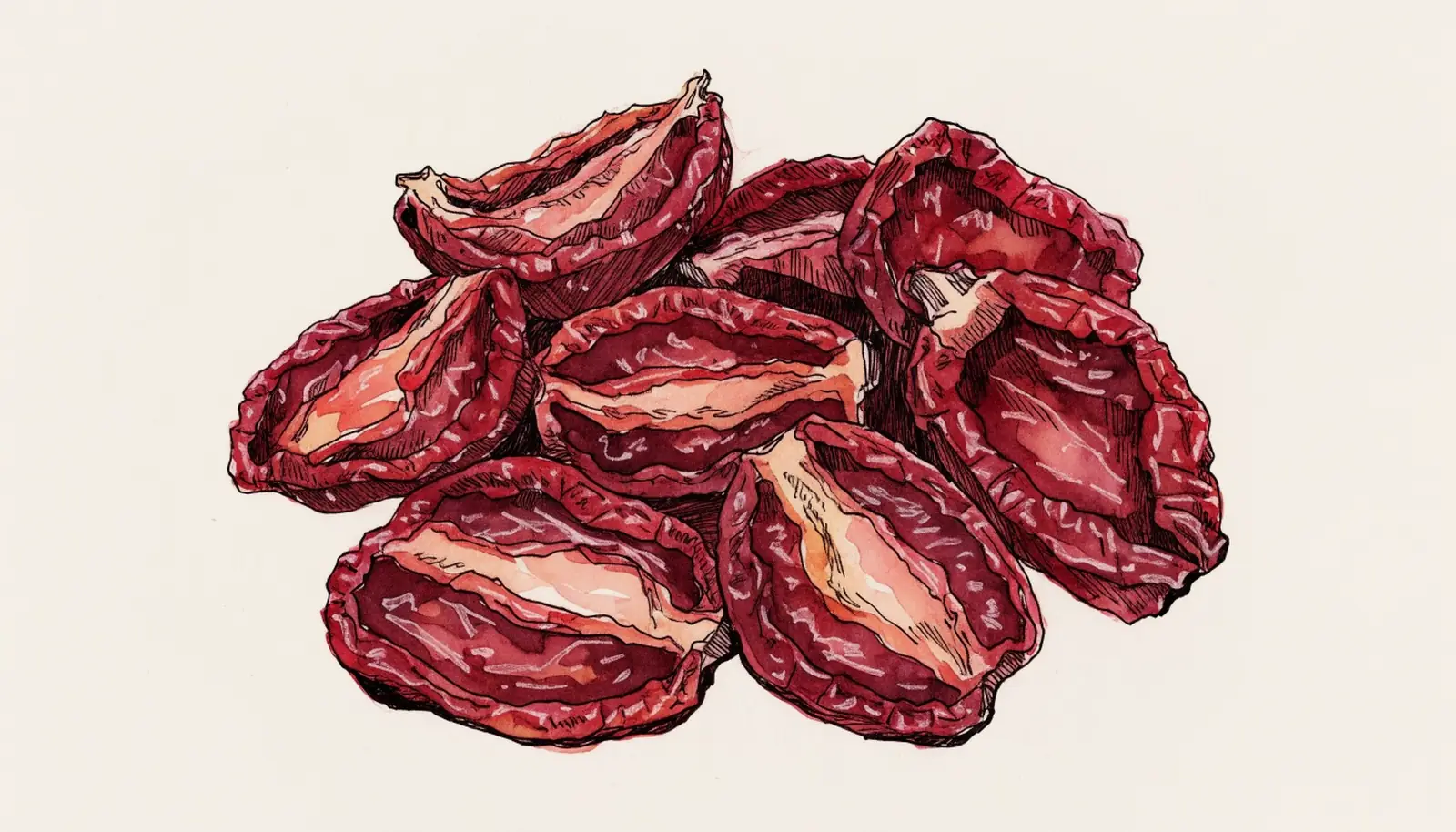
Sun-dried tomato pesto, often sold as pesto rosso, is built on dried tomato with basil as a secondary ingredient rather than the primary one, which makes it a different sauce from pesto genovese rather than a red version of it. The tomato brings concentration and sweetness where basil brings freshness. So it is judged here on its own terms rather than as a lesser genovese, as every ingredient in the CalItalia pantry is.
The name causes most of the confusion. Calling it pesto sets an expectation of the Genovese sauce, and almost nothing about how it tastes or where it belongs follows from that.
What it actually is
Sun-dried tomato pesto is dried tomatoes blended with olive oil, garlic, nuts, hard cheese and usually some basil, into a thick, deep red paste. The dried tomato is the lead ingredient by weight in any version worth buying.
Drying concentrates the tomato’s sugars and glutamates, which is why the sauce reads sweet and intensely savoury at the same time. That concentration is the entire point and it is what a fresh tomato cannot supply.
The nut varies legitimately here in a way it does not in genovese. Pine nuts, almonds and cashews all appear in traditional and commercial versions, because the sauce is not governed by a specification the way pesto genovese is.
Cheese is common but not required. Many versions carry pecorino or Parmigiano; plenty do not.
Why it is not a red genovese
The comparison people reach for is misleading in three separate ways, and together they explain why the two sauces rarely suit the same dish.
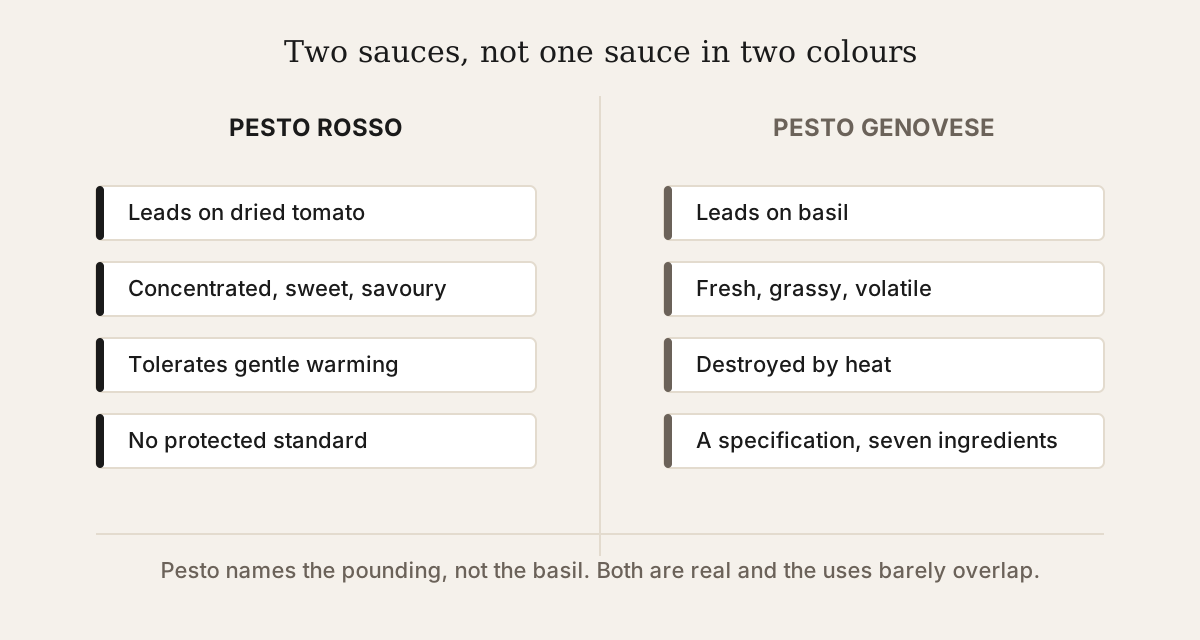
The lead ingredient is different. Genovese is a basil sauce with supporting ingredients. Pesto rosso is a tomato sauce with supporting ingredients, one of which is often basil.
The flavour axis is opposite. Genovese is fresh, grassy and volatile, which is why heat destroys it. Pesto rosso is concentrated, sweet and savoury, built on ingredients that have already been dried and are therefore far more stable.
The uses barely overlap. Genovese belongs on hot pasta off the heat, where its freshness carries. Pesto rosso works there too and also works spread on bread, stirred into a braise, spooned onto roasted vegetables, or used where you might otherwise reach for tomato paste with more going on.
There is no protected standard for it, unlike genovese, whose specification names seven ingredients. That is why formulations vary so widely between brands.
How to judge a jar
Read the position of the tomato, then the oil, then look for what has been added to bulk it out.
Dried tomato should be first or second. A jar where oil or water leads is an oil product carrying some tomato.
Check whether the tomatoes are dried or are paste. Sun-dried tomato and tomato paste are different ingredients, and a jar built on paste is a cheaper, flatter product wearing the name.
Watch for added sugar. Dried tomato is already sweet, and added sugar in the list usually compensates for lower-quality fruit.
Bulking agents apply here as elsewhere. Breadcrumb, potato flake and starch appear in the cheapest jars.
Colour is not a reliable signal. A darker jar may be better fruit or may be more concentrate, and you cannot tell from outside the glass.
Checked on 13 August 2026, the first page of United States results for sun dried tomato pesto vs genovese returned recipe publishers and cooking sites rather than sellers, which describes that search on that date. The practical reading is that the comparison is asked about frequently and answered mostly by people writing recipes rather than by anyone selling either sauce.
What it should cost
Expect roughly 6 to 14 dollars for a jar in the 180 gram range, generally below a comparable genovese.
The reason is ingredient cost. Dried tomato is cheaper than the combination of DOP basil, pine nuts and two protected cheeses that a good genovese requires, and pesto rosso carries no specification forcing the expensive versions of anything.
It also keeps better and travels better, since its components are already dried or preserved, which reduces the cost of getting it to a shelf in usable condition.
Where it belongs
Use it anywhere you want concentrated savoury tomato with body, which is a wider range than genovese covers.
On hot pasta it works stirred through off the heat, and unlike genovese it tolerates gentle warming reasonably well because there is no volatile fresh herb doing the main work.
Its best uses are arguably not pasta at all. Spread on bread or focaccia, stirred into a soup or a bean dish, spooned over roasted vegetables, mixed into a dressing, or used as a base under cheese on a pizza where its concentration survives the oven far better than genovese does.
It is also a good pantry substitute for tomato paste where a dish would benefit from garlic, oil and nuts arriving alongside the tomato.
Dried tomato, oil-packed and dry-packed
The tomatoes themselves come in two forms and the choice changes the sauce, which is worth knowing whether you are buying a jar or making one.
Oil-packed sun-dried tomatoes are already softened and carry the flavour of their packing oil, often with herbs and garlic in it. They blend readily and the oil counts toward the sauce’s fat, so a pesto made from them needs less added oil.
Dry-packed tomatoes are leathery and need rehydrating in warm water before use. They give more control, since you are not inheriting somebody else’s seasoned oil, and they are usually cheaper by weight of actual tomato.
For a jarred product, the label rarely says which was used, and the oil position in the ingredient list is the best available clue: a jar leading with oil has probably built on oil-packed fruit.
The trap with dry-packed is over-soaking. Tomatoes left too long in water become bland and waterlogged, undoing the concentration that made them worth using. Twenty minutes in warm water is usually enough, and the soaking liquid is worth keeping and adding back.
Storage
Refrigerated under a film of oil, it keeps a week or more, which is longer than genovese because there is no fresh basil to darken and no delicate emulsion to break.
It freezes well for the same reason, and thaws with less loss than either genovese or trapanese.
Its failure mode is oil separation rather than spoilage. A jar that has separated should be stirred rather than discarded.
Making it
Rehydrate if the tomatoes are dry-packed, then blend with oil, garlic, nuts and cheese, stopping while the texture is still slightly coarse.
Balance the acid deliberately. Dried tomato is sweet and concentrated, and without something sharp the sauce reads cloying. A small amount of red wine vinegar or lemon juice is standard in many versions and is the adjustment most home versions are missing.
Toast the nuts. Unlike genovese, where raw pine nuts are traditional, toasting suits this sauce because the concentrated tomato can carry a deeper nut flavour without being overwhelmed.
Go easy on the garlic. Raw garlic against sweet concentrated tomato is a sharper contrast than it is against basil, and it dominates quickly.
Add basil last and off the blade if you are including it, since it is a supporting ingredient here and blending it hard turns it dark for no benefit.
Frequently asked questions
Is sun-dried tomato pesto real pesto?
It is a real preparation with a long presence in Italian cooking, and it is not pesto genovese, which is the sauce governed by a specification. The word pesto refers to the pounding method rather than to basil, so a tomato-led sauce made the same way is legitimately called pesto. The confusion is a naming problem rather than an authenticity one.
Can I substitute it for genovese?
Not usefully. They lead on different ingredients and sit at opposite ends of the fresh-to-concentrated range, so a dish built around basil freshness will taste entirely different with a tomato-led sauce. Substituting in the other direction is worse, since genovese lacks the body and savoury concentration that pesto rosso was providing.
Why is it cheaper than basil pesto?
Because its ingredients cost less. Dried tomato is inexpensive compared with the DOP basil, pine nuts and two protected cheeses a good genovese requires, and no specification forces a producer toward the costly versions. It also keeps and ships better, which lowers the cost of getting it onto a shelf.
Can I cook with it?
Yes, and it handles heat considerably better than genovese does. Its components are already dried or preserved rather than fresh and volatile, so warming it through a sauce or baking it under cheese on a pizza costs far less than the same treatment would cost a basil pesto. It is still better added late than boiled hard.
What nut should it contain?
Pine nuts, almonds and cashews all appear legitimately, because unlike pesto genovese this sauce has no specification naming its ingredients. That means the nut is a formulation choice rather than a substitution, and a jar listing cashews is not cutting a corner in the way a genovese listing cashews would be.
CalItalia Food covers Italian ingredients: what they are, how to tell a good one from an ordinary one, and where to buy them in the United States.