
Pesto Rosso: An Umbrella Term Covering Three Different Red Pestos
Red pesto is not one product. Sun-dried tomato, Sicilian ricotta-based and Trapanese almond versions all sell under the name. How to tell which jar you have, then judge and use it.
Pesto rosso means red pesto, and it is an umbrella covering at least three distinct preparations: a sun-dried tomato pesto, the Sicilian pesto alla siciliana built on ricotta and tomato, and pesto alla trapanese with almonds and raw tomato. A jar labelled only pesto rosso could be any of them. A name this loose leaves the ingredient list to do the work, as it does across the Italian ingredients this site judges.
This page is about identifying which one is in the jar and judging it, rather than about making any of them.
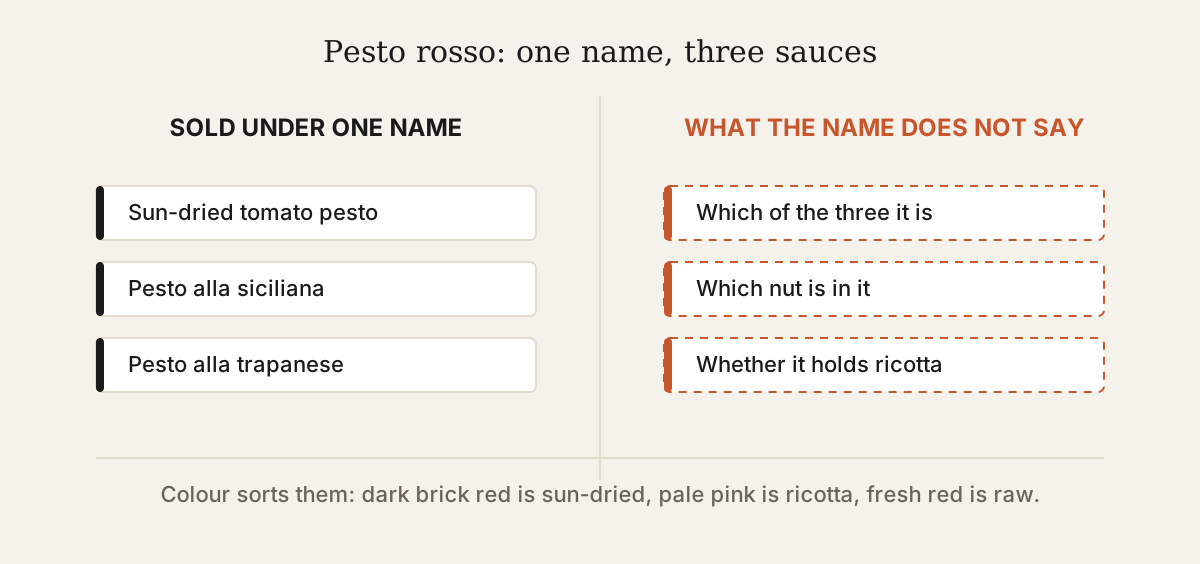
The three things sold as pesto rosso
The name describes a colour, so several unrelated sauces qualify.
Sun-dried tomato pesto is the most common in export markets. Rehydrated dried tomatoes blended with oil, nuts and cheese, giving a dark brick-red, dense, intensely savoury paste.
Pesto alla siciliana adds ricotta. Tomato, ricotta, basil, almonds and oil, producing a paler, pinker, creamier sauce that is milder than the sun-dried version.
Pesto alla trapanese uses raw tomato and almonds rather than pine nuts, with basil and garlic, giving a fresher, lighter, more fragrant sauce. This site covers it on its own page.
Some jars are simply a tomato and pepper paste with little claim to any tradition, and these are the ones the umbrella name conceals most effectively.
Colour is a usable first sort. Dark brick red means sun-dried; pale pink means ricotta; bright fresh red means raw tomato.
None of the three is a version of the others, and a recipe naming one specifically means that one.
How to read the label
The ingredient list resolves the ambiguity that the name creates.
Look for sun-dried or dried tomato as against tomato, tomato paste or tomato pulp. This is the single most informative line.
Look for ricotta, which identifies the Sicilian style immediately.
Look for which nut. Almonds point to Trapanese or Sicilian; pine nuts point to a Genovese-derived formulation with tomato added.
Check the cheese. Pecorino, Parmigiano, or none at all, each of which shifts the salt and the character.
Read for cashews. Cashew standing in for pine nuts is the commonest economy in any pesto and it is declared.
Read for potato flakes, starch or excessive oil, all of which pad a thin paste.
Checked on 13 August 2026, the first page of United States results for pesto rosso returned recipe publishers rather than jarred products, which describes that search on that date rather than recommending any seller. Counting rule: a result counts as a seller when it offers a jarred pesto rosso for purchase. On that rule the first page carried none.
How to judge one once open
Judge it on colour, then texture, then the oil.
Colour should be even and deep for a sun-dried version, without a separated orange oil layer disproportionate to the paste.
Some oil separation is normal in any pesto and stirs back in. A centimetre of oil over a thin paste is padding.
Texture should be slightly coarse rather than perfectly smooth, since a genuine pesto is ground rather than emulsified.
It should smell of tomato and nut, with the cheese behind. A sharply acidic smell means excessive vinegar or citric acid, used to extend shelf life.
It should taste savoury and concentrated, not sweet. Sun-dried tomato carries natural sugar and a jar reading sweet has usually had more added.
A gritty or sandy texture indicates poorly ground nuts or, occasionally, undissolved cheese powder.
What it should cost
Expect roughly 7 to 15 dollars for a 180 to 200 gram jar in the United States.
Sun-dried tomatoes and nuts are the cost, and the cheaper jars economise on both, replacing pine nuts with cashew and padding the tomato with paste and oil.
Pine nuts are the single most expensive component in any pesto and their substitution is the usual saving.
Sicilian ricotta versions are rarer here and cost more, being a fresher product with a shorter life.
A very cheap jar is a tomato and oil paste, which is a fair thing at its price and is not a pesto in any meaningful sense.
Making a sun-dried tomato pesto is straightforward and the ingredients keep, which is worth weighing against a jar.
How to use it
Loosen it with pasta water and toss it through pasta off the heat, or spread it.
Its density means it needs thinning. A spoonful of pesto rosso straight from the jar onto hot pasta will clump rather than coat.
Never heat it. Pesto of any colour is a raw sauce and cooking it turns the basil bitter and the oil greasy.
A few spoonfuls of pasta water is the correction, added off the heat and tossed until it emulsifies.
It is very good as a spread on bread, in a sandwich, or under a piece of fish before roasting.
Do not add salt before tasting. Sun-dried tomatoes and cheese are both salty.
A dark red pesto suits robust shapes, and its density means it clings to ridged pasta far better than to smooth.
Storage
Unopened, a year or more in a cool dark cupboard. Once opened, refrigerated, one to two weeks.
Cover the surface with a film of olive oil after each use, which keeps air off the paste and prevents darkening.
Use a clean spoon each time, since introduced bacteria are what spoil an open jar.
It freezes well in portions, and freezing is the practical answer to a jar you will not finish.
Darkening at the surface is oxidation rather than spoilage and can be stirred in or scraped off.
Discard any jar with a bulging lid unopened.
Frequently asked questions
What is pesto rosso?
Pesto rosso means red pesto and is an umbrella term rather than a single product. It covers sun-dried tomato pesto, which is dark and intensely savoury; pesto alla siciliana, which includes ricotta and is paler and creamier; and pesto alla trapanese, made with raw tomato and almonds. Some jars are simply a tomato and pepper paste with no traditional claim.
What is the difference between pesto rosso and pesto genovese?
Pesto genovese is the green Ligurian sauce of basil, pine nuts, garlic, Parmigiano, Pecorino and olive oil, and it is tightly defined. Pesto rosso is any of several red preparations built on tomato, and the name specifies a colour rather than a recipe. Genovese is fresher and more herbal; red versions are denser, sweeter and more savoury.
Can you heat pesto rosso?
Pesto of any colour is a raw sauce and should not be cooked, since heat turns the basil bitter and makes the oil greasy. It is added to pasta off the heat and loosened with a few spoonfuls of the starchy cooking water so it emulsifies and coats rather than clumping. The same rule applies to green pesto.
Why is my pesto rosso so thick?
Density is normal for a red pesto, particularly a sun-dried tomato version, since dried tomato and ground nuts make a paste rather than a sauce. It is meant to be loosened before use with pasta water, which both thins it and helps it emulsify. A jar that is thin and swimming in oil is the opposite problem and usually indicates padding.
Are the nuts in pesto rosso pine nuts?
Which nut is used depends on the style and is declared on the label. Almonds indicate a Trapanese or Sicilian formulation; pine nuts indicate a Genovese-derived recipe with tomato added. Cashews appear frequently as a cheaper substitute for pine nuts, which are the most expensive component of any pesto, and their presence is the commonest economy in a jar.
CalItalia Food covers Italian ingredients: what they are, how to tell a good one from an ordinary one, and where to buy them in the United States.