
Castelmagno: The Crumbly Piedmontese DOP That Sometimes Goes Blue
A rare mountain DOP from three Cuneo villages, crumbly and sharp, occasionally veined. Why the blue is optional, what alpeggio means on the label, and how to judge and use one.
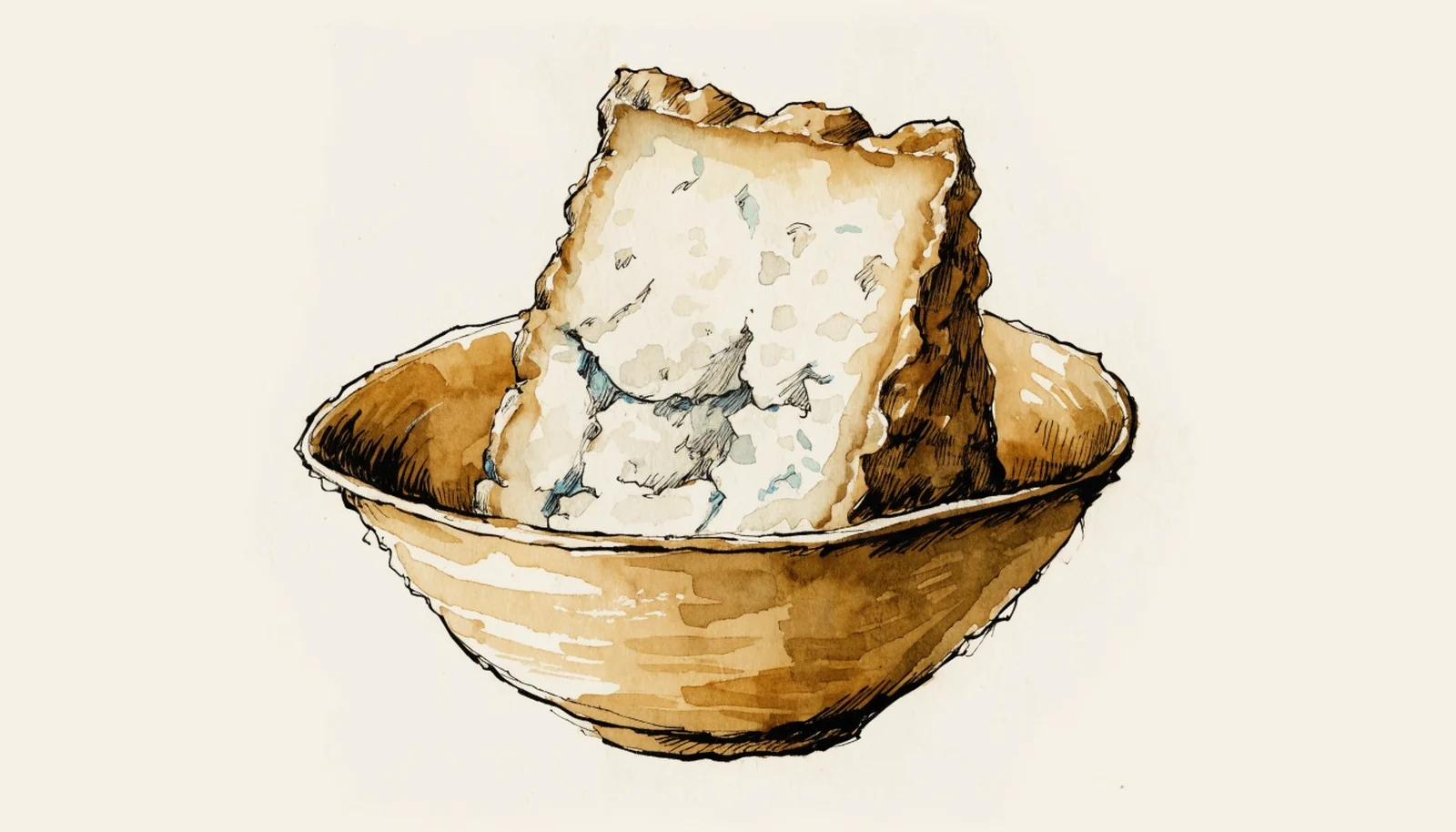
Castelmagno is a DOP cow’s-milk cheese from three mountain communes in the province of Cuneo in Piedmont, with a crumbly white to straw paste, a thick rough rind, and a sharp savoury flavour. Older wheels sometimes develop blue veining, and sometimes do not. It is among the rarest of the Italian ingredients worth paying more for.
That inconsistency is not a fault in either direction. Castelmagno is one of the few cheeses where blue veining is permitted rather than required, and knowing that prevents both disappointment and suspicion at a counter.
What Castelmagno actually is
Castelmagno is made from cow’s milk, sometimes with small additions of sheep’s or goat’s milk, curdled, broken up, pressed into cylindrical wheels, salted and aged in cool damp cellars or caves.
The zone is tiny. Three communes in the Grana valley of the Cuneo province, Castelmagno, Pradleves and Monterosso Grana, which is one of the smallest DOP zones in Italy.
The curd is broken and left before pressing, a step that gives the paste its characteristic crumbly, granular structure rather than a smooth elastic one.
The rind is thick, rough and reddish-brown to grey, developing naturally in the ageing cellar.
Ageing runs from around sixty days upward, with wheels frequently held six months or more.
The paste is white to ivory when young, deepening toward straw and amber with age.
It is a genuinely rare cheese. Production is small even by Italian mountain-cheese standards, and it very nearly disappeared before a revival.
Why the blue is optional
Castelmagno may develop blue-green veining and no one adds mould to make it happen.
The mould arrives naturally from the cellar. Ageing in damp stone caves exposes the wheels to ambient Penicillium, which enters through cracks in the crumbly paste.
The crumbly texture is what admits it. A tightly knit paste would keep mould out; Castelmagno’s broken-curd structure leaves internal spaces for it to travel.
No piercing is done. Unlike gorgonzola, whose wheels are spiked with needles to admit air deliberately, Castelmagno is not encouraged in any way.
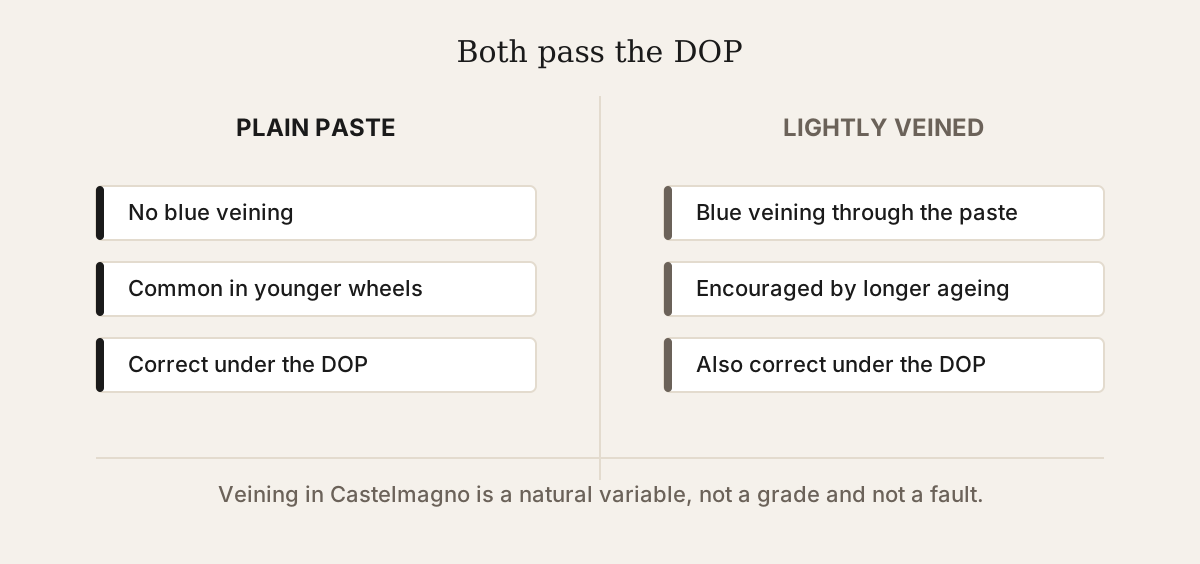
So veining tracks age and cellar conditions. Older wheels aged in damper caves are more likely to be veined; younger ones and drier cellars produce plain cheese.
Both are correct under the DOP. A plain Castelmagno is not a failed blue and a veined one is not an accident.
The veining changes the flavour rather than defining it. A veined wheel is sharper and more pungent; a plain one is savoury, nutty and salty without the blue note.
What alpeggio means
The strongest Castelmagno carries a further term on the label.
Alpeggio designates wheels made from summer mountain-pasture milk, produced at altitude while the herds are grazing high.
That milk is different. Alpine summer pasture carries a far greater variety of grasses and flowers than valley fodder, and the cheese made from it is more complex and more aromatic.
It is made in small quantity and for part of the year only, which is why it costs considerably more.
The distinction is real rather than marketing. Where a producer has gone to the trouble of making cheese at altitude, the label says so, and the difference is tastable.
Non-alpeggio Castelmagno is still Castelmagno and still holds the DOP.
How to judge a piece
Judge it on the paste, then the rind, then the smell.
The paste should be crumbly and granular, breaking into irregular pieces rather than slicing cleanly. A smooth elastic paste is not this cheese.
Colour should run white to amber depending on age, evenly, without a grey band under the rind.
Veining, if present, should be fine and blue-green, running through the natural fissures rather than in the straight lines a needle would leave.
The rind should be thick, rough and dry, without stickiness or deep cracking.
It should smell savoury and nutty, sharpening with age, with a mould note in a veined wheel. Ammonia is a fault.
Look for the DOP mark, and for alpeggio if you want the mountain-pasture version.
Checked on 13 August 2026, the first page of United States results for castelmagno returned reference material, a Slow Food entry and specialist retailers, which describes that search on that date rather than recommending any seller. Availability here is genuinely poor.
What it should cost
Expect roughly 30 to 50 dollars a pound in the United States where it can be found, and alpeggio above that.
The zone is three villages, the production is tiny, the ageing is long and the mountain logistics are difficult. Every factor pushes the same way.
It is one of the more expensive Italian cheeses relative to how little known it is outside Piedmont.
Availability rather than price is the real constraint, and it appears at specialist counters intermittently rather than reliably.
There is no close substitute. A crumbly aged pecorino approaches the texture and not the flavour; a mild gorgonzola approaches a veined wheel’s pungency and not its structure.
How to use it
Eat it in pieces at room temperature, or melt it into the dish it is famous for.
Its savour and salt want sweetness opposite them: honey, and specifically chestnut honey, which is the Piedmontese pairing, along with walnuts and a Barolo or Barbaresco.
Gnocchi al Castelmagno is its dish, gnocchi in a sauce of the cheese melted with cream, and it is the one preparation most Italians associate with it.
Serve it at room temperature. Cold, a crumbly aged cheese is dull and its aroma is closed.
Break it rather than slicing it. The crumbly structure means a knife produces rubble anyway, and irregular pieces are how it is served.
Melt it gently. It does not melt smoothly like a fontina and needs cream or milk to carry it.
Keep the rind for a soup, which is standard for any hard mountain cheese.
Storage
Wrapped in waxed or greaseproof paper, refrigerated, two to three weeks.
Paper rather than plastic film, so the thick rind can breathe.
Rewrap after each use with fresh paper.
Surface mould on the rind can be brushed or cut away and the paste beneath is sound.
A veined wheel keeps like a blue and should be stored away from other cheeses, since the mould travels.
Do not freeze it. A crumbly paste turns to grit.
Frequently asked questions
Is Castelmagno a blue cheese?
Castelmagno is not a blue cheese by definition, and it sometimes becomes one. Blue-green veining develops naturally in older wheels from ambient mould in the damp ageing caves, entering through the fissures in the crumbly paste. No mould is added and no piercing is done, unlike gorgonzola. Both plain and veined wheels are correct under the DOP.
What does alpeggio mean on Castelmagno?
Alpeggio designates Castelmagno made from summer mountain-pasture milk, produced at altitude while the herds graze high. That milk carries a far greater variety of grasses and flowers than valley fodder, and the resulting cheese is more complex and aromatic. It is made in small quantity for part of the year only and costs considerably more.
Why is Castelmagno so crumbly?
Castelmagno’s crumbly granular paste comes from the curd being broken up and left before pressing, rather than being worked into a smooth elastic mass. That structure is deliberate and it is also what allows ambient mould to travel into the wheel and produce the optional blue veining. A smooth elastic Castelmagno would not be one.
What can I substitute for Castelmagno?
No cheese substitutes closely for Castelmagno. A crumbly aged pecorino approaches its texture without its flavour, and a mild gorgonzola approaches a veined wheel’s pungency without its crumbly structure. Given how difficult it is to find in the United States, a dish built around it is usually better made with a different cheese and a different intention.
How long is Castelmagno aged?
Castelmagno is aged from around sixty days at minimum, and wheels are frequently held six months or considerably longer. Young wheels are white, milder and rarely veined. Older ones deepen toward amber, sharpen substantially, and are far more likely to have developed the natural blue veining from the ageing caves.
CalItalia Food covers Italian ingredients: what they are, how to tell a good one from an ordinary one, and where to buy them in the United States.