
Crescenza: The Same Cheese as Stracchino, Under a Name Worth Explaining
A soft rindless Lombard cheese, usually indistinguishable from stracchino. Where the two names came from, when a producer means something specific by crescenza, and how to buy and use it.
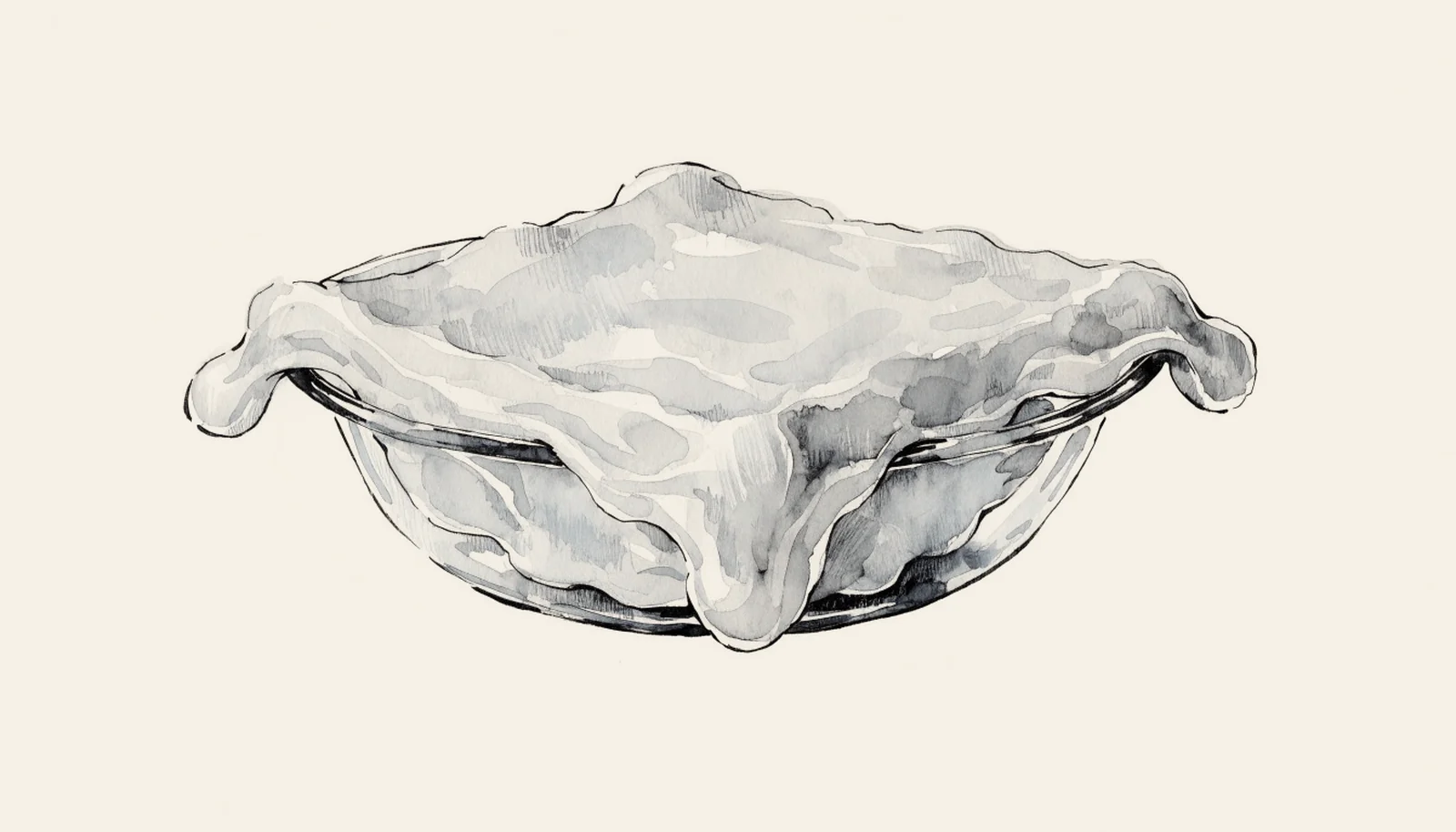
Crescenza is a soft, fresh, rindless cow’s-milk cheese from Lombardy, white, spreadable and lightly tangy. In most shops and for most producers it is the same cheese as stracchino, sold under a different word. Like the other fresh cheeses among the Italian ingredients covered here, it is bought on its date.
Two names for one product is an unsatisfying answer, so it is worth setting out where the words came from and the narrow cases where a producer does mean something specific by one of them.
What crescenza actually is
Crescenza is whole cow’s milk, lightly acidified and set with rennet, drained gently in flat moulds, lightly salted and sold within days.
It has no rind. A white slab, wrapped, with no surface development of any kind.
It is a fresh cheese, a few days to a couple of weeks old, and it does not ripen usefully beyond that.
The texture is soft and spreadable, holding a slab shape while yielding immediately.
The flavour is mild, milky and faintly tangy, with a light sour finish that is characteristic.
It comes from Lombardy, from the same plains and foothills as stracchino and Taleggio.
It carries no DOP and the name is in open use.
Where the two names come from
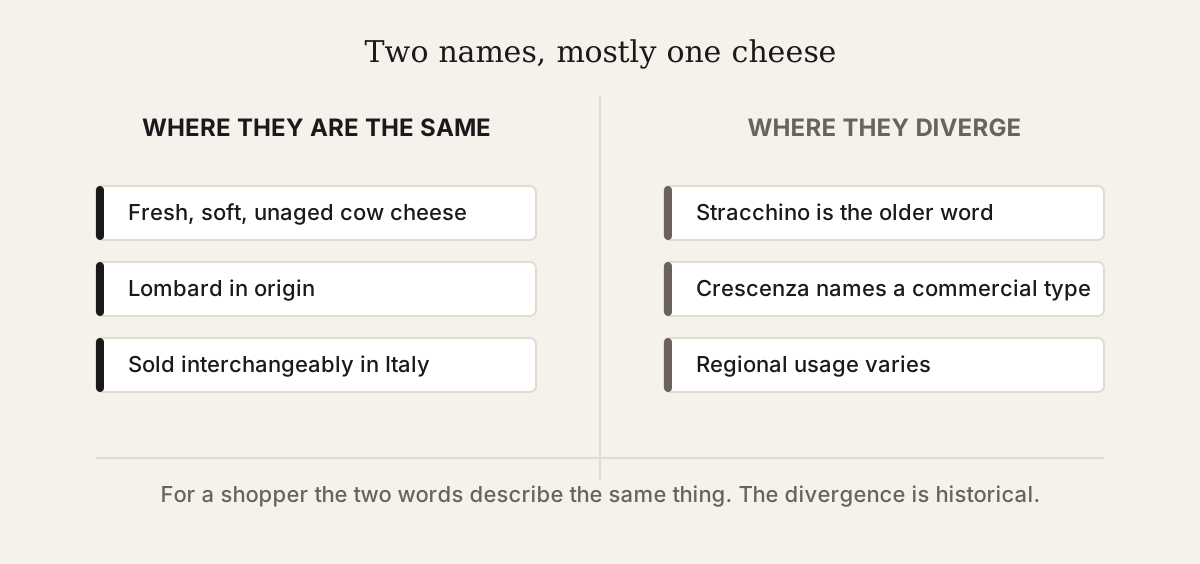
Crescenza and stracchino have different derivations, which is the only substantive thing separating them.
Stracchino comes from stracco, meaning tired, referring to cattle brought down from Alpine summer pasture in autumn, whose milk was made into a soft quick cheese.
Crescenza is generally traced to crescere, to grow, describing the way the fresh cheese swells slightly at the edges as it sits at room temperature.
Both words are old and regional, and they came to name overlapping products in adjoining parts of the same region.
Neither derivation implies a difference in method. They describe, respectively, where the milk came from and what the finished slab does on a counter.
So the names record two different observations about one family rather than marking a technical distinction.
When a producer does mean something specific
The overlap is large and it is not total, and the edges are worth knowing.
Where a distinction is drawn, crescenza is the softer and milder. Slightly higher moisture, slightly less tang, and a texture that spreads more readily.
Stracchino may be used for the marginally firmer, tangier version, closer to the historical autumn-milk product.
Some producers use crescenza for a specific commercial format and stracchino for another, which is a house convention rather than an industry rule.
Neither word is protected, so no producer is constrained by anyone else’s usage.
The practical consequence is that the label settles nothing. Where the difference matters to you, the reliable move is to ask the counter or read the moisture and fat figures rather than the name.
For almost every use they are interchangeable, and a recipe specifying one will work with the other.
How to judge a piece
Judge it on the date, then the surface, then the smell.
Buy the freshest available, since this is a fresh cheese and the date outweighs the producer.
The surface should be smooth, white and slightly moist, without a skin, without yellowing and without visible mould.
It should hold a slab shape while giving immediately to a knife. Slumping into liquid means it is past its point.
It should smell milky with a light tang. A sharp sour or ammoniated note means it has gone.
A little liquid in the packaging is normal, and a pool is not.
Checked on 13 August 2026, United States retail for crescenza runs to Italian importers and specialist cheese counters rather than general supermarkets, which describes availability on that date rather than recommending any seller.
What it should cost
Expect roughly 12 to 22 dollars a pound in the United States, essentially the same as stracchino.
There is no ageing to pay for, so the cost is milk, handling and the waste that a very short shelf life produces.
Compare the two names on price where a shop carries both, since they are usually the same cheese and are not always the same money.
Domestic American versions are made by Italian-style creameries, and freshness advantages them over an import on a two-week clock.
Availability rather than price is the constraint, as with every fresh cheese on this site.
How to use it
Spread it on bread at room temperature or melt it into something hot at the last moment.
Its mildness makes it a carrier. It goes under cured meats, alongside honey or tomatoes, and into anything that wants richness without a competing flavour.
Take it out of the refrigerator thirty minutes before serving. Cold, it is stiff and tastes of almost nothing.
It is the traditional filling for focaccia di Recco, sealed between two paper-thin sheets of dough and baked briefly so it melts to a cream.
Stir it through hot pasta off the heat for an instant sauce.
Do not cook it hard. Sustained heat splits it and releases water.
It is not a board cheese. Put it next to anything with a rind and it will be invisible.
Storage
Refrigerated in its wrapping, about a week, and less once opened.
It does not ripen. With no rind and little salt there is nothing developing and nothing protecting it.
Keep it tightly wrapped, since it dries at the surface and takes on refrigerator smells.
Sourness is the end, and there is no pleasant late stage as there is with an aged cheese.
Do not freeze it. The paste separates into curd and water and does not recombine.
Buy small and often, which is the only real answer on this timescale.
Frequently asked questions
Is crescenza the same as stracchino?
Crescenza and stracchino are the same cheese in most shops and for most producers, sold under two regional names. Where a distinction is drawn at all, crescenza is the slightly softer, moister and milder of the two. Neither name is protected, so no producer is bound by anyone else’s usage and the label settles very little.
What does crescenza mean?
Crescenza is generally traced to crescere, meaning to grow, describing the way the fresh slab swells slightly at the edges as it warms on a counter. Stracchino, by contrast, comes from stracco, meaning tired, and refers to cattle brought down from summer mountain pasture. The two words record different observations about the same family of cheese.
Does crescenza have a rind?
Crescenza has no rind at all. It is sold as a soft white slab with no surface development, which is a consequence of being eaten within days rather than ripened. This is what separates it from Taleggio, its aged relative in the same Lombard family, which develops a washed rind over several weeks.
How do you eat crescenza?
Crescenza is spread on bread at room temperature, melted into hot pasta off the heat as an instant sauce, or baked into focaccia di Recco between two thin sheets of dough. It should be taken out of the refrigerator half an hour before serving, since cold it is stiff and tastes of very little. It is not a cheeseboard cheese.
How long does crescenza last?
Crescenza keeps about a week refrigerated and less once opened. With no rind and very little salt there is nothing protecting it, and it does not develop with time the way an aged cheese does. It does not freeze, since the paste separates into curd and water on thawing.
CalItalia Food covers Italian ingredients: what they are, how to tell a good one from an ordinary one, and where to buy them in the United States.