
Stracchino: The Soft Fresh Cheese Named After Tired Cows
A young, spreadable, tangy Lombard cheese with no rind. What the name actually means, how it relates to crescenza and Taleggio, how to judge and use it, and why it does not keep.
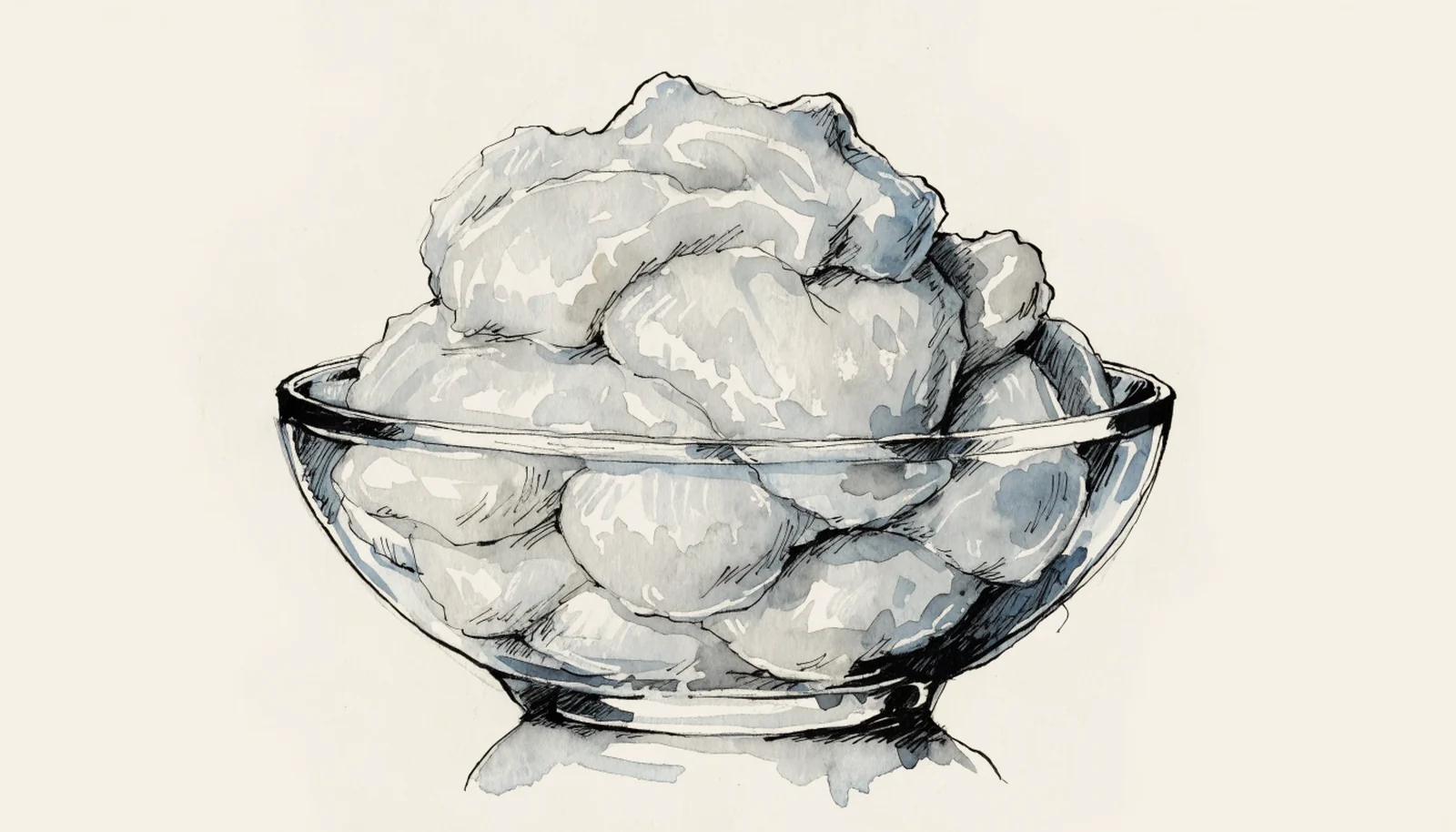
Stracchino is a soft, fresh, rindless cow’s-milk cheese from Lombardy, white, spreadable and faintly tangy, eaten within days of being made. It is one of the least dramatic cheeses Italy produces and one of the most used in its own region. Its short life makes it one of the harder imports among Italian ingredients sold in the United States.
Its name comes from the dialect word for tired, and the derivation is a genuine piece of history rather than a folk story attached later.
What stracchino actually is
Stracchino is made from whole cow’s milk, lightly acidified and set with rennet, drained gently in square or rectangular moulds, lightly salted, and sold within days.
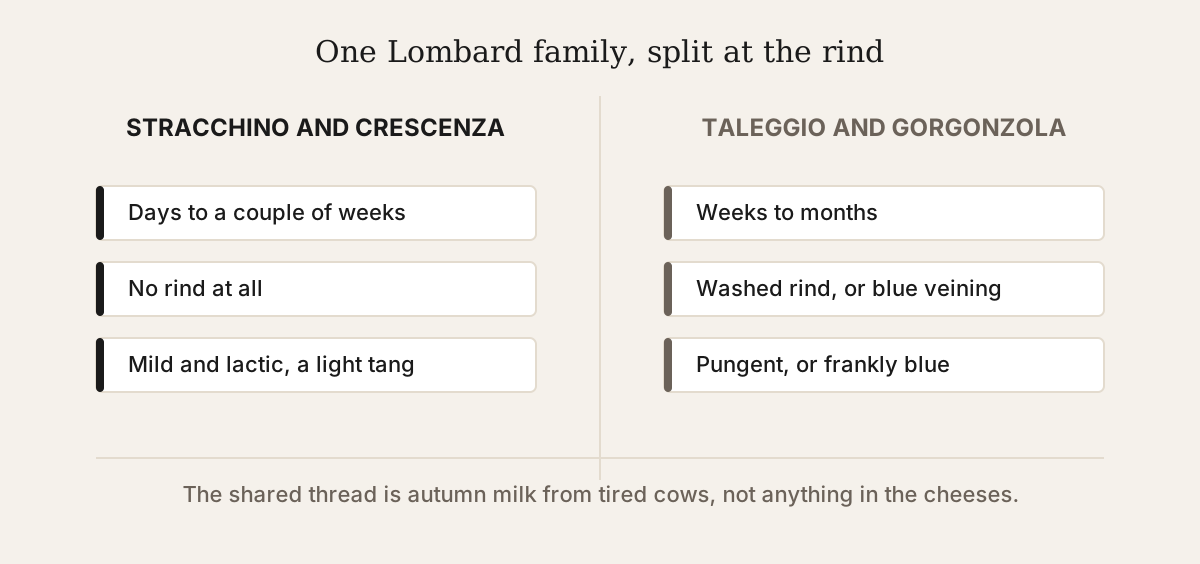
It has no rind at all. It is sold as a soft white slab, usually wrapped in paper or plastic, and there is no surface to develop anything.
It is barely aged. A few days to a couple of weeks, which places it among the fresh cheeses rather than the ripened ones.
The texture is soft and spreadable, holding its shape as a slab but yielding immediately, somewhere between a thick cream cheese and a young Brie without the rind.
The flavour is mild and lactic with a light tang, and a faintly sour finish that is characteristic rather than a fault.
It is from Lombardy, from the plains and foothills around Bergamo, Brescia and Milan.
It carries no DOP. Stracchino is a traditional style name in open use.
What the name means
Stracchino derives from stracco, Lombard dialect for tired, and it refers to the cows rather than to anything about the cheese.
The reference is to transhumance. Cattle were moved down from Alpine summer pasture to the plains in autumn, and arrived tired from the descent.
Tired cows gave less milk and different milk. The milk from animals at the end of that journey was traditionally worked into a soft quick cheese rather than a keeping one.
So the name records a season and a practice, not a flavour or a texture, which is why nothing in the finished cheese explains it.
The whole family carries the association. Taleggio was historically a stracchino, and the word once covered a group of Lombard cheeses rather than this one product.
This is a derivation with a documented agricultural basis, unlike a good many food-name origin stories, and it is worth stating for that reason.
Stracchino, crescenza and Taleggio
Three Lombard cheeses sit in one family and the boundaries between them are genuinely blurred.
Crescenza and stracchino are frequently the same thing under two names, and in much of Lombardy the words are used interchangeably. Where a distinction is drawn, crescenza tends to be the slightly softer and milder.
Taleggio is the aged, washed-rind member. It began as a stracchino left to ripen, and its square format is inherited from the same tradition.
Gorgonzola is also historically in the family, being a stracchino that developed blue mould, which is why it is sometimes called stracchino verde in older sources.
So the family spans from a three-day fresh cheese to a blue and the common thread is the autumn milk and the Lombard plain rather than anything in the finished products.
In practice, buy on description rather than name. A shop’s stracchino and crescenza are probably the same cheese, and asking is faster than reasoning about it.
How to judge a piece
Judge it on the date, then the surface, then the smell.
Buy the freshest available. This is a fresh cheese and the date matters more than the producer.
The surface should be smooth, white and slightly moist, without a skin, without yellowing and without visible mould.
It should hold its shape as a slab while yielding immediately to a knife. A slab that has slumped into liquid is past its point.
It should smell milky with a light tang, faintly of yoghurt. A sharp sour or ammoniated smell means it has gone.
A little liquid in the packaging is normal. A pool of it is not.
Checked on 13 August 2026, United States retail for stracchino runs to Italian importers and specialist cheese counters rather than general supermarkets, which describes availability on that date rather than recommending any seller.
What it should cost
Expect roughly 12 to 22 dollars a pound in the United States where it is available.
There is no ageing to pay for, so the cost is the milk, the handling and the short shelf life, which is the same economics that prices burrata and stracciatella.
Availability is the real constraint rather than price. A cheese with a two-week life at best is a difficult import.
Domestic American versions are made by Italian-style creameries and, as with any fresh cheese, freshness advantages them over an import.
Crescenza sold under that name is usually the same product and worth checking the price of alongside.
How to use it
Spread it on bread at room temperature, or melt it into something hot at the last moment.
Its mildness makes it a carrier rather than a feature, and it goes with almost anything: cured meats, honey, tomatoes, grilled vegetables, a bitter leaf.
Take it out of the refrigerator thirty minutes before serving. Cold, it is stiff and tastes of very little.
It is the traditional filling for focaccia di Recco, sealed between two thin sheets of dough and baked, where it melts to a cream.
Stir it into hot pasta off the heat as a quick sauce, which takes seconds and is one of its best uses.
Do not cook it hard. It splits under sustained heat and releases water.
Do not treat it as a cheeseboard centrepiece. It is an everyday cheese and it will be outshone by anything with a rind on the same plate.
Storage
Refrigerated in its wrapping, about a week, and rather less once opened.
It does not improve. A fresh cheese with no rind and little salt has nothing protecting it and nothing developing.
Keep it tightly wrapped, since it dries at the surface and picks up refrigerator smells.
Sourness is the end point, and unlike an aged cheese there is no stage of that which is pleasant.
Do not freeze it. The paste separates into curd and water and does not recombine.
Buy small quantities more often, which is the only real answer for a cheese on this timescale.
Frequently asked questions
What does stracchino mean?
Stracchino comes from stracco, Lombard dialect for tired, and refers to cattle rather than to the cheese. Herds were moved down from Alpine summer pasture to the plains in autumn and arrived tired from the descent, and their milk was traditionally made into a soft quick cheese. The name therefore records a season and a farming practice rather than describing any quality of the finished product.
Is stracchino the same as crescenza?
Stracchino and crescenza are frequently the same cheese under two names, and in much of Lombardy the words are used interchangeably. Where a distinction is drawn at all, crescenza tends to be marginally softer and milder. Buying on the shop’s description rather than reasoning from the name is the practical approach.
Is stracchino related to Taleggio?
Taleggio began as a stracchino that was left to ripen with a washed rind, and its square format comes from the same Lombard tradition. Gorgonzola is historically in the same family, being a stracchino that developed blue mould, and older sources sometimes call it stracchino verde. The family shares the autumn milk and the region rather than anything in the finished cheeses.
How long does stracchino keep?
Stracchino keeps about a week refrigerated and rather less once opened, which is short even by fresh-cheese standards. It has no rind and very little salt, so nothing protects it, and it does not develop with time. Freezing does not work, since the paste separates into curd and water and does not recombine.
Can you cook with stracchino?
Stracchino melts readily and is best added at the last moment rather than cooked hard, since sustained heat splits it and releases water. Its classic cooked use is focaccia di Recco, where it is sealed between two thin sheets of dough and baked briefly. Stirring it into hot pasta off the heat makes a quick sauce in seconds.
CalItalia Food covers Italian ingredients: what they are, how to tell a good one from an ordinary one, and where to buy them in the United States.