
Burrata: A Bag of Mozzarella With Cream Inside, and the Clock It Runs On
Fresh mozzarella wrapped around stracciatella and cream. Why it was invented to use up scraps, why the date matters more than for any other cheese, and how to judge one.
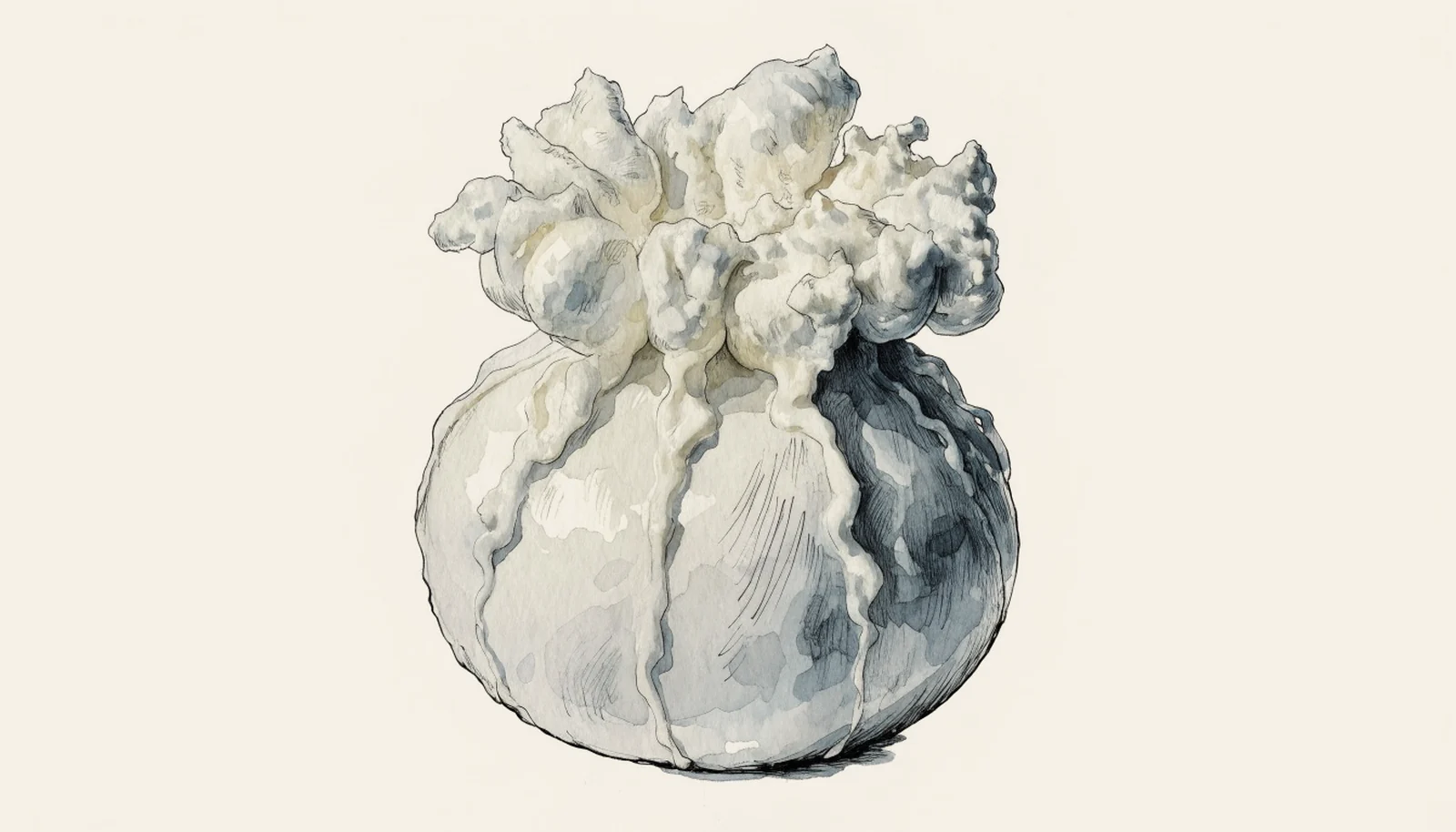
Burrata is a pouch of fresh stretched-curd mozzarella filled with stracciatella, which is torn curd mixed with cream, and closed at the top into a knot. Cutting it open releases the filling, which is the entire point of the construction. It is also the product where the usual case for paying more for the Italian original runs backwards.
It is also the most perishable thing this site covers, and the difference between a good burrata and a disappointing one is almost always how many days old it is rather than who made it.
What burrata actually is
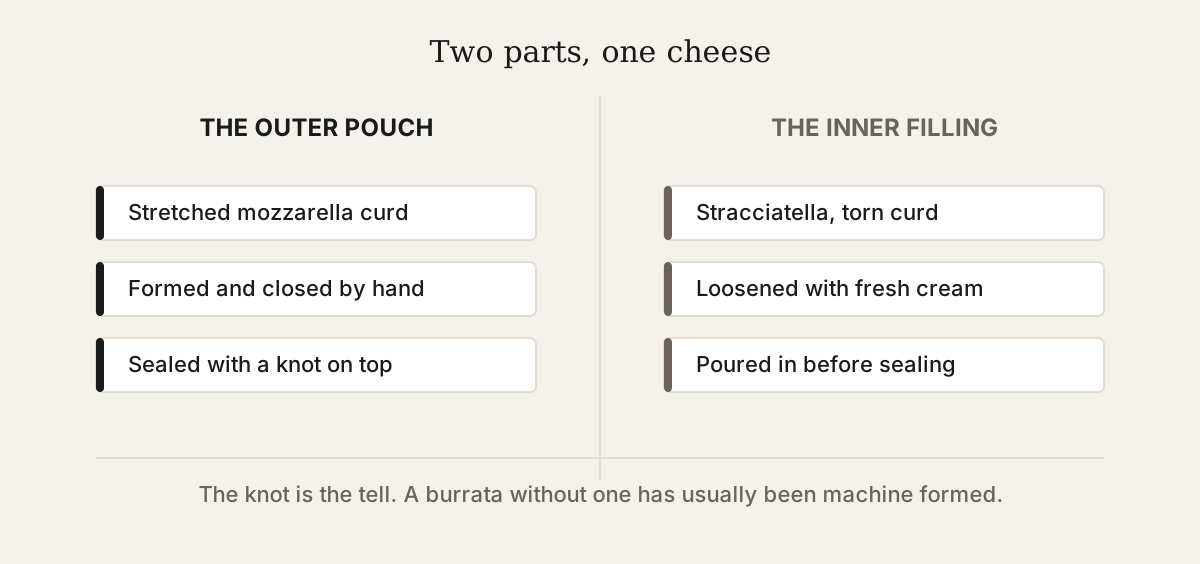
Burrata is made by forming a thin sheet of hot stretched mozzarella curd into a pouch, filling it with stracciatella, and tying the top closed.
The outside is mozzarella. The same stretched-curd cheese, worked into a bag rather than a ball.
The inside is stracciatella, which here means shreds of the same curd torn by hand and steeped in fresh cream. That is a specific cheese and not the gelato or the Roman soup that share the word.
The knot at the top is functional, closing the pouch, and is the traditional visual signature.
Cow’s milk is standard. A version made from buffalo milk, the milk of mozzarella di bufala, exists and is a distinct and more expensive product.
Nothing about it is aged. Burrata is a fresh cheese made and eaten within days.
Why it exists at all
Burrata was invented in Puglia in the early twentieth century as a way of using mozzarella offcuts, which explains its structure completely.
Stretching mozzarella produces scraps. Working the curd leaves shreds and trimmings that are perfectly good cheese and cannot be sold as a neat ball.
Cream turned the scraps into something better than the original. Steeping torn curd in cream produces stracciatella, which is richer than the mozzarella it came from.
Wrapping it in a mozzarella skin made it sellable. The pouch is packaging that you can eat, and it kept the filling together before plastic tubs existed.
So the whole product is a thrift solution that outgrew its origin, which is a common enough story in Italian food and is unusually visible here because the construction still shows the logic.
Andria in Puglia is the traditional home, and Burrata di Andria carries an IGP, though most burrata sold carries no designation.
The clock, which matters more here than anywhere else
Burrata has a shorter useful life than any other cheese in common sale, and the date is the single most important thing on the package.
It is at its best within a day or two of being made. In Puglia it is traditionally eaten the same day.
The cream filling is what degrades. It sours and separates well before the outer mozzarella shows any obvious fault.
A week-old burrata is not spoiled and is not worth buying. The filling turns firmer, flatter and slightly acidic, and the contrast between skin and centre that defines the product disappears.
This is why imported burrata is a difficult purchase. A cheese flown from Puglia has spent most of its window in transit, and a good domestic burrata made three days ago will usually beat it.
Buy on date rather than on origin, which reverses the usual advice on this site and is the honest reading for this one product.
How to judge one
Judge it on the date first, then the liquid, then the feel.
Check the made-on or use-by date and buy the freshest available. Nothing else you can assess matters as much.
The packing liquid should be cloudy-white and smell sweet. Yellowing liquid or a sour smell means it has gone.
It should feel heavy and full, yielding but not slack. A burrata that has collapsed has lost filling through a split in the pouch.
The pouch should be intact. A leaked burrata will have soaked its liquid and the interior contrast is gone.
The skin should be smooth and glossy, not rubbery or dry.
Checked on 13 August 2026, the first page of United States results for burrata returned reference material and cheese publishers alongside a domestic producer, which describes that search on that date rather than recommending any seller. Domestic production is substantial, which for this cheese is an advantage.
What it should cost
Expect roughly 8 to 16 dollars for a single ball of around eight ounces in the United States, with imported Italian and buffalo-milk versions above that.
The cost is labour and shelf life rather than ingredients. Each ball is formed and filled by hand, and a product with a few days of life carries the waste of everything unsold.
Imported burrata commands a premium that is hard to justify, given that freshness dominates quality here and importing costs freshness.
Burrata di Andria IGP is the protected version and is genuinely of the place, with the same caveat about transit time.
Buffalo-milk burrata is a real step up in flavour and roughly doubles the price.
How to use it
Serve it whole and at room temperature, cut open at the table, with good oil, salt and bread.
Its richness needs acid and salt nearby rather than more richness: a ripe tomato, a bitter leaf, a piece of prosciutto, an anchovy.
Take it out of the refrigerator thirty minutes before serving. Cold burrata is firm and mute, and the temperature difference is larger here than for almost any other cheese.
Cut it at the table. The filling running out is the presentation, and cutting it in the kitchen wastes it.
Do not cook it. Heat splits the cream filling and there is nothing left worth having. Mozzarella is the cheese for a hot dish.
Salt it at the moment of serving. Salt applied early draws water out of the filling.
Do not put it under a dressing. Vinegar and cream on a plate together curdle visibly within minutes.
Storage
Refrigerated in its liquid, two to three days at most, and preferably eaten the day it is bought.
Keep it in its packing liquid until the moment of serving. Draining it early dries the surface.
It does not improve and it does not hold. There is no version of storing burrata that produces a better result than eating it sooner.
Do not freeze it. The filling separates completely and the pouch turns to rubber.
A burrata past its point is still usable torn into a hot pasta off the heat, where it behaves like a rich ricotta, which is the salvage rather than the intention.
Frequently asked questions
What is the difference between burrata and mozzarella?
Burrata is a pouch made of mozzarella filled with stracciatella and cream, so mozzarella is one of its two components rather than a separate cheese. Mozzarella is uniform throughout, firmer and much less rich. Burrata’s whole character depends on the contrast between the elastic skin and the loose creamy centre, and it has a considerably shorter shelf life as a result.
What is inside burrata?
Inside a burrata is stracciatella, which in this context means shreds of stretched mozzarella curd torn by hand and steeped in fresh cream. That is a distinct cheese with its own name, not simply cream. The word stracciatella also names a gelato flavour and a Roman egg soup, which are unrelated products sharing a word that means little shreds.
How long does burrata last?
Burrata lasts two to three days refrigerated at most, and is at its best within a day or two of being made. The cream filling sours and separates well before the outer mozzarella looks wrong. This is far shorter than any other cheese in common sale, which is why the date on the package matters more than the producer or the country of origin.
Can you cook with burrata?
Burrata should not be cooked, because heat splits the cream filling and destroys the contrast between skin and centre that the whole product is built on. Mozzarella is the correct cheese for a hot dish. A burrata past its best can be torn into hot pasta off the heat, where it behaves like a rich ricotta, but that is salvage rather than a use.
Is imported burrata better than domestic?
Imported Italian burrata is usually not better than good domestic burrata, because freshness dominates quality in this cheese and importing costs several days of a two-to-three-day window. A domestic ball made three days ago will generally beat one flown from Puglia. This reverses the usual advice on Italian ingredients and is specific to how quickly burrata declines.
CalItalia Food covers Italian ingredients: what they are, how to tell a good one from an ordinary one, and where to buy them in the United States.