
Caciocavallo: The Southern Cheese Hung in Pairs
A stretched-curd cheese from southern Italy, aged in a teardrop shape and tied over a pole. What the shape means, how age changes it, how to judge and use it, and how it differs from provolone.
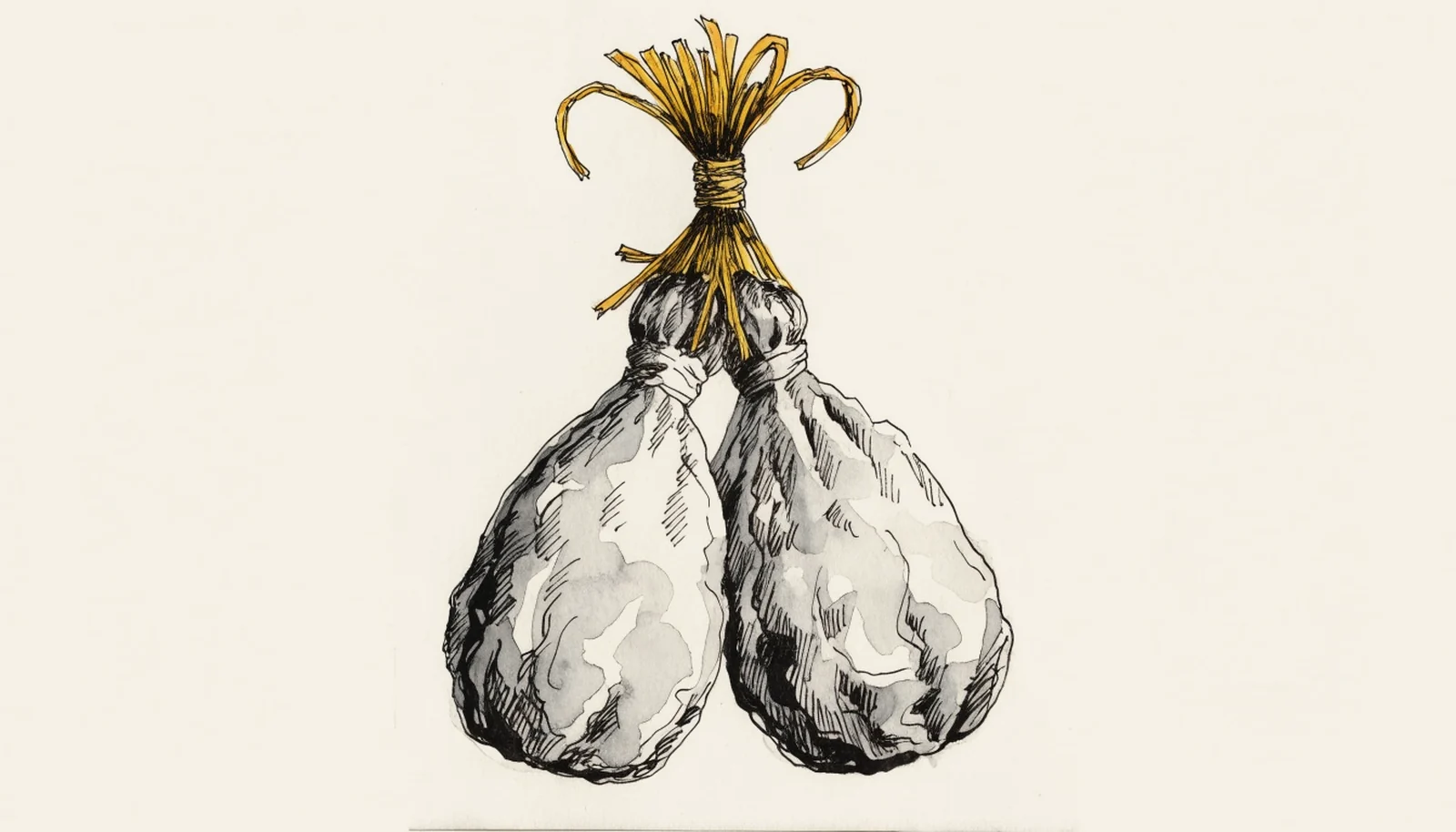
Caciocavallo is a stretched-curd cow’s milk cheese from southern Italy, shaped into a teardrop with a small head, tied in pairs and hung over a pole to age, which is where the name comes from. It is firm, tangy and sharper than mozzarella, and it is not smoked unless the label says so. It is one of the southern entries among the Italian ingredients worth knowing by name.
The name means cheese on horseback and describes the hanging rather than any connection to horses, which is the first thing to clear up because the mistranslation is everywhere.
What caciocavallo actually is
Caciocavallo is a pasta filata cheese, meaning the curd is heated and stretched before shaping, then brined and hung to age for anywhere from a few weeks to well over a year. Cow’s milk, rennet, salt, and time.
The stretching is what gives it the characteristic layered, slightly fibrous texture that reveals itself when a piece is broken rather than cut. It belongs to the same family as mozzarella, provolone and scamorza, all of which are stretched, and it separates from them in shaping and ageing.
The shape is functional. The curd is formed into a bulb with a narrow neck, a cord is tied around the neck, and pairs are hung across a beam. The neck exists so the cheese has something to be tied by, not for decoration.
Where it comes from
Caciocavallo is made across the southern regions, and several versions carry protected status. Caciocavallo Silano DOP is the most widely available, covering production across parts of Calabria, Basilicata, Campania, Molise and Puglia.
Not all caciocavallo carries a designation, and much of what is sold in the United States does not. As with several products on this site, the mark narrows the field rather than defining it.
How age changes it
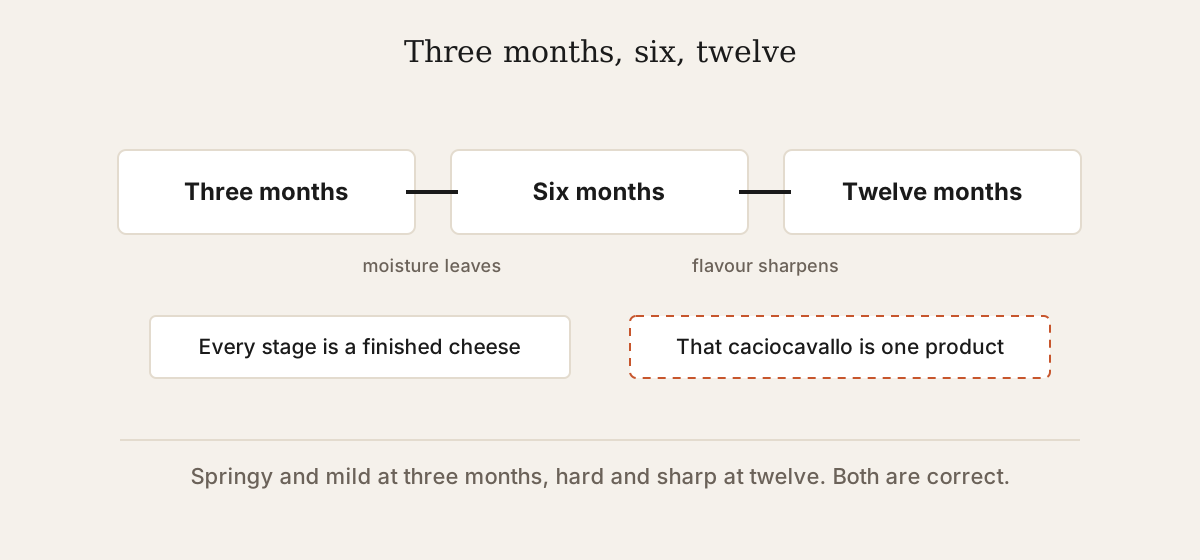
Young caciocavallo is mild, springy and faintly milky; aged caciocavallo is hard, deep yellow and sharply savoury. The span is wide enough that the two ends behave like different cheeses.
Two to three months. Pale, elastic, mild, and good for melting. This is the version most similar to a firm provolone.
Six months. Firmer, straw-coloured, with a distinct tang beginning and enough structure to shave rather than slice.
Twelve months and beyond. Hard, deep gold, granular, sharp and quite salty, with a piquancy that can approach a young pecorino. At this age it is a grating cheese as much as a table one.
Ask the age before assuming which you are buying. A recipe expecting the young melting version will not work with a twelve-month piece, and a cheese board built around a three-month one will read as bland.
Caciocavallo against provolone against scamorza
All three are stretched-curd southern cheeses, and they differ in shape, ageing and whether smoke is involved.
Provolone is shaped in larger cylinders or pears and is very commonly sold in a piccante version that has been aged with a different rennet, giving it a sharper bite. It is the closest relative and often the easiest substitute.
Scamorza is younger, drier on the outside, frequently smoked, and made to be eaten within weeks. Smoked scamorza is a distinct product and is what many people have actually tasted when they think they have had smoked caciocavallo.
Caciocavallo sits between them, capable of both the young melting role and the aged grating one depending on how long it hung.
On smoke. Caciocavallo is not traditionally smoked, though smoked versions exist and are labelled as such. If a piece tastes strongly of smoke and the label does not mention it, it is likely a scamorza or a smoked provolone.
How to judge a piece
Look at the paste for evenness, check the rind, and ask when the wheel was cut.
The paste should be even in colour, deepening with age from near-white to gold, with no chalky centre. A chalky core in an older piece means it dried unevenly.
Small eyes are normal, large irregular holes are not. This is a stretched cheese rather than a holed one.
The rind should be thin, smooth and unbroken, sometimes waxed. Cracks in the rind of an aged piece let it dry hard at the edges.
It should break in layers when pulled rather than crumbling like a hard grating cheese, even at twelve months. That layering is the pasta filata signature and its absence suggests something else.
What it should cost and where to find it
Expect roughly 12 to 22 dollars a pound in the United States, with DOP and longer-aged pieces at the upper end.
Checked on 13 August 2026, the first page of United States results for caciocavallo returned reference material alongside cheese retailers, which describes that search on that date rather than recommending any seller.
Italian delis and serious cheese counters are the reliable route. General supermarkets rarely carry it, and where they do it is usually a young imported piece or a domestic version.
Domestic American caciocavallo exists and can be good. Judge it on the paste, the layering and the age rather than the address.
How to use it
Young caciocavallo melts well and belongs anywhere a firm melting cheese is wanted; aged caciocavallo is a table and grating cheese.
The most characteristic southern use is caciocavallo impanato or grilled slices, where a thick slab is cooked until it softens and browns, which works only with the younger cheese.
Aged pieces go on a board with bread and honey, shaved over vegetables or pasta, or grated where a sharper alternative to pecorino is wanted.
Do not try to melt an aged piece. Beyond about eight months the cheese seizes and weeps oil rather than flowing, which is the most common disappointment with it.
Storage
Wrap it in cheese paper or parchment, then loosely in foil, and refrigerate. Younger pieces keep two to three weeks, aged pieces considerably longer.
As with any hard cheese, avoid tight plastic film, which traps moisture and produces surface mould and an off note near the wrapping.
Surface mould on an aged piece can be trimmed. A young, high-moisture piece with mould should be discarded.
Aged caciocavallo can be frozen for cooking with acceptable loss, though the texture suffers and it should not be frozen if it is destined for a board.
Frequently asked questions
Does caciocavallo contain horse milk?
No. It is made from cow’s milk. The name means cheese on horseback and refers to the way pairs of cheeses are tied together and hung astride a pole to age, which resembles saddlebags. The mistranslation is extremely common and there is no version of the cheese made from horse milk.
Is caciocavallo the same as provolone?
They are close relatives from the same stretched-curd family and are not the same cheese. Provolone is formed in larger shapes, often aged with a different rennet in its piccante form, and generally milder or sharper depending on version. Caciocavallo is teardrop-shaped, hung in pairs, and spans a wider age range.
Is caciocavallo smoked?
Not traditionally, though smoked versions are made and are labelled as such. A strongly smoky cheese in this family is more likely to be smoked scamorza or smoked provolone. If the label does not mention smoke and the cheese tastes of it, check what you actually bought.
Can I melt caciocavallo?
Young caciocavallo melts well and is used exactly that way in southern Italy, grilled or fried in thick slices. Aged pieces beyond roughly eight months do not melt cleanly; they seize and release oil. Buy the young cheese if melting is the plan and ask the counter for the age.
Is Caciocavallo Silano DOP better than unmarked caciocavallo?
The DOP guarantees the production area and the discipline, which is a real assurance when you cannot assess the producer. Unmarked caciocavallo from a good maker can be excellent, and a great deal of what is sold in the United States carries no mark. Judge unmarked pieces on paste evenness, layering and stated age.
CalItalia Food covers Italian ingredients: what they are, how to tell a good one from an ordinary one, and where to buy them in the United States.