
Gorgonzola Dolce: The Blue You Eat With a Spoon
The young, soft, sparsely veined half of the gorgonzola DOP. Why it is barely a blue cheese in texture, what cremificato means, and why it is the one to buy and use for sauces.
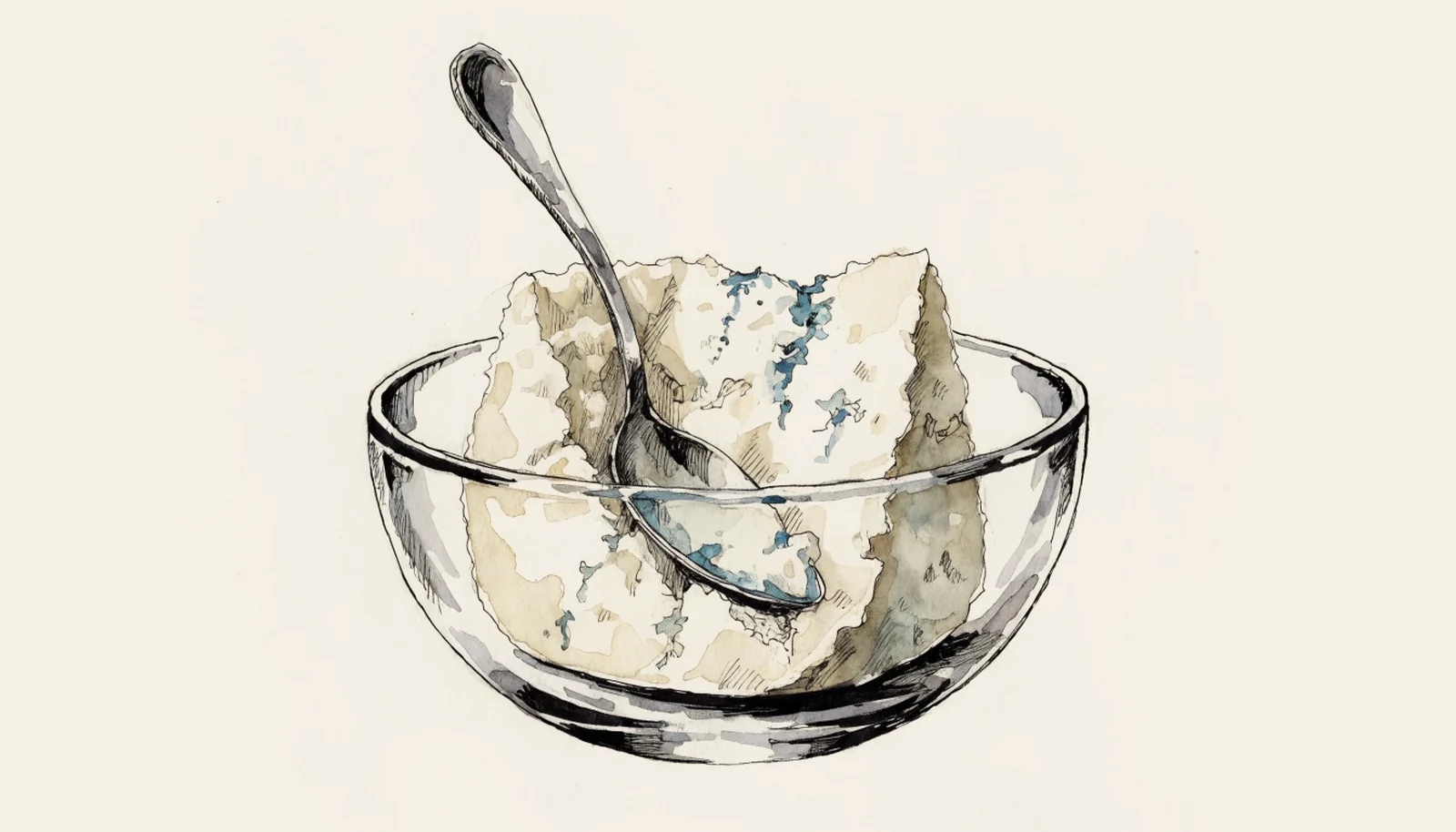
Gorgonzola dolce is the young form of the gorgonzola DOP, aged around two months, soft enough to spread or spoon, ivory-white with sparse blue-green veining, and mild and sweet rather than sharp. It is the version most people who dislike blue cheese turn out to like, and knowing which half of the DOP a label means is part of buying Italian cheese well in the United States.
Its texture is the surprise. Anyone expecting a firm crumbly blue will find something closer to a rich, faintly savoury cream, and that difference is a design decision rather than an accident of youth.
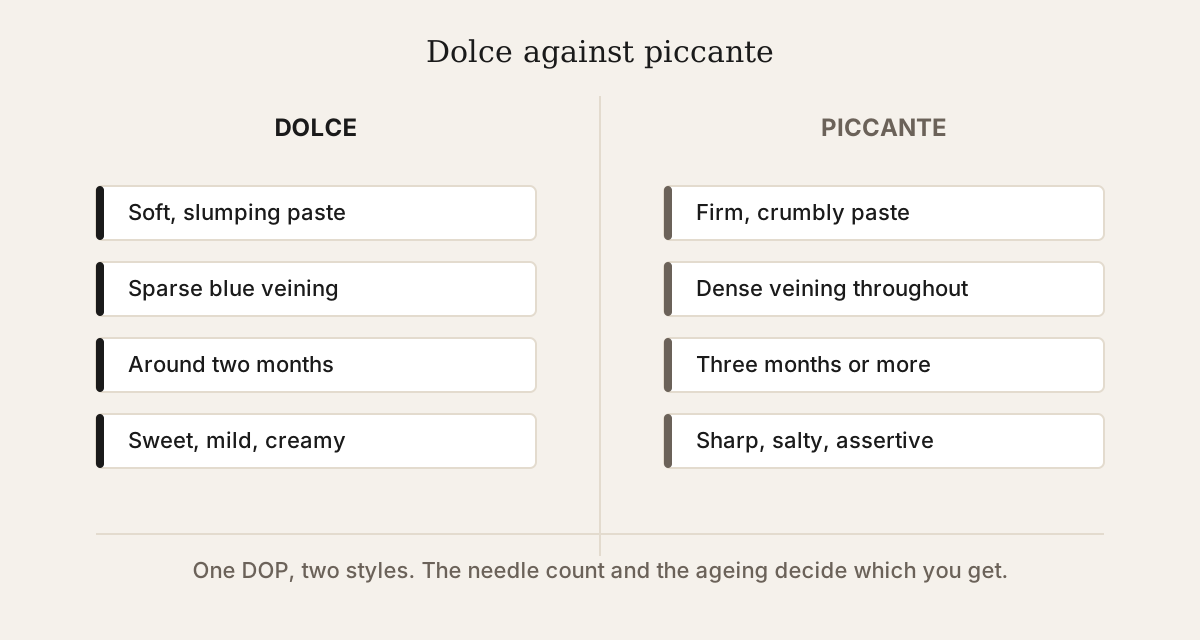
What gorgonzola dolce actually is
Gorgonzola dolce is made from whole pasteurised cow’s milk inoculated with Penicillium, drained gently, lightly salted, and aged around fifty to sixty days in cool humid cellars.
It is the same DOP as piccante. One designation, one zone across Lombardy and Piedmont, two styles, and dolce is the young one.
The paste retains a great deal of moisture. Light draining and short ageing leave it soft to the point of slumping when cut.
Salting is restrained. Less salt means less moisture is drawn out and less sharpness develops.
The veining is deliberately sparse. The wheels are pierced less than piccante wheels are, so the mould has fewer channels and grows less.
Cremificato appears on some labels and signals this creamy style specifically. It is a producer’s description rather than a separate legal grade.
It is wrapped in foil through ageing and sale, which keeps the paste moist and stops a rind forming.
Why it is mild
The mildness follows from three production choices rather than from the cheese simply being young.
Less piercing means less mould. Blue moulds need oxygen, so fewer needle channels give less veining and less of the sharp flavour the mould produces.
Less salt means less breakdown. Salt drives the enzymatic activity that makes an aged blue pungent.
More moisture dilutes what is there. A wetter paste carries the same flavour compounds at lower concentration.
So dolce is not an unfinished piccante. The two diverge in the vat and the piercing room, and holding a dolce longer produces an over-ripe dolce rather than a piccante.
The dominant flavour is lactic sweetness with a light mushroomy tang behind it, which is why the sweet-and-blue pairings work so well here.
Why it is the one for sauces
Gorgonzola dolce dissolves into a sauce in a way that a firm blue cannot.
Its high moisture and soft paste melt at low temperature, so it can be stirred into cream or hot pasta off the heat.
It disperses evenly rather than seizing. A drier, saltier blue tends to clump and then release oil.
Its mildness lets it be used generously. A sauce needs enough cheese to taste of cheese, and a piccante used at that quantity would overwhelm everything.
It is the standard for gorgonzola pasta sauces and for a gorgonzola risotto, and where an English-language recipe says gorgonzola and then says melt, this is what it means.
Add it off the heat. Direct heat splits it, which is the usual reason a gorgonzola sauce turns oily.
How to judge a piece
Judge it on the paste colour, then the texture, then the smell.
The paste should be ivory to very pale straw. Grey or brown at the edges means oxidation from a cut face left exposed at a counter.
It should be soft and slightly weeping, holding its shape on a plate but yielding immediately to a knife. A firm crumbly texture means you have piccante.
Veining should be blue-green and sparse, in thin lines following the needle channels rather than spreading through the paste.
It should smell gently of mould and cream. A strong sharp nose suggests it is either piccante or over-ripe.
Ammonia is the disqualifier. A nose-catching ammonia note means it is finished, and it does not recover.
Checked on 13 August 2026, the first page of United States results for gorgonzola dolce returned specialist Italian food retailers and cheese sellers, which describes that search on that date rather than recommending any seller. Availability at a decent counter is good.
What it should cost
Expect roughly 14 to 24 dollars a pound in the United States, generally a little below piccante.
The shorter ageing is the reason. Two months in a cellar ties up far less time and space than four or more, and the cheese loses less weight.
Buy a cut piece from a wheel rather than a pre-wrapped wedge where possible. A soft blue deteriorates fastest at the cut face and under plastic.
Buy small quantities more often. This is a cheese with a shorter useful life than a firm blue, and a large piece will reach ammonia before you finish it.
Domestic creamy blues are not substitutes. They are generally saltier and more mineral, and dolce’s lactic sweetness has no close American equivalent.
How to use it
Spread it, spoon it, or melt it into a sauce. Serve it at room temperature.
Its sweetness wants sweet and bitter company: pears, figs, honey, walnuts, radicchio, and a sweet wine rather than a dry red.
Take it out of the refrigerator thirty minutes before serving. Cold, it is firm and mute and half the point is lost.
Serve it with a spoon rather than a cheese knife if it is properly ripe, which is normal and not a sign of a fault.
Melt it off the heat, stirring into hot pasta with a little of the cooking water to help it emulsify.
It is very good on a pizza, added after baking rather than before, where heat would split it.
Storage
Wrapped in waxed or greaseproof paper, refrigerated, about a week, and it continues ripening throughout.
Paper, not plastic film. Plastic against a blue paste is what produces the ammonia smell people mistake for the cheese being strong.
Rewrap after each use with fresh paper.
Keep it in a closed container away from other cheeses, since blue moulds travel.
Do not freeze it. The paste separates into grains and water and does not come back.
Ammonia means it is done. With a soft blue this arrives sooner than with a firm one, which is the argument for buying less at a time.
Frequently asked questions
What is the difference between gorgonzola dolce and piccante?
Gorgonzola dolce is aged around two months, is soft enough to spread or spoon, sparsely veined, mild and sweet. Piccante is aged four months or more, is firm and crumbly, densely veined and genuinely sharp. Both carry the same DOP and zone. The difference is set at production through piercing, salting and draining rather than emerging from ageing alone.
Is gorgonzola dolce a strong cheese?
Gorgonzola dolce is one of the mildest blue cheeses available, tasting mainly of lactic sweetness with a light mushroomy tang, and it is frequently the blue that people who dislike blue cheese find they enjoy. Its mildness comes from sparse piercing, restrained salting and high moisture. A strongly sharp gorgonzola is either piccante or is over-ripe.
Why is my gorgonzola dolce so runny?
Softness to the point of slumping is correct for a properly ripe gorgonzola dolce rather than a fault, since the cheese is lightly drained and aged only two months. It is traditionally served with a spoon when fully ripe. A dolce that has become genuinely liquid throughout and smells of ammonia has gone past its point, which is a different matter.
Can I use gorgonzola dolce in a sauce?
Gorgonzola dolce is the right gorgonzola for a sauce, because its high moisture and soft paste melt smoothly at low temperature and disperse rather than clumping. Add it off the heat, with a little pasta water to help it emulsify, since direct heat will split it and leave an oily sauce. Piccante is drier and sharper and tends to dominate.
How long does gorgonzola dolce keep?
Gorgonzola dolce keeps about a week refrigerated wrapped in waxed or greaseproof paper, which is shorter than a firm blue manages. It continues ripening the whole time, so it moves toward ammonia rather than holding steady. Buying smaller quantities more often is the practical answer, and plastic film accelerates the decline rather than slowing it.
CalItalia Food covers Italian ingredients: what they are, how to tell a good one from an ordinary one, and where to buy them in the United States.