
Parmigiano Reggiano: How to Judge One by Age and by Eye
The pin-dot rind, what 12, 24 and 36 months actually taste like, why the crystals are a good sign, and how to judge it against Parmesan and Grana Padano before you buy.
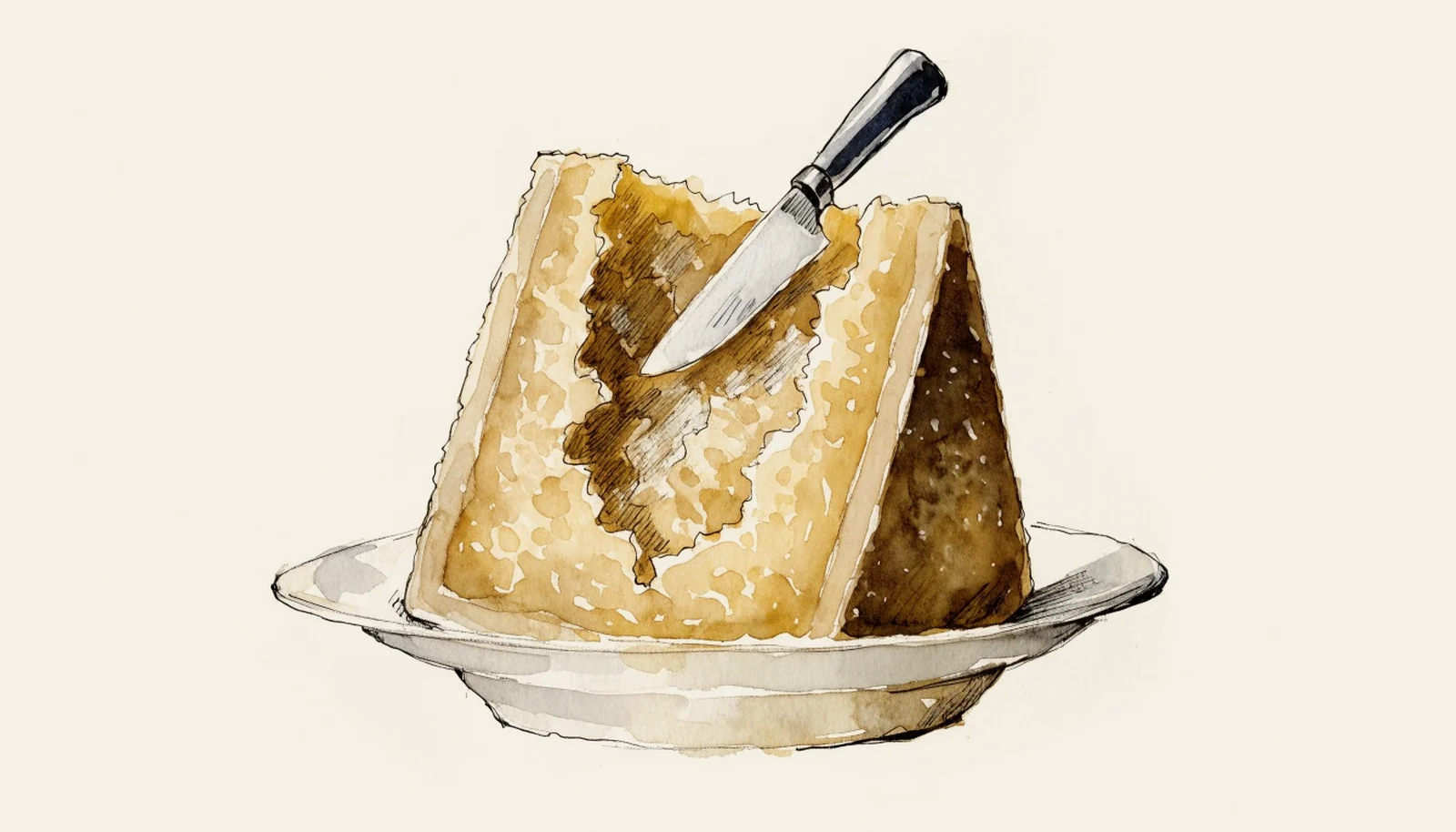
Parmigiano Reggiano is a raw cow’s milk cheese made only in a defined area of Emilia-Romagna and Lombardy from milk, salt and calf rennet, aged a minimum of twelve months, and identified by pin-dot lettering stamped over the whole rind. The rind is the only guarantee that survives being cut into a wedge, and reading it is the first step in telling a real Italian ingredient from its imitation.
The word Parmesan guarantees nothing in the United States. That single fact is most of what a buyer needs.
What Parmigiano Reggiano actually is
Parmigiano Reggiano is made from raw cow’s milk, partly skimmed, with only salt and calf rennet added, formed into wheels of around 40 kilograms and aged on wooden boards for at least twelve months. Three ingredients and time.
The DOP discipline covers the whole chain: where the cows are, what they may eat, that the milk is unpasteurised and delivered twice daily, and that the wheels are aged in the region. Every wheel is inspected and tapped before it earns its mark.
No additives are permitted at all. There is no preservative, no colouring and no anti-caking agent in the wheel, which is why grated Parmigiano behaves differently from the shelf-stable grated product it is often compared with.
The rind is the guarantee
The whole rind carries pin-dot lettering repeating Parmigiano Reggiano across its surface, along with the dairy number and the month and year of production. A wedge cut from a genuine wheel carries part of that dotted pattern.
A wedge with a blank rind, or with a printed rather than dotted mark, is not the protected cheese. This is the check to make before any other.
Age, and what actually changes
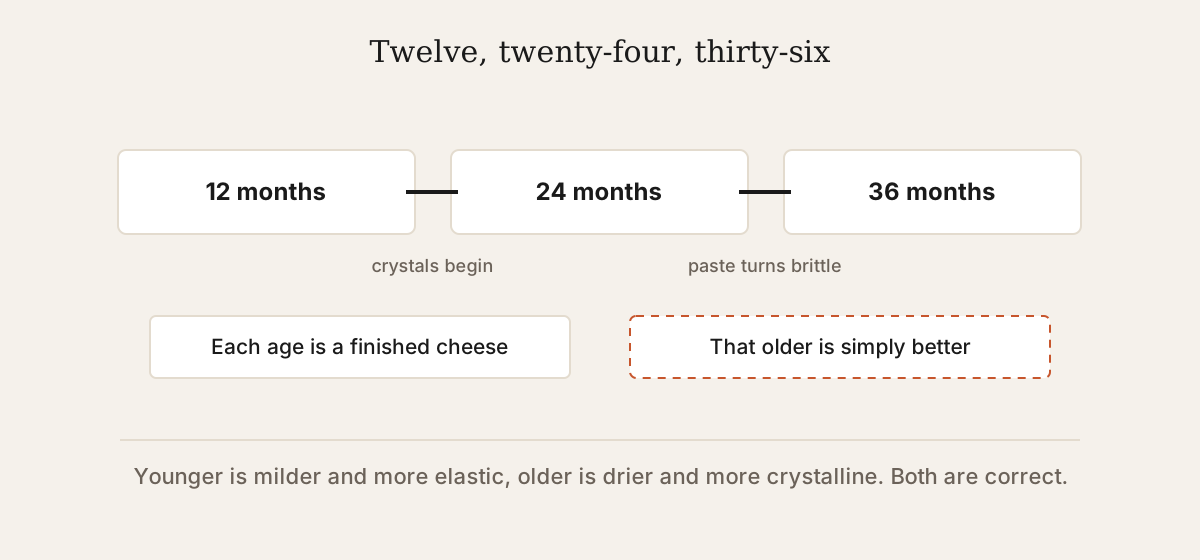
The minimum is twelve months and the useful range runs to about thirty-six, and the differences across that span are larger than almost any other variable.
Twelve to eighteen months. Pale straw, softer, milky and lactic, with a gentle nuttiness. Good for eating in chunks, poor for grating because it is not dry enough to powder cleanly.
Twenty-four months. The standard reference point. Firmer, drier, distinctly nutty, with the first noticeable crystal crunch. This is the age most recipes assume.
Thirty to thirty-six months. Deeper amber, considerably drier and more crumbly, with concentrated savoury and fruity notes and abundant crystals. Excellent shaved or eaten alone; can be too assertive stirred into a delicate dish.
Older than thirty-six months exists and is a specialist purchase rather than a general improvement. It is intense, dry and expensive.
The crystals are a good sign
The white crunchy specks are tyrosine, an amino acid that crystallises during long ageing. They are not salt and not a fault. A twenty-four month wheel with no crystals at all is worth a question about its actual age.
Parmigiano against Grana Padano against Parmesan
Grana Padano is a separate DOP, made over a much larger area, with a shorter minimum ageing, pasteurised or thermised milk permitted in some cases, and lysozyme allowed as a preservative. It is a good cheese and a cheaper one, and it is milder and less complex.
Parmesan in the United States is a generic term with no legal protection, applied to domestic hard cheeses of widely varying quality. Some is decent. None of it is Parmigiano Reggiano. American Romano stands in the same relation to Pecorino Romano.
The practical difference for cooking. Grana Padano substitutes acceptably in a sauce where the cheese is one component among many. In a dish where the cheese is the flavour, such as a cacio e pepe variant or a simple risotto finish, the substitution is audible.
How to judge a wedge at the counter
Look at the rind, then the paste, then ask when the wheel was opened.
The paste should be pale straw to amber depending on age, granular rather than smooth, and should crumble in shards rather than slicing cleanly like a young cheese.
Avoid a wedge with a dried, darkened cut face, which means it has been sitting. Ask them to cut fresh from the wheel where possible.
Avoid vacuum-packed wedges that have been packed a long time. Parmigiano continues to breathe, and a wedge sealed for months develops a slightly acrid note near the plastic.
Pre-grated is the format to avoid entirely. It dries within days, loses aroma almost immediately, and is where the least good product tends to end up.
What it should cost
Expect roughly 18 to 30 dollars a pound in the United States for 24 month Parmigiano Reggiano, with 36 month running higher and Grana Padano noticeably lower.
A hard Italian-style cheese at 8 dollars a pound is not Parmigiano Reggiano, and the price is the first signal, with the rind as confirmation.
Buying a larger piece and breaking it down yourself is genuinely cheaper and keeps better than buying small pre-cut wedges, provided you wrap it properly.
Where to buy it
Cheese counters, Italian delis and well-stocked supermarkets all carry it, and it is among the easiest protected Italian products to find in the United States.
Checked on 13 August 2026, the first page of United States results for parmigiano reggiano returned the consortium alongside cheese retailers and reference material, which describes that search on that date rather than recommending any seller.
The consortium’s site is useful for one practical thing: seeing the pin-dot rind pattern before you go looking for it.
Storage
Wrap it in parchment or cheese paper, then loosely in foil, and refrigerate. It keeps for weeks and improves slightly for the first few.
Do not wrap it tightly in plastic film. The cheese needs to breathe, and film traps moisture against the surface, which encourages surface mould and gives the paste a plasticky edge.
Surface mould on a hard cheese can be scraped off and the cheese underneath is fine. A wedge that has dried hard at the edges can be grated.
Keep the rinds. They go into soups and stocks, where they release savour over a long simmer, and they freeze indefinitely.
Frequently asked questions
Is Parmigiano Reggiano vegetarian?
No. It is made with animal rennet from calves, which the DOP discipline requires, so there is no vegetarian version of the protected cheese. Some hard cheeses made in a similar style elsewhere use microbial rennet and are vegetarian, but they cannot be called Parmigiano Reggiano.
What are the white crystals in Parmigiano?
The white crystals in Parmigiano are tyrosine, an amino acid that crystallises as the cheese ages, and they are a sign of proper maturation rather than salt or a defect. They become common from around twenty-four months and abundant at thirty-six. A cheese sold as long-aged with no crystals at all is worth questioning.
Can I use Grana Padano instead?
In cooked dishes where the cheese is one flavour among several, yes, and it costs less. Grana Padano has a shorter minimum age, a much larger production area and permits lysozyme as a preservative, so it is milder and less complex. Where the cheese carries the dish, the difference is noticeable.
How long does Parmigiano keep once cut?
Several weeks refrigerated if wrapped in paper rather than plastic film, and it will dry slowly rather than spoil. Dried edges can be grated and rinds can be saved for stock. The main failure is trapped moisture from tight plastic wrapping, which causes surface mould and off flavours.
Is Parmigiano Reggiano made from raw milk?
Yes. The discipline requires unpasteurised milk, delivered to the dairy twice a day, and this is one of the defining requirements of the DOP. The long minimum ageing is what makes the raw-milk cheese safe and legal to import into the United States, since it exceeds the sixty-day threshold comfortably.
CalItalia Food covers Italian ingredients: what they are, how to tell a good one from an ordinary one, and where to buy them in the United States.