Pecorino di Pienza: A Town Name Inside a DOP, and What It Actually Buys You
The sheep cheese of the Val d Orcia, sold under a town name that is not itself protected. What relationship it has to Pecorino Toscano DOP, and how to judge and buy one.
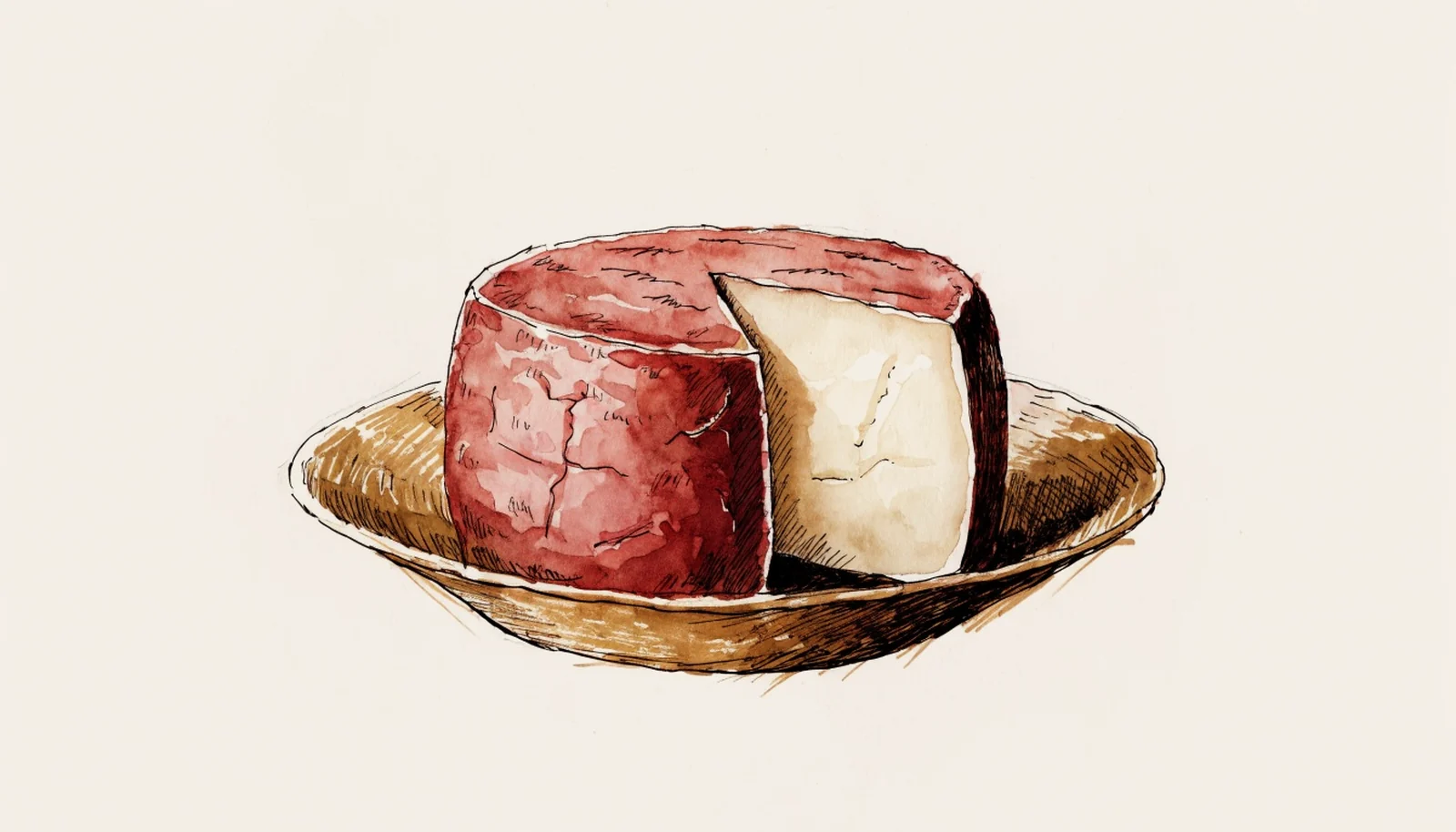
Pecorino di Pienza is sheep’s-milk cheese from Pienza and the surrounding Val d’Orcia in southern Tuscany, sold young or aged, often with a rind rubbed in tomato, ash or oil. The town name is not itself a protected designation, and much of what carries it qualifies as Pecorino Toscano DOP. That makes it a lesson in what a name on an Italian label does and does not promise.
Understanding that relationship is the whole practical problem with the cheese, because the name on the front and the designation on the wheel are doing different jobs.
What Pecorino di Pienza actually is
Pecorino di Pienza is made from sheep’s milk in the Val d’Orcia, coagulated with rennet, pressed into small wheels, salted and aged from a few weeks to several months.
Pienza is a small town in the province of Siena, in the Val d’Orcia, and the surrounding country is classic Tuscan sheep pasture.
The wheels are small, typically one to three kilograms, aged on wooden boards.
Young wheels are semi-soft, white and mild; aged ones are firm to hard, straw to amber, and savoury.
The rinds are frequently treated. Tomato concentrate for red, wood ash for grey-black, olive oil for a darkened sheen, and some are aged wrapped in walnut leaves or hay.
The salting is light, in the general Tuscan manner, so it sits at the gentle end of the pecorino range.
Local sheep breeds are used, with the Sarda breed widespread in Tuscany following historic migration of Sardinian shepherds.
The designation question
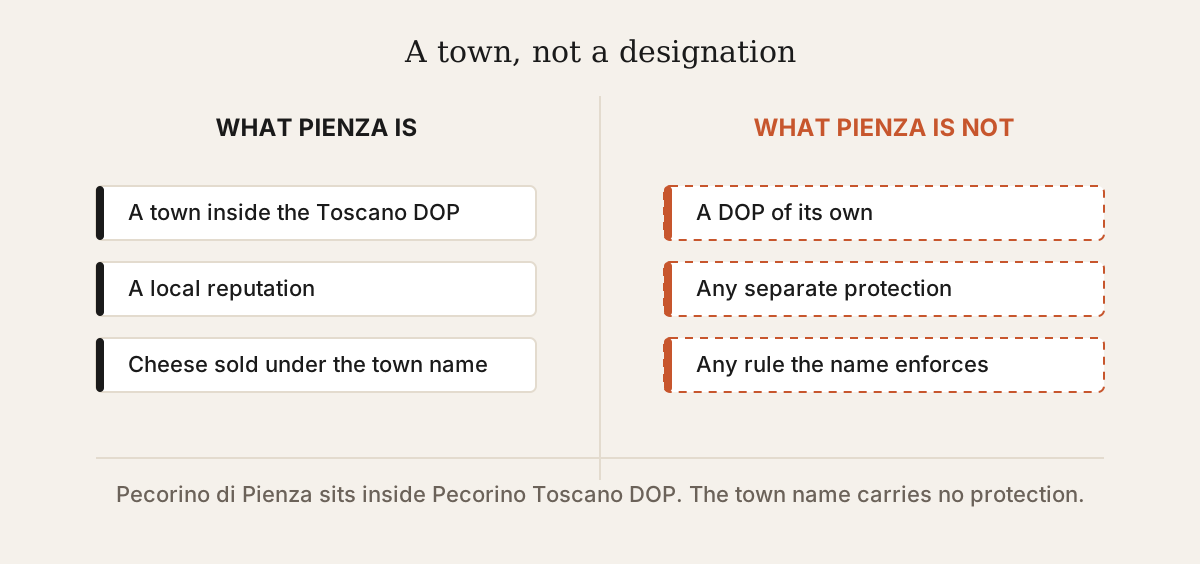
Pienza is a place name in ordinary use rather than a protected term, and this is where buyers get confused.
Pecorino Toscano DOP is the protected designation covering Tuscany and defined adjoining areas, which includes Pienza.
So a Pienza cheese may carry the Toscano DOP if it meets that specification, and many do.
Pecorino di Pienza itself is not a DOP or an IGP. No specification governs the phrase, and nothing stops a producer outside the Val d’Orcia using it.
Three cases therefore exist on a shelf. A wheel carrying Pecorino Toscano DOP and made at Pienza; a wheel made at Pienza carrying no designation; and a wheel labelled Pienza-style made elsewhere.
Only the first carries a public guarantee. The second may be excellent and rests on the producer; the third makes a claim about nothing.
Look for the DOP mark rather than the town name, which is the practical rule here and the same rule that applies to culaccia’s trademark.
What the coloured rinds actually do
The treated rinds of Pienza cheeses are traditional rather than cosmetic, as they are across Tuscany.
Tomato concentrate, ash and oil are rubbed on during ageing. Each controls surface mould and slows moisture loss.
Ash in particular has a long history as a rind treatment, reducing surface acidity and discouraging unwanted growth.
Leaf and hay wrapping is a different technique, imparting aroma as well as protecting the wheel, and it does change the flavour of the paste near the rind.
None of these rinds is eaten.
A glossy uniform plastic or wax coating is not the same thing and is purely protective, and the visual difference is that a rubbed rind is matte and uneven while a coating is smooth and perfect.
Checked on 13 August 2026, United States retail for Pecorino di Pienza runs to specialist Italian importers and cheese counters rather than general supermarkets, which describes availability on that date rather than recommending any seller.
How to judge a piece
Judge it on the paste, then the rind, then the smell.
A young wheel should be white to pale straw, semi-soft, with small irregular eyes, giving under a thumb.
An aged wheel should be deeper straw to amber, firm and close-textured, breaking cleanly.
The rind should be matte and slightly uneven where it has been rubbed, not glossy and uniform.
It should smell of sheep’s milk, lanolin-like and clean, sweeter when young. Ammonia or sourness is a fault.
Look for the Pecorino Toscano DOP mark if a public guarantee matters to you, and accept the producer’s name as the guarantee if it is absent.
A dry cracked cut face means it has sat too long at the counter.
What it should cost
Expect roughly 20 to 34 dollars a pound in the United States, with aged and leaf-wrapped wheels at the upper end.
Small wheels, sheep’s milk and hand-treated rinds all cost more than industrial production, and the Val d’Orcia’s reputation adds a premium of its own.
The Pienza name carries a price premium that the designation does not underwrite, which is worth knowing.
A Pecorino Toscano DOP without the town name is frequently the better value and is the same style of cheese.
Leaf-wrapped and ash-rubbed wheels cost more for the treatment rather than for a better cheese underneath.
How to use it
Eat a young wheel in slices at room temperature; grate or shave an aged one.
Tuscan company suits it: unsalted bread, raw broad beans in early summer, pears, honey, a Tuscan red from the same country.
Serve at room temperature, where the paste stops reading as waxy and the aroma opens.
A young wheel with fresh broad beans is the classic Tuscan spring pairing and needs nothing else.
Grate an aged wheel over soups and vegetables where Pecorino Romano would be too salty.
Honey is the standard partner, and chestnut or acacia both work.
Do not use it in a Roman pasta dish expecting the result to work, since those are seasoned for Romano’s salt.
Storage
Wrapped in paper inside a loose bag, refrigerated. A young piece keeps one to two weeks; an aged one a month or more.
Paper rather than plastic film, so the treated rind can breathe.
Rewrap after each use with fresh paper.
Surface mould can be cut away and the rest is sound.
An aged wheel will keep drying, which is not spoilage and moves it toward being a grating cheese.
Do not freeze it. The paste turns crumbly and does not recover.
Frequently asked questions
Is Pecorino di Pienza a DOP?
Pecorino di Pienza is not itself a protected designation. Pienza is an ordinary place name and nothing governs its use on a label. Much of the cheese made there qualifies as Pecorino Toscano DOP, which is the protected designation covering Tuscany, and wheels carrying that mark have a public guarantee. A wheel labelled only Pecorino di Pienza rests entirely on the producer.
What is the difference between Pecorino di Pienza and Pecorino Toscano?
Pecorino Toscano is the DOP covering Tuscany and defined adjoining areas, with a published specification and defined age grades. Pecorino di Pienza refers to cheese from one town and its surrounding valley within that area, and it is not separately protected. Many Pienza cheeses carry the Toscano DOP; the town name adds reputation rather than a further guarantee.
Why do Pienza pecorini have coloured rinds?
The red, black and darkened rinds come from rubbing the wheel during ageing with tomato concentrate, wood ash or olive oil, which controls surface mould and slows moisture loss. Some wheels are also wrapped in walnut leaves or hay, which imparts aroma to the paste near the rind. These treatments are traditional across Tuscany rather than specific to Pienza, and the rind is not eaten.
Is Pecorino di Pienza salty?
Pecorino di Pienza is lightly salted in the general Tuscan manner, which places it at the gentle end of the pecorino range and well below Pecorino Romano. Young wheels in particular are mild and milky and are eaten in slices as a table cheese. Aged wheels become more savoury without ever approaching Romano’s salt level.
Is Pecorino di Pienza worth the premium?
The Pienza name carries a price premium that no designation underwrites, so it is buying reputation rather than a guarantee. A Pecorino Toscano DOP without the town name is frequently the same style of cheese at a lower price. Where a specific producer at Pienza is known to be good, the premium is buying that producer rather than the place.
CalItalia Food covers Italian ingredients: what they are, how to tell a good one from an ordinary one, and where to buy them in the United States.