
Pecorino Toscano: The Mild Sheep Cheese, and the Rind That Is Not Wax
A DOP Tuscan sheep cheese in fresh and aged grades, far gentler than Romano. What the coloured rinds actually are, and how to judge and use one.
Pecorino Toscano is a DOP sheep’s-milk cheese from Tuscany, made in a young grade aged from twenty days and an aged grade from four months, and it is markedly milder than the sheep cheeses of the south. Its rinds are often coloured red, black or yellow, and that colour is a treatment rather than wax. The rind is one of the first things to read when weighing an Italian cheese against its imitations.
The name pecorino covers a very wide range of cheeses, and Toscano sits at the gentle end of it. Anyone whose idea of pecorino comes from Romano will find this an almost unrelated experience.
What Pecorino Toscano actually is
Pecorino Toscano is made from whole sheep’s milk, coagulated with rennet, the curd cut and pressed into modest wheels, salted, and aged in two defined grades.
The zone is Tuscany with defined adjoining areas of Umbria and Lazio, and the sheep are of local breeds.
Fresco or tenero is the young grade, aged from around twenty days. Soft to semi-soft, white, mild, milky and faintly sweet.
Stagionato is the aged grade, from four months. Firm, straw-coloured, savoury and nutty, with the sheep character more forward.
The salting is light. This is what places it at the gentle end of the pecorino range, and it is a deliberate regional preference rather than a shortcut.
The wheels are small to medium, typically one to three kilograms, aged on wooden boards.
Both raw and pasteurised milk versions exist under the DOP.
The coloured rinds, and what they actually are
Pecorino Toscano rinds frequently appear red, black, yellow or greenish, and the treatment is not wax.
The rinds are rubbed during ageing. Tomato concentrate gives the red, wood ash gives the black or grey, and olive oil gives the yellow-brown sheen.
The purpose is practical. Rubbing the rind controls surface mould, slows moisture loss and protects the wheel during ageing.
It also affects the cheese underneath, slightly, by changing how fast it dries and what grows on the surface.
These rinds are traditional rather than decorative, and the practice long predates any marketing value it now has.
A bright uniform plastic coating is a different matter. Some non-DOP cheeses are dipped in coloured wax or plastic, which is purely cosmetic and protective, and the visual difference is that a rubbed rind looks matte and slightly uneven while a coating looks glossy and perfect.
The rind is not eaten in either case.
Where it sits among the pecorini
The word pecorino names a milk rather than a cheese, and the range within it is enormous.
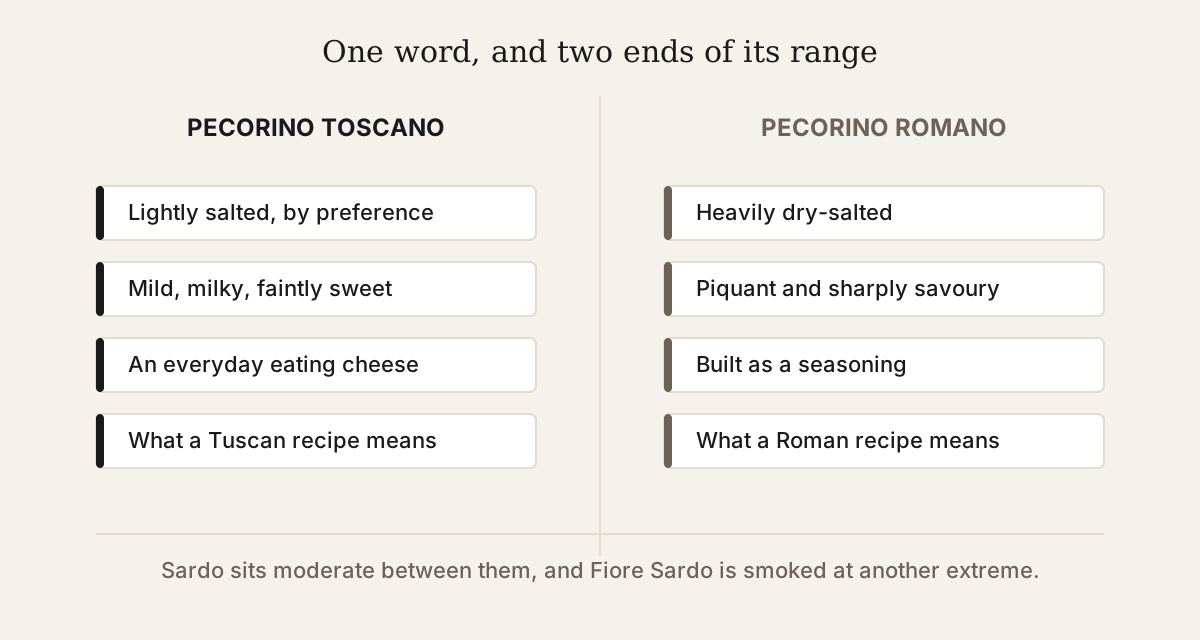
Pecorino Romano is the salt extreme. Heavily dry-salted, lamb-rennet piquant, built as a seasoning.
Pecorino Sardo is moderate, a table cheese in its young grade.
Pecorino Toscano is milder still, particularly in the fresco grade, and is closest to being an everyday eating cheese.
Fiore Sardo is smoked and sharp, at another extreme again.
So a recipe saying only pecorino is underspecified, and the right reading is usually Romano when the dish is Roman and Toscano when the dish is Tuscan.
Substituting Toscano into a Roman pasta dish leaves it flat, since those recipes are seasoned expecting Romano’s salt.
How to judge a piece
Judge it on the paste, then the rind, then the smell.
Fresco should be white to pale straw, soft to semi-soft, with small irregular eyes, giving under a thumb.
Stagionato should be deeper straw, firm and close-textured, breaking cleanly rather than bending.
The rind should be matte and slightly uneven where it has been rubbed, not glossy and perfectly uniform.
It should smell of sheep’s milk, gently lanolin-like, sweeter in the fresco. Ammonia or sourness is a fault.
Look for the DOP mark, which is stamped on the wheel along with the grade.
A dry cracked cut face means it has sat too long at the counter.
Checked on 13 August 2026, the first page of United States results for pecorino toscano returned reference material alongside Italian food and cheese retailers, which describes that search on that date rather than recommending any seller.
What it should cost
Expect roughly 18 to 30 dollars a pound in the United States, above Pecorino Romano and broadly alongside Pecorino Sardo.
Romano’s price is held down by enormous export volume; Toscano is a smaller designation made in smaller wheels, so it costs more despite being the gentler cheese.
Stagionato costs more than fresco, reflecting the additional months and weight loss.
Pecorino toscano style with no mark carries no origin or method requirement and may come from anywhere.
It is worth buying over Romano for eating, which is the general rule across the milder pecorini.
How to use it
Eat it in slices at room temperature, or grate the stagionato over food where Romano would be too much.
Its mildness suits Tuscan company: unsalted bread, fresh broad beans in spring, pears, honey, a Tuscan red.
Fresco with raw broad beans is the classic pairing, eaten in Tuscany in early summer and requiring nothing else.
Serve either grade at room temperature, where the aroma opens and the paste stops reading as waxy.
Grate stagionato over soups and vegetables, particularly where a Roman-level salt would overwhelm.
Fresco melts well on bread or in a bake, unlike the hard salted pecorini which seize.
Do not use it in cacio e pepe expecting the dish to work. That recipe needs Romano.
Storage
Wrapped in paper inside a loose bag, refrigerated. Fresco keeps one to two weeks; stagionato keeps a month or more.
Paper rather than plastic film, so the rind breathes and the cut face stays dry.
Rewrap after each use with fresh paper.
Surface mould can be cut away and the rest is sound.
Stagionato will keep drying and hardening, which is not spoilage and moves it toward being a grating cheese.
Do not freeze it. The paste turns crumbly and the texture does not recover.
Frequently asked questions
Is Pecorino Toscano the same as Pecorino Romano?
Pecorino Toscano and Pecorino Romano are separate DOPs and very different cheeses. Toscano is lightly salted, made in small wheels and aged from twenty days in its young grade, producing a mild eating cheese. Romano is heavily dry-salted over weeks, made in large wheels and aged five to eight months, and it functions as a seasoning rather than a table cheese.
What is the coloured rind on Pecorino Toscano?
The coloured rinds on Pecorino Toscano come from rubbing the wheel during ageing: tomato concentrate for red, wood ash for black or grey, and olive oil for a yellow-brown sheen. The purpose is to control surface mould, slow moisture loss and protect the wheel, and the practice is traditional. It is not wax, and the rind is not eaten in any case.
What does stagionato mean on Pecorino Toscano?
Stagionato designates the aged grade of Pecorino Toscano, matured from four months, which is firm, straw-coloured, savoury and nutty. It is contrasted with fresco or tenero, the young grade aged from around twenty days, which is soft, white and mild. Both carry the same DOP, so the grade on the label is what distinguishes them.
Can I substitute Pecorino Toscano for Pecorino Romano?
Pecorino Toscano will leave a Roman dish tasting flat, because recipes such as cacio e pepe, carbonara and amatriciana are seasoned on the assumption of Romano’s high salt and sharpness. Going the other way, Romano in a dish built for Toscano will be overpoweringly salty. Where a recipe simply says pecorino, the region of the dish is the best guide.
Should I eat the rind of Pecorino Toscano?
The rind of Pecorino Toscano is not intended to be eaten, whether it has been rubbed with tomato, ash or oil or left plain. It is a protective surface developed during ageing rather than a bloomy rind. Like any hard cheese rind, it can usefully be dropped into a soup or a bean pot to give up flavour rather than being discarded.
CalItalia Food covers Italian ingredients: what they are, how to tell a good one from an ordinary one, and where to buy them in the United States.