
Robiola: A Family Name, Not a Cheese, and How to Buy One Anyway
Soft Piedmontese and Lombard cheeses sold under one word covering several very different products. What the milks and formats are, how to judge one, and which Robiola to buy.
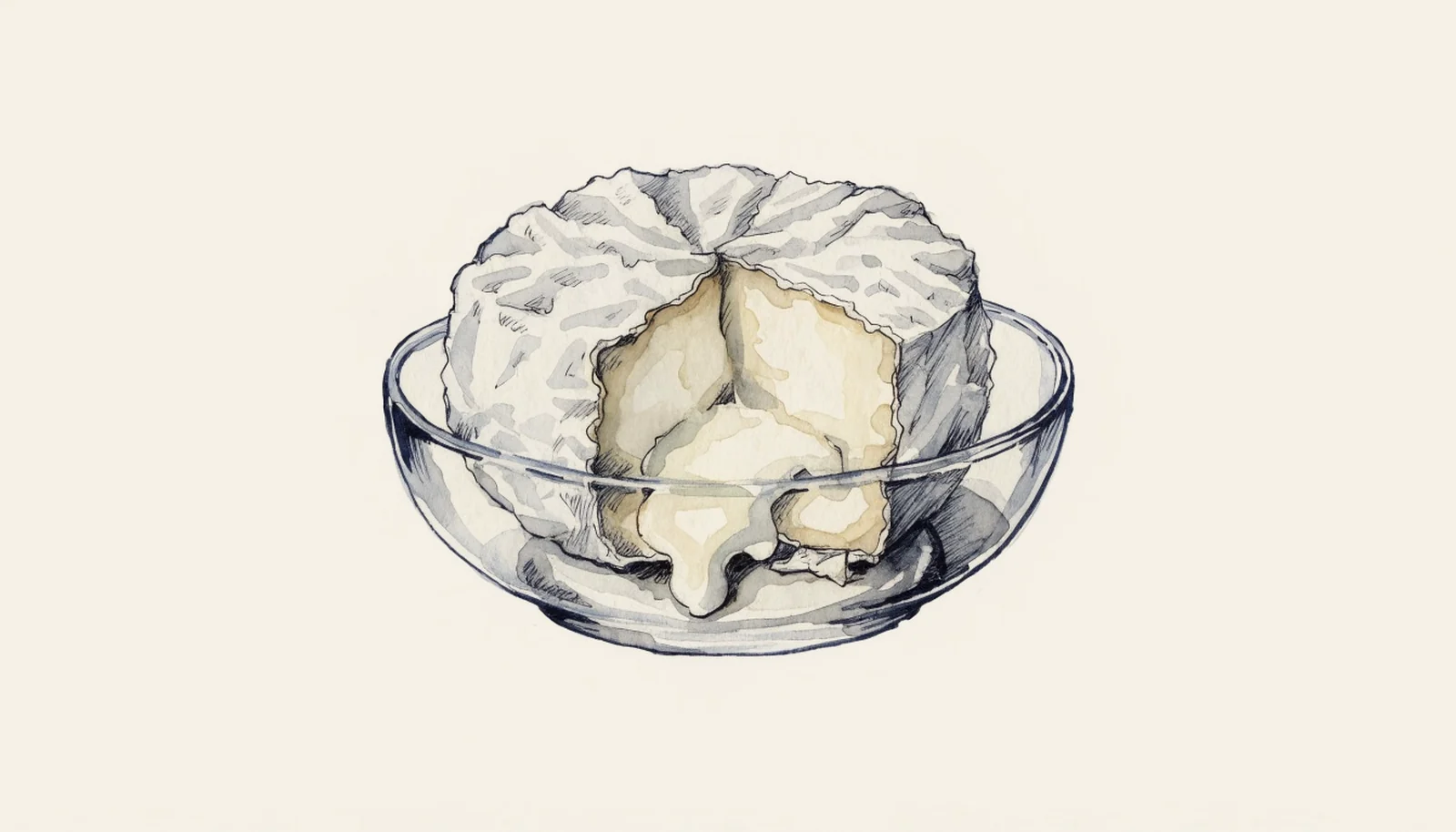
Robiola names a family of soft northern Italian cheeses rather than one product. Under the word sit fresh rindless cheeses, bloomy-rind ones, cow’s, goat’s and sheep’s milk versions and mixtures of all three, ranging from a few days old to several weeks. It is the kind of word that makes buying Italian ingredients by name alone unreliable.
Buying robiola therefore requires reading past the word, and the useful questions are which milk, which rind and how old rather than which brand.
What robiola actually covers
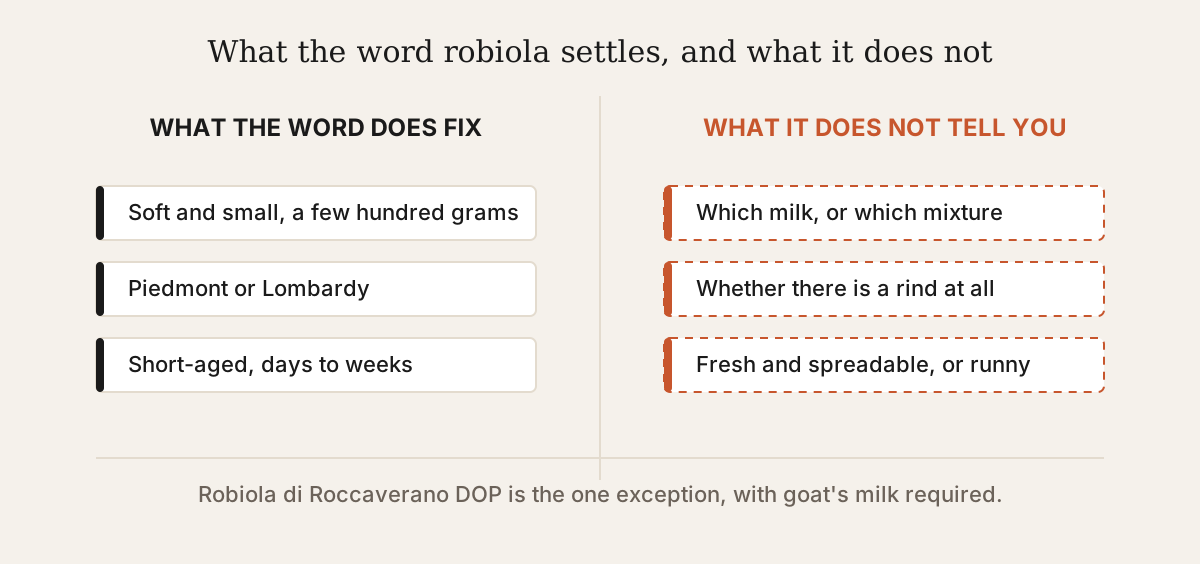
Robiola describes soft, small-format cheeses from Piedmont and Lombardy, made from any of three milks and finished in several ways.
The milk varies. Cow alone, goat alone, sheep alone, or two or three combined. A cheese made from all three is often the most prized and is what the Langhe tradition means by the word.
The rind varies. Some are rindless and eaten in days; some carry a thin bloomy white rind and ripen over weeks; some are washed.
The format is small. Squares, small rounds and short logs, usually a few hundred grams, which is what allows fast ripening.
Texture runs from fresh and spreadable to fully ripe and runny, depending on age and rind.
The flavour follows the milk. Cow versions are mild and lactic; goat brings tang; sheep brings richness and a lanolin note.
Most robiola carries no designation. Robiola di Roccaverano DOP is the significant exception, and it is a specific cheese rather than a general licence for the word.
Robiola di Roccaverano, the one that is protected
One robiola holds a DOP and it is worth distinguishing from the rest.
It comes from the Langhe and Monferrato hills in Piedmont, around the village of Roccaverano.
Goat’s milk is required, in a defined minimum proportion, with cow’s and sheep’s milk permitted alongside it.
It is small, rindless or lightly bloomed, and eaten young, from a few days to a few weeks.
It is genuinely tangy, more so than most cow’s-milk robiola, which follows from the goat’s milk.
The DOP mark is what separates it from any other cheese using the word, since robiola alone guarantees nothing about milk, method or origin.
Robiola Bosina and similar named products are commercial cheeses made in the style, frequently very good, and they carry a producer’s guarantee rather than a designation.
Which one you actually want
The word settles nothing, so buy on the three variables. The same approach works for caciotta, another name that fixes little.
For spreading on bread, buy a fresh rindless cow’s-milk robiola. Mild, soft, straightforward.
For a cheeseboard, buy a bloomy-rind mixed-milk one. Ripe, richer, more complex, and it will hold its own next to other cheeses.
For tang, buy a goat or a Roccaverano. This is where the family gets interesting and where it stops resembling a generic soft cheese.
For cooking, buy the cheapest fresh cow’s-milk version. Its job is richness and it will be buried anyway.
Ask the age. A bloomy robiola sold young is chalky at the centre and sold ripe is runny at the edge, and both are correct at different moments.
Checked on 13 August 2026, the first page of United States results for robiola returned reference material alongside specialist cheese retailers, which describes that search on that date rather than recommending any seller.
How to judge a piece
Judge it on the rind if it has one, then the paste, then the smell.
A bloomy rind should be even, white and slightly downy, without brown patches, slipping or cracking.
A rindless robiola should be smooth and white, without yellowing or a dried skin.
The paste should be white to ivory, with a softer band under the rind in a ripening cheese and a firmer core. That gradient is normal.
It should smell of milk and mushroom in a bloomy one, and of milk and light tang in a fresh one. Ammonia means it is past its point.
It should not slump entirely into liquid, which is over-ripeness rather than perfect ripeness.
A goat version should smell of goat and not of goat plus ammonia, which is the fault to watch for since goat cheeses reach it quickly.
What it should cost
Expect roughly 16 to 30 dollars a pound in the United States, with Roccaverano DOP and mixed-milk versions at the upper end.
Small formats mean more handling per kilogram, the milks are more expensive than commodity cow’s milk where goat or sheep is involved, and a short shelf life carries waste.
A cheap robiola is almost certainly cow’s milk and fresh, which is a fair buy for what it is.
Roccaverano DOP is a specialist purchase here and is not widely stocked.
Domestic American versions in the style are made and are judged on the producer, since the word protects nothing.
How to use it
Serve it at room temperature on a board or on bread, or stir a fresh one into something hot at the last moment.
Its mildness in most forms makes it a carrier, and a ripe mixed-milk one is a genuine board cheese that needs nothing beside it.
Take it out of the refrigerator thirty minutes before serving, longer for a bloomy one, which needs to be properly ripe to be worth eating.
Honey, fruit and walnuts suit the fresh and the goat versions.
Stir a fresh robiola into hot pasta off the heat for an instant sauce, in the same way as stracchino.
Do not cook a bloomy-rind one. The rind turns bitter and the point of the cheese is lost.
Do not buy a bloomy one for a recipe that wants fresh cheese, which is the most common mismatch under this name.
Storage
Wrapped in waxed or greaseproof paper, refrigerated. Fresh versions keep about a week; bloomy ones one to two, ripening throughout.
Paper, not plastic film, particularly for anything with a rind, since plastic accelerates ammonia.
Rewrap after each use with fresh paper.
A bloomy robiola is meant to ripen in your refrigerator, so buying one slightly under-ripe is reasonable.
Ammonia is the end point for any rinded version and does not recover.
Do not freeze any of them. Soft cheese paste separates and does not recombine.
Frequently asked questions
Is robiola one cheese?
Robiola is a family name covering many soft northern Italian cheeses rather than a single product. Under the word sit fresh rindless cheeses and bloomy-rind ones, made from cow’s, goat’s or sheep’s milk or mixtures of all three, ranging from a few days to several weeks old. The word alone guarantees nothing about milk, method or origin.
What is Robiola di Roccaverano?
Robiola di Roccaverano is the one robiola holding a DOP, made in the Langhe and Monferrato hills of Piedmont. Its specification requires goat’s milk in a defined minimum proportion, with cow’s and sheep’s milk permitted alongside. It is small, eaten young, and noticeably tangier than most cow’s-milk robiola. The DOP mark is what distinguishes it from any other cheese using the word.
What does robiola taste like?
Robiola’s flavour depends entirely on which one you have. Cow’s-milk versions are mild, soft and lactic. Goat versions are distinctly tangy. Sheep and mixed-milk versions are richer with a lanolin note. A bloomy-rind robiola ripened properly develops mushroom notes that a fresh rindless one never has.
Is robiola like Brie?
A bloomy-rind robiola resembles Brie in construction, having a white surface mould and a paste that softens from the outside inward, and it is usually smaller, younger and tangier. Fresh rindless robiola has nothing in common with Brie beyond being soft. The comparison holds only for one part of the family.
Can I cook with robiola?
A fresh rindless robiola cooks well and can be stirred into hot pasta off the heat as an instant sauce, in the same way as stracchino. A bloomy-rind one should not be cooked, since the rind turns bitter under heat and the ripened character that makes it worth buying is destroyed. Buying the cheapest fresh cow’s-milk version for cooking is the sensible approach.
CalItalia Food covers Italian ingredients: what they are, how to tell a good one from an ordinary one, and where to buy them in the United States.