
Taleggio: The Cheese That Smells Far Stronger Than It Tastes
A square washed-rind DOP from Lombardy with a pungent nose and a mild, buttery paste. Why the rind does the smelling, how to judge and use one, and why it melts so well.
Taleggio is a square, washed-rind DOP cow’s-milk cheese from Lombardy, with a thin pinkish-orange crust and a soft, pale, buttery paste. It smells markedly stronger than it tastes, and the gap between the two is the single most useful thing to know before buying one. It also belongs among the Italian cheeses where the stamp on the rind is worth checking.
People who reject Taleggio have almost always rejected the smell without getting to the cheese. That is a reasonable mistake and it is worth undoing.
What Taleggio actually is
Taleggio is made from whole cow’s milk, coagulated, cut, drained in square moulds, salted, and then aged in cool humid rooms where the rind is repeatedly washed with brine.
The square format is part of the identity. Taleggio is a flat slab of about two kilograms rather than a wheel, which gives a high ratio of rind to paste and matters for how it ripens. The square is inherited from stracchino, the fresh Lombard cheese Taleggio began as.
Washing the rind is the technique. Regular brine washes encourage a specific surface bacterial growth rather than a mould, and that growth is what produces both the orange colour and the smell.
It ripens from the outside inward. The rind bacteria break the paste down progressively, so a Taleggio is softer just under the crust than at the centre.
Minimum ageing is around five weeks, which is short, and the cheese is eaten young by hard-cheese standards.
Both raw and pasteurised milk versions exist under the DOP, and the raw ones are more assertive.
It comes from the Val Taleggio in the Bergamo Alps originally, with the DOP zone now covering defined areas of Lombardy, Piedmont and Veneto.
Why the smell and the taste diverge
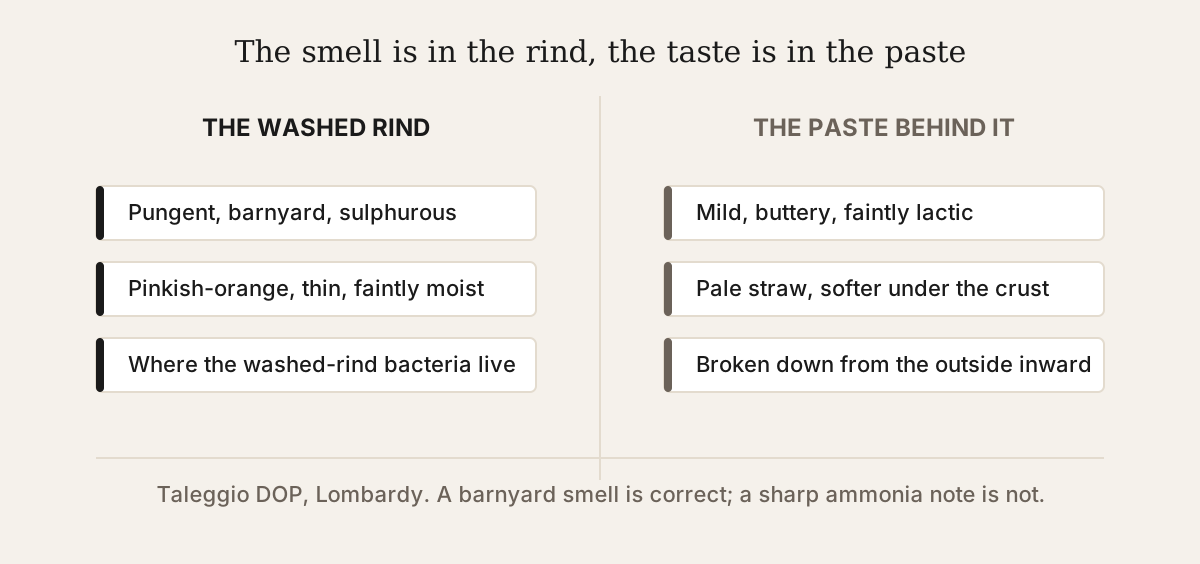
The pungency sits almost entirely in the rind, and the paste behind it is mild.
Washed-rind bacteria produce sulphurous aromatic compounds. These are what give the cheese its barnyard smell, and they are concentrated at the surface where the bacteria live.
The paste is buttery and lactic, with a faint tang and a mild fruit note, and is far gentler than the nose promises.
So the nose is a poor predictor of the palate here, more so than for almost any other cheese, and this is a general property of washed-rind cheeses rather than a Taleggio quirk.
Cutting the rind away removes most of the intensity, which is a legitimate choice for anyone who finds it too much, though it also removes a good deal of the character.
Ammonia is a different matter. A pungent barnyard smell is correct; a sharp ammonia note that catches the back of the nose means the cheese is past its point.
Why it melts so well
Taleggio is one of the best melting cheeses Italy produces, and that follows from its composition rather than being an incidental virtue.
Its moisture content is high and its paste is soft, so it flows at a low temperature rather than needing hard heat.
It does not turn stringy. Unlike stretched-curd cheeses such as mozzarella and provolone, Taleggio has no elastic protein structure to draw into threads, so it melts to a smooth cream.
It does not split easily at moderate heat, though hard heat will render the fat out as with any cheese.
Polenta is its classic partner in its own region, along with risotto and a simple gratin.
It is better melted than most cheeses are and this is a genuine argument for buying it even if the smell is off-putting on a board.
How to judge one
Judge it on the rind, then the paste, then the smell.
The rind should be thin, slightly moist and pinkish-orange, with a little white or grey bloom. It should not be sticky, slimy or cracked.
The paste should be pale straw, softer immediately under the rind and firmer toward the centre, which is correct rather than a sign of underripeness.
It should yield to gentle pressure without collapsing. A slab that has gone completely fluid throughout is over-ripe.
A brown or grey band under the rind indicates over-ripening from the outside in.
Look for the stamp. Genuine Taleggio DOP carries the designation mark impressed on the rind.
Checked on 13 August 2026, the first page of United States results for taleggio returned reference material alongside specialist cheese retailers, which describes that search on that date rather than recommending any seller. Availability here is good at a decent cheese counter.
What it should cost
Expect roughly 16 to 28 dollars a pound in the United States.
The short ageing keeps it below the long-aged hard cheeses, and the labour of washing rinds by hand over five weeks and the fragility of a soft cheese in transit keep it above a commodity product.
Ask for a cut piece from a whole slab rather than a pre-wrapped wedge where possible, since a soft washed-rind cheese deteriorates fastest under plastic.
Domestic American washed-rind cheeses in this style exist and are judged on the producer, since nothing outside the DOP zone can carry the mark.
A cheap Taleggio-style square is usually a milder, firmer, pasteurised imitation, which is a different eating experience rather than a fraud.
How to use it
Serve it at room temperature on a board, or melt it into polenta, risotto or a gratin.
Its mildness makes it more versatile than the smell suggests, and it sits well with things that are sweet or sharp: pears, honey, mostarda, a robust red.
Take it out of the refrigerator an hour before serving. Cold Taleggio is firm and its flavour is closed.
Eat the rind or do not, as you prefer. It is edible and it carries most of the intensity, so it is a genuine choice rather than a rule.
Melt it off direct heat or on low, stirring into hot polenta or risotto at the end.
Do not grate it. The paste is far too soft, and it should be cut into pieces and allowed to melt.
Storage
Wrapped in waxed or greaseproof paper, refrigerated, one to two weeks, and it continues ripening throughout.
Paper, not plastic film. A washed-rind cheese needs to breathe, and plastic traps the ammonia that plastic itself accelerates.
Rewrap after each use with fresh paper.
Keep it in a closed container in the refrigerator so its smell does not travel to everything else.
Ammonia means it is finished and does not recover.
Do not freeze it. The paste separates and the texture is lost.
Frequently asked questions
Why does Taleggio smell so strong?
Taleggio’s smell comes from bacteria encouraged on the rind by repeated brine washing during ageing, which produce sulphurous aromatic compounds. Those bacteria live at the surface, so the pungency is concentrated in the crust while the paste behind it stays mild and buttery. The nose is therefore a poor guide to how the cheese actually tastes.
Can you eat the rind of Taleggio?
The rind of Taleggio is edible and carries most of the cheese’s intensity, so whether to eat it is a genuine preference rather than a rule. Cutting it away leaves a much milder cheese, which is a reasonable choice for anyone who finds the aroma too strong. The rind should be thin and slightly moist rather than sticky, cracked or slimy.
Is Taleggio like Brie?
Taleggio and Brie are both soft cheeses that ripen from the outside inward, and they are made differently. Taleggio has a washed rind, developed by brine washing, which gives an orange crust and a pungent aroma. Brie has a bloomy white rind grown from a surface mould and a much gentler smell. Taleggio’s paste is also firmer and less runny than a ripe Brie’s.
What is the best way to melt Taleggio?
Taleggio melts smoothly at low heat and should be cut into pieces and stirred into something hot rather than heated directly. It has no elastic protein structure, so unlike mozzarella or provolone it melts to a cream rather than turning stringy. Polenta and risotto are its traditional partners and both work by adding the cheese off the heat at the end.
How do I know if my Taleggio has gone off?
A sharp ammonia smell that catches the back of the nose means Taleggio is past its point, and it does not recover. A strong barnyard aroma without that ammonia edge is correct. Other signs are a sticky or cracked rind, a brown or grey band beneath the crust, and a paste that has gone completely fluid throughout rather than staying firmer at the centre.
CalItalia Food covers Italian ingredients: what they are, how to tell a good one from an ordinary one, and where to buy them in the United States.