
Caciotta: A Shape and a Size, Not a Recipe
Small round semi-soft Italian cheeses sold under one word covering any milk and any region. What caciotta actually specifies, and how to judge and buy one when the name tells you nothing.
Caciotta names a format rather than a cheese: a small round wheel of semi-soft cheese, aged briefly, made across central Italy and beyond from cow’s, sheep’s, goat’s milk or any mixture. The word specifies a shape and a size and almost nothing else, which makes it a hard case for judging an Italian ingredient by its name.
That makes it the least informative cheese name on an Italian counter, and buying one well means ignoring the word entirely and asking three other questions.
What the word actually fixes
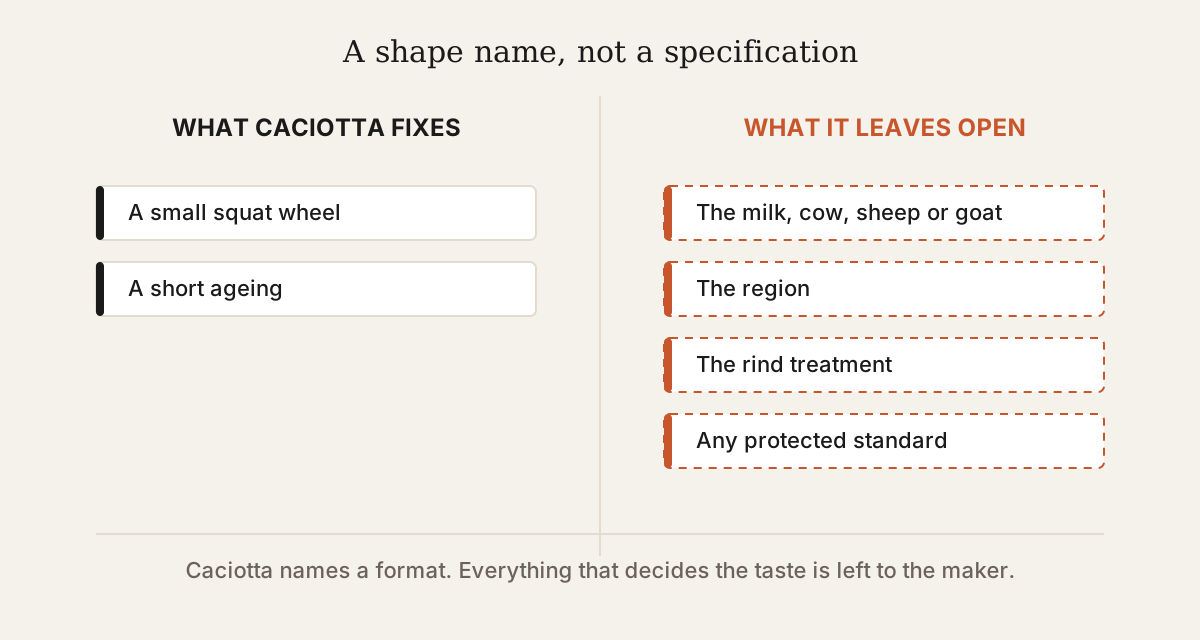
Caciotta constrains two things and leaves everything else open.
It fixes the format. A small flat round wheel, typically half a kilogram to a kilogram and a half, with straight sides.
It fixes the ageing loosely. Short, from a couple of weeks to a couple of months, which keeps the paste semi-soft rather than hard.
It does not fix the milk. Cow, sheep, goat, buffalo or any blend.
It does not fix the region. Tuscany, Umbria, the Marche and Lazio are the heartland, and caciotta is made across Italy and by American producers.
It does not fix the rind. Natural, waxed, oiled, rubbed with tomato or ash, or wrapped in leaves and herbs.
It does not fix flavour or intensity, which follow from the milk and the age rather than the name.
Cacio is simply an old word for cheese and caciotta is its diminutive, which is why the term is so unconstraining: it means, roughly, little cheese.
The three questions to ask instead
Since the word settles nothing, buy on what it leaves open.
Which milk? This is the largest variable. Sheep gives richness and a lanolin note; goat gives tang; cow gives mildness. A mixed-milk caciotta is common and is often the most interesting.
How old? Two weeks gives a soft, mild, milky cheese. Two months gives something firmer, more savoury and more concentrated.
What is on the rind? A plain natural rind means the cheese is the point. Herbs, ash, tomato paste, truffle or leaves mean the treatment is part of what you are buying, and those are legitimate rather than gimmicks.
Ask, or read the small print. A good counter will answer all three in a sentence, and the front label frequently answers none of them.
Checked on 13 August 2026, the first page of United States results for caciotta returned reference material, a cheesemaking supplier and cheese publishers, which describes that search on that date rather than recommending any seller. The prominence of a cheesemaking supplier is consistent with caciotta being a format that home and small producers make rather than a specific protected product.
The protected ones, and why they are the exception
Most caciotta carries nothing. A few named versions carry real recognition. The pattern is the same for canestrato, another format name with a few protected versions.
Caciotta d’Urbino DOP is the significant one, from the Marche, made largely from sheep’s milk with some cow’s, and it is a specific cheese rather than a format.
Regional traditional listings exist for several others, which record that a product is traditional to a region without reserving the name.
The bare word caciotta is not protected in any way, so anyone anywhere may use it, including American creameries, and many do.
So a DOP mark changes the purchase completely. With one you are buying a specification; without one you are buying a producer’s judgement of what a small round cheese should be.
Neither is better in principle. Unprotected caciotta from a careful small producer is frequently excellent and is judged on the evidence in front of you.
How to judge one
Judge it on the paste, then the rind, then the smell.
The paste should be even in colour, white for goat, pale straw for cow or sheep, without a grey band under the rind.
It should be semi-soft, giving under a thumb and springing back, with small scattered eyes or none.
A chalky centre in a very young one is normal; in an older one it means it did not ripen evenly.
The rind should be intact and dry for its type, without cracking, stickiness or unexpected mould.
It should smell of its milk. Goat should smell of goat, sheep of lanolin, cow of little. Ammonia is a fault in any of them.
A cut face that has dried and darkened means it has sat too long at the counter.
What it should cost
Expect roughly 14 to 28 dollars a pound in the United States, with sheep and goat versions and DOP Urbino at the upper end.
Short ageing keeps costs modest, and the milk is the main variable, since sheep and goat milk cost considerably more than cow’s.
Herb, truffle and leaf-wrapped versions cost more and the premium is for the treatment rather than the cheese underneath.
Domestic American caciotta is common and is judged on the producer like any unprotected cheese.
A cheap caciotta is almost certainly young cow’s milk, which is a perfectly fair buy for what it is.
How to use it
Eat it at room temperature on a board or in a sandwich, and melt a young one where a mild melting cheese is wanted.
Its versatility follows from its vagueness. A young cow’s-milk caciotta goes anywhere a mild semi-soft cheese goes; a sheep or aged one earns a place on a board.
Serve it at room temperature, where the milk character becomes legible and the paste stops reading as rubbery.
A young one melts well in a toasted sandwich or a bake.
Truffle and herb versions are best eaten plain, since the point is the treatment and anything else competes with it.
Sheep and mixed-milk versions suit fruit, honey and nuts in the same way a young pecorino does.
Do not use it where a recipe names a specific cheese. Caciotta’s whole character is unspecified, so it will not reliably do a defined job.
Caciotta against the other unconstrained names
Italian has several cheese words that describe a format rather than a recipe, and caciotta is the broadest of them.
Tomino is smaller and usually fresher, a single-portion round from Piedmont, often grilled whole.
Formaggio di fossa is defined by where it ages, buried in tufa pits, rather than by shape or milk.
Pecorino names the milk and nothing else, which is the mirror image of caciotta naming the shape and nothing else.
Caciotta is the least constrained of the four, fixing only size and rough ageing, which is why the counter conversation matters more here than for almost any other Italian cheese.
Storage
Wrapped in waxed or greaseproof paper, refrigerated, one to three weeks depending on age.
Paper rather than plastic film, so the rind can breathe.
Rewrap after each use with fresh paper.
Surface mould can be cut away on a firm rind and the rest is sound.
It continues to ripen and dry, becoming firmer and more savoury, which is not spoilage.
Do not freeze it. A semi-soft paste turns crumbly and watery.
Frequently asked questions
What is caciotta?
Caciotta names a format rather than a specific cheese: a small flat round wheel of semi-soft cheese, aged from a couple of weeks to a couple of months. It may be made from cow’s, sheep’s, goat’s or buffalo milk or any blend, in any region, with any rind treatment. Cacio is an old word for cheese and caciotta is its diminutive, meaning roughly little cheese.
What milk is caciotta made from?
Caciotta may be made from any milk, and the word tells you nothing about which. Cow gives a mild cheese, sheep gives richness and a lanolin note, goat gives tang, and mixed-milk versions are common and often the most interesting. Since the milk is the largest variable in how the cheese tastes, it is the first thing to ask at a counter.
Is caciotta a DOP cheese?
The bare word caciotta is not protected at all and may be used by anyone anywhere, including American creameries. Caciotta d’Urbino from the Marche holds a DOP and is a specific cheese made largely from sheep’s milk with some cow’s. Several others carry regional traditional listings, which record tradition without reserving the name.
What does caciotta taste like?
Caciotta’s flavour depends entirely on its milk and its age, since the name specifies neither. A young cow’s-milk caciotta is mild, milky and semi-soft. A sheep’s-milk one is richer with a lanolin note. An older wheel of any milk is firmer, more savoury and more concentrated. Rind treatments such as herbs, ash or truffle add their own character.
Can I substitute caciotta for another cheese?
Caciotta is a poor substitute where a recipe names a specific cheese, precisely because its own character is unspecified and varies enormously between wheels. Going the other way, a mild semi-soft cheese will generally stand in for a young cow’s-milk caciotta. Matching the milk and the age of the caciotta in question is more useful than matching the name.
CalItalia Food covers Italian ingredients: what they are, how to tell a good one from an ordinary one, and where to buy them in the United States.