
Gorgonzola: One DOP, Two Cheeses, and the Word That Hides the Choice
A DOP blue from Lombardy and Piedmont sold in two very different forms. Why dolce and piccante are barely the same cheese, which one a recipe means, and how to judge and buy one.
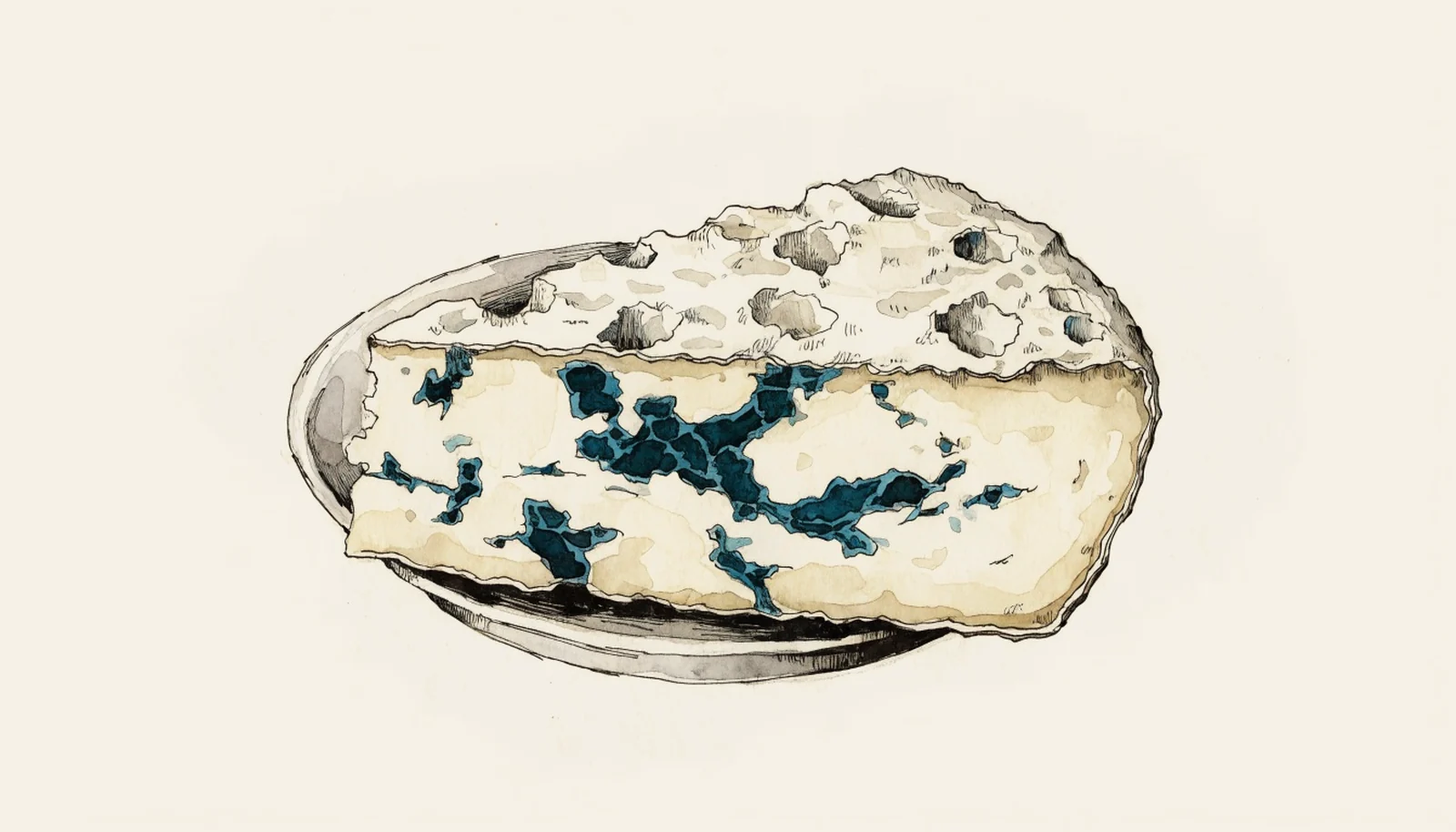
Gorgonzola is a DOP cow’s-milk blue cheese from Lombardy and Piedmont, and it is made in two distinct styles under one designation: dolce, which is young, soft and mild, and piccante, which is older, firmer and genuinely sharp. A label reading only gorgonzola tells you very little, which makes it a good first lesson in reading an Italian ingredient past its name.
That single word covering two products is the practical problem with the cheese, and it is why a recipe calling for gorgonzola can go badly wrong in either direction.
What gorgonzola actually is
Gorgonzola is made from whole pasteurised cow’s milk, inoculated with Penicillium mould, drained, salted and aged in cool humid cellars where it is pierced with needles to admit air.
The piercing is what makes the veining. Blue moulds need oxygen, so the wheels are spiked with steel needles to open channels, and the mould grows along them.
It is one of the oldest recorded blue cheeses, from the plains around Milan, and it is named for a town now absorbed into that city’s outskirts.
The DOP zone covers a broad band of Lombardy and Piedmont, larger than most Italian cheese designations.
The wheels are wrapped in foil during ageing, which limits rind development and keeps the paste moist.
It is made from pasteurised milk, unlike most of the great Italian hard cheeses, so the sixty-day import rule is not what governs its availability here.
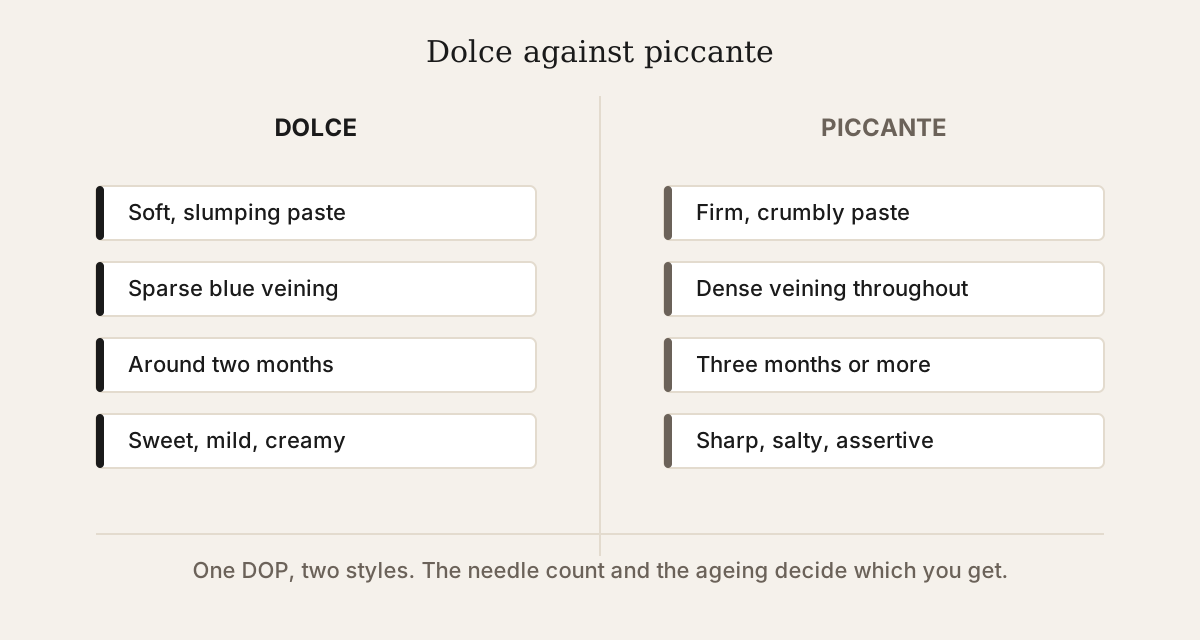
Dolce against piccante, which is the whole choice
The two styles share a designation, a zone and a starting method, and they are different cheeses on the plate.
Dolce is aged around two months. Soft to the point of being spoonable, ivory-white, sparsely veined, mild, sweet and lactic, with a texture closer to a rich cream cheese than to a firm blue.
Piccante is aged four months or more. Firm enough to crumble and slice, more densely veined, drier, and genuinely sharp with a peppery bite.
Dolce is sometimes labelled cremificato. The word signals the soft creamy style and appears on some producers’ packaging.
Piccante is sometimes labelled naturale or montagna. Both point toward the older, firmer style.
The intensity gap is large. Someone who finds dolce too mild and someone who finds piccante overpowering can both be describing gorgonzola accurately.
Which one your recipe means
English-language recipes almost never specify, and the right answer usually follows from the dish.
For a sauce, dolce. It melts smoothly into cream or pasta water and disperses without dominating, which is what a gorgonzola sauce wants.
For a board, either, and piccante if there is competition. Alongside strong company piccante holds its own; dolce disappears.
For crumbling over a salad or a steak, piccante. It holds its shape, and the sharpness is the point against bitter leaves or beef.
For spreading, dolce. It is soft enough to be served with a spoon.
Where a recipe says gorgonzola and describes melting it, assume dolce. Where it says crumble, assume piccante.
Substituting one for the other changes the dish rather than adjusting it, which is worth knowing before deciding the recipe is at fault.
How to judge a piece
Judge it on the paste, then the veining, then the smell.
The paste should be ivory to pale straw, not grey or brown. Browning at the edges means oxidation from a piece cut and left exposed.
Veining should be blue-green and well distributed, following the needle channels. Dolce is sparsely veined by design and that is not a defect.
Dolce should be soft and slightly weeping, holding its shape but yielding. Piccante should be firm and crumbly.
It should smell of mould and milk, sharp in the piccante and gentle in the dolce. A strong ammonia note means it is past its point, and that is the fault to check for in any blue.
Avoid a piece with a dry, cracked cut face, which indicates it has been sitting on the counter.
Checked on 13 August 2026, the first page of United States results for gorgonzola returned the consortium alongside cheese reference publishers and a recipe site, which describes that search on that date rather than recommending any seller.
What it should cost
Expect roughly 14 to 26 dollars a pound in the United States, with piccante generally above dolce.
The longer ageing is the difference, along with piccante’s greater weight loss over four or more months in a cellar.
American blue cheese is not a substitute at any price. Gorgonzola’s texture and its lactic sweetness are specific, and a domestic blue will read as saltier and more mineral.
Gorgonzola-style cheeses made outside the zone carry no designation. They may be good and they are judged on the producer, since nothing else is guaranteed.
Buy a cut piece rather than a pre-wrapped wedge where possible, since a blue deteriorates fastest at the cut face.
How to use it
Serve it at room temperature, or melt dolce into a sauce off the heat, and keep piccante for where sharpness is wanted.
Its natural companions are sweet and bitter things: pears, walnuts, honey, radicchio, and a sweet wine rather than a dry one.
Take it out of the refrigerator thirty minutes before serving. Cold blue cheese is muted and slightly waxy.
Melt dolce gently and off direct heat. High heat splits it and leaves an oily sauce.
Crumble piccante at the last moment, since it dries quickly once broken up.
Do not cook piccante into a delicate dish. Its sharpness takes over anything mild, which is a use rather than a fault when the dish can carry it.
Storage
Wrapped in waxed or greaseproof paper, refrigerated, one to two weeks for piccante and rather less for dolce.
Paper, not plastic film. A blue cheese needs to breathe, and plastic against the paste is what produces the ammonia smell people mistake for the cheese being strong.
Rewrap after each use with fresh paper.
Ammonia means it is finished. A faint mushroom smell is fine; a sharp nose-catching ammonia note is not, and it does not recover.
Do not freeze it. The texture becomes crumbly and watery and the paste separates.
Keep it away from other cheeses in a closed container, since blue moulds travel readily.
Frequently asked questions
What is the difference between gorgonzola dolce and piccante?
Gorgonzola dolce is aged around two months and is soft, mild, sweet and sparsely veined, almost spoonable. Piccante is aged four months or more and is firm, crumbly, densely veined and genuinely sharp with a peppery bite. Both carry the same DOP and the same production zone, so the label word rather than the designation is what tells you which cheese you have.
Which gorgonzola should I use in a sauce?
Dolce is the right choice for a sauce, because it melts smoothly into cream or pasta water and disperses without dominating the dish. Piccante is drier and much sharper, so it tends to take a sauce over and can turn oily if heated hard. As a rule, a recipe that describes melting the cheese means dolce and one that says crumble means piccante.
Why does my gorgonzola smell of ammonia?
An ammonia smell means the gorgonzola is past its point, and it does not recover. The most common cause is storage in plastic film, which prevents a blue cheese from breathing and accelerates the breakdown that produces the smell. Wrapping in waxed or greaseproof paper and rewrapping after each use prevents it.
Is gorgonzola made from raw milk?
Gorgonzola is made from pasteurised cow’s milk, unlike several of the great Italian hard cheeses such as Parmigiano Reggiano and Pecorino Romano, which are raw. This means the sixty-day ageing rule that governs raw milk imports into the United States is not the constraint on its availability, and young dolce can be imported despite its short ageing.
Can I substitute another blue cheese for gorgonzola?
Other blue cheeses substitute poorly for gorgonzola because its lactic sweetness and its texture are specific, and dolce in particular has no close equivalent. American and English blues generally read as saltier and more mineral. Where a substitution is unavoidable, match the style rather than the name: a mild creamy blue for dolce, a firm sharp one for piccante.
CalItalia Food covers Italian ingredients: what they are, how to tell a good one from an ordinary one, and where to buy them in the United States.