
Montasio: The Friulian DOP That Becomes Three Cheeses With Age
A cow milk DOP from Friuli and the Veneto sold fresh, semi-stagionato and stagionato. Which grade to buy for each use, and the fried cheese dish that made it famous.
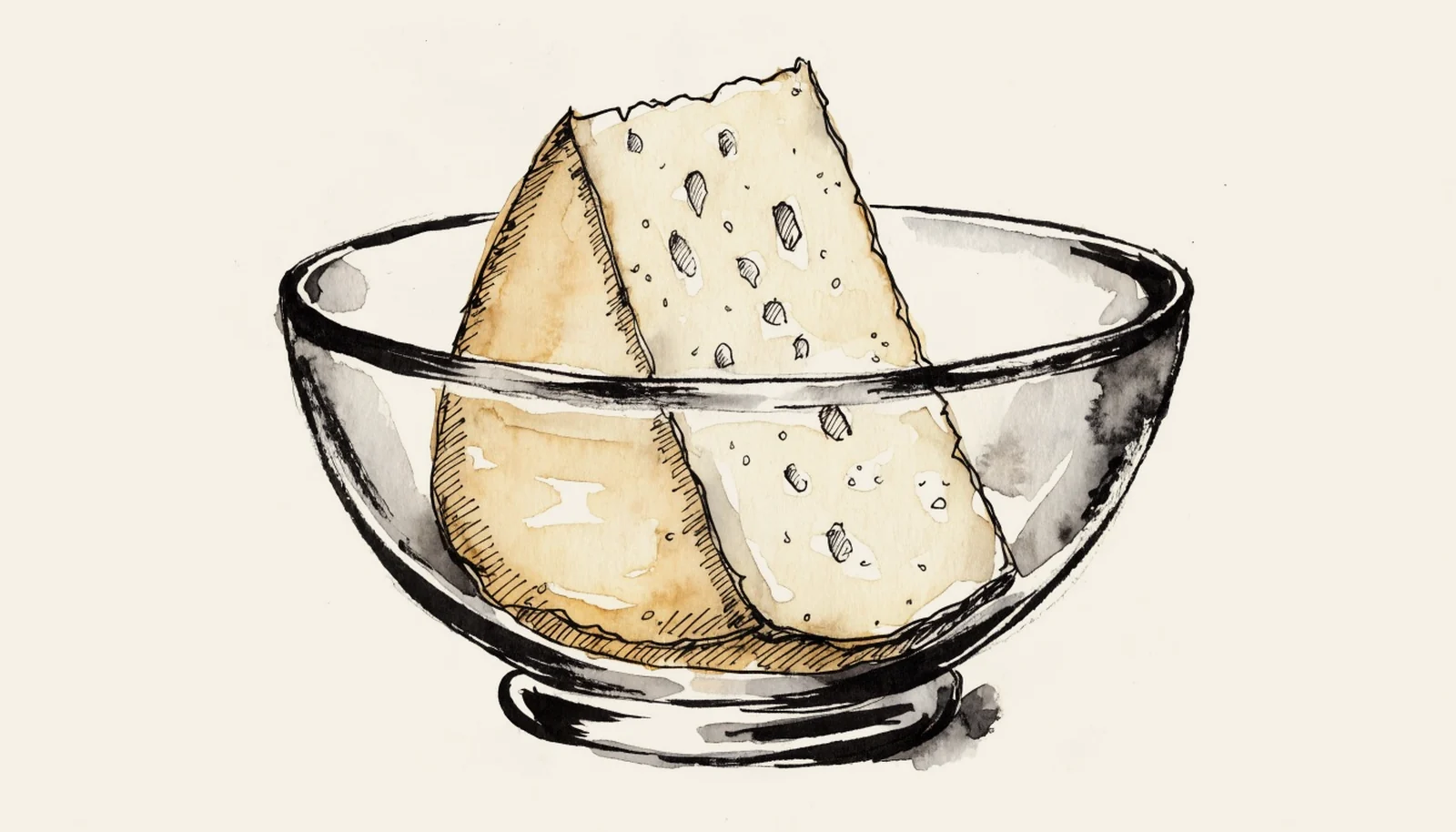
Montasio is a DOP cow’s-milk cheese from Friuli-Venezia Giulia and the eastern Veneto, sold in three age grades that behave like three different cheeses: fresco at two to five months, semi-stagionato at five to ten, and stagionato beyond ten. That makes it one of the Italian ingredients that reward a close reading of the label.
The grades are not marketing tiers. A fresh Montasio melts and slices; a stagionato grates and crystallises. Buying the wrong one for the job is the usual way people are disappointed by it.
What Montasio actually is
Montasio is made from cow’s milk, partly skimmed, coagulated, the curd cooked and pressed into large wheels, brined, and aged on wooden boards.
The zone covers Friuli-Venezia Giulia and defined provinces of the Veneto, which is a broader area than most Italian mountain-cheese DOPs.
It originated in monastery dairies in the Alpine foothills, named for the Montasio massif, and the recipe is documented back several centuries.
The wheels are large, five to eight kilograms or more, with a smooth, thin, straw-coloured to brown rind.
The paste is compact with small regular eyes, pale straw in a young wheel and deepening with age.
Minimum ageing is sixty days, which places even the youngest grade past the raw milk import threshold, though most Montasio is made from thermised or pasteurised milk, unlike the raw milk Fontina Val d’Aosta.
Montasio is not a mountain-only cheese despite its name and origin, and much of it is made on the plains.
The three grades
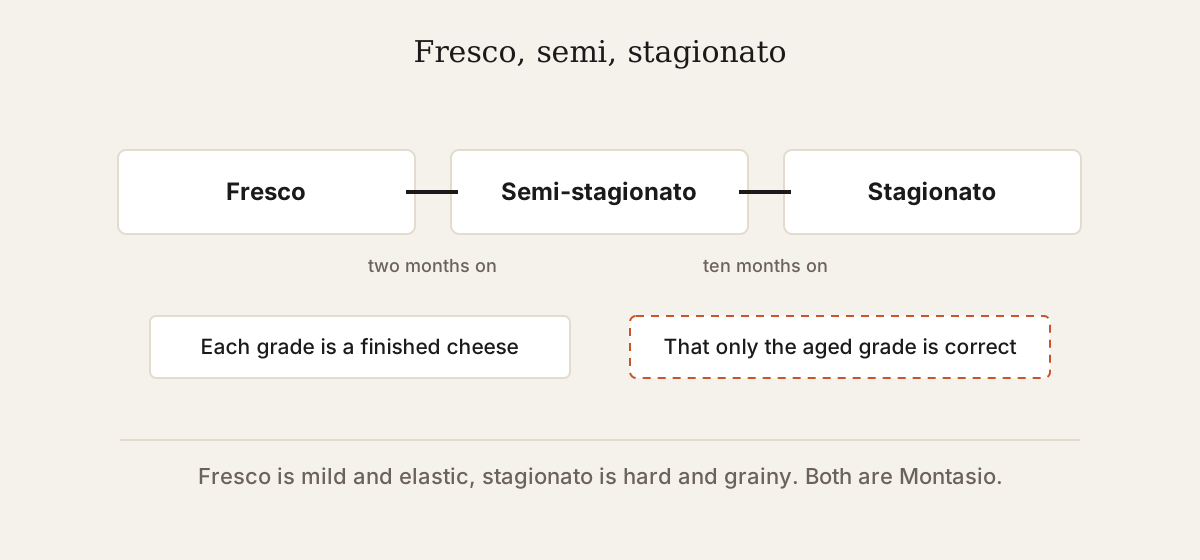
The grades are defined by the DOP and they matter more than for most cheeses.
Fresco, two to five months. Semi-firm, elastic, pale, mild, milky and gently sweet. It slices cleanly and melts smoothly.
Semi-stagionato, five to ten months. Firmer, deeper straw, more savoury, with the beginnings of a nutty character. It does both jobs adequately and neither perfectly.
Stagionato, beyond ten months. Hard, granular, amber, sharp and nutty, with tyrosine crystals appearing. It grates and does not melt smoothly.
Some producers offer wheels well past two years, which are intensely concentrated and are grating cheeses only.
The price spread between grades is modest and the eating difference is large, which makes reading the label unusually worthwhile here.
Frico, the dish that carries it
Montasio’s best-known use is a Friulian preparation that works with more than one grade.
Frico is cheese fried until it forms a crisp disc, sometimes with potato and onion worked in, and it is the regional dish of Friuli.
The thin crisp version uses an aged Montasio, grated and fried alone until it melts and then crisps into a lacy wafer.
The thick version uses a younger cheese with potato, producing a soft cake with a browned crust rather than a wafer.
The two are different dishes under one name, and a recipe usually gives away which by whether it calls for potato.
A fresh Montasio will not crisp on its own. Its moisture keeps it soft, so attempting a lacy frico with fresco produces a puddle.
This is the clearest practical reason to know your grade before cooking with it.
How to judge a piece
Judge it on the paste, then the rind, then the eyes.
The paste should be pale straw to amber depending on grade, even in colour, with no grey band under the rind.
Fresco should be elastic and give under a thumb; stagionato should be hard and flake rather than bend.
Small regular eyes are correct in the younger grades. Large irregular holes or cracks indicate a fault or a very old wheel drying out.
White crystals in a stagionato are tyrosine and are a sign of genuine maturation.
The rind should be smooth, thin and dry, straw to brown, without stickiness.
Look for the DOP mark and the grade, both of which appear on the wheel.
Checked on 13 August 2026, the first page of United States results for montasio returned reference material, the consortium and specialist Italian retailers, which describes that search on that date rather than recommending any seller.
What it should cost
Expect roughly 16 to 30 dollars a pound in the United States, rising with the grade.
The wheels are large and efficiently made, so young Montasio is reasonably priced, and the stagionato carries the cost of a year or more of ageing and the weight lost to it.
It is generally cheaper than the better-known Alpine cheeses of comparable age, which makes an aged Montasio good value.
Availability is moderate. It appears at good cheese counters and rarely in general supermarkets.
Anything labelled Montasio-style carries no designation and may come from anywhere.
How to use it
Slice or melt the young grade; grate the aged one; fry either into frico.
Its Friulian context suggests the company: polenta, cured mountain meats, pickled vegetables, and the region’s white wines.
Serve it at room temperature on a board, where the younger grades in particular read as far more flavourful than cold.
Melt fresco into a bake or a toasted sandwich, where it behaves like a good Alpine melting cheese.
Grate stagionato over pasta or soup as an alternative to the usual hard cheeses such as Parmigiano Reggiano, bringing a nuttier and less salty result than pecorino.
Keep the rind of an aged wheel for a soup or a bean pot.
Do not use stagionato where a recipe wants melting. It will separate rather than flow.
Storage
Wrapped in paper inside a loose bag, refrigerated. Fresco keeps two to three weeks; stagionato keeps a month or more.
Paper rather than plastic film, so the cut face does not go slick.
Rewrap after each use with fresh paper.
Surface mould can be cut away on any grade and the rest is sound.
Stagionato will keep drying and hardening, which is not spoilage and only makes it more of a grating cheese.
Do not freeze it. The paste turns crumbly and the melting quality of the young grades is lost.
Frequently asked questions
What is the difference between Montasio fresco and stagionato?
Montasio fresco is aged two to five months and is semi-firm, elastic, pale and mild, slicing cleanly and melting smoothly. Stagionato is aged beyond ten months and is hard, granular, amber and sharply nutty, with tyrosine crystals, and it grates rather than melting. Semi-stagionato at five to ten months sits between them. All three carry the same DOP.
What is frico?
Frico is the Friulian dish of Montasio fried until it crisps, and it exists in two forms. The thin lacy version uses grated aged Montasio fried alone until it melts and crisps into a wafer. The thick version incorporates potato and onion with a younger cheese, producing a soft cake with a browned crust. A recipe usually reveals which by whether it calls for potato.
Can I use Montasio instead of Parmesan?
An aged Montasio stagionato works as a grating cheese in place of Parmigiano Reggiano, producing a nuttier and less salty result with less of the crystalline sweetness. It is often better value for the age. Montasio fresco cannot substitute at all, being elastic and moist, and will melt into a dish rather than sitting on it.
Does Montasio melt?
Montasio fresco and semi-stagionato melt well and are good Alpine-style melting cheeses for bakes, toasted sandwiches and gratins. Stagionato does not melt smoothly and will separate under heat, since its moisture is largely gone. This is why a thin crisp frico requires the aged grade while a thick potato frico uses a younger one.
Is Montasio a raw milk cheese?
Most Montasio is made from thermised or pasteurised milk rather than raw, although its minimum sixty-day ageing would satisfy the United States raw milk rule in any case. The DOP governs the zone, the milk source and the ageing grades rather than requiring raw milk, which distinguishes it from designations such as Fontina Val d’Aosta that do.
CalItalia Food covers Italian ingredients: what they are, how to tell a good one from an ordinary one, and where to buy them in the United States.