
Mozzarella di Bufala: The DOP That Names an Animal, Not a Place Alone
Water buffalo milk mozzarella from Campania and Lazio, protected by DOP. Why buffalo milk changes the cheese, how to spot the fake, how to judge and use one, and why the liquid matters.
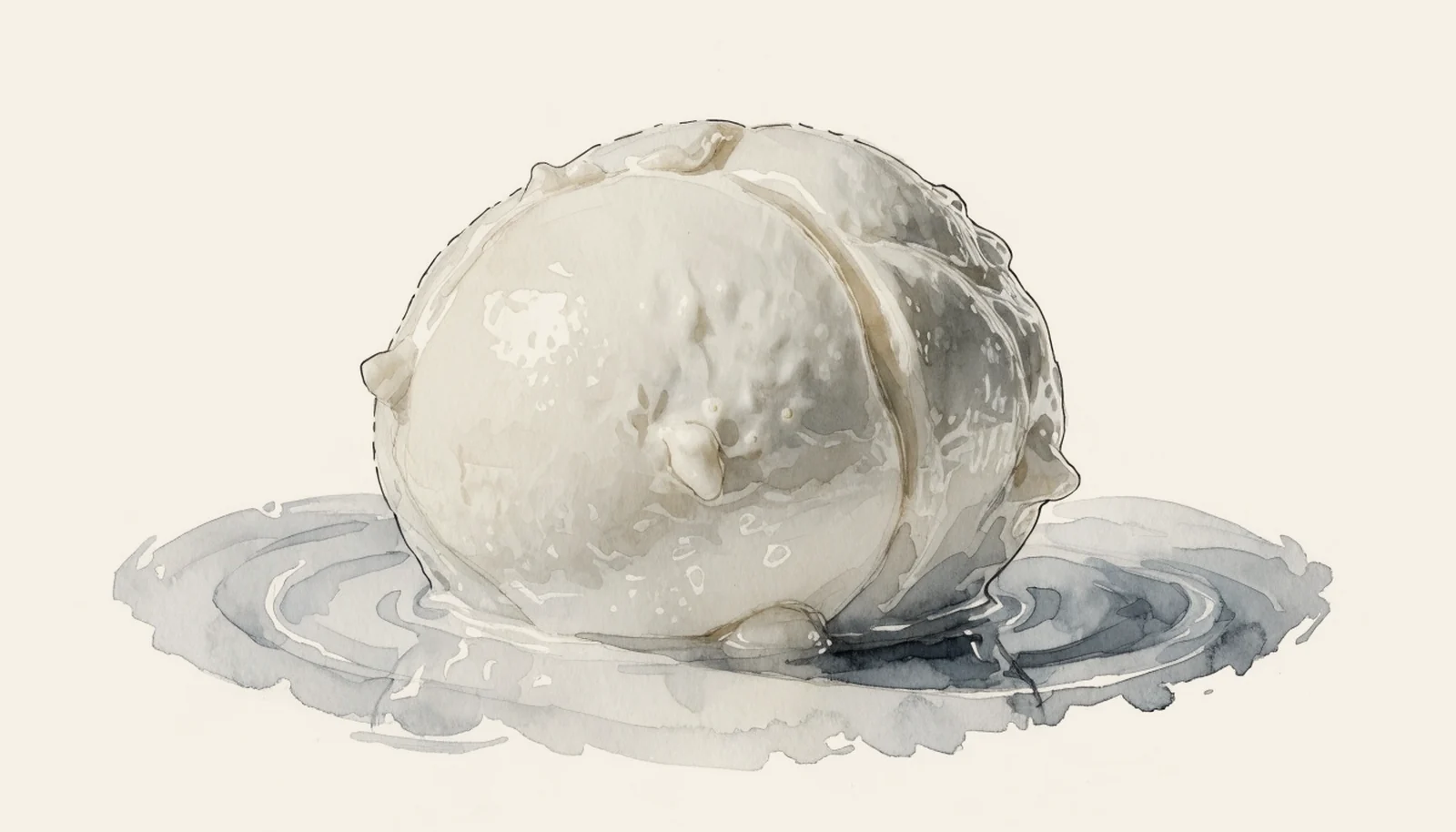
Mozzarella di Bufala Campana is a fresh stretched-curd cheese made from whole water buffalo milk in defined parts of Campania, Lazio, Puglia and Molise, and it holds a DOP. The buffalo milk is not a variation on the cow’s-milk version; it is what the designation exists to protect, and it shows the gap between the Italian original and the American shelf in a single ball.
Most mozzarella sold in the United States is cow’s milk, which is a legitimate cheese with a different name, and the confusion between the two costs people money at the counter more often than it costs them a bad meal.
What mozzarella di bufala actually is
Mozzarella di bufala is made by acidifying whole water buffalo milk, cutting and ripening the curd, then working it in hot water until it stretches, and forming it by hand.
The animal is the Italian Mediterranean water buffalo, a domesticated species kept in the marshy plains south of Naples and in parts of Lazio.
Buffalo milk is much richer than cow’s milk, carrying substantially more fat and protein, which is why the cheese is denser, whiter and more lactic.
Mozzare means to cut off, and the name describes the moment the cheesemaker pinches the ball from the stretched rope of curd by hand.
It is a fresh cheese with no ageing at all. Everything about how it is bought and kept follows from that.
It is pure white rather than cream-coloured, because buffalo milk contains no beta-carotene. That is the fastest visual test at a counter.
Why the milk changes the cheese
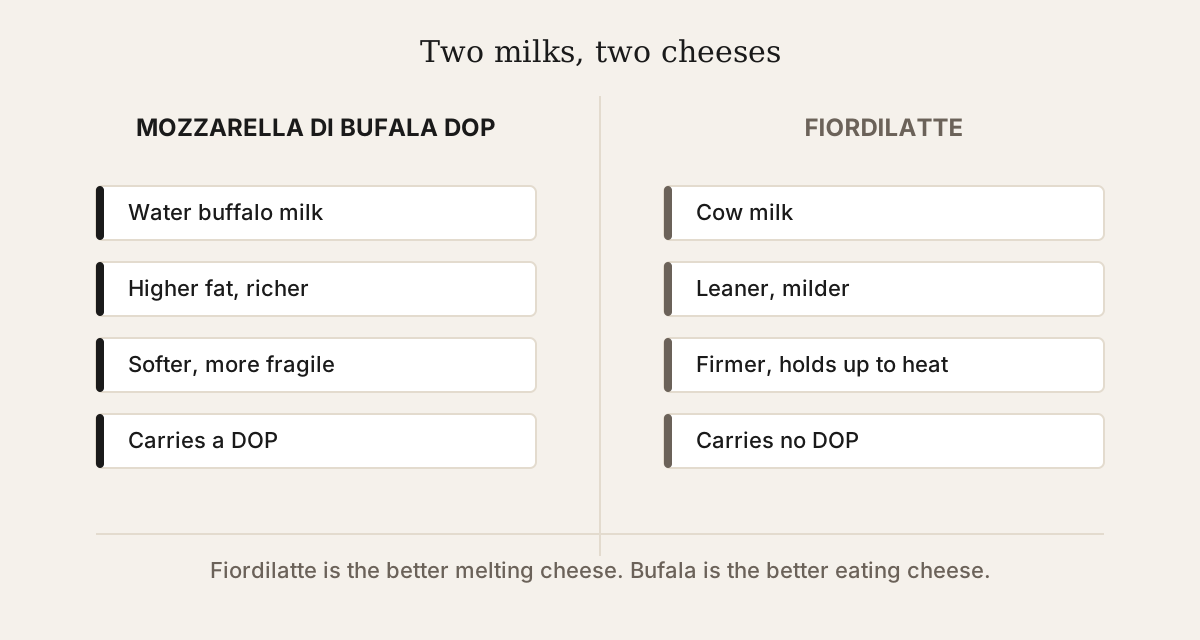
Substituting cow’s milk into the same process gives a real cheese with a different name and different behaviour.
Fat content is the largest difference. Buffalo milk’s higher fat gives a softer, more yielding texture and a mouthfeel that cow’s milk cannot reach.
The flavour is more lactic and slightly tangy, where cow’s-milk mozzarella is milder and sweeter.
The colour is porcelain white. Cow’s milk carries beta-carotene from grass and gives a faintly yellow or ivory cheese; buffalo milk does not.
It releases more liquid when cut, which is expected and is a sign of a properly moist cheese rather than a fault.
Cow’s-milk mozzarella has its own Italian name, fior di latte, which means flower of the milk and is not a lesser term. A good fior di latte is a good cheese; it is simply not this one.
How to spot what you are actually buying
The DOP is precise and the shelf label frequently is not.
Look for the full name. The protected designation is Mozzarella di Bufala Campana DOP. Anything shorter is doing less work.
Buffalo mozzarella and mozzarella di bufala without Campana may be genuine buffalo milk from outside the zone, or may be a blend. The DOP mark is the check.
Read for blends. Some products combine buffalo and cow milk, which cannot carry the DOP, and the ingredient list is where that appears.
Check the colour. A cream or pale-yellow ball is cow’s milk whatever the front of the package says.
Checked on 13 August 2026, the first page of United States results for mozzarella di bufala returned reference material alongside importers and specialist cheese retailers, which describes that search on that date rather than recommending any seller. Availability here is good in cities and thin outside them.
Why the liquid matters
Mozzarella di bufala is sold in liquid and the liquid is part of the product rather than packing material.
It should be sold submerged, in its own whey or a light brine, and a ball sold dry has already begun to deteriorate.
The liquid should be cloudy and smell sweet. Clear water suggests the cheese was repacked; a sour or yellowing liquid means it is old.
Do not discard it until serving. The cheese dries and hardens within hours out of its liquid.
Do not refrigerate it hard if it can be avoided. In Campania it is kept and eaten at room temperature the day it is made, and cold is what makes the texture squeaky and dull.
A ball that has been frozen is ruined, and the texture does not return.
How to judge one
Judge it on the date, then the surface, then the cut.
Buy the freshest available. Like burrata, this is a cheese where the date beats the producer, and it is at its best within a day or two.
The surface should be smooth and faintly glossy, with a very thin skin, not rubbery and not slimy.
It should give under light pressure and spring back.
Cutting it should release milky liquid. A ball that stays dry when cut is either not buffalo milk or has been sitting.
It should smell fresh and lactic, faintly of yoghurt. Any sourness beyond that is age.
It should tear rather than slice cleanly, showing a layered interior structure from the stretching.
What it should cost
Expect roughly 12 to 22 dollars for a ball of around eight ounces in the United States, well above cow’s-milk mozzarella.
The buffalo is the cost. The animals yield far less milk than dairy cows, the herds are small, and the DOP zone is limited, so the raw material is expensive before any cheesemaking happens.
Cow’s-milk fresh mozzarella costs a fraction of that and is the sensible buy for anything cooked.
Domestic American buffalo mozzarella exists and is made from genuine buffalo milk without the DOP, which is a real product judged on freshness like any other.
A cheap ball labelled buffalo is worth reading closely. The price gap between the milks is large enough that undercutting it usually means a blend.
How to use it
Eat it at room temperature, torn rather than sliced, with oil, salt and bread, and as little else as possible.
Its richness and moisture make it a cheese to serve plainly. Tomato and basil is traditional and works; anything more elaborate buries it.
Take it out of the refrigerator an hour before serving. Cold buffalo mozzarella is firm and mute, and the improvement at room temperature is dramatic.
Tear it by hand. A knife compresses the layered structure and a torn edge holds dressing better.
Salt it at the moment of serving. Salt applied early draws water out and leaves a puddle.
Do not cook with it. Its high moisture floods a pizza and its expense is wasted under heat. Fior di latte is the pizza cheese, and in Naples it frequently is. For a drier melt, scamorza is mozzarella hung until firm.
Storage
In its liquid, refrigerated, two to three days, and it is best the day it is bought.
Keep it in the liquid until serving. This is the single most effective thing you can do for it.
It does not improve with keeping. There is no version of storing this cheese that beats eating it sooner.
Do not freeze it. The structure collapses and the texture is gone permanently.
If it must be kept a further day, change nothing and keep it cold and submerged rather than trying to improve on the packaging.
A ball past its best is still usable torn into a hot dish off the heat, which is salvage rather than a use.
Frequently asked questions
What is the difference between mozzarella di bufala and regular mozzarella?
Mozzarella di bufala is made from water buffalo milk and regular mozzarella from cow’s milk, which the Italians call fior di latte. Buffalo milk is considerably richer in fat and protein, giving a softer, denser, more lactic cheese that is pure white. Cow’s milk contains beta-carotene and produces a faintly ivory cheese that is milder and firmer.
Is buffalo mozzarella made from water buffalo?
Buffalo mozzarella is made from the milk of the Italian Mediterranean water buffalo, a domesticated species kept in the plains of Campania and parts of Lazio, and not from the American bison. The animals yield far less milk than dairy cows, which is the main reason the cheese is expensive. The DOP protects both the animal and the production zone.
Why is my mozzarella di bufala so watery?
Releasing milky liquid when cut is correct for mozzarella di bufala rather than a fault, and follows from the high moisture content that gives the cheese its texture. A ball that stays dry when cut has usually been sitting, or is not buffalo milk. Serving it torn on a plate rather than sliced onto bread manages the liquid without losing it.
Can I use mozzarella di bufala on pizza?
Mozzarella di bufala is a poor pizza cheese despite the association, because its high moisture floods the base and its cost is wasted under heat. Fior di latte, the cow’s-milk version, is what most Neapolitan pizzerias actually use for exactly these reasons. Where bufala is used on pizza it is usually torn on after baking rather than before.
How do I know it is the real DOP?
The protected designation reads Mozzarella di Bufala Campana DOP in full, and anything shorter carries less guarantee. Buffalo mozzarella made outside the zone may be genuine buffalo milk without the designation, and some products blend buffalo and cow milk, which the ingredient list will show. A cream or pale-yellow colour is cow’s milk regardless of what the front of the package claims.
CalItalia Food covers Italian ingredients: what they are, how to tell a good one from an ordinary one, and where to buy them in the United States.