
Pecorino Romano: The Sheep Cheese That Is Mostly Made in Sardinia
A hard salted DOP sheep cheese from Lazio, Sardinia and Grosseto. Why most of it is Sardinian, why it is so salty, how to judge a piece, and when it is the wrong cheese to use.
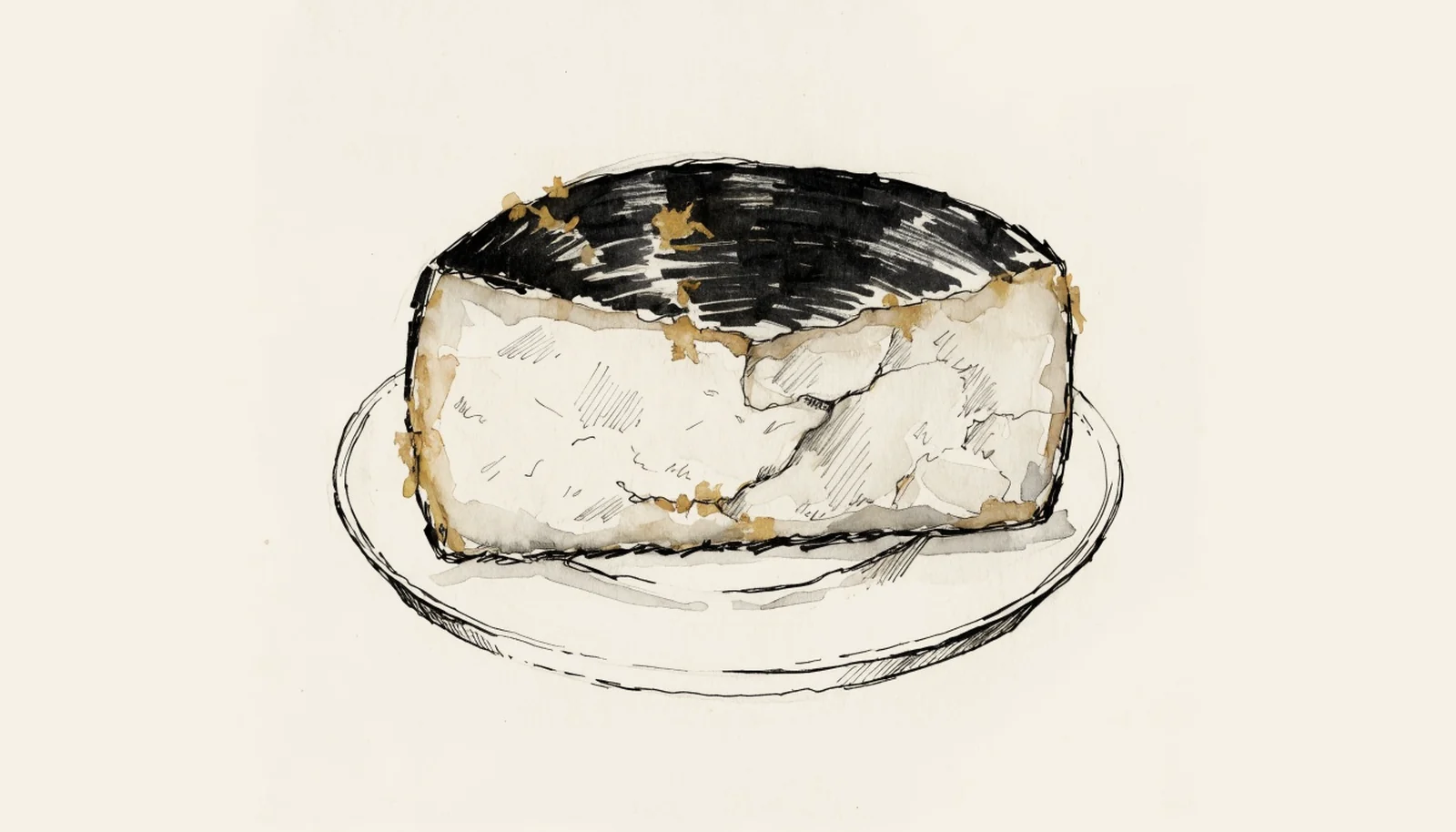
Pecorino Romano is a hard, sharply salty DOP cheese made from raw sheep’s milk, aged at least five months for table use and longer for grating. Despite the name, the great majority of it is produced in Sardinia rather than around Rome. The DOP mark rather than the address is what separates it from the imitations sold under Italian names.
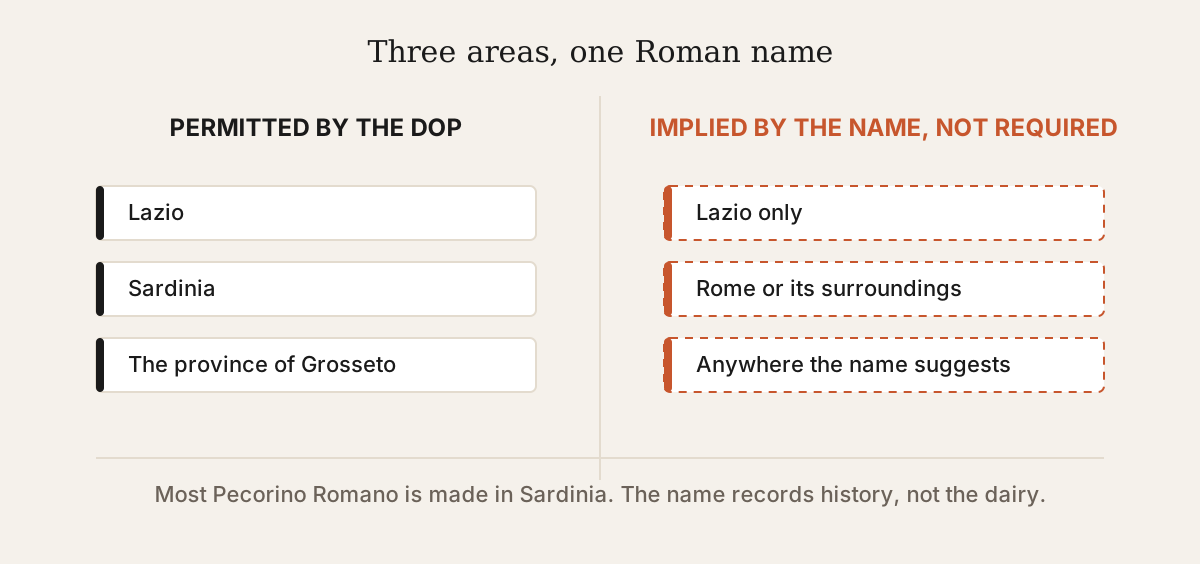
That is not a loophole. Sardinia is inside the protected zone by design, and understanding why explains most of what the cheese is.
What Pecorino Romano actually is
Pecorino Romano is made from whole sheep’s milk, coagulated with lamb rennet, the curd cut fine, pressed, then dry-salted repeatedly over weeks and aged.
Pecora means sheep. Pecorino is the general Italian word for a sheep’s-milk cheese, and Romano is the specific protected one, which is why the two words are not interchangeable.
The salting is the defining process. The wheels are dry-salted by hand over an extended period, which is what produces the cheese’s characteristic sharpness and its keeping quality.
Lamb rennet gives the piquancy. The traditional coagulant contributes the sharp, slightly peppery note that distinguishes it from a mild sheep cheese.
It is a raw milk cheese and its long ageing is what makes it legal to import into the United States, since the sixty-day rule applies.
Minimum ageing is five months for table cheese and eight for the grating designation, so a wheel sold for grating is by definition older and sharper.
Why most of it is Sardinian
The DOP zone covers Lazio, the whole of Sardinia and the Tuscan province of Grosseto, and Sardinia produces the overwhelming share.
Sardinia has the sheep. The island’s pastoral economy and its enormous sheep population made it the natural place to make a sheep cheese at scale.
Roman producers moved there over a century ago. The migration of production to Sardinia happened in the late nineteenth and early twentieth centuries, driven by land and flock availability, and the DOP recorded the reality rather than creating it.
So a Sardinian Pecorino Romano is fully authentic. It is not a lesser version, a copy or an outsourcing, and the wheel will carry the DOP mark exactly as a Lazio one does.
Sardinia also has its own separate DOP, Pecorino Sardo, which is a different and generally milder cheese, so the island produces two distinct protected sheep cheeses.
The name is historical rather than geographical, in the same way that the style names of unprotected salami are, with the difference that here the mark is real and the zone is defined.
Why it is so salty, and when that is wrong
Pecorino Romano is much saltier than most cheese, and the salt is a design feature rather than an excess.
Salt was the preservation. A hard, heavily salted sheep cheese kept without refrigeration through a Mediterranean summer, which is what it was made for.
It is a seasoning as much as a cheese. In Roman cooking it does a job closer to what anchovy or cured pork does, contributing salt and sharpness rather than dairy richness.
So it needs no additional salt in the dish. The most common mistake is salting a pasta sauce and then adding Pecorino Romano, which produces something inedible.
It is wrong where you wanted Parmigiano. Substituting it one for one into a dish built around Parmigiano Reggiano gives a sharper, saltier and less sweet result, and the two are not interchangeable despite both being hard grating cheeses.
Cacio e pepe, carbonara, amatriciana and gricia are its dishes, all Roman, all built to expect that salt level.
Pecorino Romano against Parmigiano Reggiano
The two are the hard Italian grating cheeses an American shop stocks and they are different in kind.
Pecorino Romano is sheep’s milk; Parmigiano Reggiano is cow’s milk. That is the root of every other difference.
Pecorino is sharper and much saltier. Parmigiano is sweeter, nuttier and more complex.
Parmigiano is aged far longer, twelve months minimum and frequently two or three years, against Pecorino Romano’s five to eight.
Their textures differ. Parmigiano is granular and crystalline; Pecorino Romano is denser, harder and more compact.
Blending them is traditional in some dishes and is a legitimate choice rather than a compromise.
How to judge a piece
Judge it on the rind mark, then the paste, then the smell.
Look for the DOP stamp on the rind. Genuine Pecorino Romano carries the designation mark and the producer identifier, and a wedge cut from the wheel should show part of it.
The paste should be white to pale straw, compact and close-textured, with few or no holes.
It should be firm and slightly grainy, not rubbery, and should crumble rather than bend when broken.
It should smell sharp and lanolin-like. A sheep cheese has a distinct animal character that a cow cheese does not, and its absence suggests the wrong cheese.
Avoid pre-grated tubs. Anti-caking agents dull the flavour, and a hard cheese loses aroma very quickly once grated.
Checked on 13 August 2026, the first page of United States results for pecorino romano returned the consortium and specialist cheese retailers alongside reference material, which describes that search on that date rather than recommending any seller. Availability here is excellent.
What it should cost
Expect roughly 14 to 24 dollars a pound in the United States, which makes it cheaper than Parmigiano Reggiano.
The shorter ageing is why. Five to eight months ties up far less capital and warehouse space than the two years a serious Parmigiano gets.
Romano without the Pecorino is a different product. American Romano is a cow’s-milk cheese made domestically and is not related to the DOP beyond the borrowed word. It is legitimate, much cheaper, and tastes quite different.
Very cheap grating cheese sold as Romano is almost always the American cow version, which is worth knowing rather than being surprised by at the till.
How to use it
Grate it over finished pasta, or use it as the cheese in the four Roman pasta dishes built around it.
Its salt means it should go in at the end, off the heat, and the dish should be under-salted in expectation of it.
Grate it fresh each time. The aroma of a hard sheep cheese fades within hours of grating.
Take the pan off the heat before adding it. Direct heat makes it seize and turn stringy rather than melting smoothly, which is the usual reason a cacio e pepe breaks.
A little of the pasta water helps it emulsify rather than clumping, which is the technique those dishes actually turn on.
It is not a table cheese for most palates. A young table wheel eaten in pieces is traditional in Lazio and the grating wheels most Americans buy are too sharp for it.
Storage
Wrapped in paper inside a loose bag, refrigerated, a piece keeps a month or more. It is a hard cheese and hard cheeses keep.
Paper rather than plastic film. Plastic against the cut face traps moisture and produces a slick, ammoniated surface.
Rewrap it after each use with fresh paper.
Surface mould on a hard cheese can be cut away and the rest is fine, which is not true of a soft cheese.
Do not freeze it. The texture turns crumbly and mealy, and a hard cheese has no need of freezing anyway.
Keep the rind. A Pecorino rind simmered in a soup or a bean pot gives up a great deal of flavour and is not waste.
Frequently asked questions
Why is Pecorino Romano made in Sardinia?
Pecorino Romano’s DOP zone covers Lazio, Sardinia and the province of Grosseto, and Sardinia produces most of it because the island has the sheep and the pastoral economy to support the scale. Roman producers moved production there in the late nineteenth and early twentieth centuries, and the designation recorded that reality rather than creating an exception. A Sardinian wheel is fully authentic.
Can I substitute Pecorino Romano for Parmigiano Reggiano?
Pecorino Romano can stand in for Parmigiano Reggiano with the understanding that it is sharper, considerably saltier and made from sheep’s milk rather than cow’s. Any dish salted on the assumption of Parmigiano will come out too salty. Reduce or remove the added salt and use rather less cheese, or blend the two, which is traditional in several Roman dishes.
Why is Pecorino Romano so salty?
Pecorino Romano is heavily dry-salted by hand over several weeks because salt was the preservation method for a cheese made to keep through a Mediterranean summer without refrigeration. The salt is intrinsic to the product rather than an excess. It functions as a seasoning in Roman cooking, closer to what cured pork or anchovy does, which is why dishes using it are salted lightly or not at all.
What is the difference between Pecorino Romano and Romano?
Pecorino Romano is a protected Italian DOP cheese made from sheep’s milk in Lazio, Sardinia or Grosseto. Romano sold without the word Pecorino is usually an American cow’s-milk cheese with no connection to the designation beyond the borrowed name. The American version is much cheaper and tastes quite different, being milder, less sharp and without the lanolin character of sheep’s milk.
Why does my Pecorino Romano turn stringy in sauce?
Pecorino Romano seizes and turns stringy when it meets direct heat, which is why cacio e pepe and carbonara break. Take the pan off the heat before adding the cheese and use a little starchy pasta water to help it emulsify into a smooth sauce. Grating it very finely also helps, since a coarse grating melts unevenly and clumps.
CalItalia Food covers Italian ingredients: what they are, how to tell a good one from an ordinary one, and where to buy them in the United States.