
Provola: The Word Between Mozzarella and Provolone, and What It Actually Names
A stretched-curd cheese sitting between fresh mozzarella and aged provolone, usually smoked. How it differs from scamorza, how to judge and use one, and what provola means in Naples.
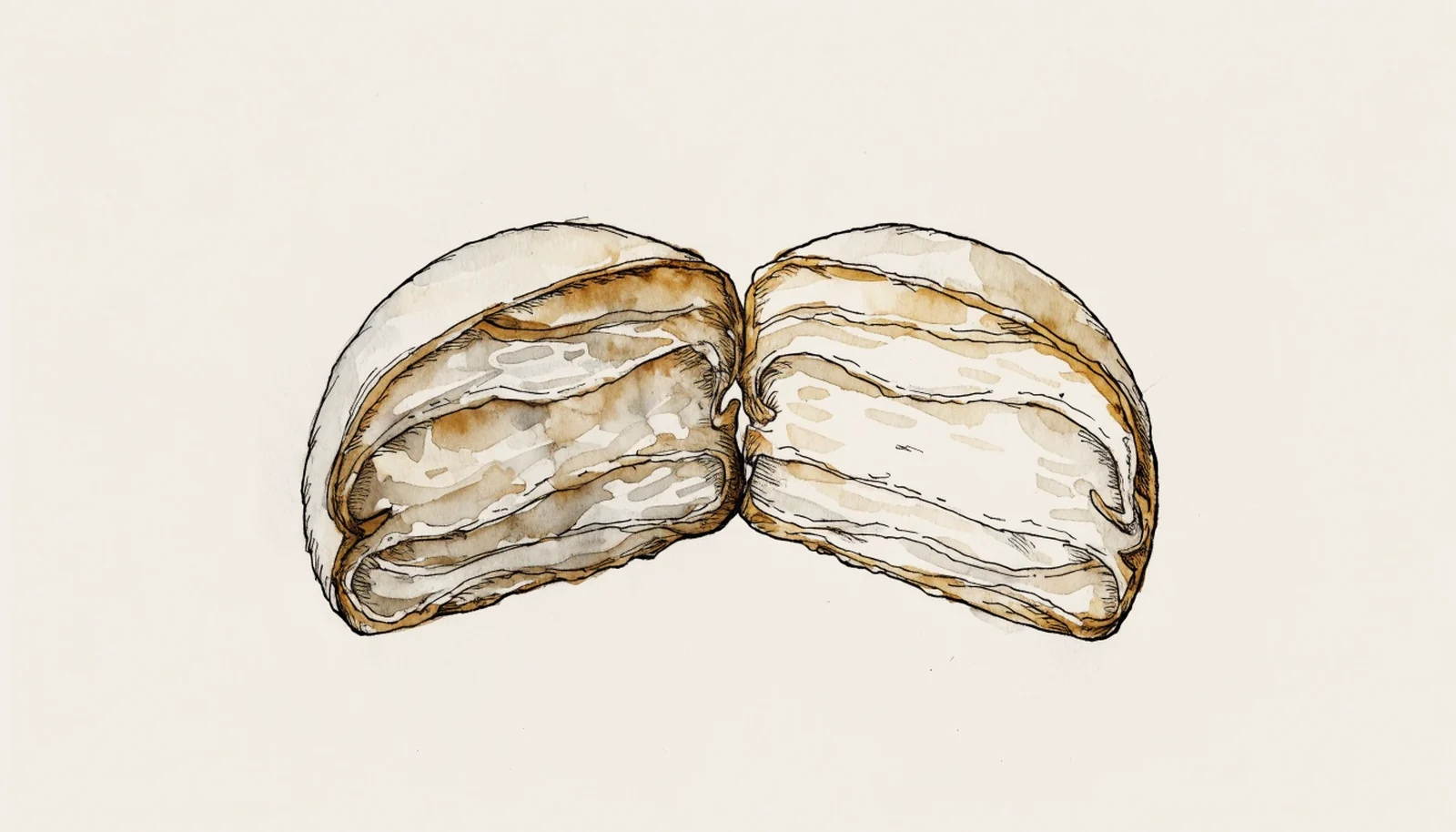
Provola is a stretched-curd cheese in the same family as mozzarella and provolone, made in small rounds, aged briefly and very often smoked. The word sits between the two better-known names and is used loosely enough that it needs unpicking before it is useful. It is a good example of how little an unprotected Italian name guarantees.
In Naples, provola on a pizza menu means something specific and it is not what an American cheese counter usually means by the word.
What provola actually is
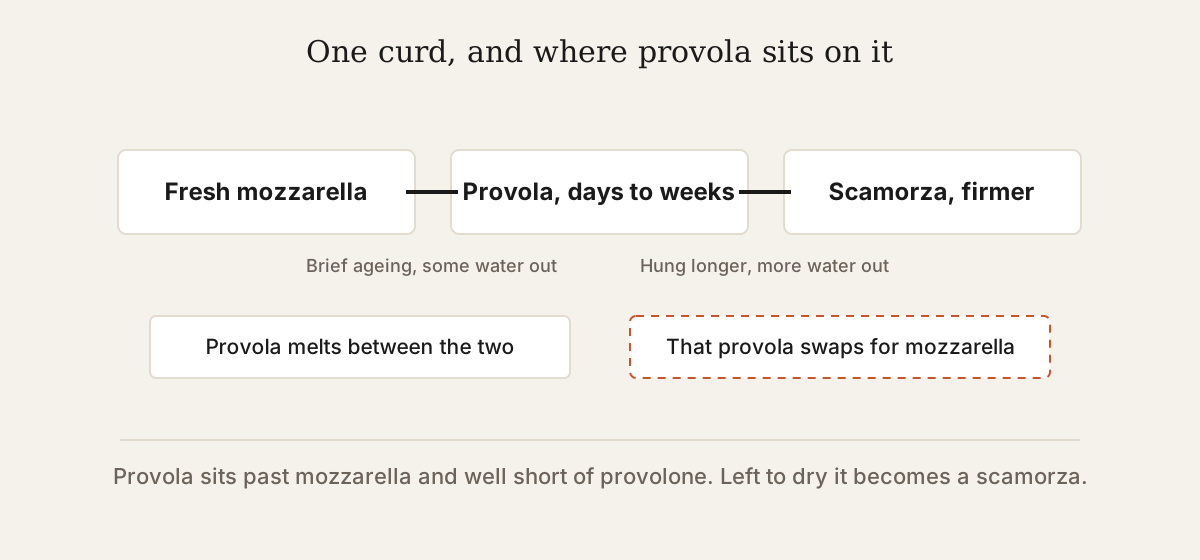
Provola is made by the pasta filata method, acidifying milk, ripening and stretching the curd in hot water, forming small rounds, brining them and ageing briefly.
It is aged days to a few weeks, which places it past mozzarella and well short of provolone.
It is usually smoked. Provola affumicata is the common form, and in much of southern Italy provola without qualification is assumed to be smoked.
The rounds are small, typically a few hundred grams, often with a small knot at the top from the cord.
Cow’s milk is standard, and a buffalo-milk provola exists in Campania and is a genuinely different and better product.
It carries no DOP in its general form. Provola dei Nebrodi and similar regional products have their own recognition, and the plain word protects nothing.
A thin pale rind forms during the short ageing, unlike mozzarella which has none.
Provola against scamorza
The two are close enough that shops use the words interchangeably, and there are tendencies worth knowing.
Both are briefly aged stretched-curd cheeses and both are commonly smoked. The overlap is genuine and large.
Scamorza is typically drier, hung longer to lose moisture, and firmer as a result.
Provola tends to be moister and softer, closer to the fresh end of the family.
Scamorza’s pear shape with a pronounced neck is more consistent; provola is more often a plain round.
Neither word is protected, so a producer may use either for either, and the label settles nothing.
Where the distinction matters, judge by feel. The softer, moister one is behaving as a provola whatever it says on the wrapper.
What provola means in Naples
Naples uses the word in a specific way that matters if you are reading a pizza menu.
Provola on a Neapolitan pizza means smoked provola, and it is the cheese in pizza with provola e pepe and in many of the city’s non-margherita pizzas.
It is chosen for smoke and for melting behaviour, not as a substitute for mozzarella. The two are frequently used together on the same pizza.
Buffalo-milk provola affumicata is the premium version and is a Campanian speciality.
Provola di bufala is smoked buffalo mozzarella, essentially, and is worth seeking out where the plain cow version is unremarkable.
So a Neapolitan recipe calling for provola wants smoke. Substituting an unsmoked cheese changes the dish materially, which is not obvious from the word.
How to judge one
Judge it on the rind, then the give, then the smoke.
The rind should be thin, smooth and dry, pale on an unsmoked one and tan to amber on a smoked one.
It should give under a thumb and spring back, softer than a scamorza and firmer than a fresh mozzarella.
It should not be sitting in liquid. A provola that weeps has been sold too young or kept badly.
On a smoked one, the paste should stay pale with the colour graduating at the edge, which indicates smoke that penetrated from the surface. A uniformly tan paste suggests smoke flavouring.
It should smell milky, with woodsmoke on a smoked one that reads as resinous rather than sweet and flat.
Checked on 13 August 2026, the first page of United States results for provola returned reference material, an Italian food publisher and specialist producers, which describes that search on that date rather than recommending any seller.
What it should cost
Expect roughly 10 to 18 dollars a pound in the United States for cow’s-milk provola, and considerably more for buffalo.
The short ageing keeps it near mozzarella’s price, and the smoking and the small format add modestly.
Buffalo provola is a genuine step up and costs roughly double, which is the same premium buffalo milk carries in mozzarella.
Domestic American provola is made by Italian-style creameries and is judged on the producer, since no designation is in play.
Very cheap smoked provola is worth reading the label on, since smoke flavouring is the obvious economy.
How to use it
Melt it. Provola is a cooking cheese and its smoke is the reason to choose it over mozzarella.
Its moisture sits between mozzarella’s and scamorza’s, so it melts to a genuine pull without flooding a dish the way fresh mozzarella can.
On pizza it is the Neapolitan choice where smoke is wanted, frequently alongside rather than instead of mozzarella.
It is excellent in a baked pasta, where the smoke carries through a tomato sauce.
Grilled or fried in slices it browns well and goes molten inside.
Serve it at room temperature if eating it uncooked, though it is not primarily a table cheese.
Do not use it on a caprese. That dish wants fresh mozzarella and provola’s smoke and firmness are wrong for it.
Storage
Wrapped in paper inside a loose bag, refrigerated, one to two weeks.
It keeps better than mozzarella because the brief ageing removed some water, and less well than scamorza because it removed less.
Paper rather than plastic film, so the rind stays dry rather than going slick.
It will keep drying as it sits, becoming firmer and effectively turning into a scamorza, which is not spoilage.
Surface mould can be cut away and the rest is sound.
It freezes acceptably for cooking, with the texture suffering, so use a thawed one melted rather than sliced.
Frequently asked questions
What is the difference between provola and scamorza?
Provola and scamorza are both briefly aged stretched-curd cheeses and both are commonly smoked, so the overlap is genuine and shops use the words interchangeably. Scamorza tends to be drier and firmer, hung longer to lose moisture, and more consistently pear-shaped. Provola tends to be moister and softer. Neither word is protected, so the label settles nothing and the feel of the cheese is the better guide.
Is provola always smoked?
Provola is very often smoked and not always. In much of southern Italy, and on a Neapolitan pizza menu in particular, provola without qualification is assumed to be smoked. An unsmoked version exists and is sometimes labelled provola dolce. Because a Neapolitan recipe calling for provola generally wants the smoke, substituting an unsmoked cheese changes the dish materially.
Is provola the same as mozzarella?
Provola and mozzarella are made by the same stretched-curd method and differ in ageing. Mozzarella is sold fresh within days and has no rind; provola is aged for days to a few weeks, develops a thin rind, loses some moisture and is usually smoked. Provola therefore melts without flooding a dish, which fresh mozzarella can do.
Can I use provola on pizza?
Provola is a standard Neapolitan pizza cheese, chosen for its smoke and its melting behaviour, and it is frequently used alongside mozzarella rather than instead of it. Its lower moisture means it will not make the base soggy the way fresh mozzarella can in a domestic oven. Pizza with provola and black pepper is a Neapolitan classic.
What is provola di bufala?
Provola di bufala is provola made from water buffalo milk, essentially a smoked and briefly aged buffalo mozzarella, and it is a Campanian speciality. It is richer and more lactic than the cow’s-milk version and costs roughly double, which is the same premium buffalo milk carries in fresh mozzarella. It is worth seeking out where the plain cow version is unremarkable.
CalItalia Food covers Italian ingredients: what they are, how to tell a good one from an ordinary one, and where to buy them in the United States.