
Stracciatella (the Cheese): Torn Curd in Cream, and the Two Other Things Called That
The Pugliese cheese that fills a burrata, made of shredded mozzarella curd steeped in cream. How it differs from the gelato and the Roman soup, and how to buy and use it.
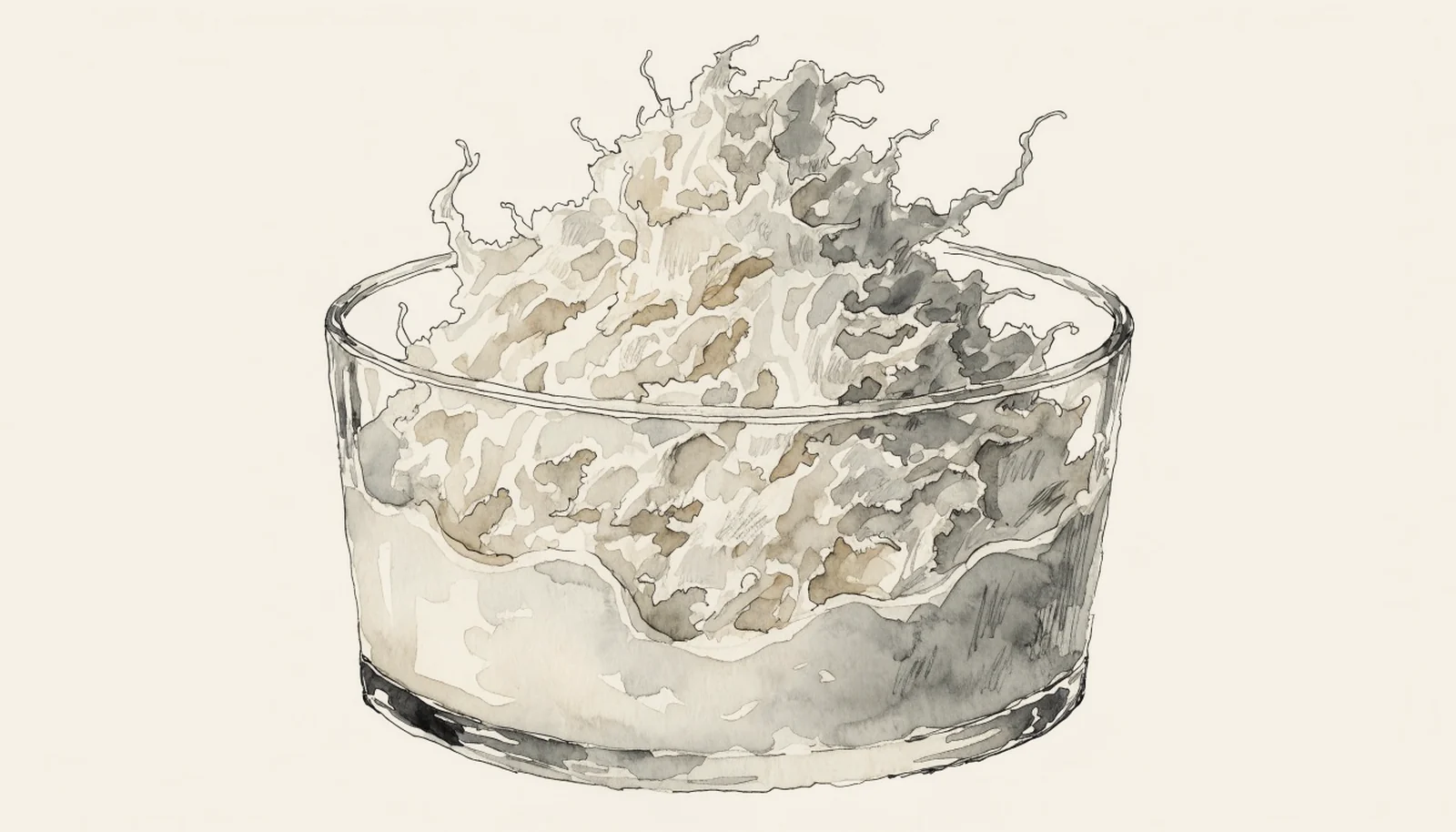
Stracciatella, in the sense meant here, is a fresh Pugliese cheese made of stretched mozzarella curd torn by hand into shreds and steeped in fresh cream. This page is about that cheese and not about the gelato flavour or the Roman soup, both of which carry the same name and are unrelated products. As a fresh cheese, it is one where the argument for buying the Italian import is weakest.
Saying that first is necessary rather than pedantic. Searching for stracciatella in English returns all three senses mixed together, and the word settles nothing on its own.
What the cheese actually is
Stracciatella is made by taking stretched mozzarella curd while it is still warm and pliable, tearing it by hand into fine irregular shreds, and steeping those shreds in fresh cream.
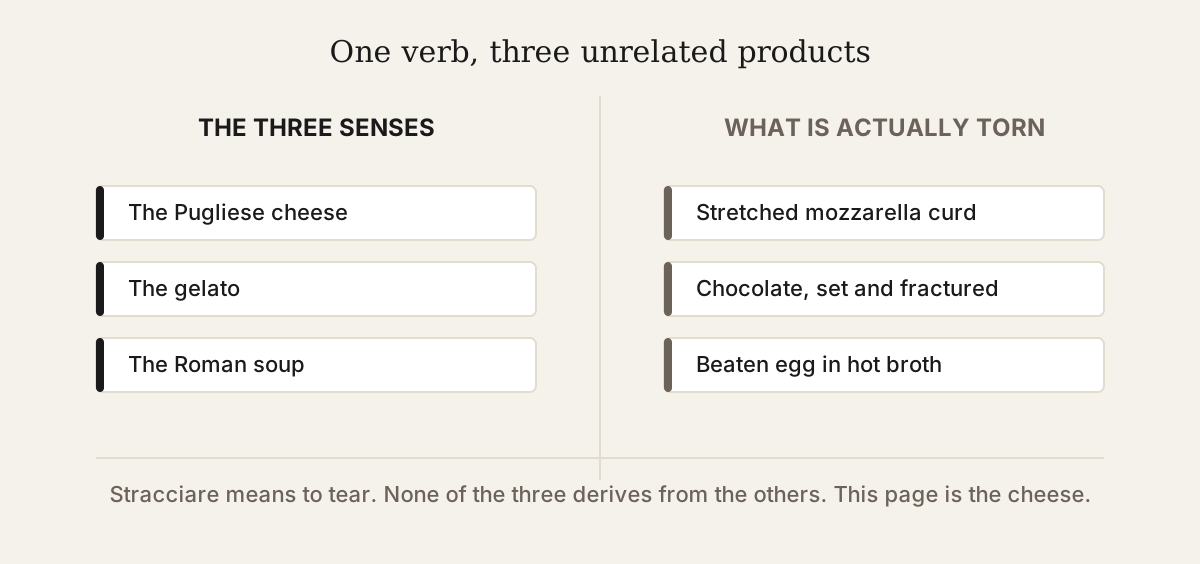
Stracciare means to tear or shred, which is what all three senses of the word have in common and is the only thing they share.
The shreds are the cheese and the cream is the medium. It is not a cream cheese and it is not whipped; it is loose ribbons of mozzarella sitting in liquid cream.
Buffalo milk and cow’s milk versions both exist. The buffalo version is richer and more expensive, as mozzarella di bufala is, and the cow’s-milk one is more common.
It comes from Puglia, specifically the area around Andria, which is the same tradition that produced burrata.
It carries no DOP. Stracciatella di bufala has protected status in some regional frameworks, and the plain product is not designated, so the producer carries the judgement.
Its relationship with burrata
Stracciatella is the filling of a burrata, which is the single most useful fact about it.
A burrata is a mozzarella pouch containing stracciatella. Cut one open and what runs out is exactly this product.
Stracciatella came first in a sense. Both arose from the same problem, which was what to do with the shreds and offcuts left over from working mozzarella curd.
Buying stracciatella is buying the good part without the wrapper. For most uses this is more practical, since the pouch is the part people leave on the plate.
Burrata is the better presentation and stracciatella the better ingredient. A burrata cut at the table is a piece of theatre; a tub of stracciatella spooned onto something is easier to portion and to spread.
They keep equally badly, which is the constraint on both.
The other two senses, briefly
Both other stracciatellas are legitimate and neither is a cheese.
Stracciatella gelato is fior di latte gelato with shards of chocolate run into it as thin liquid chocolate that sets and fractures. The shredding here is of the chocolate rather than of curd.
Stracciatella alla romana is a soup, a broth into which beaten egg with cheese and semolina is stirred so it sets in ragged threads. The shredding is of the egg.
None of the three is derived from the others. They are separate applications of an ordinary Italian verb, which is why the collision exists and why no amount of context in the word itself resolves it.
In an American shop, stracciatella on a refrigerated tub means the cheese, in a gelateria it means the ice cream, and on a Roman menu it means the soup.
How to judge a tub
Judge it on the date, then the separation, then the shreds.
Buy the freshest available. This is a fresh cheese with a two to three day useful life, and the date matters more than the producer.
Cream and curd should be loosely combined, not separated into a puddle of liquid with solids on top. Some separation on standing is normal and heavy separation is not.
The shreds should be visible and distinct, irregular ribbons rather than a homogenous paste. A smooth uniform tub has been over-mixed or is a different product.
It should smell sweet and lactic, faintly of yoghurt. Sourness is age.
It should be white, porcelain-white for buffalo and faintly ivory for cow’s milk.
Checked on 13 August 2026, the first page of United States results for stracciatella cheese returned reference material, a general marketplace listing and cheese publishers, which describes that search on that date rather than recommending any seller. Counting rule: a result counts as being about the cheese when it concerns the Pugliese curd-and-cream product rather than the gelato or the soup. On that rule, adding the word cheese to the search resolved the ambiguity effectively.
What it should cost
Expect roughly 10 to 20 dollars for an eight-ounce tub in the United States, with buffalo-milk versions above that.
The cost is the cream and the shelf life rather than the labour. A product with a few days of life carries the waste of everything unsold, which is the same economics that prices burrata.
Domestic American stracciatella is widely made and, as with burrata, freshness advantages it over an import that has spent most of its window in transit.
Buying stracciatella rather than burrata is usually better value, since you are not paying for the mozzarella pouch.
A cheap tub is worth checking for stabilisers, since the natural product separates and a formulation that never does has usually been helped.
How to use it
Spoon it onto things at room temperature. It needs no preparation at all.
Its richness wants acid, salt and bitterness nearby: a ripe tomato, good oil, an anchovy, a bitter leaf, prosciutto.
Take it out of the refrigerator twenty minutes before serving. Cold cream is waxy and the flavour is closed.
Put it on pizza after baking, never before. Heat splits the cream and the shreds toughen.
Stir it through hot pasta off the heat as a finishing cream, which is one of its best uses and takes seconds.
Salt it at the moment of serving. Salt applied early draws water out of the shreds.
Do not whip or blend it. The torn texture is the product and destroying it leaves you with mediocre cream cheese.
Storage
Refrigerated in its tub, two to three days, and it is best the day it is bought.
It does not improve. There is no version of keeping stracciatella that beats eating it sooner.
Keep it sealed, since the cream picks up refrigerator smells readily.
Stir gently before serving if it has separated on standing, which is normal.
Do not freeze it. The cream breaks and the shreds turn to rubber, and nothing recovers.
A tub slightly past its best can be stirred into hot pasta off the heat, where it behaves like a rich sauce, which is salvage rather than a use.
Frequently asked questions
What is stracciatella cheese made of?
Stracciatella cheese is made of stretched mozzarella curd torn by hand into fine irregular shreds while still warm, then steeped in fresh cream. Buffalo milk and cow’s milk versions both exist. It comes from Puglia, from the same tradition that produced burrata, and it is the filling that runs out when a burrata is cut open.
Is stracciatella the same as burrata?
Stracciatella is the filling inside a burrata rather than a different cheese. A burrata is a pouch of mozzarella enclosing stracciatella, so cutting one open releases exactly this product. Buying stracciatella by the tub gives you the same thing without the mozzarella wrapper, which is usually more practical and better value.
Why is stracciatella also an ice cream flavour?
Stracciare means to tear or shred in Italian, and all three products called stracciatella involve something shredded. In the cheese it is the mozzarella curd, in the gelato it is thin liquid chocolate that sets and fractures into shards, and in the Roman soup it is beaten egg that sets in ragged threads. None derives from the others.
How long does stracciatella cheese last?
Stracciatella keeps two to three days refrigerated and is at its best the day it is bought, which is the same short window burrata runs on. The cream sours and separates well before anything else goes wrong. It does not freeze, since the cream breaks and the torn shreds turn rubbery.
Can you cook with stracciatella?
Stracciatella should not be heated directly, because the cream splits and the delicate shreds toughen. On pizza it goes on after baking rather than before. Its best cooked application is being stirred through hot pasta off the heat, where it melts into a rich finishing sauce without ever being exposed to direct heat.
CalItalia Food covers Italian ingredients: what they are, how to tell a good one from an ordinary one, and where to buy them in the United States.