
Scamorza: Mozzarella Dried Out on Purpose, and the Smoked One
A stretched-curd cheese hung to dry until firm, sold white or smoked. Why it melts without flooding a dish, how to use and judge one, and how to tell real smoking from added flavouring.
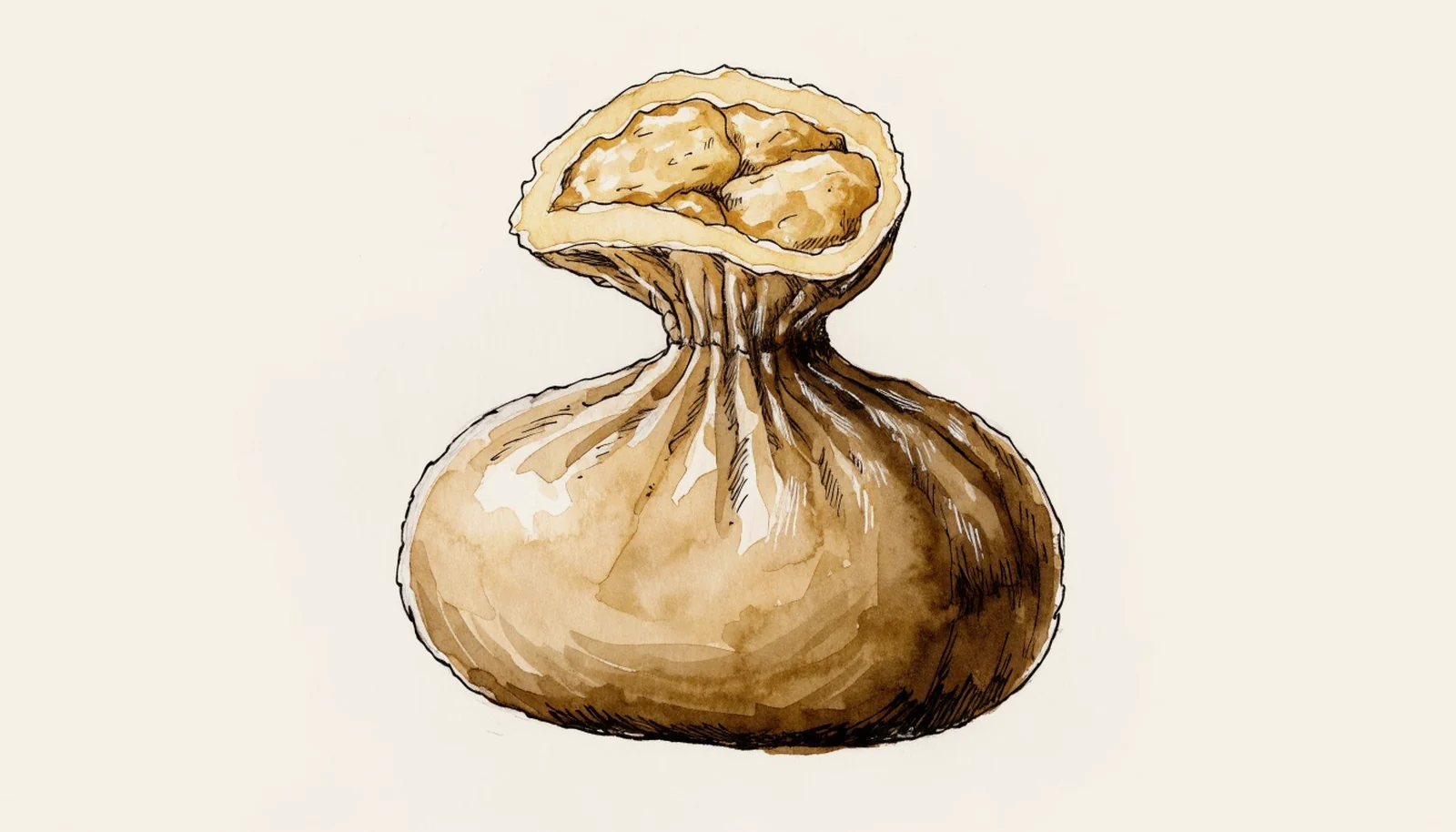
Scamorza is a stretched-curd cow’s-milk cheese made much like mozzarella and then hung by a cord to dry for one to two weeks, which drives off moisture and firms it. It is sold plain, scamorza bianca, and smoked, scamorza affumicata, and the smoked one is where the question of a real process against a shortcut comes up.
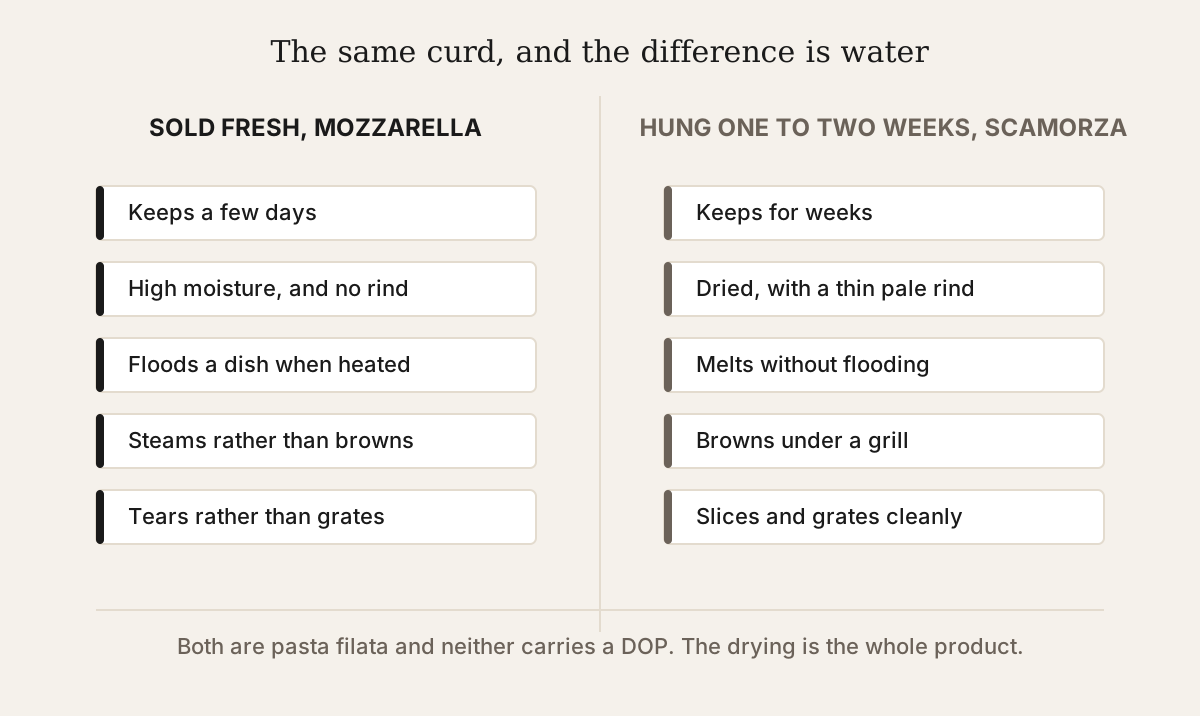
The drying is the whole product. Everything scamorza does that mozzarella cannot follows from having less water in it.
What scamorza actually is
Scamorza is made by acidifying cow’s milk, ripening and stretching the curd in hot water as for mozzarella, forming it, brining it briefly, then tying a cord around the top and hanging it to dry.
It is a pasta filata cheese, the same stretched-curd family as mozzarella, provolone, caciocavallo and provola.
The pear shape with a knot at the neck comes from the cord it hangs by, which pinches the top and gives the cheese its outline.
Drying runs one to two weeks, which is far shorter than provolone’s ageing and far longer than mozzarella gets.
A thin pale rind forms during the hanging, unlike mozzarella which has none.
It comes from southern Italy, particularly Puglia, Campania, Molise and Abruzzo.
It carries no DOP. Scamorza is a traditional style rather than a protected name, so the producer carries the judgement.
Why the drying matters
Removing water changes what the cheese can do, and it is the reason scamorza exists alongside mozzarella rather than competing with it.
It melts without flooding. Fresh mozzarella releases a great deal of water when heated, which is why it makes a pizza soggy. Scamorza has already lost most of that.
It browns. Lower moisture means the surface reaches browning temperature rather than steaming, so it colours under a grill.
It slices and grates cleanly, which mozzarella does not.
It keeps far longer. Weeks rather than days, since water is what spoils a fresh cheese.
The flavour concentrates. Scamorza tastes more savoury and slightly nuttier than mozzarella because the same solids sit in less water.
It is firmer and slightly elastic, springy under a thumb rather than yielding.
Bianca against affumicata, and how to spot fake smoke
The smoked version is the one most people encounter, and how the smoke got there varies.
Traditional smoking is done over straw or wood, in a smokehouse, after the cheese has dried.
Genuine smoking colours the rind, not the paste. A properly smoked scamorza has a deep tan to amber rind and a paste that stays pale inside, with the colour graduating slightly at the edge.
A uniformly beige or tan paste throughout suggests added smoke flavouring rather than smoke that penetrated from the surface.
The smell is the better test. Real smoke reads as woody and slightly acrid; liquid smoke reads as sweet, flat and faintly chemical.
Read the ingredient list. Smoke flavouring appears there where it is used, and its absence alongside a smoked claim is a good sign.
Neither is inferior by definition. A cleanly made cheese with added smoke is better than a badly made one hung in a smokehouse, and the point is knowing which you are buying.
How to judge one
Judge it on the rind, then the paste, then the give.
The rind should be thin, smooth and dry, pale straw on a bianca and tan to amber on an affumicata. Cracked or sticky is wrong.
The paste should be pale and close-textured, with a faint layered structure visible on a torn edge from the stretching.
It should be firm and springy, giving under a thumb and returning. A soft yielding cheese has not dried enough; a hard one has dried too far.
It should not weep. Liquid in the packaging means it was sold too young or has been kept badly.
It should smell mildly of milk, with woodsmoke on the affumicata and very little else on the bianca. Sourness is age.
Checked on 13 August 2026, the first page of United States results for scamorza returned reference material, an Italian producer and cheese publishers, which describes that search on that date rather than recommending any seller.
What it should cost
Expect roughly 10 to 18 dollars a pound in the United States, above fresh mozzarella and below aged provolone.
The one to two weeks of hanging and the weight lost to evaporation put it above mozzarella, and the short drying keeps it well below anything genuinely aged.
Domestic American scamorza is widely made and is judged on the producer, since no designation is in play for anyone.
Smoked usually costs slightly more than bianca, reflecting the extra process where the smoking is real.
Very cheap smoked scamorza is worth reading the label on, since smoke flavouring is the obvious economy.
How to use it
Melt it. Scamorza is a cooking cheese first and a table cheese second.
Its low moisture and good browning make it the better choice than mozzarella wherever a dish would otherwise go watery: on pizza, in a bake, under a grill, in a toasted sandwich.
It is excellent grilled in slices on its own, which is a standard southern Italian preparation, browning on the outside while going molten inside.
On pizza it beats fresh mozzarella on any base that cannot take extra water, which includes most home ovens.
Smoked scamorza goes well with strong company, cured meats and bitter greens, where its smoke can answer them.
Serve it at room temperature if eating it uncooked, where it reads as considerably more flavourful than cold.
Do not treat it as mozzarella on a caprese. It is firmer, saltier and drier, and the dish wants the fresh cheese.
Storage
Wrapped in paper inside a loose bag, refrigerated, two to three weeks.
It keeps far better than mozzarella because the drying removed the water that spoils a fresh cheese.
Paper rather than plastic film, so the rind stays dry rather than going slick.
It will keep drying as it sits, becoming firmer and sharper, which is not spoilage and eventually makes it a grating cheese.
Surface mould can be cut away on a firm cheese and the rest is sound.
It freezes acceptably for cooking, unlike most fresh cheeses, though the texture suffers and it should be used melted rather than sliced.
Frequently asked questions
What is the difference between scamorza and mozzarella?
Scamorza is made by the same stretched-curd method as mozzarella and then hung to dry for one to two weeks, which removes most of the water. That drying makes it firmer, saltier, more savoury, sliceable and much longer keeping. Most importantly it melts without releasing the flood of water that makes fresh mozzarella soggy on a pizza.
Is smoked scamorza really smoked?
Some smoked scamorza is genuinely smoked over straw or wood and some carries added smoke flavouring. Genuine smoking colours the rind deeply while leaving the paste pale inside, with a slight graduation at the edge. A uniformly tan paste throughout suggests flavouring, as does a sweet flat smell rather than a woody, slightly acrid one. The ingredient list will list smoke flavouring where it is used.
Can I use scamorza instead of mozzarella on pizza?
Scamorza is generally the better pizza cheese, because its low moisture means it browns rather than releasing water onto the base. It is firmer and more savoury, so the result tastes more strongly of cheese. Fresh mozzarella is the traditional Neapolitan choice, and it works best in a very hot oven that drives the moisture off quickly, which most home ovens cannot manage.
Does scamorza have a DOP?
Scamorza carries no DOP and no IGP. It is a traditional southern Italian style rather than a protected name, so producers anywhere may use it, including in the United States. The rind, the springiness of the paste and the smell are what to judge, along with the ingredient list on a smoked version.
Why is my scamorza rubbery?
A degree of springiness is correct for scamorza rather than a fault, since drying firms the stretched curd. Genuine rubberiness usually means the cheese is being eaten cold, and twenty minutes at room temperature makes a large difference. A cheese that has dried too far becomes hard rather than rubbery, and at that point it is best grated into a cooked dish.
CalItalia Food covers Italian ingredients: what they are, how to tell a good one from an ordinary one, and where to buy them in the United States.