
Quartirolo Lombardo: The DOP Named After the Fourth Cut of Grass
A square soft-to-semi-soft DOP from Lombardy, tangy when young and mellow when aged. What the name records about autumn pasture, how it differs from stracchino, and how to judge and use it.
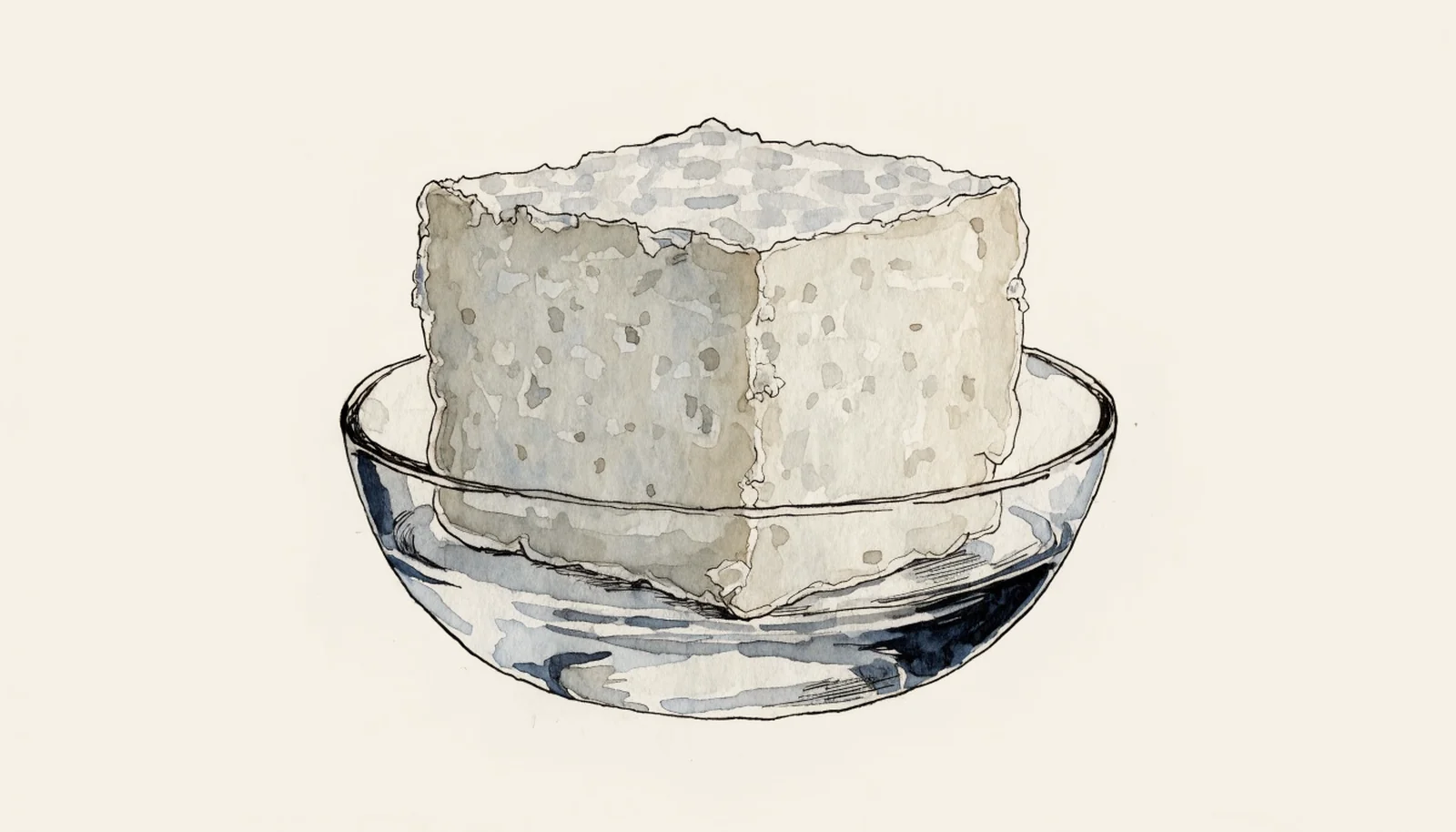
Quartirolo Lombardo is a DOP cow’s-milk cheese from Lombardy, made in a square slab, sold young as a soft, white, tangy cheese or aged as a firmer, mellower one. Its name comes from the fourth cut of grass of the season, and that derivation is a genuine record of when it was made. It is one of the harder-to-find entries among the Italian ingredients worth tracking down.
It sits in the same Lombard family as stracchino and Taleggio, and it is the one whose name says most about the farming behind it.
What Quartirolo Lombardo actually is
Quartirolo Lombardo is made from cow’s milk, coagulated, the curd cut and drained in square moulds, salted, and aged briefly or for a few months depending on grade.
The format is a square slab, flat and rectangular, in the same shape family as Taleggio and stracchino.
It has a thin rind at most. Young wheels are nearly rindless; aged ones develop a thin greyish-pink surface.
Young Quartirolo is soft, white and noticeably tangy, with a slightly crumbly, almost chalky centre that is characteristic rather than a fault.
Aged Quartirolo is firmer, deeper in colour and much milder, losing the acidity as it matures.
Minimum ageing is a few days for the young grade, with the aged form held around thirty days or more.
It uses partly skimmed milk, which is part of why it is leaner and tangier than its relatives.
What the name records
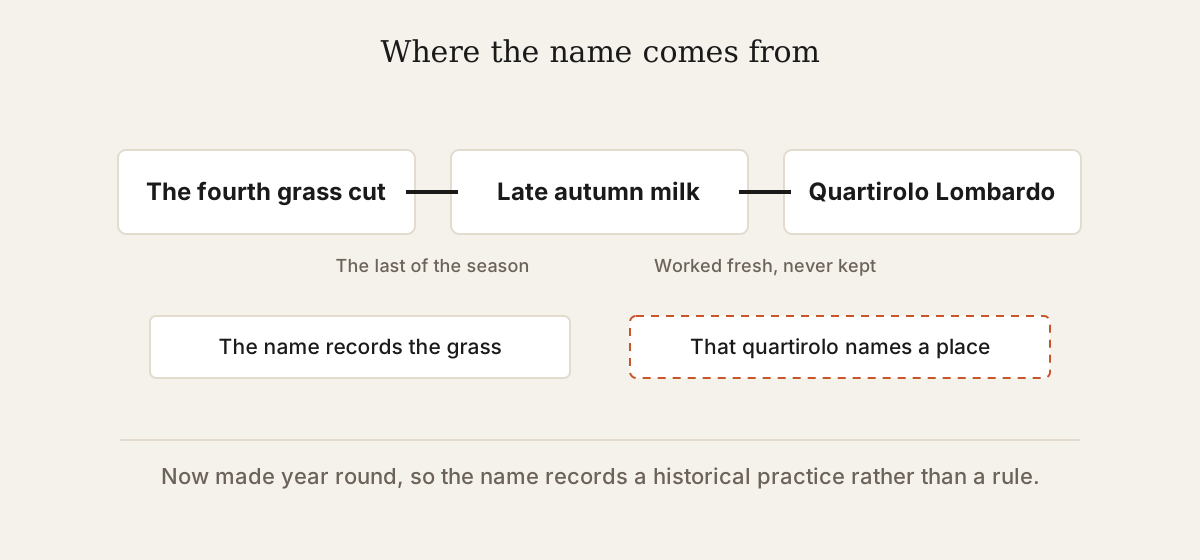
Quartirolo takes its name from erba quartirola, the fourth cut of grass.
Lombard meadows were cut several times a season. The fourth and last cut came in autumn, after the summer growth had been taken.
That late grass produced different milk. It is the same autumn context that gives stracchino its name, when herds came down from summer pasture.
The cheese was made from that autumn milk and named for the grass rather than for a place or a person.
It is now made year round, so the name records a historical practice rather than a current constraint.
This is a documented agricultural derivation rather than a folk story, which is worth saying because a good many cheese-name origins are not.
How it differs from stracchino and Taleggio
Three Lombard square-format cheeses share a region and diverge in useful ways.
Quartirolo is tangier than either, particularly when young, which follows from a more acidic make and partly skimmed milk.
Stracchino is richer and milder, made from whole milk, and it is rindless throughout its short life.
Taleggio is washed-rind and aged, developing a pungent orange crust that neither of the others has.
Quartirolo’s texture is distinctive. A young one is soft at the edge and slightly crumbly at the centre, where a stracchino is uniformly soft.
Only Quartirolo and Taleggio hold DOPs among the three; stracchino is an open name.
They are not substitutes for one another despite the shared shape, since the acidity and the rind change the eating substantially.
How to judge a piece
Judge it on the paste, then the rind, then the smell.
A young one should be white and soft at the edges with a slightly firmer, faintly chalky centre. That gradient is correct.
An aged one should be pale straw and uniformly firmer, without the chalky core.
The rind should be very thin or absent on a young one, and thin and greyish-pink on an aged one, without stickiness.
It should smell milky and lightly sour in the young grade, and mellower and faintly nutty in the aged one.
Ammonia is the fault to watch for, particularly in an aged piece, and it does not recover.
Look for the DOP mark, which the slabs carry.
Checked on 13 August 2026, United States retail for Quartirolo Lombardo runs to specialist Italian importers and cheese counters rather than general supermarkets, which describes availability on that date rather than recommending any seller.
What it should cost
Expect roughly 16 to 26 dollars a pound in the United States where it can be found.
The short ageing keeps production costs low, and the constraint on price here is import volume rather than the cheese being expensive to make.
Availability rather than price is the issue. It is far less exported than Taleggio and appears intermittently.
Taleggio is the realistic alternative at a good counter, with the understanding that it is washed-rind, pungent and much richer.
Anything labelled quartirolo without the Lombardo and without a DOP mark carries no guarantee.
How to use it
Eat it at room temperature on a board or with bread, and use the aged grade where a firmer cheese is wanted.
Its tang makes it more interesting alongside plain things than a mild soft cheese would be: bread, polenta, fruit, and a light northern red.
Take it out of the refrigerator thirty minutes before serving. Cold, the young grade in particular reads as flat and chalky.
The young grade suits fruit and honey, where its acidity works like a fresh goat cheese’s does.
The aged grade melts reasonably into polenta or a gratin.
Do not treat it as a Taleggio substitute in cooking. It is leaner and tangier and will not give the same buttery melt.
Do not cut the rind away on an aged piece unless you dislike it; it is thin and edible.
Storage
Wrapped in waxed or greaseproof paper, refrigerated. Young keeps about a week; aged keeps two to three.
Paper rather than plastic film, so any rind can breathe.
Rewrap after each use with fresh paper.
It continues ripening and the young grade will mellow toward the aged character in your refrigerator, which is not a fault.
Ammonia is the end point and is more likely in an aged piece.
Do not freeze it. The paste separates and the texture does not recover.
Frequently asked questions
What does quartirolo mean?
Quartirolo comes from erba quartirola, the fourth cut of grass of the season, taken in autumn after the summer growth had been harvested. The cheese was traditionally made from the milk of cows grazing that late pasture. It is now produced year round, so the name records a historical farming practice rather than a current requirement.
Is quartirolo the same as stracchino?
Quartirolo Lombardo and stracchino are different cheeses in the same Lombard family. Quartirolo is made from partly skimmed milk, is noticeably tangier, and has a characteristic slightly chalky centre when young. Stracchino uses whole milk, is richer and milder, and is uniformly soft. Quartirolo holds a DOP and stracchino does not.
Why is the middle of my quartirolo chalky?
A slightly firmer, faintly chalky centre is correct for a young Quartirolo rather than a sign of underripeness. The cheese softens from the outside inward, so a young slab is soft at the edges with a firmer core. As it ages the chalkiness disappears and the paste becomes uniformly firmer and milder.
Is quartirolo a soft cheese?
Quartirolo is soft when young and semi-soft to firm when aged, so it spans both descriptions depending on grade. The young form is soft, white and tangy with a chalky centre. The aged form, held around thirty days or more, is firmer, pale straw and considerably milder, having lost much of its acidity.
Does quartirolo have a rind?
A young Quartirolo is nearly rindless, and an aged one develops a thin greyish-pink surface. Neither has anything like the substantial washed rind of Taleggio, its relative in the same square format. The thin rind on an aged piece is edible and need not be cut away.
CalItalia Food covers Italian ingredients: what they are, how to tell a good one from an ordinary one, and where to buy them in the United States.