Piave: The Young DOP That Tastes Like an Old One
A hard cow milk DOP from Belluno sold in five named age grades. Why it develops sweetness and crystals faster than most, how to judge one, and which grade to buy for what.
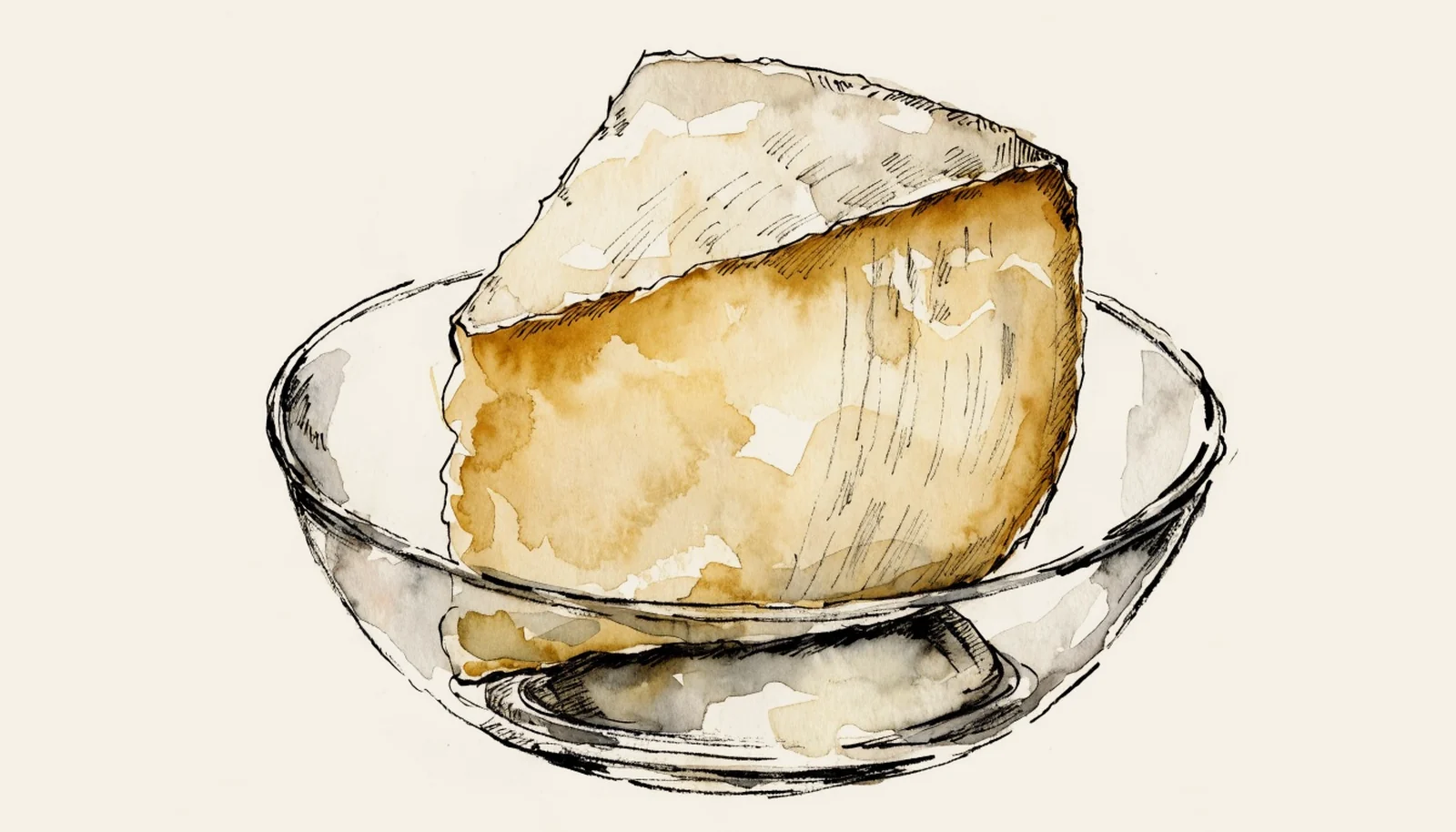
Piave is a hard cow’s-milk DOP from the province of Belluno in the Dolomites, sold in five named age grades from twenty days to more than eighteen months. Even its middle grades carry a sweetness and a crystalline crunch that most cheeses only reach much later. It is one of the few cheeses in the CalItalia guide to Italian ingredients singled out as good value.
That precocity is the useful thing about it. A Piave Vecchio at a year does work that would otherwise need a considerably older and more expensive wheel.
What Piave actually is
Piave is made from cow’s milk from the province of Belluno, coagulated, the curd cooked, pressed into wheels, brined and aged for periods defined by grade.
The zone is a single province. All the milk must come from Belluno in the Veneto Dolomites, which is a tight designation by Italian standards.
It is named for the river Piave, which runs through the province, rather than for a town or a massif.
The wheels are medium-large, around six kilograms, with a smooth thin rind that darkens with age.
The paste is compact and nearly blind, with few or no eyes, which distinguishes it visually from the Alpine cheeses it sits near.
It is a relatively modern DOP, protected in 2010, though the cheese itself is considerably older than that.
Both whole and partly skimmed milk are used depending on the grade.
The five grades
Piave’s grades are named rather than merely described, and the top two are commercial designations within the DOP.
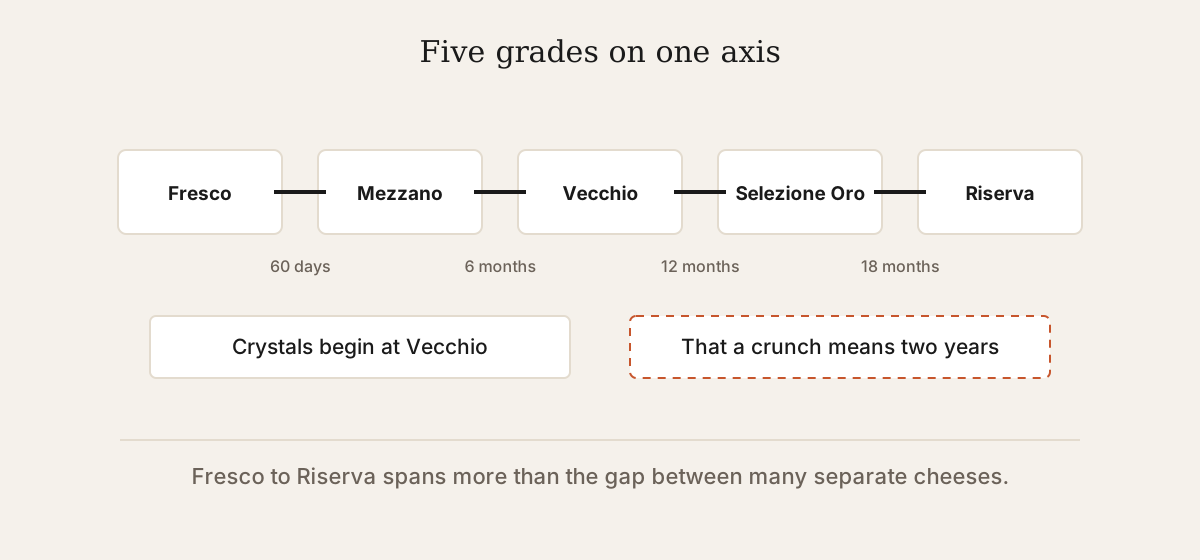
Fresco, around twenty to sixty days. Pale, semi-firm, mild and milky.
Mezzano, sixty to one hundred and eighty days. Firmer, straw-coloured, starting to develop savour.
Vecchio, more than six months. Hard, deeper straw, distinctly sweet and nutty, with crystals beginning.
Vecchio Selezione Oro, more than twelve months. Harder still, amber, with pronounced crystals and a long sweet finish.
Vecchio Riserva, more than eighteen months. Intensely concentrated, granular, sharp and sweet together.
The middle and upper grades are where the cheese is interesting. Fresco is pleasant and unremarkable; from Vecchio onward it becomes distinctive.
Why it develops so fast
Piave reaches a sweet, crystalline character sooner than most hard cheeses, and there are reasons rather than magic.
The paste is very compact and nearly blind. Fewer air spaces mean the proteolysis that produces sweetness and crystals proceeds more uniformly through the wheel.
The curd is cooked to a relatively high temperature, which drives out moisture early and starts the wheel drier than a typical Alpine cheese.
The milk is from one province with a defined feeding regime, which produces consistency rather than speed as such, but it does mean the grades behave predictably.
Tyrosine crystals appear from around the Vecchio grade, which is early relative to the two years a Parmigiano usually needs for a comparable crunch.
So it is frequently described as a cheaper alternative to aged Parmigiano. That is fair on texture and sweetness and unfair on complexity, since Piave is more straightforwardly sweet and less layered. Grana Padano is the other cheese usually cast in that role.
How to judge a piece
Judge it on the paste, then the crystals, then the rind.
The paste should be pale straw through to amber depending on grade, even in colour, with no grey band under the rind.
It should be nearly blind. Numerous eyes suggest a different cheese or a fermentation fault.
White crystals from Vecchio upward are tyrosine and are what you are paying for in the older grades.
It should flake rather than bend in the aged grades, and give slightly in Fresco.
The rind should be smooth, thin and dry, darkening with age, without cracks or stickiness.
Read the grade on the label, since the difference between Fresco and Riserva is larger than the difference between many separate cheeses.
Checked on 13 August 2026, the first page of United States results for piave cheese returned reference material alongside cheese retailers, which describes that search on that date rather than recommending any seller. Availability here is reasonable, and Piave has travelled better than most Veneto cheeses.
What it should cost
Expect roughly 16 to 30 dollars a pound in the United States, rising through the grades.
Piave is efficiently made in a tight zone with good yields, and its selling point is that the aged grades cost less than comparably crystalline cheeses from more famous designations.
Vecchio and Selezione Oro are the value grades, delivering the sweetness and crunch at well below Parmigiano Reggiano prices.
Fresco is not worth seeking out. It is a pleasant mild cheese and there are many of those.
It is genuinely good value, which is not something this site says often, and it is the reason Piave has built an export market quickly.
How to use it
Eat the aged grades in pieces at room temperature, or grate them; use Fresco for melting.
The aged grades want the company an aged hard cheese wants: fruit, nuts, honey, a substantial red, and they hold their own on a board without support.
Serve at room temperature. Cold, the sweetness that distinguishes Piave is largely inaudible.
Break the aged grades into shards rather than slicing, since they flake naturally and a shard shows the crystals.
Grate Vecchio over pasta where a sweeter and less salty result than pecorino is wanted.
Melt Fresco or Mezzano in a bake or a toasted sandwich.
Keep the rind for stock, as with any hard cheese.
Storage
Wrapped in paper inside a loose bag, refrigerated. Fresco keeps two to three weeks; the aged grades keep a month or more.
Paper rather than plastic film, so the cut face does not go slick.
Rewrap after each use with fresh paper.
Surface mould can be cut away and the rest is sound.
The aged grades keep drying, which is not spoilage and only concentrates them further.
Do not freeze it. The paste turns crumbly and mealy.
Frequently asked questions
What are the five grades of Piave?
Piave is sold as Fresco at roughly twenty to sixty days, Mezzano at sixty to one hundred and eighty days, Vecchio beyond six months, Vecchio Selezione Oro beyond twelve months and Vecchio Riserva beyond eighteen. All five carry the same DOP. The character changes substantially across them, from mild and milky at Fresco to intensely sweet, granular and crystalline at Riserva.
Is Piave like Parmigiano Reggiano?
Piave’s aged grades resemble Parmigiano Reggiano in being hard, sweet and crystalline, and they reach that character considerably sooner and at a lower price. Piave is more straightforwardly sweet and less layered and complex than a well-aged Parmigiano. It is a fair alternative on texture and value rather than a replacement for the older cheese’s depth.
Why does Piave have crystals?
The white crystals in aged Piave are tyrosine, an amino acid that comes out of solution as proteins break down during maturation, and they indicate genuine ageing rather than a fault. Piave develops them from around the Vecchio grade at six months, which is early compared with the two years a Parmigiano typically needs for a comparable crunch.
Which grade of Piave should I buy?
Vecchio or Vecchio Selezione Oro are the grades worth buying, delivering the sweetness, the nuttiness and the crystalline crunch that make Piave distinctive, at well below the price of comparably aged cheeses from more famous designations. Fresco is a pleasant mild cheese with little to distinguish it. The price spread between grades is modest relative to the difference in eating.
Where is Piave made?
Piave is made in the province of Belluno in the Veneto Dolomites, and its DOP requires all the milk to come from that single province. It is named for the river Piave which runs through the area rather than for a town or a mountain. The tight zone is unusual for a cheese produced at this commercial scale.
CalItalia Food covers Italian ingredients: what they are, how to tell a good one from an ordinary one, and where to buy them in the United States.