
Pecorino Sardo: The Sardinian DOP That Is Not the Romano Made in Sardinia
A DOP sheep cheese from Sardinia in two grades, dolce and maturo. Why it is a different cheese from Pecorino Romano despite sharing an island, and how to judge and use one.
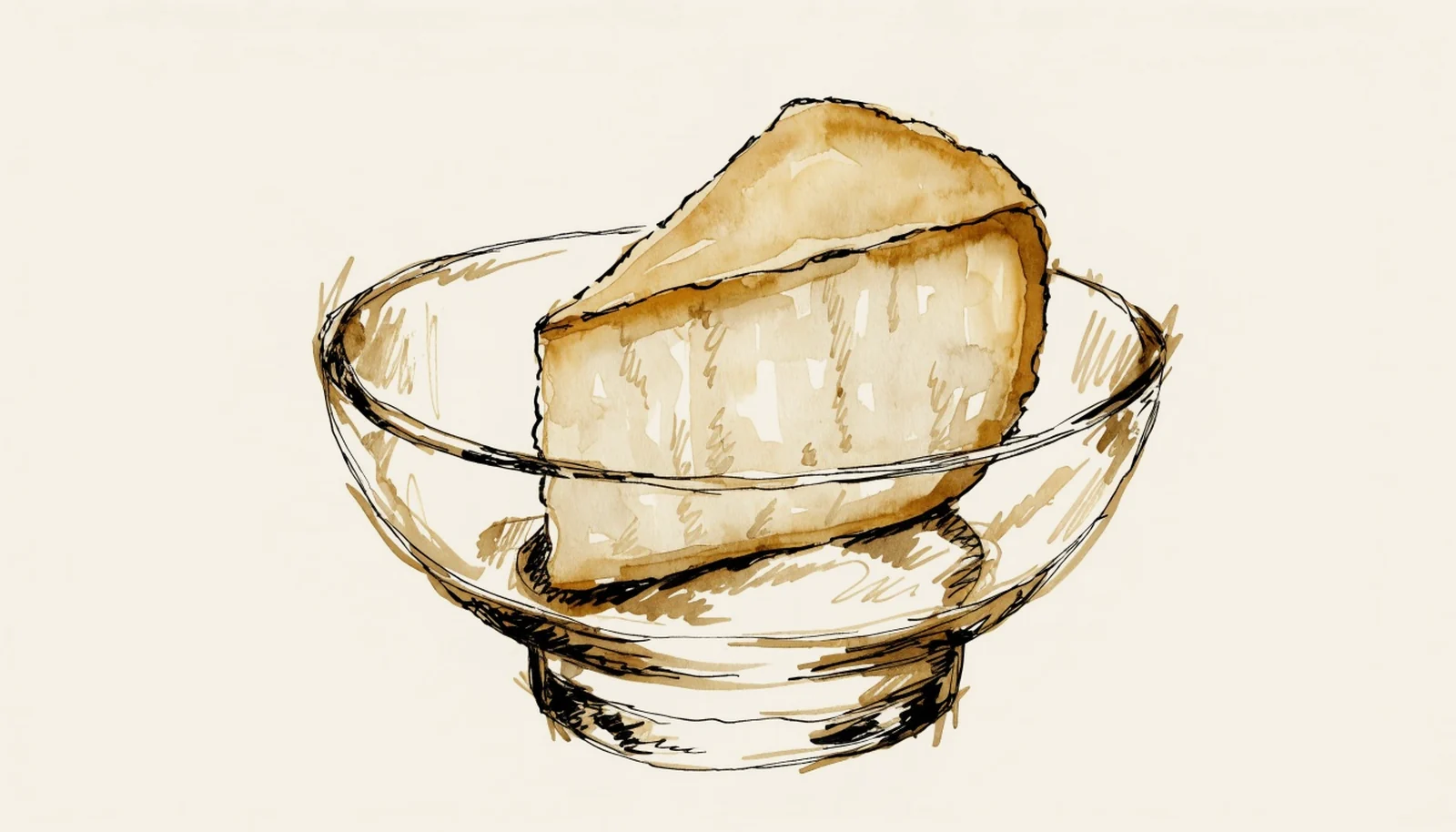
Pecorino Sardo is a DOP sheep’s-milk cheese made in Sardinia, sold as dolce, aged around twenty to sixty days and mild, or maturo, aged several months and firm and savoury. It is a distinct designation from Pecorino Romano and a distinct cheese, and telling the two apart is part of buying Italian sheep cheese with some confidence.
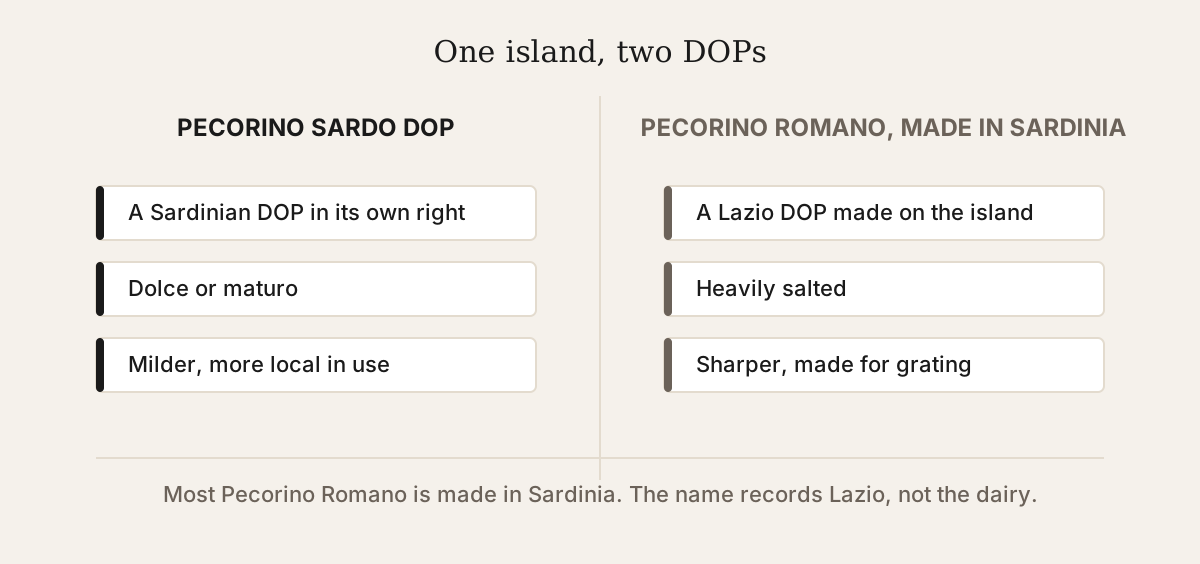
That distinction matters more than it looks, because most Pecorino Romano is also made in Sardinia, so the island produces two protected sheep cheeses and one of them is named after somewhere else.
What Pecorino Sardo actually is
Pecorino Sardo is made from whole Sardinian sheep’s milk, coagulated, the curd cut and pressed into small wheels, brined or dry-salted, and aged.
The wheels are small. Typically one to four kilograms depending on the grade, which is a fraction of a Pecorino Romano wheel.
It comes in two DOP grades. Dolce, aged roughly twenty to sixty days, and maturo, aged two months and upward and often much longer.
The salting is moderate. This is the single largest difference from Pecorino Romano, and it changes what the cheese is for.
Dolce is soft to semi-firm, white, mild, milky and faintly sweet, with small irregular eyes.
Maturo is firm to hard, straw-coloured, savoury and nutty, with a sharper finish that stops well short of Romano’s.
It is made across Sardinia and the sheep are Sardinian breed, which the specification requires.
Why it is not Pecorino Romano
The two share an island, a species and a family name, and they are made for different purposes.
Pecorino Romano is heavily dry-salted; Pecorino Sardo is not. Salt is the defining variable and it is why Romano is a seasoning and Sardo is a cheese you eat.
Romano uses lamb rennet for piquancy. Sardo’s dolce grade in particular is much gentler.
Romano’s wheels are large and its ageing is five to eight months minimum. Sardo dolce is ready in under two.
Romano is designed for grating. Sardo dolce is a table cheese and maturo can go either way.
They are separate DOPs with separate specifications, so a wheel is one or the other and never both.
Most Romano being Sardinian is a historical accident of flocks and land, covered on this site’s Pecorino Romano page, and it does not make the two cheeses relatives beyond the shared milk.
Dolce against maturo
The two grades are further apart than the shared name suggests.
Dolce is a young eating cheese. Slice it, put it on bread, serve it with fruit and honey. It is mild enough that people who find sheep cheese strong generally like it.
Maturo is a savoury cheese with grating potential. Firmer, drier, more concentrated, with the lanolin note more forward.
Neither is sharp in the way Romano is. Even a well-aged maturo is rounder and less aggressively salty.
The label carries the grade, and it is the thing to read, since the price difference between them is small and the eating difference is not.
Maturo keeps far better, which follows from being drier and more salted.
How to judge a piece
Judge it on the paste, then the rind, then the smell.
Dolce should be white to very pale straw, soft to semi-firm, with small scattered irregular eyes, giving slightly under a thumb.
Maturo should be deeper straw, firm and close-textured, breaking rather than bending.
The rind should be thin and clean, natural rather than waxed, and free of cracks.
It should smell of sheep’s milk, lanolin-like and clean. Sourness or ammonia is a fault in either grade.
Look for the DOP mark, which the wheels carry along with the grade.
Checked on 13 August 2026, the first page of United States results for pecorino sardo returned reference material alongside Italian producers and specialist cheese retailers, which describes that search on that date rather than recommending any seller. Availability here is decent at a proper cheese counter and thin in general supermarkets.
What it should cost
Expect roughly 16 to 28 dollars a pound in the United States, above Pecorino Romano.
That inversion surprises people. Romano is made in vast quantity for an export grating market; Pecorino Sardo is a smaller designation with a smaller output, so scale rather than quality sets the gap.
Maturo generally costs a little more than dolce, reflecting the additional months.
Anything labelled simply pecorino sardo style carries no designation and may come from anywhere.
It is worth buying over Romano for eating, and Romano remains the better buy for grating into Roman pasta dishes, which is what it was built for.
How to use it
Eat dolce in slices at room temperature; use maturo either on a board or grated over food.
Dolce’s mildness makes it a good introduction to sheep cheese, much as a young Pecorino Toscano is, and it suits sweet company: honey, pears, fig jam, and the Sardinian flatbread pane carasau.
Serve either at room temperature. Cold, a sheep cheese reads as waxy and its aroma stays closed.
Grate maturo over vegetables, soups and pasta where Romano would be too salty, which is a genuinely useful role.
Dolce melts reasonably well in a bake or on bread, unlike Romano which seizes.
Do not substitute it into a cacio e pepe expecting the same dish. That recipe depends on Romano’s salt and sharpness, and Sardo will read as flat.
Storage
Wrapped in paper inside a loose bag, refrigerated. Dolce keeps one to two weeks; maturo keeps a month or more.
Paper rather than plastic film, so the rind can breathe and the cut face does not go slick.
Rewrap after each use with fresh paper.
Surface mould can be cut away on either grade and the rest is sound.
Maturo will keep drying and hardening, which is not spoilage and eventually makes it a grating cheese.
Do not freeze either. The texture turns crumbly and does not recover.
Frequently asked questions
What is the difference between Pecorino Sardo and Pecorino Romano?
Pecorino Sardo is much less heavily salted, made in far smaller wheels and aged for a shorter minimum, producing a cheese for eating rather than grating. Pecorino Romano is dry-salted intensively over weeks, uses lamb rennet for piquancy, and is designed as a seasoning. They are separate DOPs with separate specifications, despite most Pecorino Romano also being produced in Sardinia.
What do dolce and maturo mean on Pecorino Sardo?
Dolce designates the young grade, aged roughly twenty to sixty days, which is soft to semi-firm, white, mild and milky. Maturo designates the aged grade, from two months upward and often considerably longer, which is firm, straw-coloured, savoury and nutty. Both carry the same DOP, so the grade on the label is what tells you which cheese you have.
Is Pecorino Sardo salty?
Pecorino Sardo is moderately salted rather than salty, which is the largest single difference from Pecorino Romano. It can be eaten in slices as a table cheese, whereas Romano’s salt level makes that difficult for most palates. Even the aged maturo grade is rounder and less aggressive than a young Romano.
Can I substitute Pecorino Sardo for Pecorino Romano?
Pecorino Sardo maturo can stand in for Romano where a milder result is acceptable, and it will taste noticeably less salty and less sharp. In Roman pasta dishes such as cacio e pepe, carbonara and gricia the substitution does not work, because those recipes are built around Romano’s salt and piquancy and are seasoned on the assumption of it.
Why is Pecorino Sardo more expensive than Pecorino Romano?
Pecorino Romano is produced in enormous volume for an international grating market, which drives its price down, while Pecorino Sardo is a smaller designation with far lower output. The gap reflects scale rather than quality. For eating rather than grating, Pecorino Sardo is generally the better cheese despite Romano’s greater fame.
CalItalia Food covers Italian ingredients: what they are, how to tell a good one from an ordinary one, and where to buy them in the United States.