
Mascarpone: Not a Cheese in the Ordinary Sense, and Why That Matters
Cream acidified and drained, with no rennet and no culture. Why it is technically barely a cheese, why it splits so easily, how to use it, and how to judge a good tub against a stabilised one.
Mascarpone is made by heating cream, acidifying it with tartaric or citric acid, and draining the result. There is no rennet, no starter culture and no ageing, which puts it at the very edge of what counts as cheese. It still belongs among the Italian ingredients worth understanding before buying.
That production route explains everything people find puzzling about it: why it is so rich, why it splits if you beat it hard, and why it goes off faster than its blandness suggests.
What mascarpone actually is
Mascarpone is cream, usually of high fat content, heated gently and coagulated with an acid, then drained of whey until thick.
There is no rennet. Almost every other cheese is set with rennet, an enzyme that coagulates casein. Mascarpone is set by acid alone.
There is no bacterial culture. Cream cheese, ricotta and every aged cheese involve microbial activity of some kind. Mascarpone does not, which is why it tastes of nothing but sweet cream.
It is not aged for a single day. It is finished when it is drained.
The fat content is very high, typically far above cream cheese, which is the whole reason for its texture.
It is from Lombardy, traditionally associated with the area south-west of Milan, and it carries no DOP, unlike gorgonzola from the same plains.
Technically it is closer to a fresh dairy preparation than to cheese proper, which is a fair description rather than a criticism.
Why it splits, and how not to
Mascarpone breaks more readily than cooks expect, and the reason follows from having no protein network to speak of.
Rennet-set cheeses have a knitted casein structure. Mascarpone’s acid-set curd is far weaker, so there is little holding the fat and water together.
Over-beating is the usual cause. Whipping it hard, particularly cold, shears the emulsion and the fat separates into grains in a watery liquid.
Cold is the aggravating factor. Straight from the refrigerator it is stiff, so people beat harder to loosen it, which is exactly wrong.
Let it come to room temperature first, then fold or stir gently rather than whipping.
Adding cold liquid to it splits it too. Bring eggs, sugar syrup or coffee to a similar temperature before combining.
A split mascarpone is usually unrecoverable in a dessert, which is why the order of operations in a tiramisu recipe is not arbitrary.
Mascarpone against cream cheese
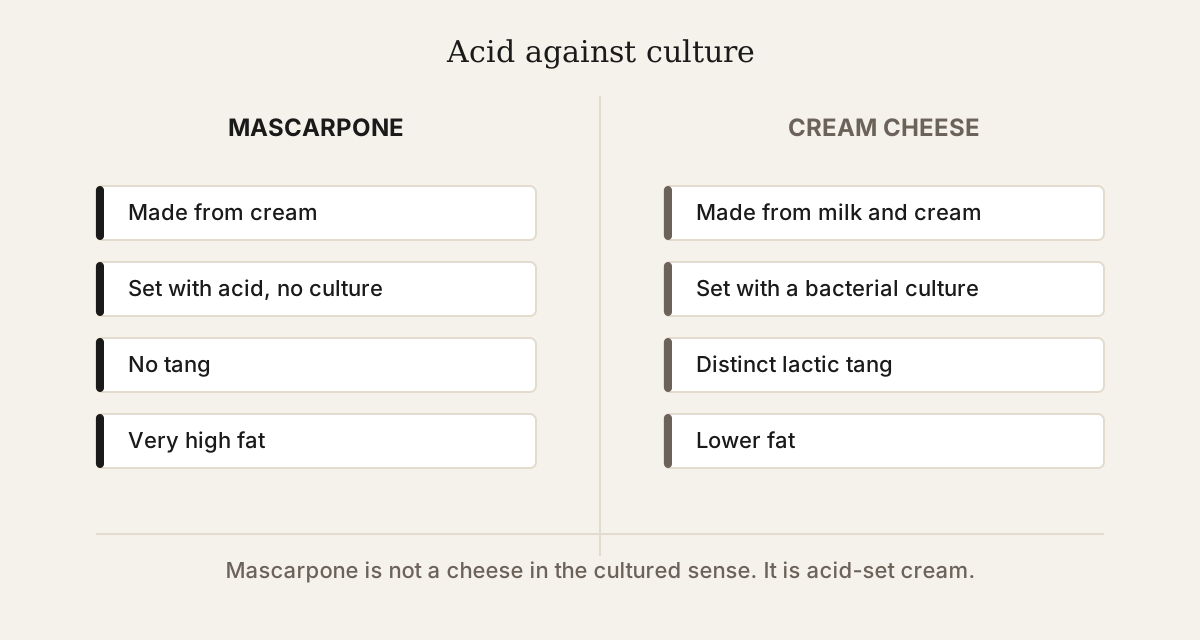
Mascarpone and cream cheese are used interchangeably in a great deal of English-language baking and they are not equivalent.
Mascarpone is made from cream; cream cheese is made from milk and cream. The starting material differs before anything else does.
Cream cheese is cultured and mascarpone is not. That culture gives cream cheese its characteristic tang, and mascarpone has none.
Mascarpone carries substantially more fat, which is why it is richer and softer at the same temperature.
Cream cheese is more stable. Its culture and its lower fat make it far more forgiving of beating and of heat, which is why cheesecake recipes are usually built on it.
Substituting mascarpone into a cream cheese recipe gives a richer, sweeter, less tangy and structurally weaker result, and the reverse gives something tangier and firmer than intended.
How to judge a tub
Judge it on the ingredient list, then the texture, then the smell.
The ingredient list should be short. Cream, and an acidifier. Some list milk as well. A long list means stabilisers.
Gums and stabilisers are the thing to look for. Carrageenan, guar and locust bean gum appear in cheaper tubs to prevent the separation the real product is prone to, and they give a slightly slick, bouncy texture.
It should be ivory to pale straw, thick, glossy and smooth, holding a peak softly.
A little liquid on the surface is normal, particularly in a genuine unstabilised product, and should be stirred in rather than poured off.
It should smell of sweet cream and nothing else. Any tang, sourness or cheesiness means it has started to turn.
Checked on 13 August 2026, the first page of United States results for mascarpone returned reference material and general grocery listings, which describes that search on that date rather than recommending any seller. Availability here is good in ordinary supermarkets.
What it should cost
Expect roughly 6 to 12 dollars for an eight-ounce tub in the United States, with Italian imports at the upper end.
The cost is the cream. Mascarpone is a high-fat product with a low yield from its raw material, and there is no ageing or labour to add beyond that.
Italian imported mascarpone is not reliably better than a good domestic one, since freshness matters here and there is no ageing character to develop over a long journey.
A very cheap tub is worth reading. The economy usually comes from stabilisers and a lower fat content rather than from efficiency.
Making it at home is genuinely simple, requiring only cream and an acid, and is worth doing if the shop versions available to you all contain gums.
How to use it
Fold it into desserts, stir it into a sauce off the heat, or spread it on something sweet.
Its lack of any flavour of its own is the point. It carries other flavours, which is why it is the base of tiramisu and why it works equally in savoury risotto.
Bring it to room temperature before working with it. This single step prevents most mascarpone failures.
Fold rather than whip. Where a recipe says beat, treat that as a warning.
Add it off the heat in savoury cooking. Stirred into a risotto or a pasta sauce at the end it enriches beautifully; boiled, it splits.
It is excellent savoury despite being thought of as a dessert ingredient, and a spoonful finishing a risotto is standard in Lombardy.
Do not substitute it for ricotta in a baked filling. Ricotta holds structure under heat and mascarpone does not.
Storage
Refrigerated and sealed, five to seven days once opened, and it is a fresh dairy product rather than a keeping cheese.
It goes off faster than its mildness suggests. With no culture and no salt to speak of, there is little protecting it. A fresh crescenza does not keep either.
Keep it tightly covered, since high-fat dairy picks up other smells quickly.
Stir in any surface liquid rather than discarding it.
Sourness means it has turned, and unlike an aged cheese there is no version of that which is still pleasant.
It freezes badly. The emulsion breaks and thaws into grains and water, though a thawed tub can still be used in a cooked sauce where texture does not matter.
Frequently asked questions
Is mascarpone actually a cheese?
Mascarpone sits at the very edge of the category, being cream coagulated with an acid and drained, with no rennet, no bacterial culture and no ageing. Almost every other cheese involves at least one of those. It is more accurately described as a fresh dairy preparation, which is why it tastes purely of sweet cream and has none of the tang that culturing produces.
What is the difference between mascarpone and cream cheese?
Mascarpone is made from cream alone, set with acid and uncultured, and carries substantially more fat. Cream cheese is made from milk and cream with a bacterial culture, which gives it its characteristic tang, and it is lower in fat. Cream cheese is far more stable under beating and heat, which is why cheesecakes are usually built on it.
Why did my mascarpone split?
Mascarpone splits because it has almost no protein network holding the fat and water together, having been set with acid rather than rennet. Over-beating is the usual cause, especially when it is cold and stiff and the temptation is to beat harder. Bringing it to room temperature and folding rather than whipping prevents it, as does avoiding cold liquids added straight into it.
Can I substitute cream cheese for mascarpone in tiramisu?
Cream cheese will produce a firmer, tangier and less rich tiramisu, so it works structurally and changes the character noticeably. Mascarpone’s neutrality is what lets the coffee and cocoa dominate, and cream cheese’s culture adds a sourness that competes. Where a substitution is unavoidable, softening the cream cheese and slackening it with a little double cream gets closer.
Does good mascarpone contain stabilisers?
Genuine mascarpone contains only cream and an acidifier, sometimes with milk listed as well. Gums such as carrageenan, guar or locust bean appear in cheaper tubs to prevent the separation the natural product is prone to, and they leave a slightly slick, bouncy texture. A little liquid on the surface of an unstabilised tub is normal and should be stirred back in.
CalItalia Food covers Italian ingredients: what they are, how to tell a good one from an ordinary one, and where to buy them in the United States.