
Fiore Sardo: The Smoked Sardinian DOP, and the Sheep Cheese That Is Not Romano
A raw sheep milk DOP from Sardinia, smoked over open fires and aged for months. Why it tastes nothing like Pecorino Romano despite sharing an island and a milk, and how to judge and use it.
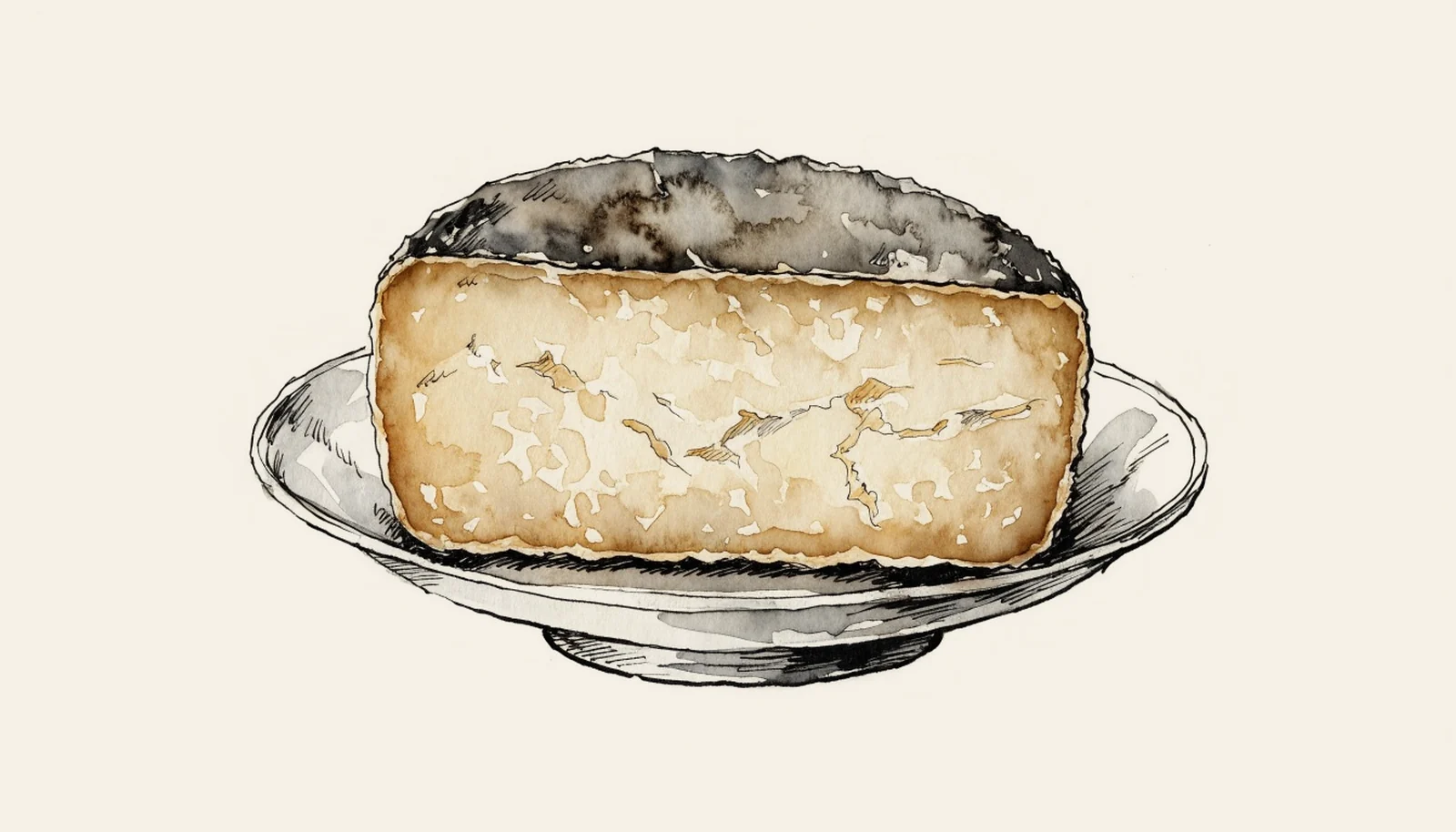
Fiore Sardo is a DOP sheep’s-milk cheese from Sardinia, made from raw milk, set with lamb rennet paste, smoked over open wood fires and aged for several months. It is the third protected sheep cheese associated with the island and the least like the other two, and its fire smoke shows what separates the authentic Italian article from a copy.
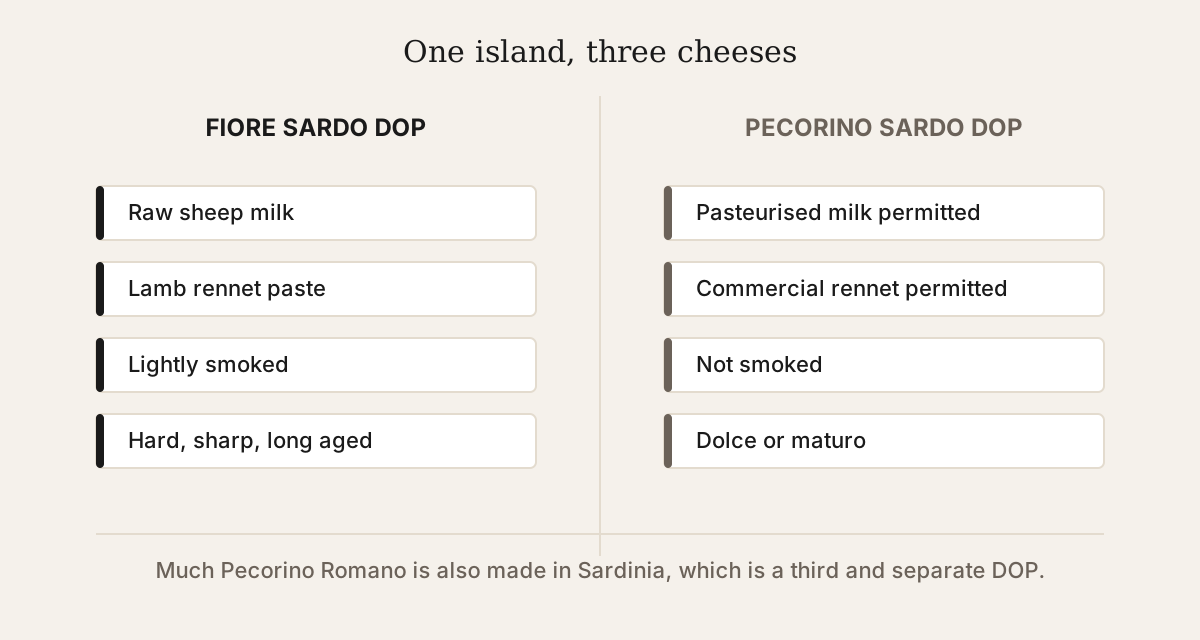
Sardinia produces most of Italy’s Pecorino Romano and all of its Pecorino Sardo, and Fiore Sardo is neither. The smoke is what sets it apart, and it is real smoke from the ageing room rather than a flavouring.
What Fiore Sardo actually is
Fiore Sardo is made from raw whole milk of Sardinian sheep, coagulated with lamb rennet paste, hand-formed, brined or dry-salted, then smoked and aged for months on wooden frames.
The milk is raw and unpasteurised. Its long ageing carries it well past the sixty-day threshold, which is why it imports into the United States.
Lamb rennet paste is used, the same coagulant that gives Pecorino Romano its piquancy, and it contributes a sharp, faintly goaty note here too.
The smoking is genuine and traditional. Wheels are held above or near open wood fires in the ageing rooms, historically in shepherds’ huts, and the smoke penetrates the rind over weeks.
The wheels are small and distinctively shaped, with concave sides and a flattened profile from hand-forming rather than industrial pressing.
Ageing runs from around three months to well over a year. Young wheels are firm and semi-hard; old ones are hard and suited to grating.
It is one of Italy’s oldest cheeses, made by shepherds rather than in creameries, and the DOP records a pastoral practice rather than a factory method.
Why it tastes nothing like Pecorino Romano
Fiore Sardo and Pecorino Romano are both Sardinian sheep cheeses set with lamb rennet, and they diverge on two decisions.
Fiore Sardo is smoked and Romano is not. That alone changes the entire character.
Romano is dry-salted intensively over weeks. Fiore Sardo is salted far more moderately, so it is savoury rather than aggressively salty.
Romano is made in vast wheels in creameries. Fiore Sardo is small, hand-formed and traditionally made on the farm.
Romano is built as a grating seasoning. Fiore Sardo is a table cheese first, and only becomes a grating cheese when very old.
So the shared milk and rennet mislead. The smoke and the salt level are what a buyer actually tastes, and on both counts the two cheeses are far apart.
The smoke, and how to judge it
Smoke is the identifying feature and its quality varies.
It should sit behind the cheese rather than in front of it. A good Fiore Sardo tastes of sheep’s milk, lanolin and a savoury depth, with woodsmoke as a frame.
The rind carries most of it. Smoke penetrates from the surface inward, so the paste immediately under the rind is smokier than the centre.
A dark brown to near-black rind is correct and comes from the fire rather than from a rub.
An evenly smoky paste throughout suggests smoke flavouring rather than genuine ageing over a fire.
A harsh, acrid or chemical smoke note is a fault. Wood smoke should read as resinous and warm.
Checked on 13 August 2026, the first page of United States results for fiore sardo returned specialist cheese retailers and an Italian affineur alongside a discussion thread, which describes that search on that date rather than recommending any seller. Availability here is limited to proper cheese counters.
How to judge a piece
Judge it on the rind, then the paste, then the smell.
The rind should be hard, dark and dry, brown to almost black, without cracks or stickiness.
The paste should be white to pale straw, firm and close-textured, deepening in colour with age.
It should break rather than bend in an aged wheel, and give slightly in a young one.
White crystals in a well-aged piece are tyrosine and indicate genuine maturation.
It should smell of smoke, lanolin and hay, in that order of prominence. Ammonia or sourness is a fault.
Look for the DOP mark, which the wheels carry.
What it should cost
Expect roughly 24 to 40 dollars a pound in the United States, above both Pecorino Sardo and Pecorino Romano.
Small hand-formed wheels, raw milk, farm production and months of ageing over a fire all cost more than industrial creamery production, and the output is far smaller than Romano’s.
Older wheels cost more and are worth it if grating is the intention.
It carries a real premium over Romano and does an entirely different job, so the comparison on price is not useful.
Anything labelled smoked pecorino without the designation may be smoked with flavouring and from anywhere.
How to use it
Eat a young wheel in pieces at room temperature; grate an old one over food.
Its smoke and savour want robust company: a Sardinian flatbread, honey, walnuts, cured meat, a full-bodied red such as Cannonau.
Serve it at room temperature. Cold, a hard sheep cheese is waxy and the smoke reads as flat.
Honey is the traditional partner in Sardinia, and the sweetness against smoke and salt is the point.
Grate an aged wheel over pasta or vegetables where a smoky note is wanted, which is a distinctive alternative to Romano.
Do not use it in cacio e pepe or carbonara. Those dishes want Romano’s salt and no smoke at all, and Fiore Sardo will take them somewhere else entirely.
Do not trim the rind and discard it. An old rind gives up a great deal to a soup or a bean pot.
Storage
Wrapped in paper inside a loose bag, refrigerated, a month or more for an aged piece and rather less for a young one.
Paper rather than plastic film, so the hard rind stays dry.
Rewrap after each use with fresh paper.
Surface mould can be cut away on a hard cheese and the rest is sound.
It will keep drying and hardening, which is not spoilage and moves it further toward being a grating cheese.
Do not freeze it. The paste turns crumbly and mealy and the smoke does not survive well.
Frequently asked questions
Is Fiore Sardo smoked?
Fiore Sardo is genuinely smoked, held above or near open wood fires in the ageing rooms over weeks, a practice that comes from shepherds’ huts rather than from any modern process. The smoke penetrates from the rind inward, so the paste is smokier near the surface than at the centre. A uniformly smoky paste throughout suggests added flavouring rather than fire ageing.
What is the difference between Fiore Sardo and Pecorino Romano?
Fiore Sardo is smoked, moderately salted, made in small hand-formed wheels from raw milk on farms, and eaten as a table cheese. Pecorino Romano is unsmoked, intensively dry-salted over weeks, made in vast creamery wheels, and built as a grating seasoning. They share Sardinian sheep’s milk and lamb rennet, and that shared origin misleads, since the salt and the smoke are what a buyer actually tastes.
Is Fiore Sardo made from raw milk?
Fiore Sardo is made from raw unpasteurised sheep’s milk, which its DOP specification requires. Its ageing of three months or more carries it well past the sixty-day threshold that governs raw milk imports into the United States, so it is legally available here despite the raw milk.
Can I substitute Fiore Sardo for pecorino in a recipe?
Fiore Sardo will bring smoke that no other pecorino has, so it changes a dish rather than adjusting it. In Roman pasta dishes such as cacio e pepe and carbonara the substitution fails, since those are built on Pecorino Romano’s salt and expect no smoke at all. Where a smoky note would suit, as over roasted vegetables or a bean dish, it is a genuinely good choice.
How long is Fiore Sardo aged?
Fiore Sardo is aged from around three months to well over a year. Young wheels are firm and semi-hard and are eaten in pieces as a table cheese. Older wheels become hard, dry and crystalline, developing tyrosine crystals, and at that point they are better grated than sliced.
CalItalia Food covers Italian ingredients: what they are, how to tell a good one from an ordinary one, and where to buy them in the United States.