
Soppressa Veneta: The Third Thing Called Soppressa, and the Mildest
A large, soft, gently spiced salami from the Veneto, unrelated to Calabrian soppressata beyond the name. What the Vicenza DOP covers, how to judge one, and how to use it.
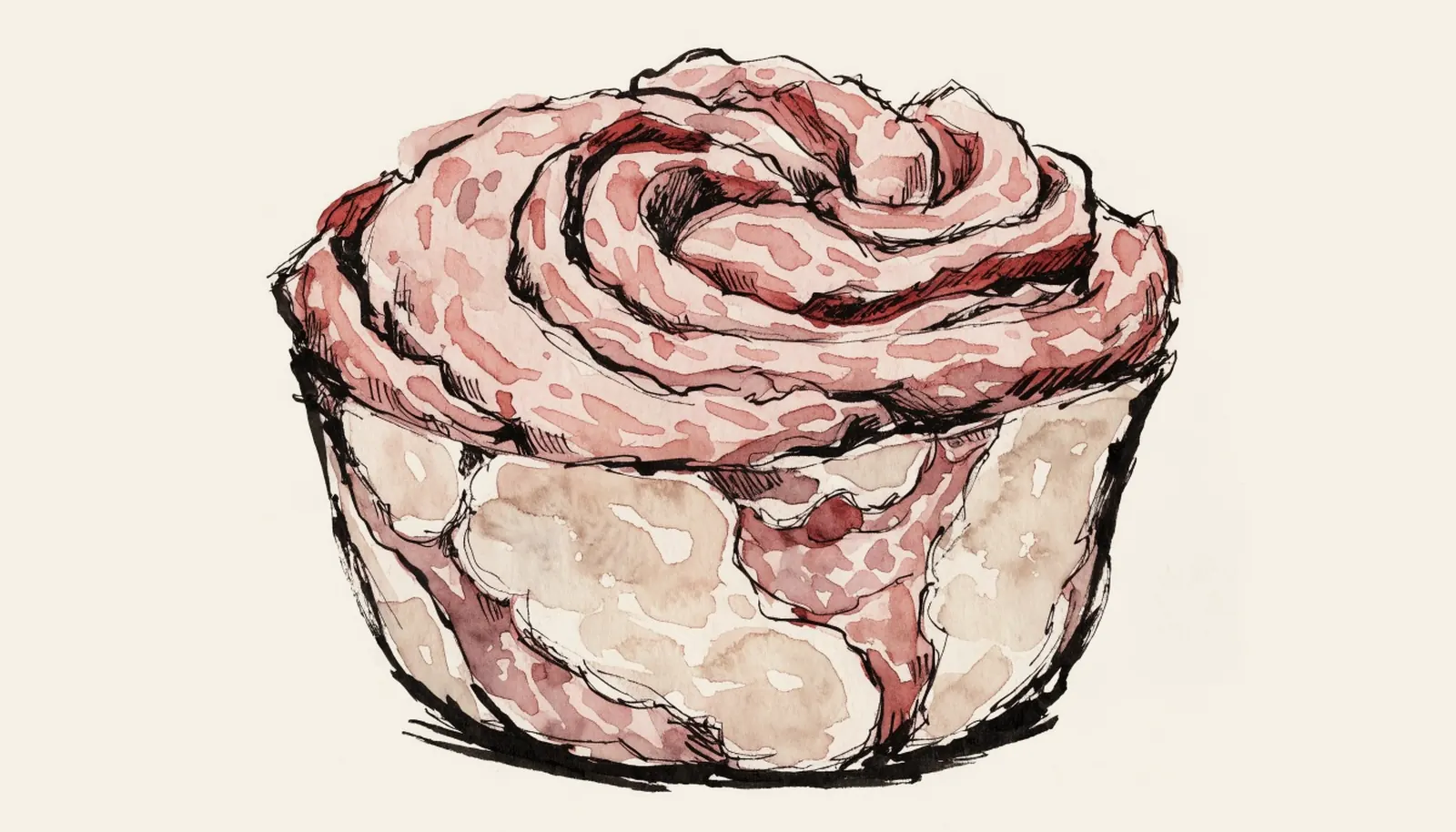
Soppressa veneta is a large-calibre, soft, mildly spiced pork salami from the Veneto, aged several months and eaten in thick slices. It is not a regional variant of Calabrian soppressata. It is a different product that happens to share most of a word. Asking for it by region is the practical fix, and part of finding the right Italian ingredient in an American shop.
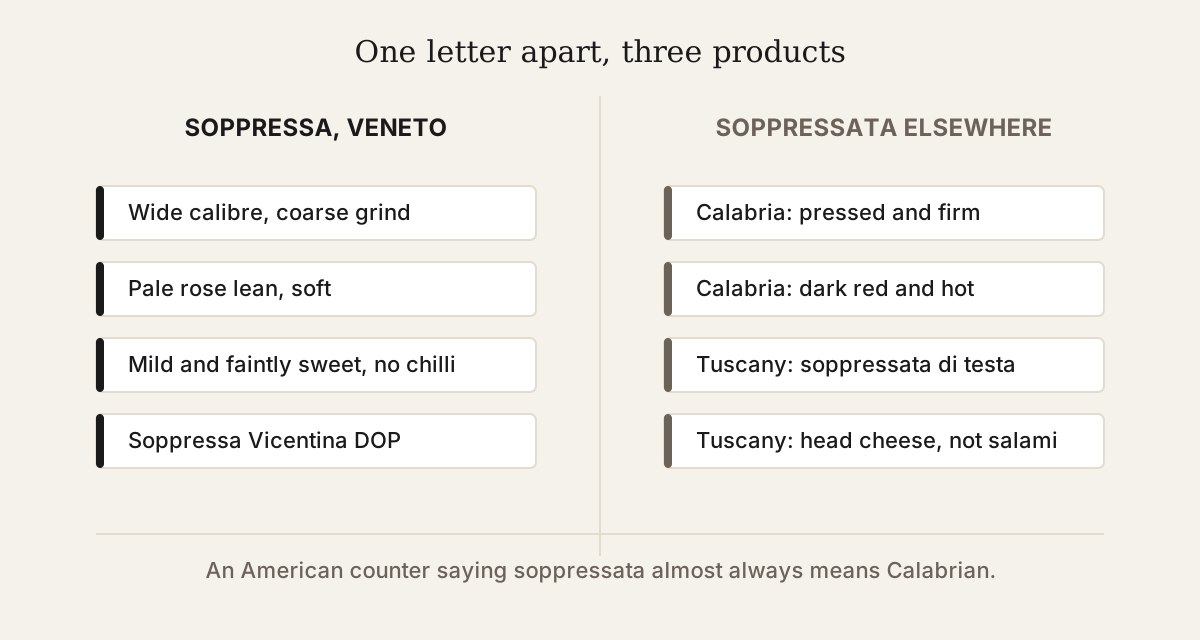
This site already covers two things called soppressata, a Calabrian chilli salami and a Tuscan head cheese. The Veneto product is the third, and it is the mildest of the three by a considerable margin.
What soppressa veneta actually is
Soppressa veneta is coarsely ground pork from heavy pigs, seasoned gently, stuffed into a wide natural casing, tied and aged for several months.
The calibre is large, considerably wider than most salami, which is why it cures slowly and stays soft in the middle.
The grind is coarse with visible pieces of fat, in the register of a rustic country salami rather than a fine-milled one.
The seasoning is mild and slightly sweet. Salt and pepper with garlic, and in many versions a small amount of warm spice such as cinnamon, clove or nutmeg. There is no chilli.
It uses the whole animal’s usable meat rather than only prime cuts, which is traditional for a large farmhouse salami.
The texture is soft and yielding, not firm, which follows from the wide calibre and a relatively short cure for its size.
Why the name misleads
Soppressa and soppressata both derive from pressing, and the products arrived at very different places.
Soppressa veneta is not necessarily pressed at all in the modern product, despite the name. The word survived the technique in the Veneto.
Calabrian soppressata is pressed and is a hot salami, coarse, chilli-spiked and firm.
Tuscan soppressata is a head cheese, made from the parts of the pig that do not go into salami, and is not a dry salami at all.
The three are separated by a single letter and a region. Soppressa in the Veneto, soppressata in Calabria and Tuscany, and the American shelf label rarely helps.
Judge by appearance rather than by name. Wide, pale, soft and mild is the Veneto product; flattened, dark red and hot is the Calabrian one.
An American counter usually means the Calabrian one when it says soppressata, so the Veneto product is worth asking for by region.
The Vicenza DOP
Soppressa Vicentina DOP is the protected version, from the province of Vicenza, and it defines one part of a broader Veneto tradition.
The DOP requires the whole chain in the zone, pigs included, which is the stronger form of protection.
It specifies the pig. Heavy pigs of defined breeds raised to a substantial weight, which is what gives the fat its firmness and the meat its character.
It sets the seasoning and the ageing. The permitted spice list and the minimum ageing period are both fixed.
Much Veneto soppressa carries no mark. Soppressa from Treviso, Padua, Verona and the rest of the region is traditional and unprotected, and the general term soppressa veneta is not itself reserved.
A version with garlic and one without are both traditional in the region, and neither is more correct.
How to judge one
Judge it on softness, then the grain, then the smell.
It should be soft and give under a thumb. Firmness in a soppressa veneta usually means it has been over-aged, which is a different fault from the same symptom in a thin salami.
The grain should be coarse and clearly defined, with fat in distinct pieces against pale rose lean.
The lean should be pale rose to light red, not deep brick. This is a mild, gently cured salami and a dark interior indicates age.
Fat should be white and firm, and there is a fair amount of it visible.
It should smell sweet and faintly spiced. Sourness or an acetic edge is a fermentation fault rather than a style.
Slice it thick. A soft, coarse, wide salami sliced thin falls apart and loses the texture that defines it.
Checked on 13 August 2026, the first page of United States results for soppressa veneta returned an American Italian-foods retailer, Italian producers and reference material, which describes that search on that date rather than recommending any seller.
What it should cost
Expect roughly 20 to 35 dollars a pound in the United States, with DOP Vicentina at the upper end.
The wide calibre requires a long slow cure and considerable weight loss, and the heavy-pig requirement in the DOP raises the raw material cost, so it sits above an everyday salami.
Unprotected Veneto soppressa is usually cheaper and can be excellent, since the tradition is regional and much wider than the one protected province.
Domestic American versions are uncommon. The style is much less taken up by American producers than the Tuscan and Calabrian ones.
How to use it
Eat it in thick slices at room temperature, with bread, and preferably with something acidic nearby.
Its mildness and softness make it a plain, generous salume rather than a seasoning one, and it is treated that way in the Veneto: cut thick, eaten in quantity, with polenta or bread.
Polenta is the regional partner, grilled or soft, which suits the salami’s softness better than bread does.
Serve it at room temperature. Cold, the substantial fat is waxy and the gentle spicing disappears entirely.
It goes well with pickled vegetables and a sharp white, which cut the fat that a mild salami cannot cut itself.
Cooking is a waste. The delicate spicing is the product and heat removes it.
Storage
Whole and wrapped in paper, several weeks refrigerated. Cut, four to five days.
The wide calibre means a large exposed face once cut, so it dries and darkens faster than a narrow salami does after slicing.
Wrap the cut face closely and trim it before the next use if it has darkened.
Paper rather than plastic for the whole salami, so the casing continues to breathe.
It will keep hardening as it sits, moving away from the soft texture that is the point, so buy it in a quantity you will finish.
White bloom on the casing is the intended mould. Coloured fuzzy growth is not.
Frequently asked questions
Is soppressa veneta the same as soppressata?
Soppressa veneta is a different product from Calabrian soppressata despite the near-identical name. The Veneto version is large, pale, soft and mildly spiced with no chilli; the Calabrian one is pressed flat, dark red, firm and hot. A third product, Tuscan soppressata, is a head cheese rather than a dry salami. All three derive their name from pressing and share little else.
Does soppressa veneta have a DOP?
Soppressa Vicentina holds a DOP, covering the version from the province of Vicenza and requiring the whole production chain including the pigs to be in the zone. Soppressa made elsewhere in the Veneto is traditional and unprotected, and the general term soppressa veneta is not itself reserved. Much of what is sold under the name carries no mark.
Is soppressa veneta spicy?
Soppressa veneta is not spicy and contains no chilli. It is seasoned with salt, pepper and garlic, often with a small amount of warm spice such as cinnamon, clove or nutmeg, which gives it a gentle sweetness rather than heat. Anyone expecting heat is thinking of Calabrian soppressata, which is a different product.
Why is my soppressa veneta so soft?
Softness is correct for soppressa veneta rather than a fault, and follows from its wide calibre and comparatively short cure for its size. The interior of a large salami stays moist far longer than that of a thin one. A firm soppressa veneta has usually been over-aged, which is the opposite of the problem most people assume they have.
How should I slice soppressa veneta?
Soppressa veneta should be sliced thick, unlike most cured salami, because it is soft and coarsely ground and a thin slice falls apart. Thick cutting also preserves the contrast between the discrete fat pieces and the lean, which is what the texture is built on. In the Veneto it is cut generously and eaten with polenta rather than shaved onto a board.
CalItalia Food covers Italian ingredients: what they are, how to tell a good one from an ordinary one, and where to buy them in the United States.