
Soppressata: The Pressed Salami, and Why Two Regions Claim It
A dry-cured pressed salami made very differently in Calabria and in Tuscany. Which one your recipe means, how to judge a piece, what it should cost, and where to buy it.
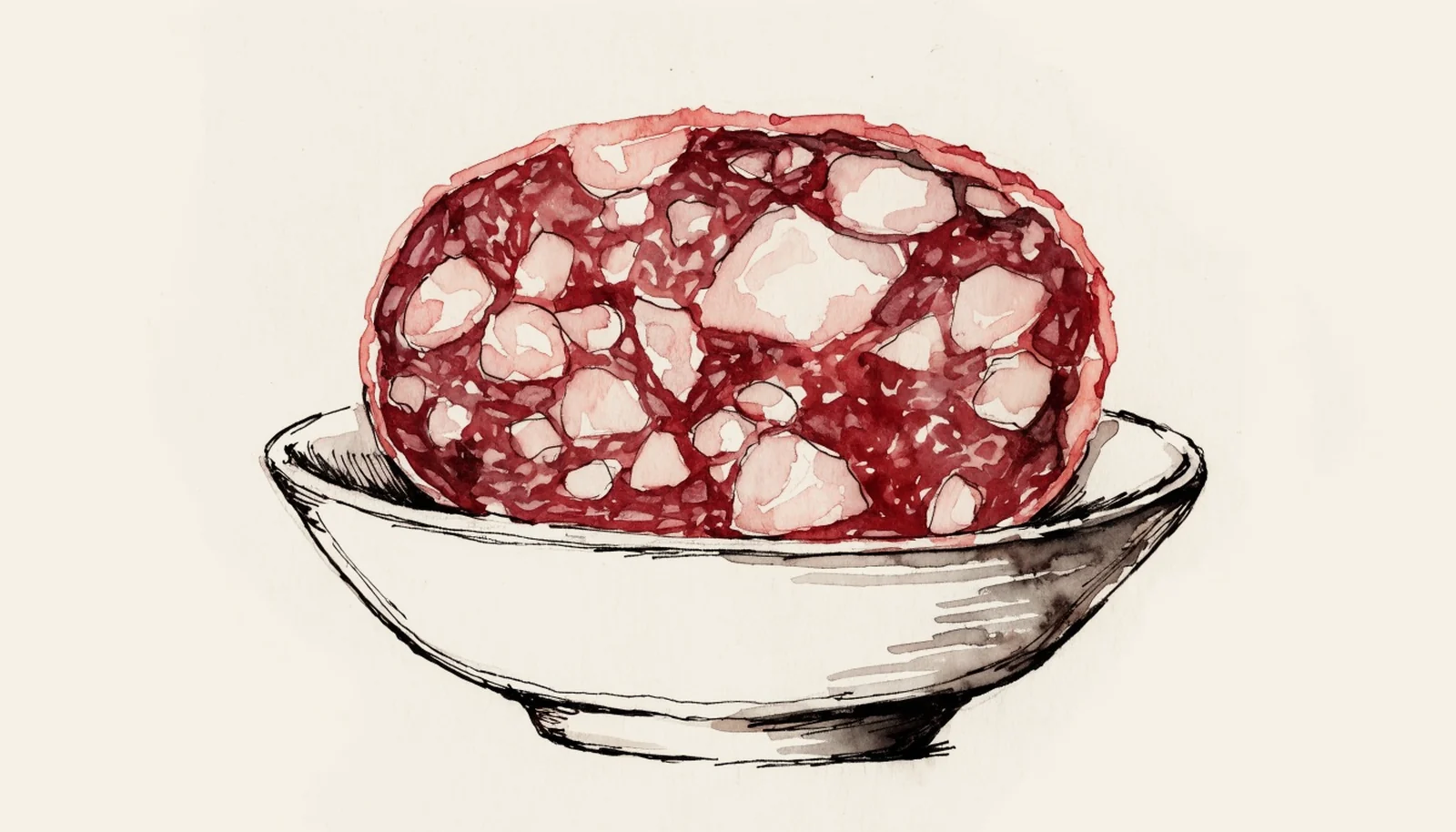
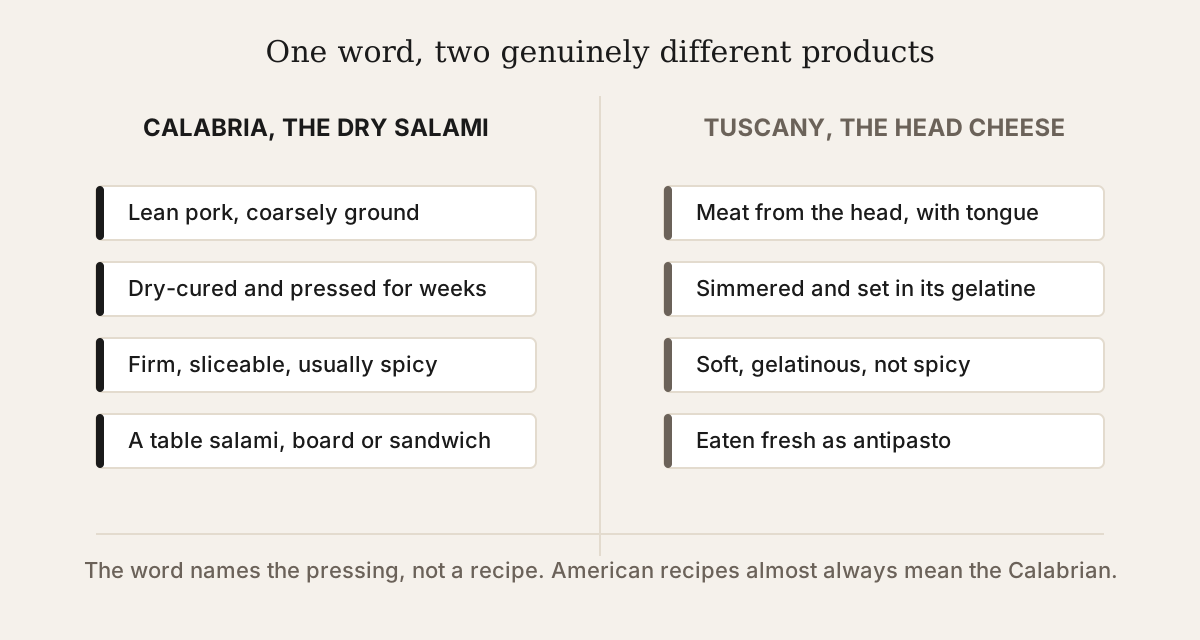
Soppressata is a dry-cured pork salami that has been pressed during curing, and the word covers two genuinely different products: a coarse, chilli-spiked Calabrian salami and a Tuscan head cheese made from the parts of the pig that do not go into salami. Most English-language recipes mean the first. Knowing which one is meant is part of using an Italian ingredient the way a recipe intends.
The name describes a process, not a recipe, which is why two regions can both be right and a shopper can end up with something entirely unexpected.
The Calabrian version, which is what most people mean
Calabrian soppressata is coarsely ground lean pork with visible cubes of fat, seasoned with salt, black pepper and Calabrian chilli, stuffed into a casing, pressed flat during curing and dried for weeks to months. The pressing is what gives it its flattened oval cross-section.
Soppressata di Calabria DOP is the protected version, with a discipline covering the pig, the cuts, the seasonings and the curing. Its permitted seasonings are limited, which is unusual and useful.
The pressing is functional. Compressing the salami during the early cure drives out air pockets and moisture, which produces a denser texture and a more even cure than a hanging salami of the same size.
It is usually spicy, though a sweet version without chilli exists and is labelled dolce against piccante. The chilli is the same Calabrian pod that defines nduja.
The Tuscan version, which surprises people
Tuscan soppressata, sometimes soppressata di testa or coppa di testa, is a head cheese: meat from the head simmered, chopped, seasoned and set in its own gelatine, then pressed into a form.
It is not dry-cured, not a salami and not sliceable in the same way. It is soft, gelatinous and eaten fresh rather than aged for months.
Both products are correctly called soppressata in their own regions, because the word refers to the pressing. Neither is a corruption of the other.
In the United States you will almost always encounter the Calabrian type, but a Tuscan deli or a whole-animal butcher may well mean the other, so it is worth asking rather than assuming.
How to judge a Calabrian soppressata
Look at the grind, the fat distribution, the colour of the lean and the firmness, in that order.
The grind should be coarse and visible. Soppressata is not a fine emulsion, and you should be able to see distinct pieces of lean and distinct cubes of fat. A smooth, uniform paste is a different salami.
Fat should be firm and white, distributed evenly, and should not have smeared during grinding. Smeared fat produces a greasy, dull-looking cut face and indicates the meat was too warm when worked.
The lean should be deep red, not brown at the centre and not grey. Some darkening at the very edge of a cut face is normal after a day.
It should be firm rather than hard. A properly cured soppressata yields slightly under a thumb. Rock hardness means it has over-dried, which happens easily with a pressed salami.
Casing should adhere to the meat. A large gap between casing and salami means it dried too fast and the meat shrank away, which usually goes with a hard rim and a softer centre.
What it should cost
Expect roughly 18 to 32 dollars a pound in the United States, with DOP Calabrian product at the upper end and domestic charcuterie often below it.
Pressed salami loses more weight in curing than a hanging one of the same size, so the yield is lower and the price reflects that. A soppressata priced like supermarket salami is a different product.
Domestic American soppressata from serious producers is widely available and frequently excellent, and it should be judged on the grind, the fat and the firmness rather than on the address.
Where to buy it
Italian delis, whole-animal butchers and charcuterie specialists carry it, and it is one of the more widely available Italian salumi in the United States.
Checked on 13 August 2026, the first page of United States results for soppressata returned producers and specialist charcuterie sellers rather than reference material, which describes that search on that date rather than recommending any seller. The practical reading is that this is a commercially well-served category, which is not true of everything on this site.
Buy it whole rather than pre-sliced where possible. A whole piece keeps for weeks and a pre-sliced pack dries within days.
How to use it
Eat it as it comes, sliced thin to medium, at room temperature. It is a table salami rather than a cooking one.
It belongs on a board with bread and a hard cheese, in a sandwich, or alongside pickled vegetables that can stand up to the chilli. The piccante version pairs particularly well with something sweet, which is why it turns up with melon and with honey.
Cooking it is usually a waste. The chilli and the cured pork character are what you paid for, and both are dulled by heat. Where a recipe wants cured pork in a hot dish, guanciale or pancetta are the correct choices.
Slice thickness matters more than with a finer salami. Cut too thin, a coarse-ground soppressata falls apart; cut too thick it eats fatty. A little thicker than prosciutto is about right.
Storage
Whole and uncut, wrapped in paper in the refrigerator, it keeps for many weeks. Once cut, wrap the face closely and use within two to three weeks.
A white bloom on the casing is normal for dry-cured salami and can be left or wiped off with a cloth dampened in vinegar. Fuzzy green or black growth should be trimmed away hard.
If the cut face dries and darkens, trim a thin slice off and continue. That is normal ageing rather than spoilage.
It freezes acceptably but pointlessly, since it keeps so long refrigerated.
Frequently asked questions
Is soppressata always spicy?
The Calabrian version usually is, and a sweet version exists labelled dolce rather than piccante. The heat comes from Calabrian chilli, the same pod used in nduja, and it is warming rather than fierce in most examples. The Tuscan head-cheese version is generally not spicy at all.
What is the difference between soppressata and salami?
Soppressata is a salami, distinguished by being pressed during curing, which flattens its cross-section and produces a denser texture. It is also typically coarser in grind than many other salami. So the relationship is that all soppressata is salami and most salami is not soppressata.
Why does my soppressata have a white coating?
A white coating on soppressata is a surface mould culture, usually a penicillium strain, deliberately encouraged on dry-cured salami to protect the meat during curing and regulate moisture loss. It is normal and harmless, and it can be wiped off with a vinegar-dampened cloth if you prefer. Fuzzy coloured growth is a different matter and should be trimmed.
Can I cook with soppressata?
You can, and it is usually a poor use of it. Its chilli and cured character are the reasons to buy it and heat dulls both. Where a dish needs rendered cured pork, guanciale or pancetta are cheaper and better suited. Soppressata belongs on a board or in a sandwich.
Which soppressata does an American recipe mean?
Almost always the Calabrian dry-cured salami, since that is what is widely sold in the United States. If a recipe describes something soft, gelatinous or spreadable, it may mean the Tuscan head cheese. When buying from a Tuscan deli or a whole-animal butcher it is worth asking which they are selling.
CalItalia Food covers Italian ingredients: what they are, how to tell a good one from an ordinary one, and where to buy them in the United States.