Nduja: What It Is, How to Judge One, and Where to Buy It
Nduja is a spreadable Calabrian salami. What separates a real one from an imitation, what it should cost in the United States, where to buy it and how to use it.
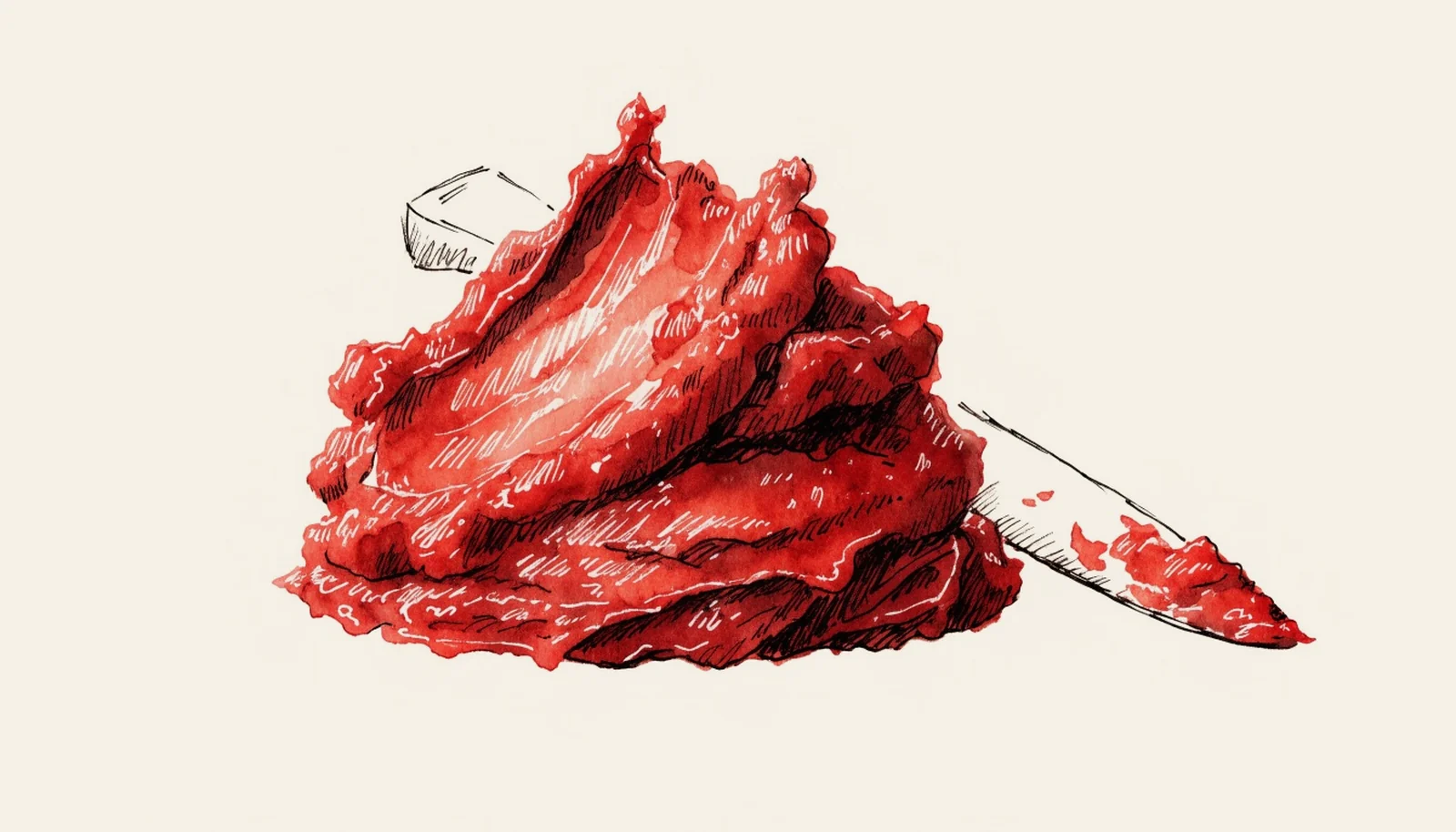
Nduja is a soft, spreadable pork salami from Calabria, made with a very high proportion of Calabrian chilli and fermented rather than cooked, which is what makes it both spreadable and shelf-stable. It is the one Italian cured meat that behaves like a condiment. With no protected mark behind it, judging the real thing falls to the ingredient list.
If you have seen it described as a spicy spread and left it there, the useful part is missing: the differences between a real Calabrian nduja and the industrial versions sold in the United States are large, visible before you open the jar, and easy to check.
What nduja actually is
Nduja is fatty pork, Calabrian chilli and salt, minced very fine, stuffed into a casing and left to ferment and age until it is spreadable rather than sliceable. That short list is the whole product.
The texture is the consequence of two things. The meat is a high proportion of fat, traditionally from the softer cuts, and the chilli content is high enough to act as a preservative in its own right. Together they give a paste that holds at room temperature and spreads like a thick butter.
It is not a pâté, not a cooked spread, and not a chilli sauce with meat in it. Those distinctions matter when reading a label, because all three are sold in the United States under names that borrow from nduja without being it. Nor is it ciauscolo, the other well-known Italian salame that spreads.
Where the name and the product come from
Nduja belongs to Spilinga and the surrounding area in the province of Vibo Valentia, in Calabria. It is peasant food in origin, built from the parts of the pig that were not worth curing whole, and its heat was as much about keeping the meat safe as about flavour.
How to judge one before you buy
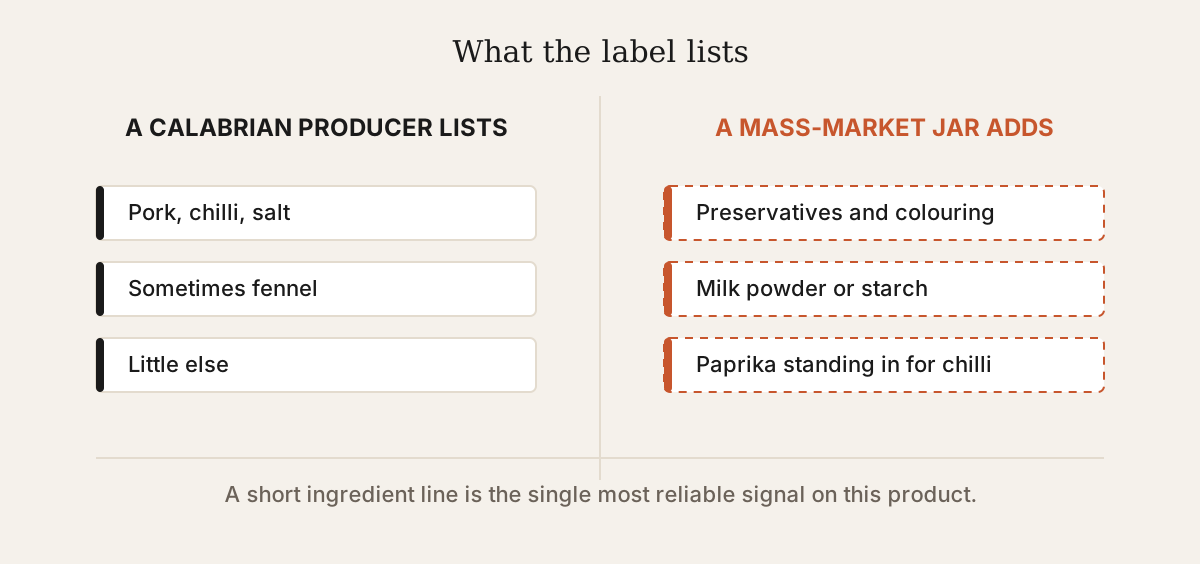
Read the ingredient list first, because a real nduja has almost nothing in it and an imitation usually announces itself there. Pork, Calabrian chilli, salt, and in most cases nothing else beyond a curing salt.
The chilli proportion is the first tell. Traditional nduja runs high on chilli, and producers who are proud of it state the percentage. A jar that lists chilli far down the ingredient order, after several other items, is a different product.
The second tell is what has been added to hold it together. Paprika, tomato, breadcrumb, potato starch and vegetable oil all appear in cheaper versions, and all of them are there to bulk out or stabilise a paste that does not have enough fat or fermentation behind it. None belongs in the traditional product.
The third is the fat. Nduja should look and feel rich, and a version that spreads thinly and wetly rather than densely has usually had its fat reduced.
On protected status, and what it does not tell you
Nduja di Spilinga does not currently hold DOP or IGP protection in the way Parmigiano Reggiano or Prosciutto di Parma do. That is worth knowing precisely because it inverts the usual advice: with nduja you cannot lean on a certification mark, so the ingredient list and the producer are doing all the work.
Some producers use “Spilinga” on the label to signal origin. Treat that as a claim to check rather than a guarantee, since without a protected designation behind it the word is not policed the way a DOP name is.
What it should cost in the United States
Expect roughly 12 to 25 dollars for a jar in the 200 gram range from a specialist importer, and treat anything far below that as a signal to read the label twice rather than as a bargain.
The price gap between real and industrial nduja is narrower than for many Italian products, which is part of why the imitations sell. A jar at 8 dollars is not obviously wrong in the way a 6 dollar Parmigiano is, so the label matters more than the price does here.
Imported jars carry the cost of the fermentation time and of the chilli, which is a real agricultural input at that proportion rather than a seasoning. Domestic American nduja made by serious charcuterie producers exists and can be very good, and it should be judged on the same three tells rather than dismissed for not being Calabrian.
Where to buy it
Specialist Italian importers and serious charcuterie sellers carry it; ordinary supermarkets mostly do not, and where they do it is usually the industrial version.
Checked on 13 August 2026, the first page of United States results for nduja returned specialist sellers alongside the reference material, including Smoking Goose, Zingerman’s and Serious Eats. That is a statement about that search on that date and not a ranking or a recommendation of any seller.
The practical routes are a specialist online importer, a charcuterie-focused domestic producer, or an Italian grocer with real salumi turnover. The last is the best of the three when you have one nearby, because you can see the product and ask what has moved recently.
How to use it once you have it
Nduja works wherever you would use both fat and chilli at once, and heat is what unlocks it. Stirred into a hot pan it melts into the fat and disperses; spread cold on bread it stays dense and direct.
The most common use is a spoonful stirred into a tomato sauce or into softened onions at the start of a dish, where it does the work of chilli, pork fat and seasoning together. It also melts onto bread under a grill, goes into scrambled eggs, and finishes a bean or chickpea dish.
A little goes a long way. The chilli proportion that makes it stable also makes it assertive, and the usual mistake is treating it as a meat rather than as a seasoning.
Storage
Unopened, a jar keeps for months at room temperature. Opened, refrigerate it and use it within a few weeks, keeping the surface smoothed and covered by its own fat.
Nduja in a casing rather than a jar behaves like other cured salami: keep it cool, and if a bloom appears on the outside, judge it the way you would any dry-cured sausage rather than assuming it has spoiled. A sharp, rancid smell rather than a warm fermented one is the signal that it has gone.
Frequently asked questions
Is nduja very spicy?
Nduja is properly hot, though the heat is broad and warming rather than sharp, because Calabrian chilli is aromatic as well as hot. Most people find a teaspoon stirred into a dish for two is assertive but comfortable. Cooking it into fat softens the heat considerably compared with eating it cold on bread.
Is nduja cooked?
No, nduja is not cooked. It is fermented and aged, which is a different process, and that is why it is stable at room temperature while unopened. This also means it can be eaten without cooking, though heat changes it substantially and most uses involve melting it.
What is the difference between nduja and soppressata?
Both are Calabrian pork salami, but soppressata is pressed, dry-cured and sliceable, while nduja is soft and spreadable with a far higher chilli and fat proportion. They are not substitutes for one another in either direction.
Can I substitute nduja for chilli paste?
Only where the dish can take pork fat as well as heat. Nduja brings fat, salt and cured pork flavour along with the chilli, so swapping it into a vegetable dish that wanted heat alone will change the result. In the other direction, replacing nduja with a chilli paste loses the fat that was doing structural work.
Does nduja need a protected designation to be authentic?
It does not currently carry one comparable to DOP or IGP, so authenticity here rests on the producer and the ingredient list rather than on a mark. That is why the three checks on this page, the chilli proportion, the absence of bulking agents and the fat content, matter more for nduja than they would for a product with a consortium behind it.
CalItalia Food covers Italian ingredients: what they are, how to tell a good one from an ordinary one, and where to buy them in the United States.