
Salame di Varzi: The DOP Where the Size Has Its Own Name
An Oltrepo Pavese salami cured in four named formats by calibre, seasoned with garlic infused in red wine. What the DOP fixes, how to judge a piece, and how to use it.
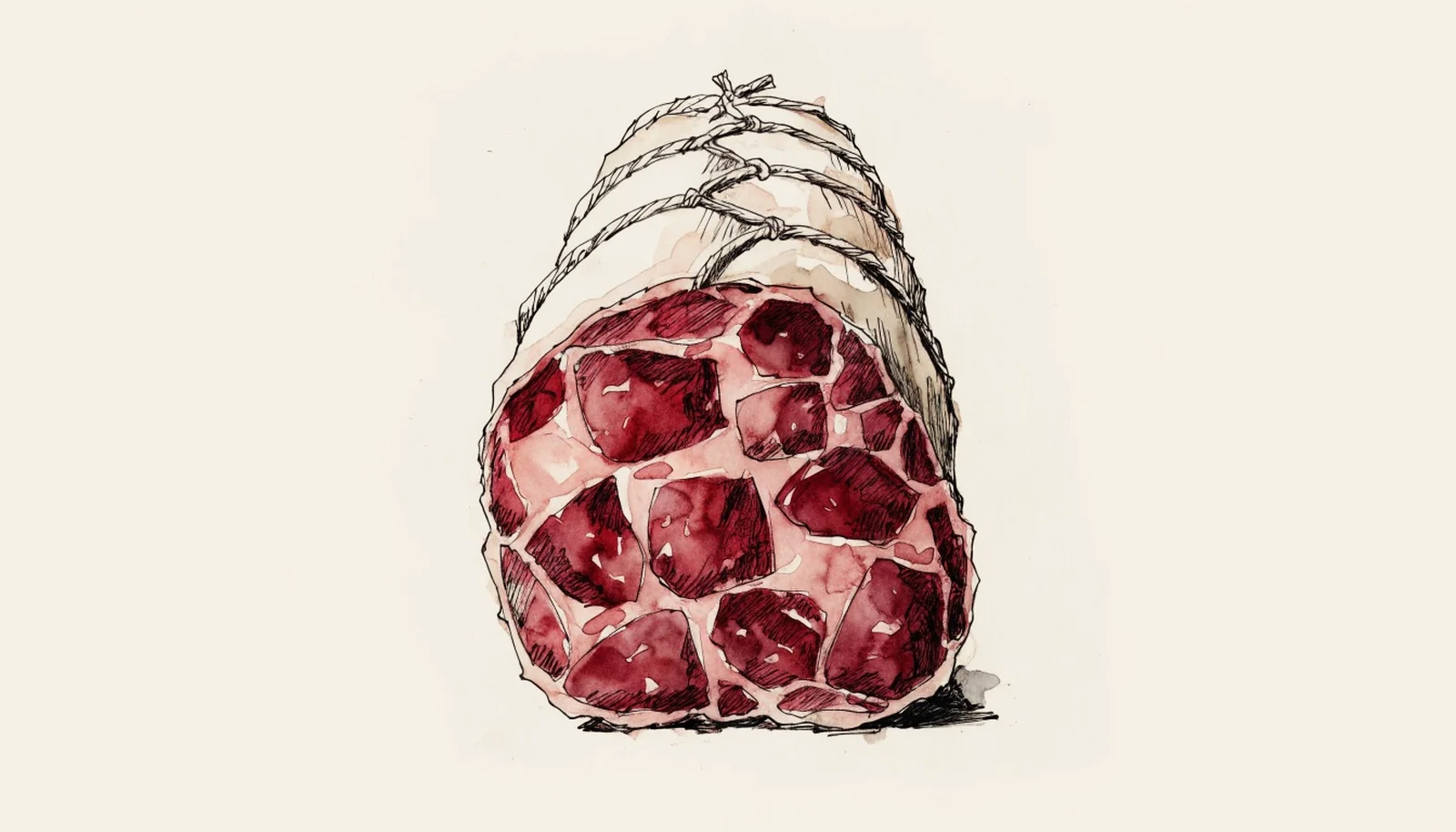
Salame di Varzi is a DOP pork salami from the Oltrepò Pavese in southern Lombardy, seasoned with salt, pepper and garlic infused into filtered red wine. It is one of the Italian ingredients that rarely reach an American counter. Its specification names four different formats by calibre, each with its own minimum ageing period and its own name.
That last detail is unusual. Most salami specifications set one minimum and let the producer choose a size. Varzi treats the size as part of the product.
What salame di Varzi actually is
Salame di Varzi is coarsely ground pork from heavy pigs, seasoned, stuffed into natural casing, hand-tied and cured in the valleys around Varzi in the province of Pavia.
The garlic goes in through wine. Whole garlic is steeped in filtered red wine, and the wine rather than the garlic enters the mixture. That gives an aroma without the raw bite of chopped garlic.
The seasoning list is short. Salt, pepper, the garlic-infused wine, and the permitted curing salts. Nothing else.
The grind is coarse, with fat in clearly visible pieces against the lean.
It uses the noble cuts of the whole pig rather than trimmings alone, which the specification requires and which is part of why the finished salami is soft rather than dry.
It is tied by hand in natural casing, and the tying pattern is part of the traditional appearance.
The four formats, and why they exist
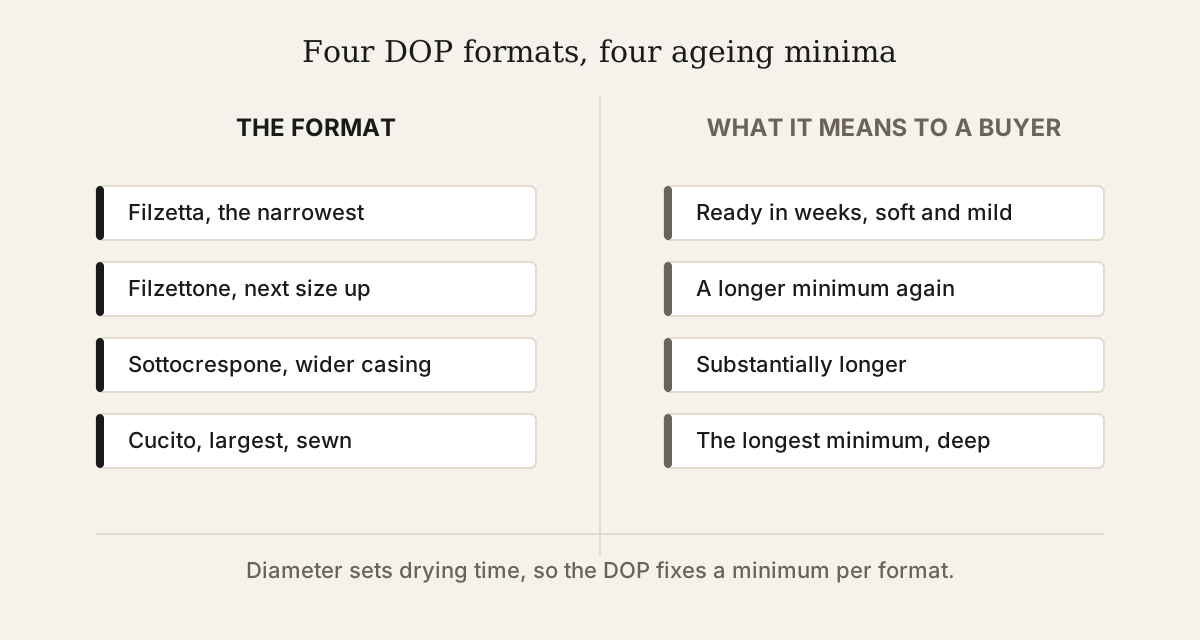
The Varzi DOP defines the salami in four calibres, each named and each with its own ageing minimum.
Filzetta is the smallest. A narrow salami with the shortest minimum cure, ready in weeks.
Filzettone is the next size up, requiring longer.
Sottocrespone is larger again, cased in a wider natural casing and needing a substantially longer cure.
Cucito is the largest, sewn rather than simply tied, and carries the longest minimum ageing of the four.
The logic is that diameter determines drying time. A wide salami takes far longer for moisture to leave the centre, so a single minimum applied across all sizes would either under-cure the large ones or pointlessly over-cure the small.
The practical consequence for a buyer is that the format name tells you roughly what you are getting. A filzetta is younger, softer and milder; a cucito is older, firmer and deeper.
Ask which format you are buying, since the difference between the extremes is larger than the difference between many separate salami.
What the DOP fixes
Salame di Varzi holds a DOP, which is the stronger of the two European marks.
A DOP requires the whole chain in the zone. The pigs, the production and the ageing all within the defined area of the Oltrepò Pavese.
The pigs are heavy pigs from the traditional Italian pool, raised to a substantial weight, which produces firm white fat rather than the soft fat of a lighter animal.
The seasoning is restricted, which is unusual and useful. A short permitted list means the wine-and-garlic character cannot be substituted with cheaper flavourings.
Minimum ageing is set per format rather than across the board, as above.
The zone is a group of valleys in the province of Pavia rather than a single town, and the local microclimate is treated in the specification as part of the method.
How to judge a piece
Judge it on the grain, then the fat, then the aroma.
The grain should be coarse and clearly defined. Smearing at the boundaries of the fat means the mixture warmed during grinding.
Fat should be bright white and firm, which is what the heavy-pig requirement is for. Soft or yellow fat is either a lighter animal or an aged salami.
The lean should be a deep rose to red, even across the face, without a grey ring.
It should smell of wine and garlic behind the pork, restrained rather than pungent. A sharp raw garlic note suggests chopped garlic rather than the infusion.
Look for the DOP mark, which is what separates Salame di Varzi from a salami made in the style.
Checked on 13 August 2026, the first page of United States results for salame di varzi returned DOP reference sites, Italian regional material and technical references rather than United States sellers, which describes that search on that date rather than recommending any seller. Counting rule: a result counts as a seller when it offers the salami for purchase into the United States. On that rule the first page carried none.
What it should cost and whether you can get it
Expect roughly 25 to 45 dollars a pound where it is available, and availability in the United States is poor.
Varzi is a small DOP by volume, produced in a set of valleys rather than across a province, and it has never built the export presence that Felino or the Piacenza products have.
Salame Felino IGP is the realistic alternative and is far easier to buy here, being similarly wine-seasoned and lean, though its garlic treatment and its grind differ.
A specialist Italian importer is the route if you want the actual product, and it is worth asking rather than searching.
Style claims should be read carefully. Varzi-style carries no origin or method requirement, and with a DOP available the mark is the thing to look for.
How to use it
Eat it sliced at room temperature, on a board or with bread. It is not a cooking salami.
Its restrained wine and garlic character means it sits well with plain accompaniment, and its coarse grain and firm fat make it a good board salami alongside a hard cheese.
Slice thickness follows the format. A filzetta is soft and takes a moderately thick slice; a cucito is firm and slices thin cleanly.
Serve at room temperature, since the firm heavy-pig fat is waxy when cold and the wine aroma stays shut.
Do not cook it. The garlic-and-wine seasoning is delicate and heat removes it, and a cheaper salami does any hot-dish job better.
Storage
Whole and wrapped in paper, several weeks to a couple of months refrigerated depending on format. Cut, four to five days.
The larger formats keep considerably better than the small ones, which is the same logic that drives their longer minimum ageing.
Paper rather than plastic so the natural casing can breathe.
Trim the cut face if it has darkened or hardened before slicing again.
White bloom on the casing is the intended mould culture. Coloured fuzzy growth is not, and means damp storage.
Frequently asked questions
What are filzetta, filzettone, sottocrespone and cucito?
They are the four formats of Salame di Varzi DOP, defined by calibre, each with its own minimum ageing period. Filzetta is the narrowest and youngest, cucito the widest and longest-aged, with filzettone and sottocrespone between them. The specification names them separately because diameter determines how long moisture takes to leave the centre, so one ageing minimum could not serve every size.
Does Salame di Varzi contain garlic?
Salame di Varzi is seasoned with garlic, introduced by steeping whole garlic in filtered red wine and adding the wine rather than the garlic itself. That gives an aroma without the sharp bite that chopped raw garlic produces. A pronounced raw garlic note in a salami sold as Varzi suggests the traditional infusion was not used.
Is Salame di Varzi a DOP or an IGP?
Salame di Varzi holds a DOP, the stronger of the two marks, which requires the pigs, the production and the ageing all to take place within the defined zone in the Oltrepò Pavese. An IGP would require only one production stage in the zone. The specification also restricts the permitted seasonings and sets ageing minimums by format.
What is the difference between Salame di Varzi and Salame Felino?
Salame di Varzi holds a DOP and Salame Felino holds an IGP, which is the first difference: Varzi requires the whole chain in its zone and Felino requires only production and ageing in the province of Parma. Varzi is coarser, uses garlic infused in red wine, and is defined in four named calibres. Felino is finer-grained, uses dry white wine, and is far easier to buy in the United States.
Why is Salame di Varzi hard to find in the United States?
Salame di Varzi is a small DOP produced across a group of valleys in the province of Pavia rather than at regional scale, and it has never developed the export presence of the better-known northern salami. The scarcity reflects production volume rather than any import restriction. Salame Felino IGP is the closest widely available alternative.
CalItalia Food covers Italian ingredients: what they are, how to tell a good one from an ordinary one, and where to buy them in the United States.