
Coppa Piacentina: The Northern DOP Cured Neck, Spiced Sweet
Pork neck from Piacenza cured with cloves, cinnamon and nutmeg under a DOP. How it differs from Calabrian capocollo, what the Piacenza trio is, how to judge a slice, and how to use it.
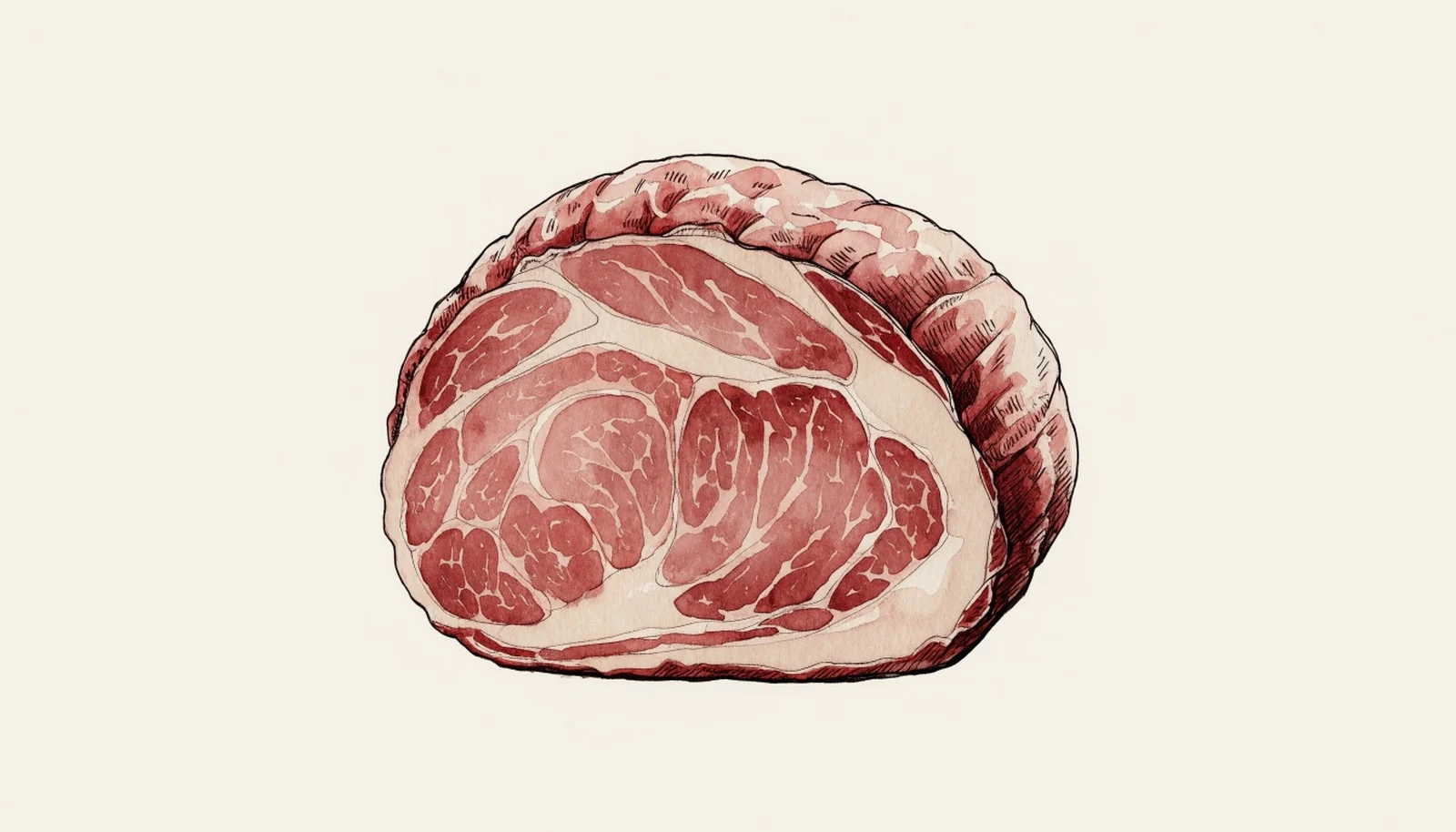
Coppa Piacentina is a DOP cured pork neck from the province of Piacenza in Emilia-Romagna, salted and seasoned with a warm spice mixture including cloves, cinnamon and nutmeg, cased and aged for at least six months. Its DOP mark is the thing to look for, as with any protected Italian ingredient. It is the northern counterpart to Calabria’s chilli-seasoned capocollo.
The same muscle, cured under two DOPs at opposite ends of Italy, gives one of the clearest illustrations available of what a protected designation actually protects.
What Coppa Piacentina actually is
Coppa Piacentina is the boned neck muscle of a heavy pig, dry-salted, rubbed with a warm spice mixture, cased in natural pork skin, bound with string and aged for a minimum of six months.
The spicing is sweet rather than hot. Cloves, cinnamon, nutmeg and bay alongside pepper, which gives an aromatic warmth entirely different from a chilli cure.
The marbling is the same as any coppa. The neck muscle is threaded with intramuscular fat, so a slice shows fat running through the meat rather than a cap around the edge.
It is bound tightly by hand, which compacts the muscle and is part of why the finished slice holds together.
The minimum cure is six months, longer than most unprotected capocollo, and many are held longer.
It is cased in natural skin rather than an artificial casing, which the specification requires.
The Piacenza trio
Coppa Piacentina is one of three DOP pork products from the same province, protected together, and that grouping is worth knowing.
Coppa Piacentina DOP is the neck.
Pancetta Piacentina DOP is the belly, rolled and cured.
Salame Piacentino DOP is the salami.
All three require the whole chain in the zone. A DOP covers the pigs, the production and the ageing, so the province supplies the animals as well as the craft.
They share a spicing tradition. The warm northern spice register runs across all three, which is what makes them recognisably a family rather than three unrelated marks.
This mirrors Calabria’s grouping. Calabria protected its capocollo, pancetta, salsiccia and soppressata together in the same way, with chilli in place of sweet spice. Two regions, two coherent sets, opposite seasoning philosophies.
How it differs from Calabrian capocollo
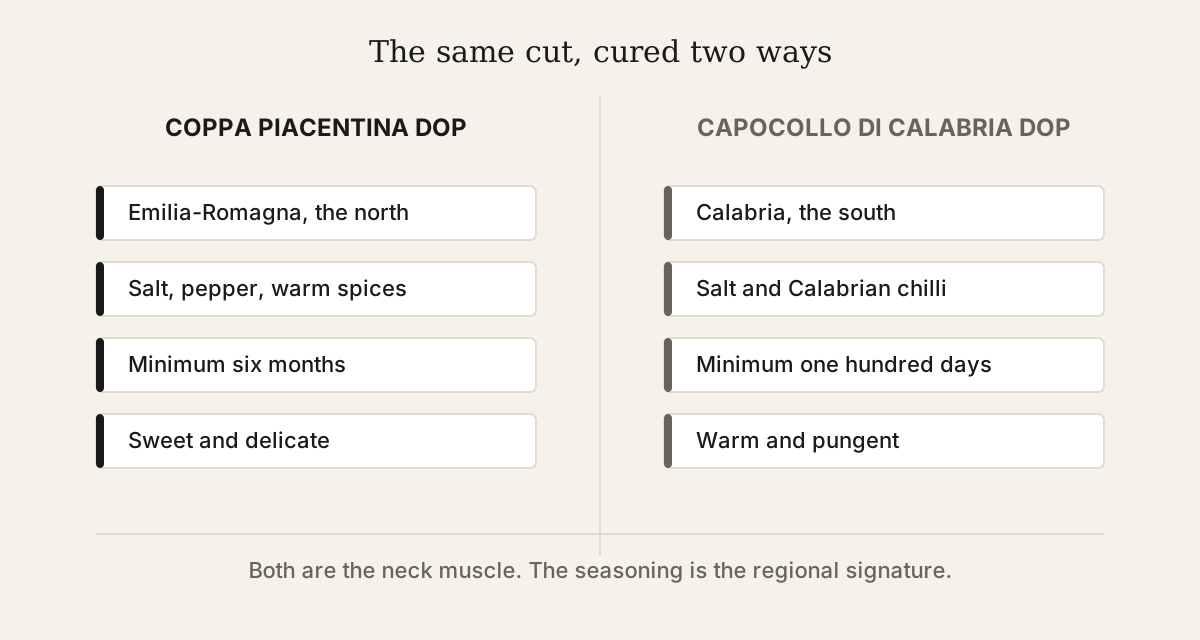
Coppa Piacentina and Capocollo di Calabria are both DOP cured pork neck, and the difference between them is the cure rather than the cut.
Coppa Piacentina is spiced sweet. Cloves, cinnamon and nutmeg, no heat.
Capocollo di Calabria is spiced hot. Calabrian chilli and wine, genuinely warm.
The Piacentina minimum ageing is longer, which gives a firmer, more concentrated result.
The colour differs accordingly. The Calabrian version carries a reddish tint from the chilli; the Piacentina is a deeper natural red without that overlay.
Neither is the default. English-language writing tends to treat capocollo as one product with regional variation, and the two DOPs are better understood as two products from one cut.
This site heads its general article on this cut capocollo rather than coppa, because the bare word coppa is unusable in English search. That reasoning is set out on that page and does not apply here, since the full phrase resolves cleanly.
How to judge a slice
Judge it on the marbling, then the lean, then the aroma.
Fat should run through the muscle in fine veins, white and firm. Large solid blocks suggest poor trimming; no visible fat suggests the wrong cut.
The lean should be a deep red, even across the slice, with no grey ring. Six months of curing produces a darker colour than a young capocollo.
The spice should be aromatic rather than sharp. Clove and cinnamon should sit behind the pork, and a spice note that arrives before the meat means a heavy hand or a young piece.
Look for the DOP mark. Coppa Piacentina without the designation is a different product, and Piacenza-style carries no requirement at all.
It should be sliced thin but not paper-thin, thicker than prosciutto and thinner than salami, so the marbling holds on the slice.
Checked on 13 August 2026, the first page of United States results for coppa piacentina returned specialist importers, DOP reference sites and a scientific database, which describes that search on that date rather than recommending any seller. Availability here is moderate rather than good.
What it should cost
Expect roughly 30 to 50 dollars a pound in the United States, above unprotected capocollo and below the long-cured whole-leg hams.
The six-month minimum and the DOP’s heavy-pig requirement are the cost. A neck muscle loses substantial weight over that period and the raw material is more expensive than commodity pork.
Unmarked capocollo is considerably cheaper and can be very good, including domestic American product, which is judged on the marbling and the producer instead of on a mark.
A cheap product labelled Piacentina without a DOP mark is a style claim rather than the designation, and the mark is the thing to check.
How to use it
Eat it as it comes, sliced thin, at room temperature. It is a board and antipasto meat rather than a cooking one.
Its sweet spicing makes it a good foil for sharp things: a mature cheese, mustard fruits, pickled vegetables, a Gutturnio from its own province.
Serve at room temperature. The marbled fat is waxy when cold and the clove and cinnamon stay closed.
It needs no dressing, unlike a lean cured meat such as bresaola, because the intramuscular fat does that work.
Cooking it is a waste. The fat renders, the warm spices turn bitter, and a cheaper cured pork does any hot-dish job better.
Storage
Whole and wrapped in paper, several weeks refrigerated. Sliced, three to four days.
The marbled fat protects the cut face better than a very lean salume manages, so it keeps somewhat better than bresaola once opened.
Wrap the cut end closely and trim a thin slice before the next use if it has darkened.
Paper rather than plastic, so the natural casing continues to breathe.
White surface bloom on the casing is normal for a dry-cured product. Fuzzy coloured growth is not.
Frequently asked questions
What is the difference between Coppa Piacentina and capocollo?
Coppa Piacentina and Capocollo di Calabria are both DOP cured pork neck, and they differ in the cure rather than the cut. Coppa Piacentina is from Emilia-Romagna and seasoned with cloves, cinnamon and nutmeg, with a six-month minimum ageing. Capocollo di Calabria is seasoned with Calabrian chilli and wine. Most capocollo sold generally carries neither designation.
Is Coppa Piacentina spicy?
Coppa Piacentina is not spicy and carries no chilli. Its seasoning is a warm sweet spice mixture of cloves, cinnamon, nutmeg and bay alongside black pepper, which produces aroma rather than heat. The chilli-seasoned version of this cut is Capocollo di Calabria, from the opposite end of Italy.
What is the Piacenza DOP trio?
Coppa Piacentina, Pancetta Piacentina and Salame Piacentino are three DOP pork products from the province of Piacenza, protected together and sharing a warm northern spicing tradition. Each requires the pigs, the production and the ageing to take place within the province. The grouping mirrors Calabria’s set of four protected pork products, which use chilli where Piacenza uses sweet spice.
How long is Coppa Piacentina aged?
Coppa Piacentina DOP is aged for a minimum of six months from salting, and many producers hold it considerably longer. That is substantially longer than most unprotected capocollo, which is commonly sold at three to six months, and it is why the Piacentina is firmer, darker and more concentrated than a young coppa.
Can I substitute capocollo for Coppa Piacentina?
Capocollo can stand in for Coppa Piacentina in most uses, since it is the same cut, with the differences being seasoning and age. A Calabrian version brings chilli heat the Piacentina does not have, and an unmarked domestic capocollo is usually younger and milder. Where the sweet clove and cinnamon character is the point of the dish, neither substitutes closely.
CalItalia Food covers Italian ingredients: what they are, how to tell a good one from an ordinary one, and where to buy them in the United States.