
Culaccia: The Registered Trademark That Reads Like a Traditional Name
A boneless cured hind-leg cut from the Parma lowlands, sold under a brand rather than a designation. How it differs from culatello and fiocco, how to judge it, and why that matters when you buy.
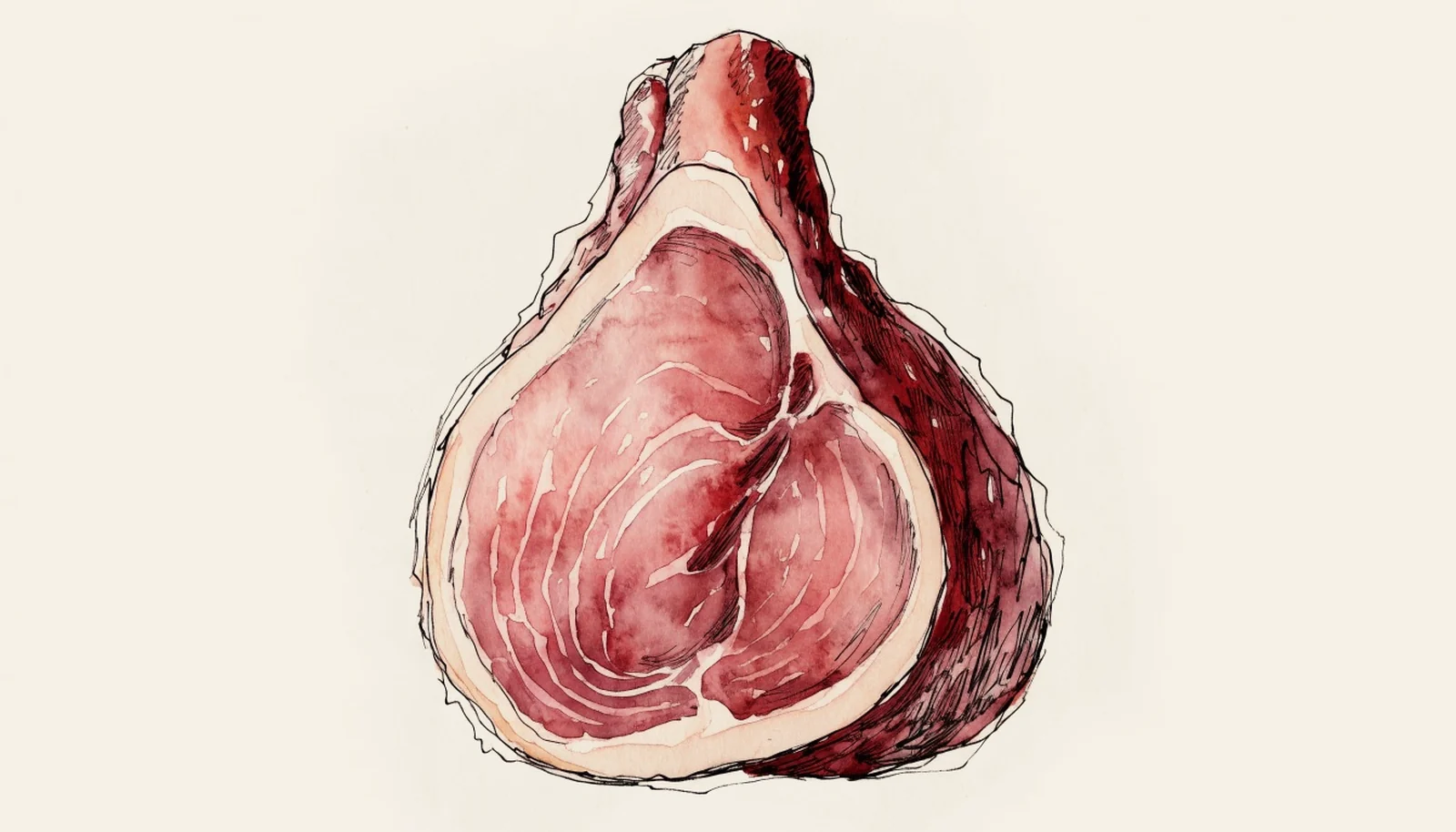
Culaccia is a cured cut from the pig’s hind leg, taken from the same region of the animal as culatello but cured with the rind left on rather than in a bladder. Its name needs reading as carefully as any label on an Italian ingredient. It is a registered trademark belonging to a single Parma producer rather than a traditional name in open use.
That is the fact worth having before you buy it, because on a counter it sits between two products with protected designations and its own name looks like it belongs to the same family of guarantees.
What culaccia actually is
Culaccia is the upper hind-leg muscle group, boned, salted, seasoned and dry-cured with its rind and a covering of fat left in place, aged for several months in the Parma lowlands.
The rind is the technical difference. Culatello is stripped of rind and sewn into a pig’s bladder; culaccia keeps its natural covering, which protects it during a shorter and simpler cure.
That makes it easier and cheaper to produce. No bladder, no sewing, less specialised handling, and less loss.
It is boneless, like culatello and unlike a whole prosciutto.
The cure is measured in months rather than a year or more, which keeps it softer and milder than a long-aged ham.
It comes from the same lowland zone, the Bassa Parmense, whose damp river-fog conditions the whole family of products depends on.
The name, and what kind of name it is
Culaccia is a registered trademark held by one producer, which is a different kind of protection from a DOP or an IGP and guarantees different things.
A trademark protects a name for its owner. It says who may sell a product under that word and it sets no public specification a buyer can read.
A DOP or an IGP protects a method and a place. It is administered publicly, the specification is published, and any producer meeting it may use the name.
So culaccia’s guarantee is reputational rather than regulatory. It is the assurance of one firm’s consistency, which may in practice be excellent, and it is not the same instrument as the mark on a culatello.
The name reads as traditional and is not. Culaccia sits alongside culatello, culatta and fiocco, all genuine dialect words for parts of the same anatomy, which is why the trademark is easy to mistake for one more of them.
Culatta is the related generic term. Where a similar boneless rind-on hind-leg product is sold without the trademark, culatta is often the word used, and that word is in open use.
None of this makes culaccia a lesser product. It makes it a branded one, and the distinction only matters if you thought you were buying a designation.
How it differs from culatello and fiocco
Three products come out of the same hind leg and they are routinely conflated.
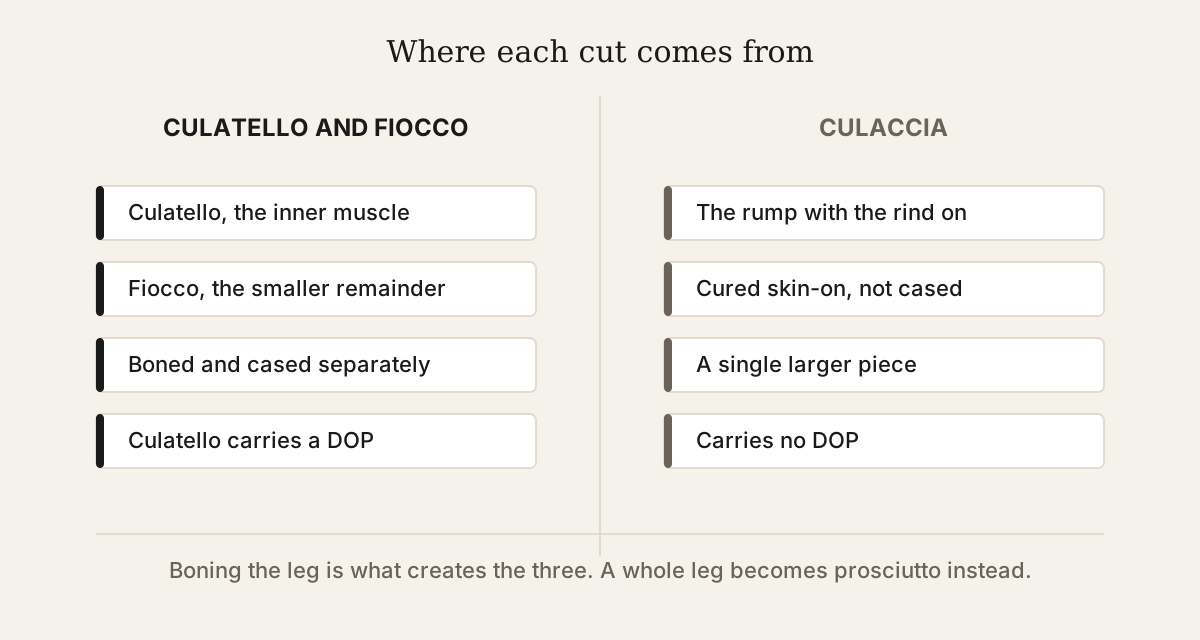
Culatello is the prize. The inner rump muscle, stripped of rind, cured in a bladder for a year or more. Culatello di Zibello holds a DOP.
Fiocco is the smaller companion. The other muscle from the same leg, cured separately, cheaper and leaner.
Culaccia is the whole upper region cured rind-on. Larger than either, milder, softer, and quicker.
Price ranks them in that order. Culatello well above, culaccia in the middle, fiocco below.
Texture separates them clearly. Culatello is dense and complex from its long bladder cure; culaccia is softer, sweeter and much more approachable.
Availability inverts the ranking. Culatello di Zibello DOP has historically been difficult to obtain in the United States, while culaccia and culatta reach here far more readily.
How to judge it
Judge it on the fat, then the lean, then the aroma.
The fat covering should be white and firm and should not be trimmed off before slicing. It is part of the product and part of the eating.
The lean should be a deep rose to red, even across the face, with no grey ring.
It should be sliced thin, closer to prosciutto than to salami, since it is a whole muscle rather than a ground product.
It should smell sweet and faintly of the curing room. Any sourness or ammonia note is a fault.
Look for the producer’s name rather than for a designation mark, since with a trademark the firm is the entire guarantee.
Checked on 13 August 2026, the first page of United States results for culaccia returned the trademark holder’s own site alongside Italian producers and retailers, which describes that search on that date rather than recommending any seller. The brand’s prominence in its own search results is consistent with a trademarked name rather than a category term.
What it should cost
Expect roughly 30 to 50 dollars a pound in the United States, below culatello and above prosciutto crudo.
The shorter cure and the simpler method keep it below culatello, and its status as a whole-muscle boneless cut from a prized zone keeps it above an ordinary ham.
It is frequently the practical alternative to culatello. Where culatello is unavailable or prohibitively priced, culaccia offers a related eating experience at a fraction of the difficulty.
Culatta sold without the trademark is often cheaper for a comparable product, which is worth knowing when comparing counters.
How to use it
Eat it sliced thin at room temperature, with the fat left on, and nothing done to it.
Its mildness and sweetness make it a good introduction to the family for anyone who finds a long-aged culatello too intense.
Bread and butter is the right accompaniment, or nothing at all.
Take it out of the refrigerator twenty minutes before serving. The fat is waxy when cold and the aroma stays shut.
Do not cook it. Several months of curing are undone by heat.
Do not trim the fat. It is soft, sweet and the reason the lean stays moist, and removing it leaves a dry slice.
Storage
Sliced and wrapped, two to three days refrigerated. In a piece with the cut face covered, several weeks.
The rind and fat covering protect it well, which is the same property that made the rind-on method viable in the first place.
Cover the cut face with its own fat or with paper and trim a thin layer before the next use if it has darkened.
Keep slices flat and separated so they do not fuse.
Do not freeze it. The texture of a cured whole muscle does not survive freezing.
Frequently asked questions
What is the difference between culaccia and culatello?
Culaccia is cured with its rind and fat covering left on and is aged for several months, while culatello is stripped of rind, sewn into a pig’s bladder and aged for a year or more. Culatello is denser, more complex and considerably more expensive, and Culatello di Zibello holds a DOP. Culaccia is softer, milder and much easier to buy in the United States.
Does culaccia have a DOP or IGP?
Culaccia holds neither a DOP nor an IGP. It is a registered trademark belonging to a single Parma producer, which protects the name for its owner rather than setting a published specification any producer could meet. The guarantee behind it is one firm’s consistency rather than a public standard, which is a different kind of assurance from the mark on a culatello.
Is culaccia the same as culatta?
Culaccia and culatta describe a very similar product, a boneless hind-leg cut cured with the rind on, and they differ in the status of the name. Culaccia is a registered trademark held by one producer; culatta is a generic term in open use. In practice a culatta from a good producer is comparable, and often cheaper, than the trademarked product.
Should I trim the fat off culaccia?
The fat on culaccia should be left in place and eaten with the lean, since it is soft, sweet and integral to the product rather than waste. Trimming it leaves a dry slice and removes much of the flavour. This is the same convention that applies to prosciutto, where the fat is part of what a long cure produces.
Is culaccia a good substitute for culatello?
Culaccia is the most practical alternative to culatello for anyone in the United States, since it comes from the same zone and the same part of the leg while being far easier to obtain. It is milder, softer and sweeter, without the density and complexity that a year in a bladder produces. Treat it as a related product rather than as the same thing at a lower price.
CalItalia Food covers Italian ingredients: what they are, how to tell a good one from an ordinary one, and where to buy them in the United States.