
Lardo di Colonnata: Cured Back Fat, and Why the Marble Matters
Pork back fat cured in marble basins in a Tuscan quarry village. What the marble does, what the IGP controls, how to judge a piece, and how to buy and serve it.
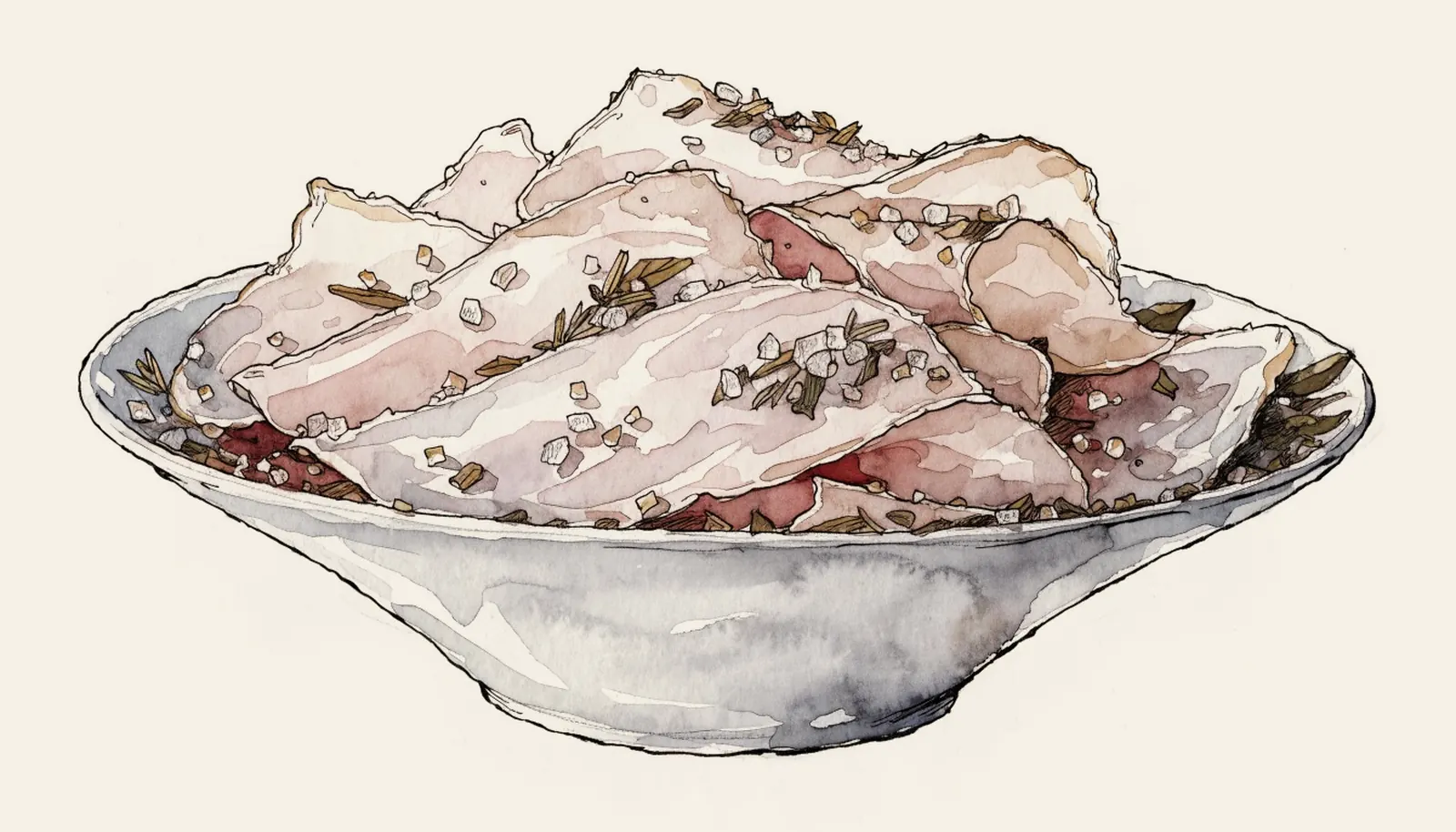
Lardo di Colonnata is pork back fat cured with salt, rosemary, garlic and spices in basins carved from local marble, in a village above the Carrara quarries, for at least six months. It is eaten in thin translucent slices and it is fat rather than meat, which is the point rather than a caveat. Buying it well means knowing what separates the authentic Italian ingredient from its stand-ins.
It carries an IGP, and it is one of the few products on this site where the container is part of the specification.
What lardo actually is
Lardo di Colonnata is the layer of fat from the back of the pig, trimmed into slabs, layered with salt, rosemary, garlic, black pepper and other spices in a marble basin called a conca, and left to cure for six months or more.
It is not lard. Lard is rendered fat, liquid or soft at room temperature and used for cooking. Lardo is cured whole fat, sliced and eaten as it is. The false friend between the English and Italian words causes real confusion.
It is not fatback as sold in an American butcher, which is uncured. The curing is what turns it from a cooking ingredient into a salume.
The finished product is white with a faint pink cast, silky rather than greasy, and it should melt on contact with a warm surface or a warm mouth.
Colonnata, and the marble
Colonnata is a village above the marble quarries at Carrara, and the conche are cut from the local stone. The specification requires them.
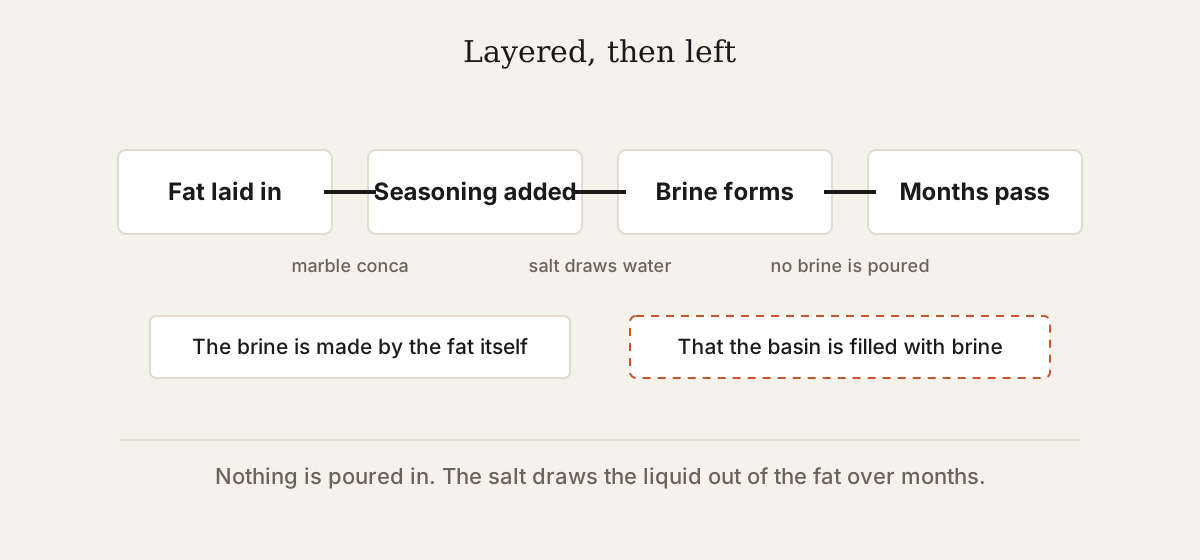
The marble is doing something real. It is porous enough to regulate humidity, stays cool at a stable temperature, and is slightly alkaline, all of which suit a long salt cure. The basins are rubbed with garlic before filling, and a brine forms naturally as the salt draws water from the fat.
It is not a marketing detail in the way that a decorative claim would be. The container’s material and the cellar’s ambient conditions are both written into the IGP discipline.
What the IGP controls
Lardo di Colonnata IGP requires the curing to take place in Colonnata, in marble conche, for a minimum of six months, using a defined set of seasonings.
What it does not require is that the pig is local. As with any IGP, at least one stage must occur in the named area, and here it is the curing. The pork may come from elsewhere in Italy or beyond.
That is a reasonable arrangement rather than a loophole. The transformation that makes lardo what it is happens in the conca, not in the field, so tying the cure to the place is tying the mark to the part that matters.
Lardo made elsewhere is not Lardo di Colonnata. Other Italian regions cure back fat, and lardo di Arnad from the Aosta Valley carries its own DOP. Both are legitimate; neither is the other.
How to judge a piece
Look at the colour, the thickness of the slab, the seasoning crust and the texture.
The fat should be white to very faintly pink, not yellow. Yellowing indicates age or oxidation and brings a rancid note.
A thick slab is a better sign than a thin one, since the cure and the eating quality both depend on having enough depth of fat.
The seasoning crust should be visible on the outside, herbaceous and coarse rather than a uniform powder. It is scraped off or left according to preference.
Texture is the real test. Good lardo is silky and firm when cold and begins to soften almost immediately at room temperature. Anything waxy, hard or greasy at room temperature is either poorly cured or old.
Smell should be clean, herbal and faintly porky. Any sharpness or rancidity means it has gone.
What it should cost
Expect roughly 25 to 45 dollars a pound in the United States, which is high for fat and reflects the six-month minimum cure and the loss during it.
Very cheap lardo is usually uncured fatback or a short-cured product from outside Colonnata. Both may be perfectly good and neither is the IGP product.
Buy small quantities. Lardo is eaten in thin slices and a little goes a long way, so a quarter pound is a substantial purchase rather than a sample.
Where to buy it
Specialist Italian importers and serious salumi counters carry it; general retail almost never does.
Checked on 13 August 2026, the first page of United States results for lardo di colonnata returned specialist importers and reference material, including a Utah cheese and charcuterie retailer and an Italian products seller. That describes that search on that date rather than recommending any seller.
Availability in the United States is genuinely limited, and buying online from an importer is the normal route rather than a fallback.
How to serve it
Slice it as thinly as you can manage and lay it over something warm, so it begins to melt without being cooked.
The classic service is on warm bread or bruschetta, where the residual heat softens it into the crumb. It also goes over hot boiled or roasted potatoes, draped on grilled vegetables, or laid over a warm piece of fish just before serving.
Chill it before slicing and slice it cold. Warm lardo will not cut cleanly and tears instead.
Do not cook it directly. Heating lardo in a pan renders it and turns it into cooking fat, which is a legitimate thing to do with cheap fatback and a waste of a cured product. If a dish needs rendered pork fat, use something else. That is the job guanciale is cured for.
Serve it thinner than instinct suggests. Almost every disappointment with lardo comes from slices cut too thick, which eat as a mouthful of solid fat rather than melting away.
Storage
Wrapped in paper and refrigerated, a piece keeps for weeks and continues to firm slowly. Once sliced, use within a few days.
Do not seal it tightly in plastic, which traps moisture against the surface and encourages off flavours in a product that is almost entirely fat. The same rule runs through the guide to how long Italian cured meat keeps.
Fat takes up other smells readily, so keep it away from strongly aromatic things in the refrigerator.
It can be frozen and generally should not be, since the texture that justifies the price does not survive well.
Frequently asked questions
Is lardo the same as lard?
No, and the words are a false friend. Lard is rendered pork fat, soft or liquid, used for cooking. Lardo is a cured salume made from whole back fat, sliced thin and eaten as it is. Ordering lardo expecting a cooking fat, or using it as one, misses the product entirely.
Is it just eating fat?
Yes, and that is the intended experience. Cured back fat has a silky texture and a herbal, faintly sweet flavour quite unlike raw or rendered fat, and it is served in slices thin enough to melt rather than in quantity. People who find the idea unappealing usually change their minds after a properly thin slice on warm bread.
Does the marble actually matter?
It does enough that the IGP requires it. Marble conche regulate humidity, hold a stable cool temperature and are slightly alkaline, all of which suit a long salt cure, and the brine that forms in the basin is part of the process. Whether a taster could identify marble-cured lardo blind is a separate question from whether the specification is doing real work.
How long does lardo cure?
A minimum of six months under the IGP discipline, and often longer. Shorter cures produce a softer, blander product that has not developed the herbal character the seasonings contribute over time. Producers sometimes state the cure length, and longer pieces are usually firmer and more aromatic.
Can I substitute fatback or salt pork?
Not usefully for eating raw. Uncured fatback is a cooking ingredient and salt pork is cured for a different purpose and is far saltier. Neither has the six-month herbal cure that makes lardo edible in thin raw slices. For cooking applications either is a fine substitute, but that is not what lardo is for.
CalItalia Food covers Italian ingredients: what they are, how to tell a good one from an ordinary one, and where to buy them in the United States.